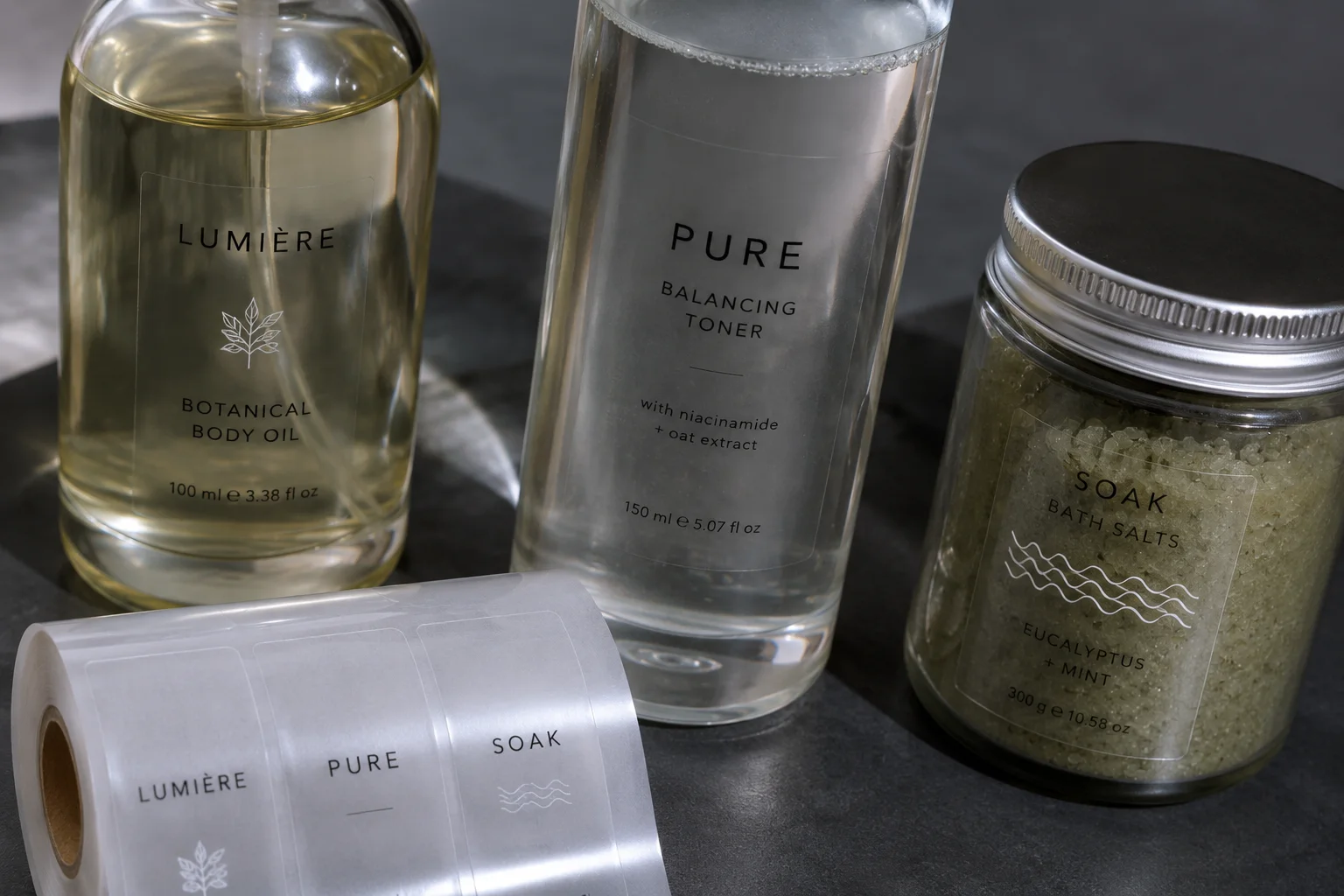
Transparent film for glass and plastic containers
Clear label material is commonly used on bottles, jars, tubes, and smooth product packaging where a white paper label would feel too heavy.
Create a clean no-label look with custom clear labels for bottles, jars, cosmetics, skincare, food packaging, and premium product containers. ZIVFY reviews clear film material, white ink layers, label shape, supply format, and application surface before production.
Clear labels can look almost invisible on transparent packaging, but ink visibility depends on artwork color, container color, surface curve, and whether a white ink layer is needed.
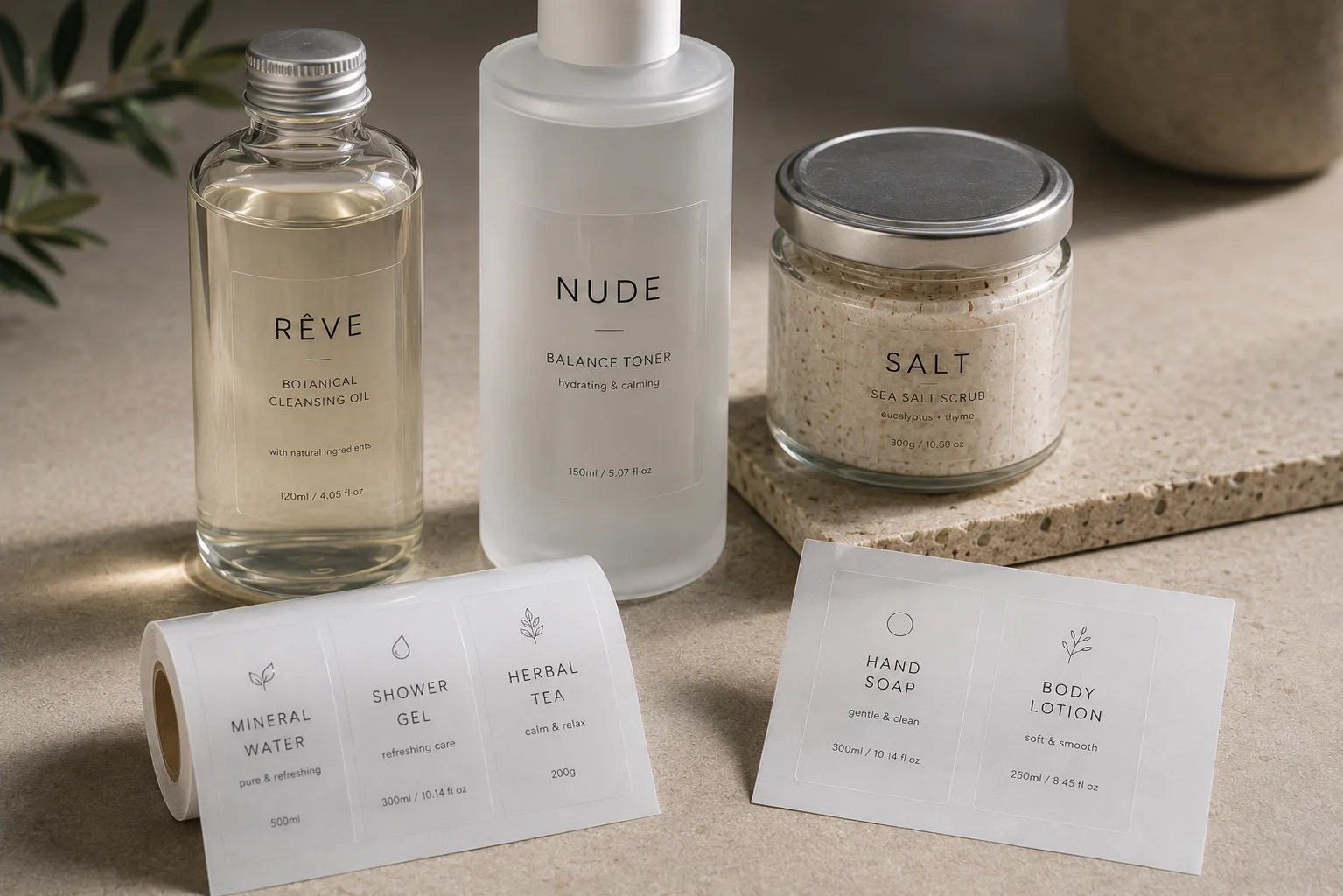
Clear labels are made for brands that want the product, bottle, jar, or container color to remain visible. When applied correctly, the transparent film blends into the packaging surface and creates a clean printed-on appearance.
Clear label material is commonly used on bottles, jars, tubes, and smooth product packaging where a white paper label would feel too heavy.
On transparent material, artwork color depends on the container behind it. A white ink layer can help small text, logos, and pale colors read more clearly.
Bottle curve, plastic type, moisture exposure, label size, and edge-lift risk should be checked before choosing material, adhesive, and supply format.
Transparent labels do not behave like white paper labels. Ink color, container color, liquid color, and background surface can all change the final appearance. ZIVFY reviews whether your design should use clear film only, white ink support, or full-color printing over a white ink layer.
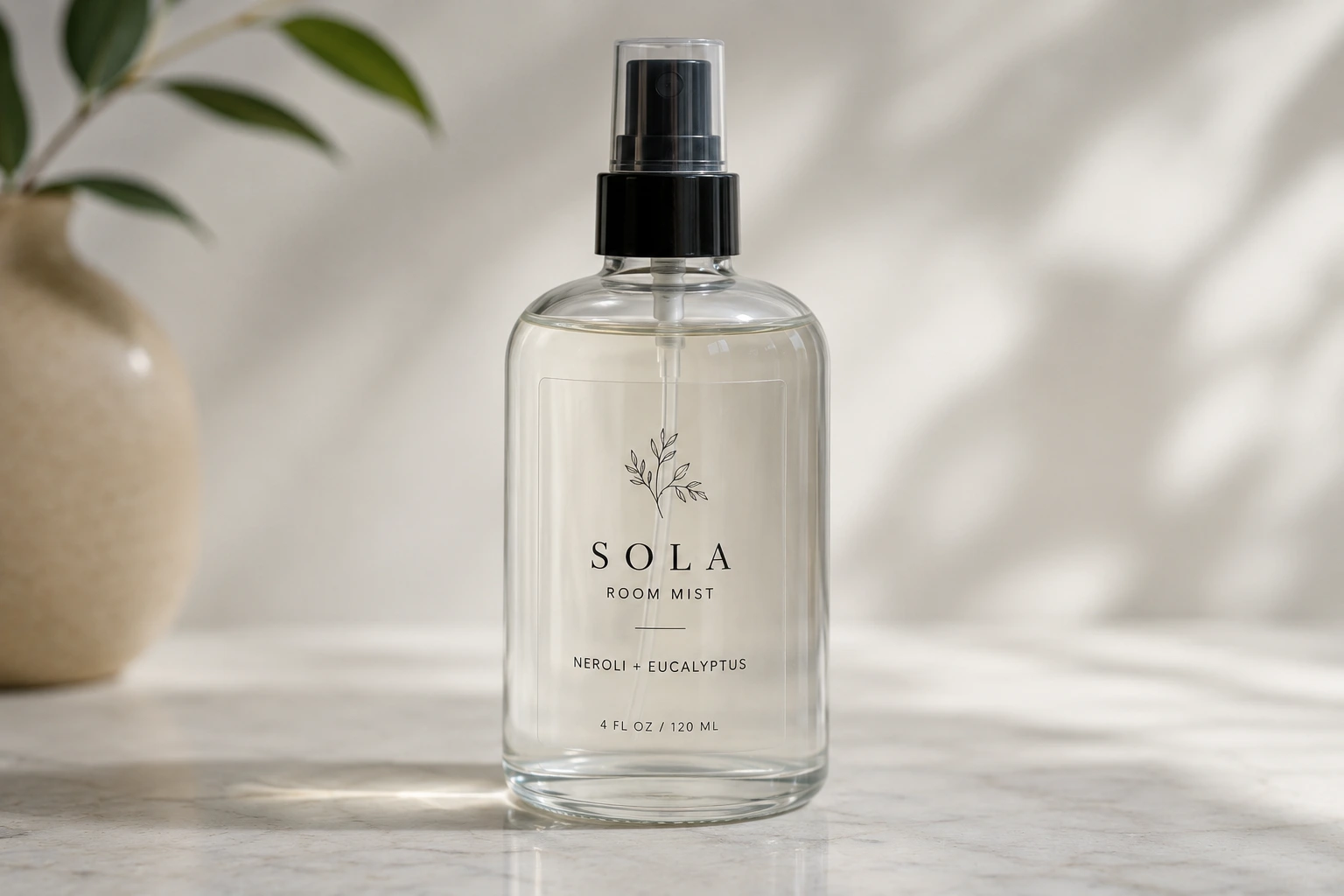
Best for dark ink, simple marks, and a very light label appearance where the container or product color remains the main visual.
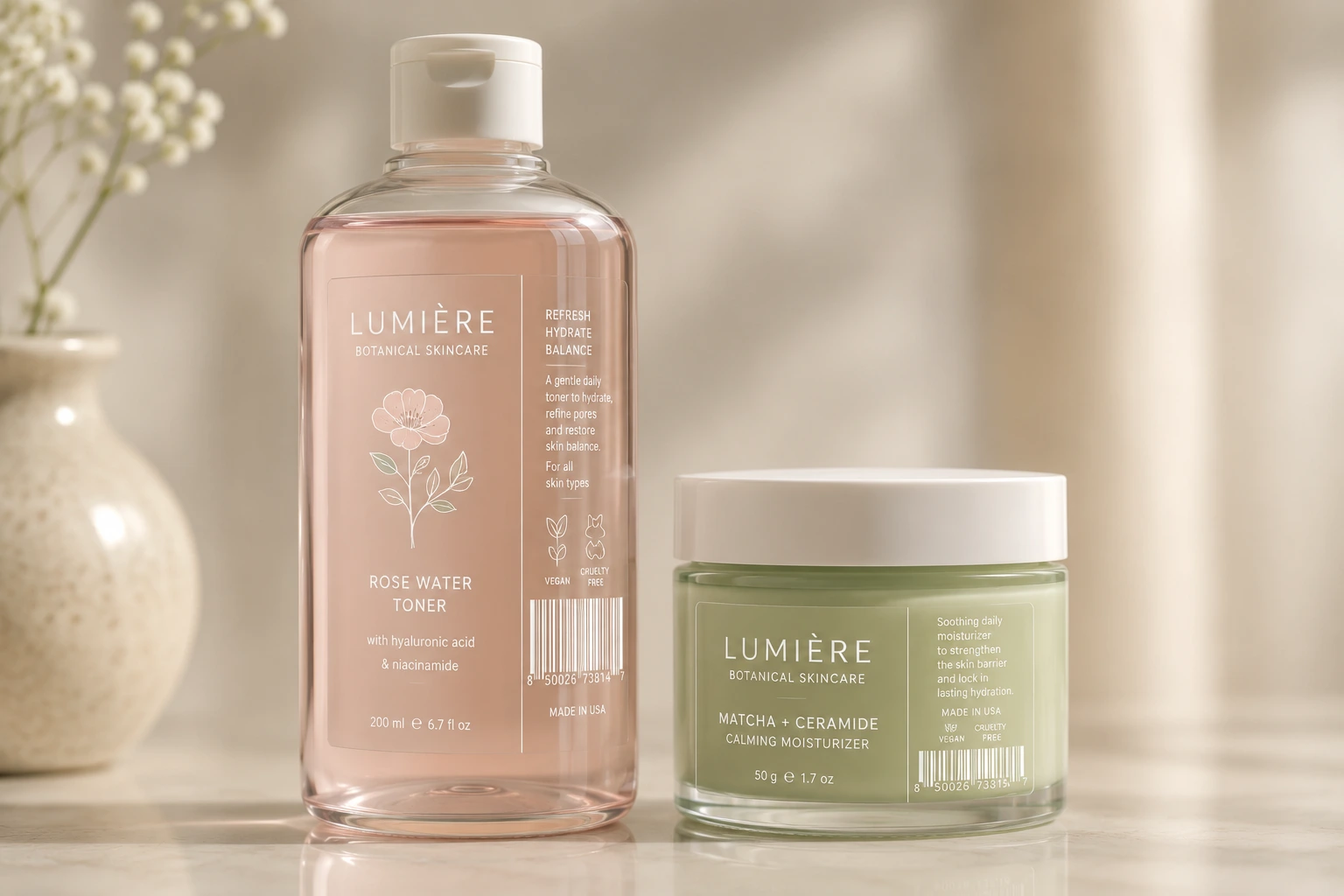
A white ink layer can make logos, small text, pale graphics, and compliance information easier to read on transparent packaging.
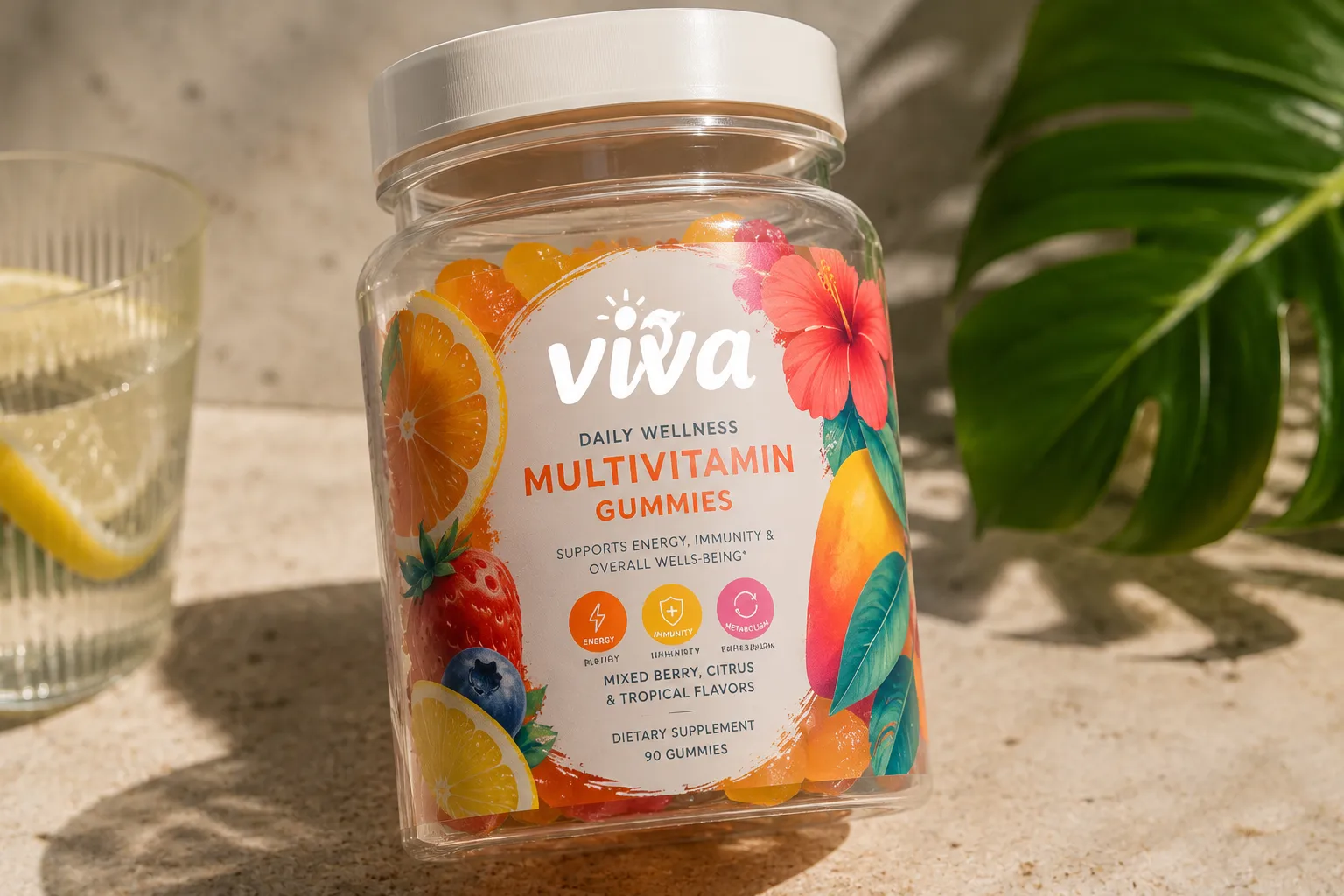
For colorful artwork, white ink can sit behind selected print areas so colors appear stronger instead of becoming too transparent.
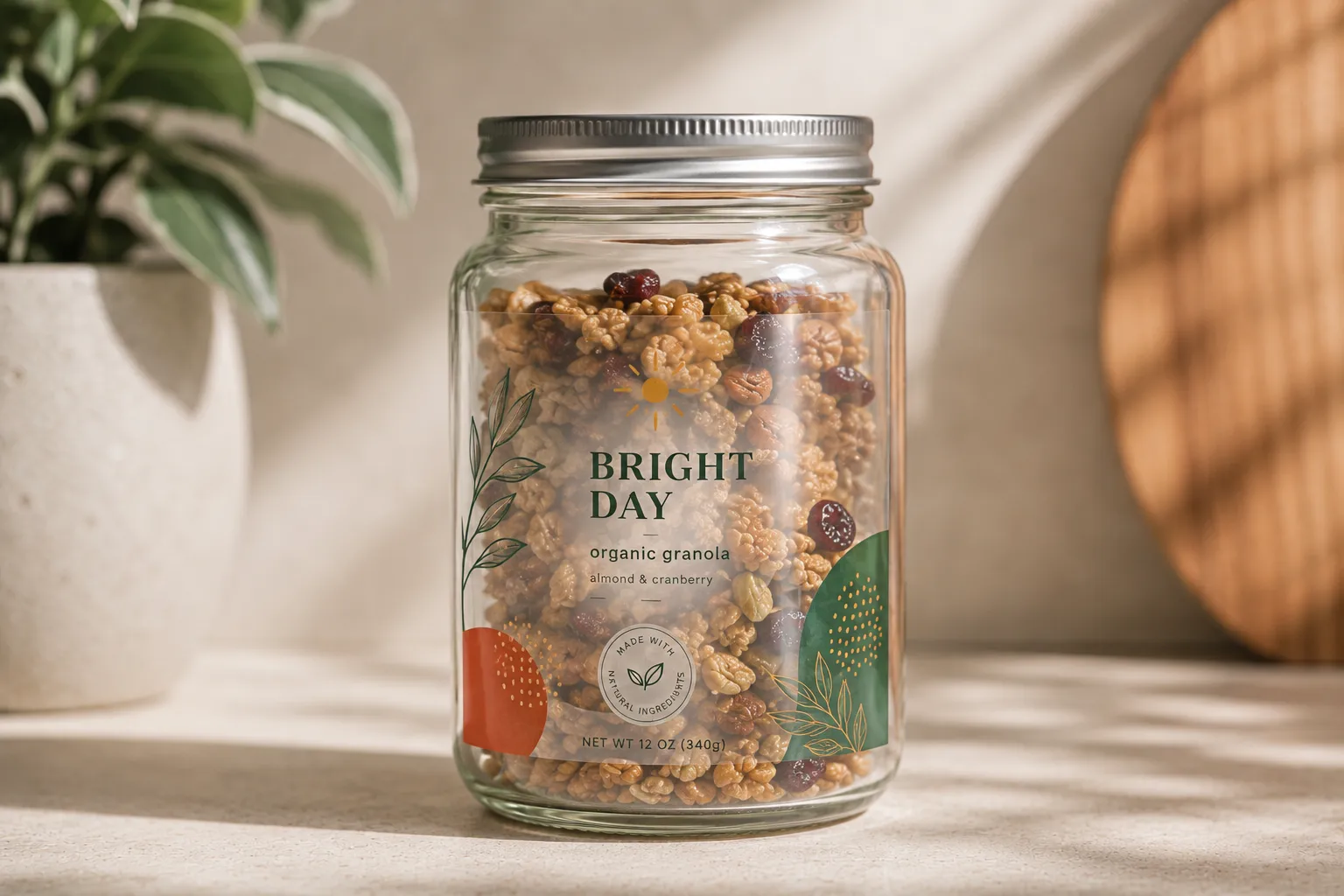
Keep selected areas transparent while using white ink or color elsewhere for product windows, minimal labels, or layered packaging effects.
If your clear label will be applied to a dark bottle, colored liquid, patterned box, or curved container, white ink can affect both appearance and readability. Send your container type and artwork so the correct print direction can be checked before production.
Clear labels depend heavily on the container behind the label. Request material samples to compare clear film, white ink visibility, print contrast, and the final appearance on bottles, jars, or packaging surfaces.
Samples are matched to your project type and available material references. A sample request does not mean every size, adhesive, print color, shape, or production combination is stocked as a finished sample.
The right label material depends on whether you want the package to stay visible, the artwork to look fully opaque, or the material itself to create a special effect. Clear labels are best when the surface behind the label is part of the design.
| Type | Clear Labels | White Film Labels | Metallic PET Labels | Holographic Labels |
|---|---|---|---|---|
| Look | Transparent, minimal, clean. Creates a no-label look on glass, plastic, and smooth packaging. | Opaque and solid. Gives artwork a clean white base with stronger color coverage. | Silver or gold material effect. The metallic look comes from the PET surface itself. | Rainbow reflective effect. Used when the label should catch light and feel more decorative. |
| Best For | Bottles, jars, cosmetics, skincare, food containers, and premium packaging where the contents should stay visible. | Product labels that need strong readability, full artwork coverage, or a clean standard label base. | Cosmetics, electronics, tools, candles, industrial products, and premium packaging that need a metal-like surface. | Security seals, limited editions, beauty packaging, promotional stickers, and products needing a strong visual effect. |
| Ink Logic | White ink may be needed behind logos, small text, pale colors, or full-color areas. | White base already supports most print colors without needing a separate white ink layer. | Ink sits on a metallic silver or gold PET surface, so color appearance must be reviewed. | Artwork interacts with the holographic surface; contrast and readability need careful planning. |
| When Not To Use | Not ideal if you need full opacity, heavy coverage, or artwork that must look the same on every background. | Not ideal if the goal is a transparent no-label look or visible product contents. | Not ideal if you want a fully transparent label or a soft invisible packaging effect. | Not ideal if the brand needs a quiet, minimal, non-reflective label appearance. |
Transparent, minimal, and clean. Best for a no-label look.
Bottles, jars, cosmetics, skincare, food containers, and premium packaging.
White ink may be needed for logos, small text, pale colors, or full-color areas.
Opaque white base with stronger color coverage and easier readability.
Standard product labels that need clear print and full artwork coverage.
Not suitable if the goal is a transparent no-label appearance.
Silver or gold PET material surface for a metal-like label effect.
Cosmetics, tools, electronics, candles, industrial labels, and premium packaging.
Not for a fully transparent or invisible packaging look.
Rainbow reflective surface for stronger visual impact.
Security seals, limited editions, beauty packaging, promotional stickers, and decorative labels.
Not ideal for quiet, minimal, or non-reflective packaging.
Clear label production depends on label size, shape, application method, quantity, roll direction, and whether the labels will be applied by hand or machine. ZIVFY reviews the supply format before quoting so the label is practical for your packaging workflow.
Suitable for larger quantities, bottle labeling, repeated SKUs, and machine or semi-manual application. Roll direction and core size should be reviewed before production.
Useful for small batches, sample projects, hand application, mixed designs, or projects where labels are easier to organize on sheets.
Clear stickers can be supplied as individual pieces when the project is for packaging inserts, events, promotional use, or small custom batches.
Clear labels can be reviewed in custom shapes, rounded corners, logo cuts, or kiss-cut formats depending on artwork, size, and application surface.
A clear label can look excellent on one surface and fail on another if the material, adhesive, size, curve, or use environment is not reviewed. Before quoting, ZIVFY checks where the label will be applied and how the product will be stored, handled, or exposed to moisture.
Clear labels are often used on glass because the transparent film can blend into the bottle while keeping the liquid, product, or jar contents visible.
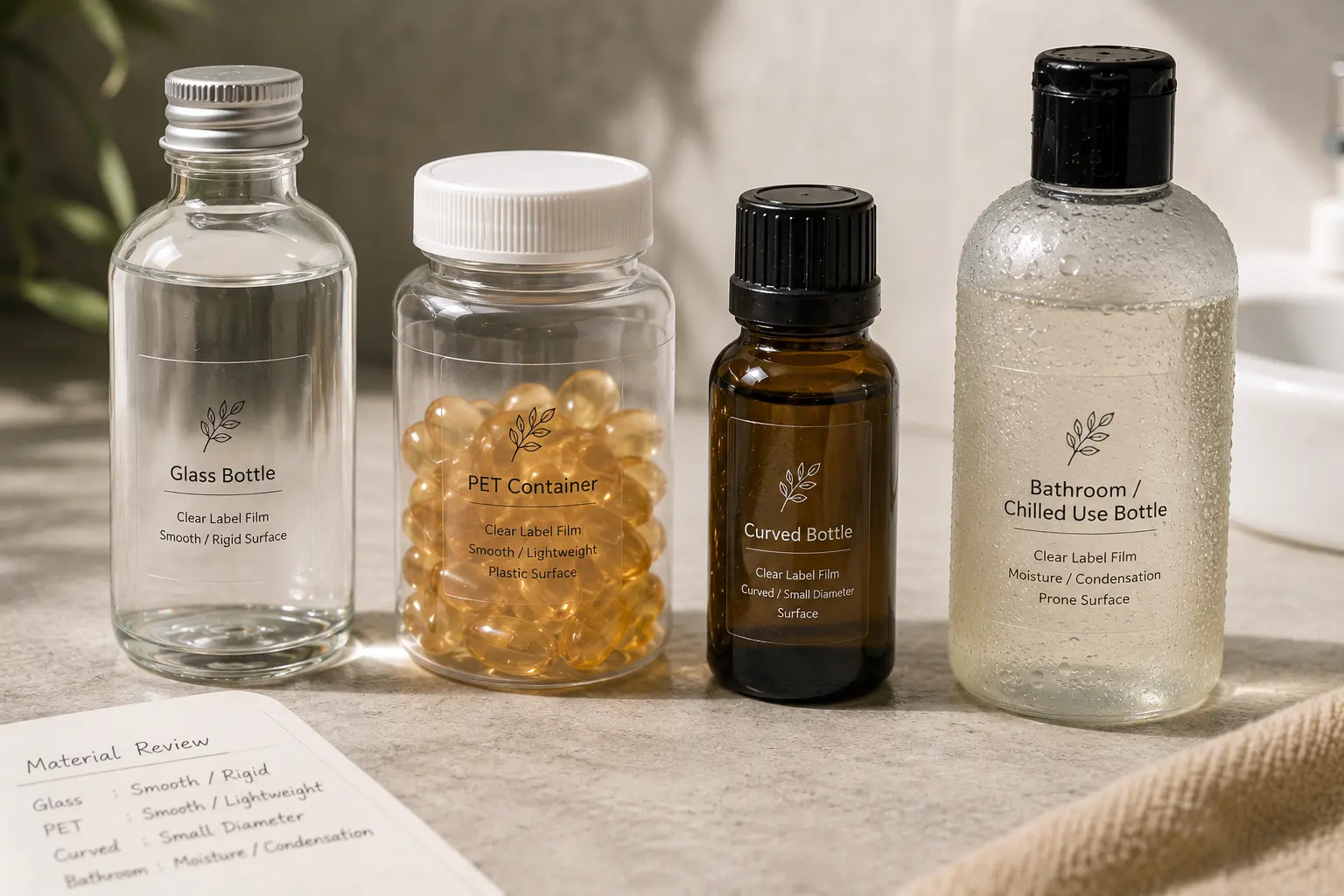
Plastic type and surface treatment can affect adhesion. For PET, PP, PE, or coated plastic, the adhesive direction should be checked before production.
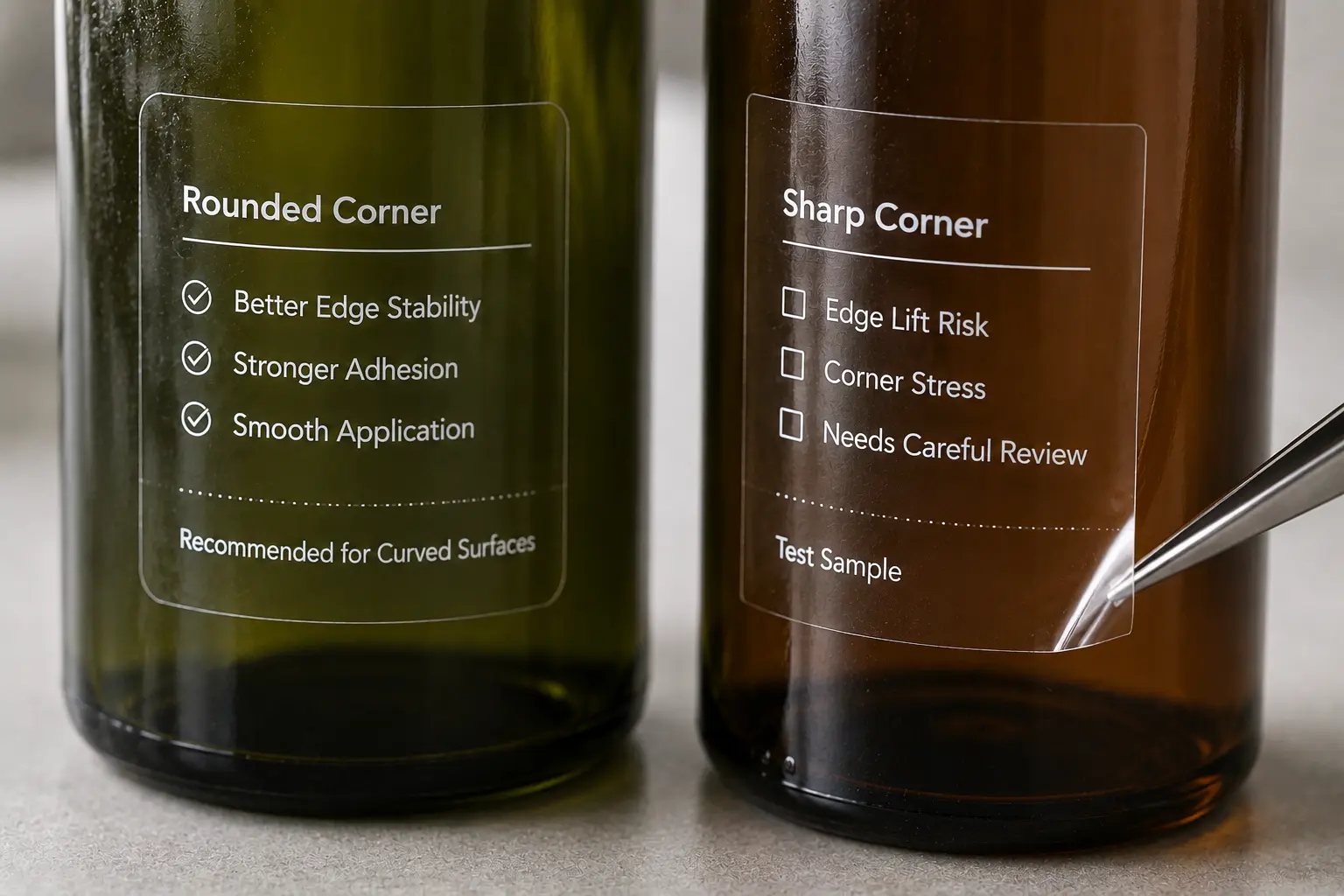
The tighter the curve, the more important label size, corner radius, adhesive choice, and application direction become. Oversized labels can lift at the edges.
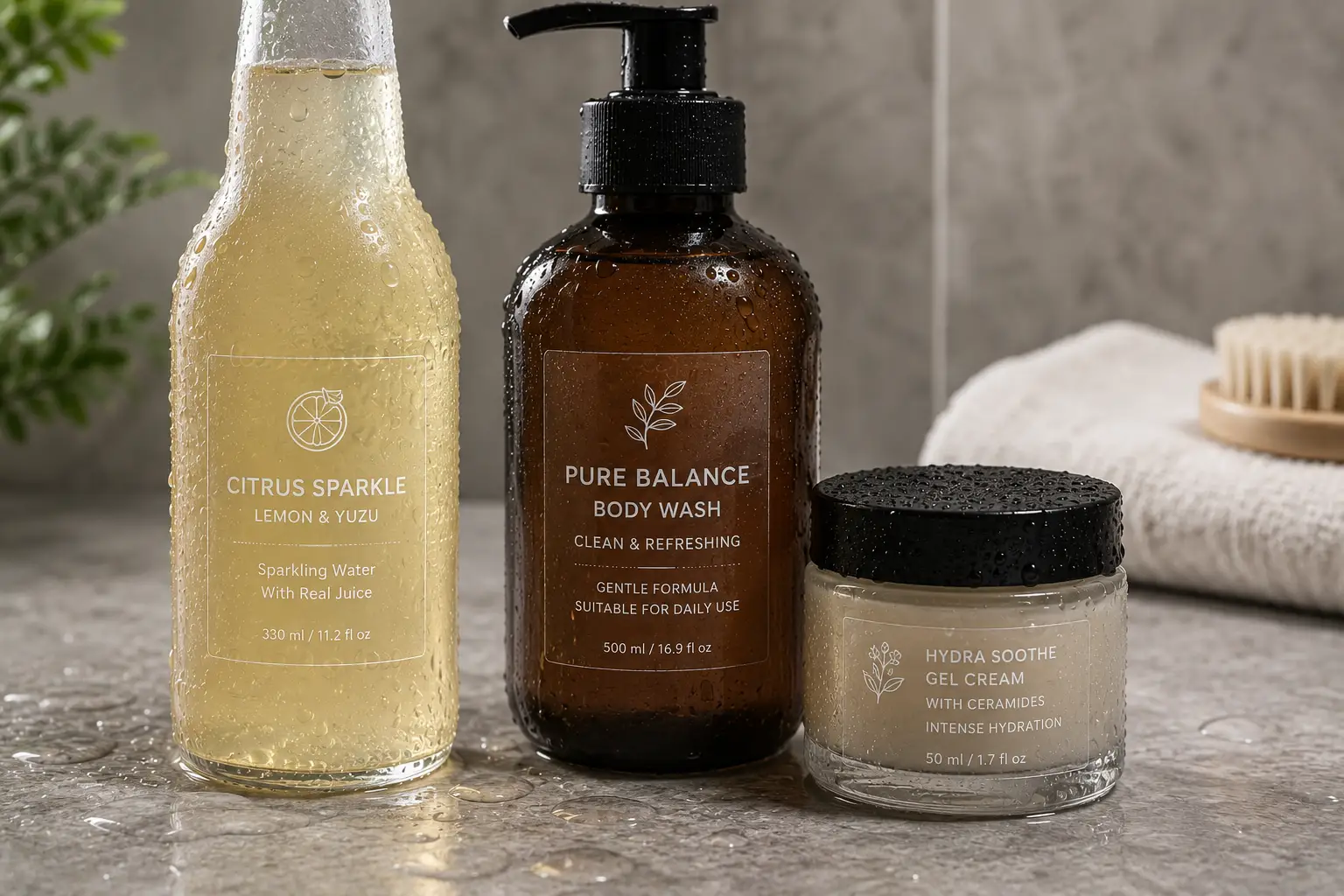
For chilled drinks, bathroom products, or packaging exposed to moisture, material and adhesive should be reviewed as water-resistant or moisture-resistant options.
Clear labels depend heavily on the container behind the label. Request material samples to compare clear film, white ink visibility, print contrast, and the final appearance on bottles, jars, or packaging surfaces.
Samples are matched to your project type and available material references. A sample request does not mean every size, adhesive, print color, shape, or production combination is stocked as a finished sample.
Tell us the clear label type, label size, quantity or roll count, product surface, white ink needs, artwork status, and use environment. We will review the transparent film material, print setup, adhesive, supply format, and production details before quoting.
Clear labels can create a clean no-label look, but the final result depends on material, white ink, artwork color, container surface, moisture exposure, and supply format.
Clear labels are labels printed on transparent film material. They are often used on glass bottles, plastic containers, jars, skincare packaging, food packaging, and premium product labels when the brand wants the container or product color to remain visible.
They are closely related, but the wording depends on use. Clear labels usually refer to product packaging labels supplied on rolls, sheets, or individual pieces. Transparent stickers can also include promotional stickers, kiss-cut stickers, or smaller loose pieces.
Not always. Clear film only can work for dark text, simple marks, or very minimal label designs. White ink is usually reviewed when the design includes pale colors, small text, logos, barcodes, or full-color artwork that must stay readable on a transparent surface.
Yes. Glass bottles and jars are common applications for clear labels because the transparent film can blend into the surface. Bottle curve, label size, moisture exposure, and application method should still be reviewed before production.
Clear labels can be reviewed for water-resistant or moisture-resistant use, but performance depends on the selected material, adhesive, surface, storage conditions, and application method. For chilled drinks, bathroom products, or heavy water exposure, send the use environment before choosing the final label direction.
Yes. Clear labels can be supplied as roll labels, sheet labels, individual stickers, or kiss-cut / die-cut formats. Roll labels are counted by roll, not as one loose sticker. One roll normally contains many labels depending on size, spacing, roll direction, core size, and setup.
Yes. Clear labels can be reviewed in rectangles, circles, ovals, rounded corners, logo shapes, kiss-cut shapes, or custom die-cut shapes. The final recommendation depends on artwork, label size, edge detail, and application surface.
Clear labels use transparent film and are best for a no-label look. White labels use an opaque white base and are better when you need stronger color coverage, consistent artwork appearance, or full label opacity on different packaging backgrounds.
Yes. Clear label material samples can help you review transparent film, white ink visibility, print contrast, and application appearance. Samples are matched to project type and available material references, not every possible size, adhesive, print color, or production combination.
No. You can submit logo files, text, brand colors, rough layouts, reference images, bottle photos, or existing packaging photos for review. ZIVFY can check file direction, white ink needs, size, dieline, readability, and production feasibility before confirming the order.
Send your bottle, jar, container, artwork, and use environment. ZIVFY will review whether clear film, white ink, white labels, metallic PET, or another label material is more suitable.