Visible label film or adhesive edge
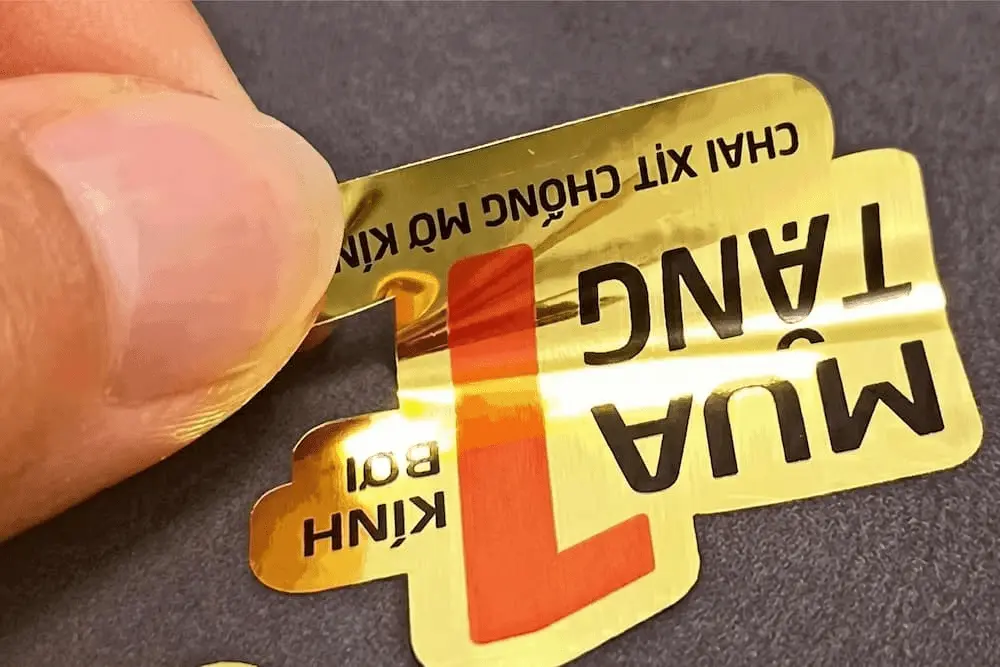
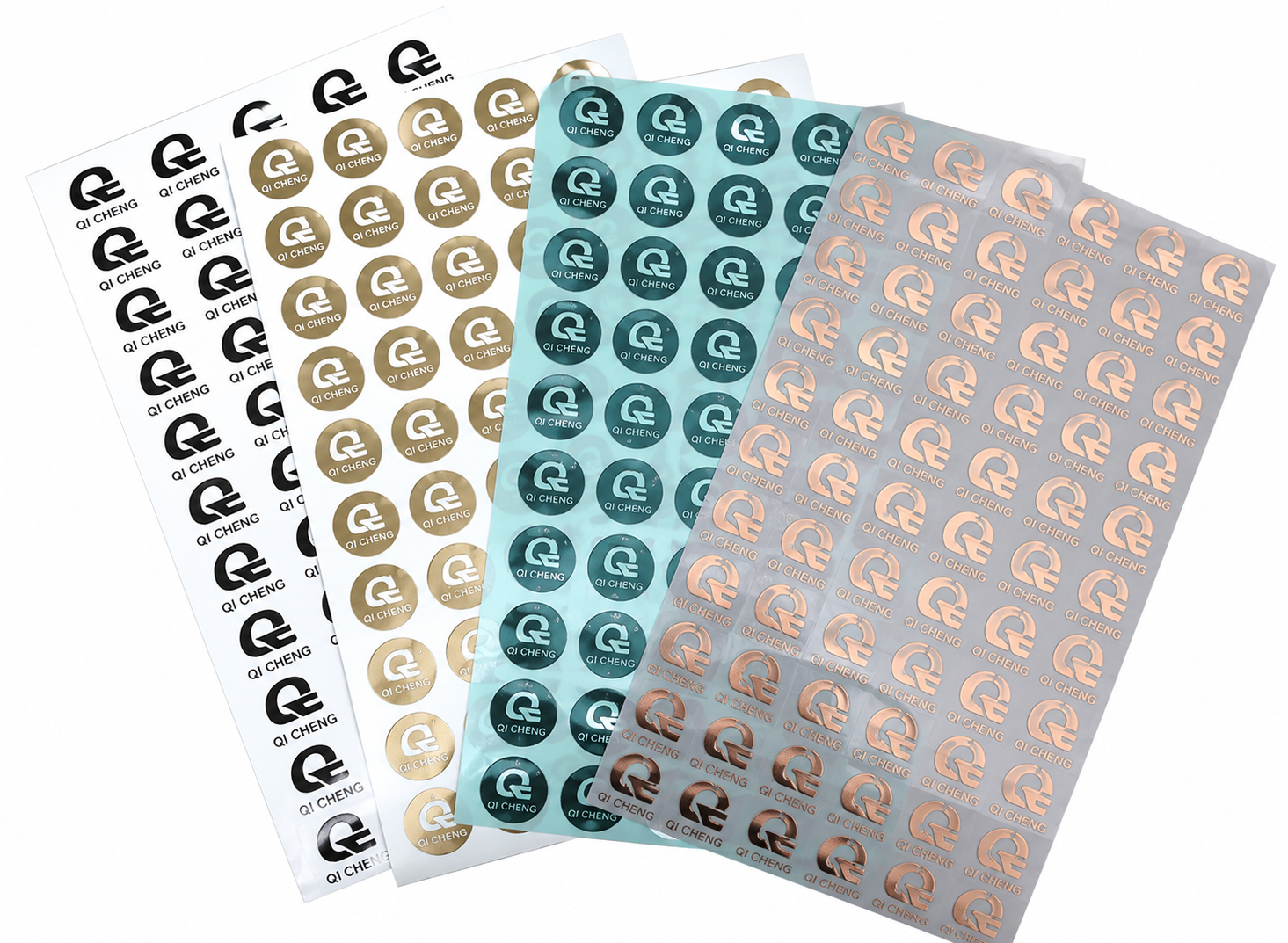
Metallic PET labels and printed adhesive labels are useful when the design needs a full label area. However, the film edge or label boundary can still be visible around the artwork.
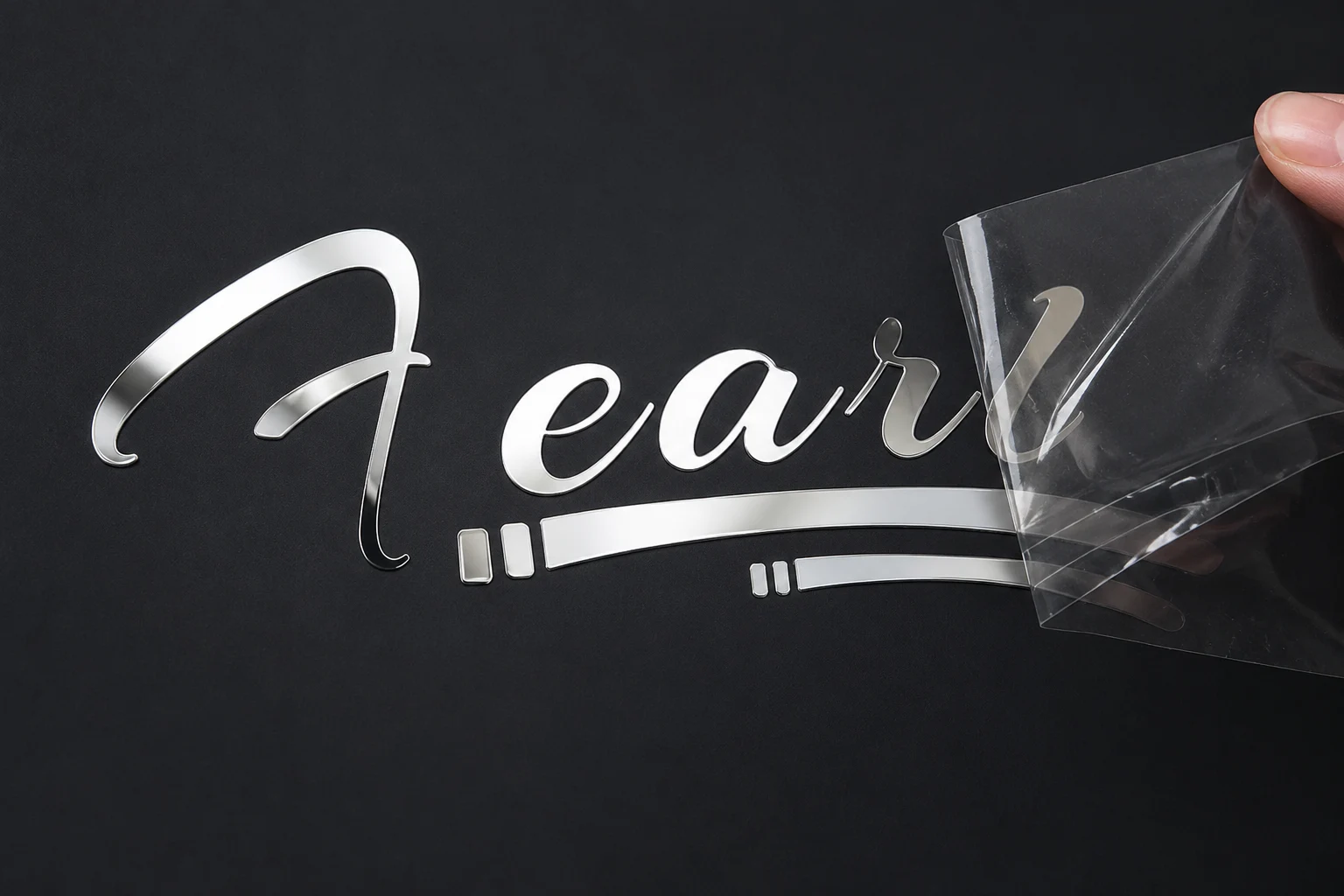
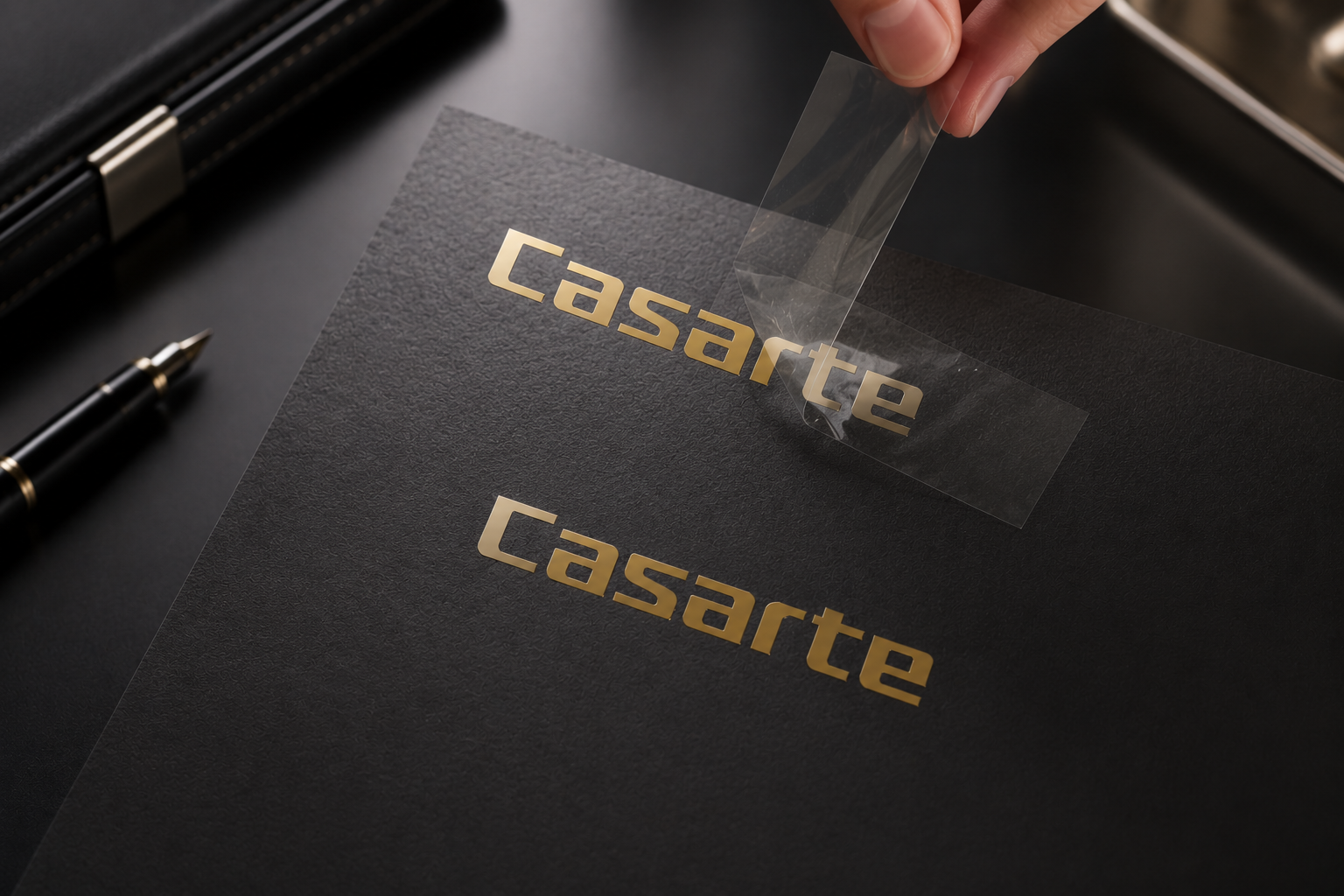
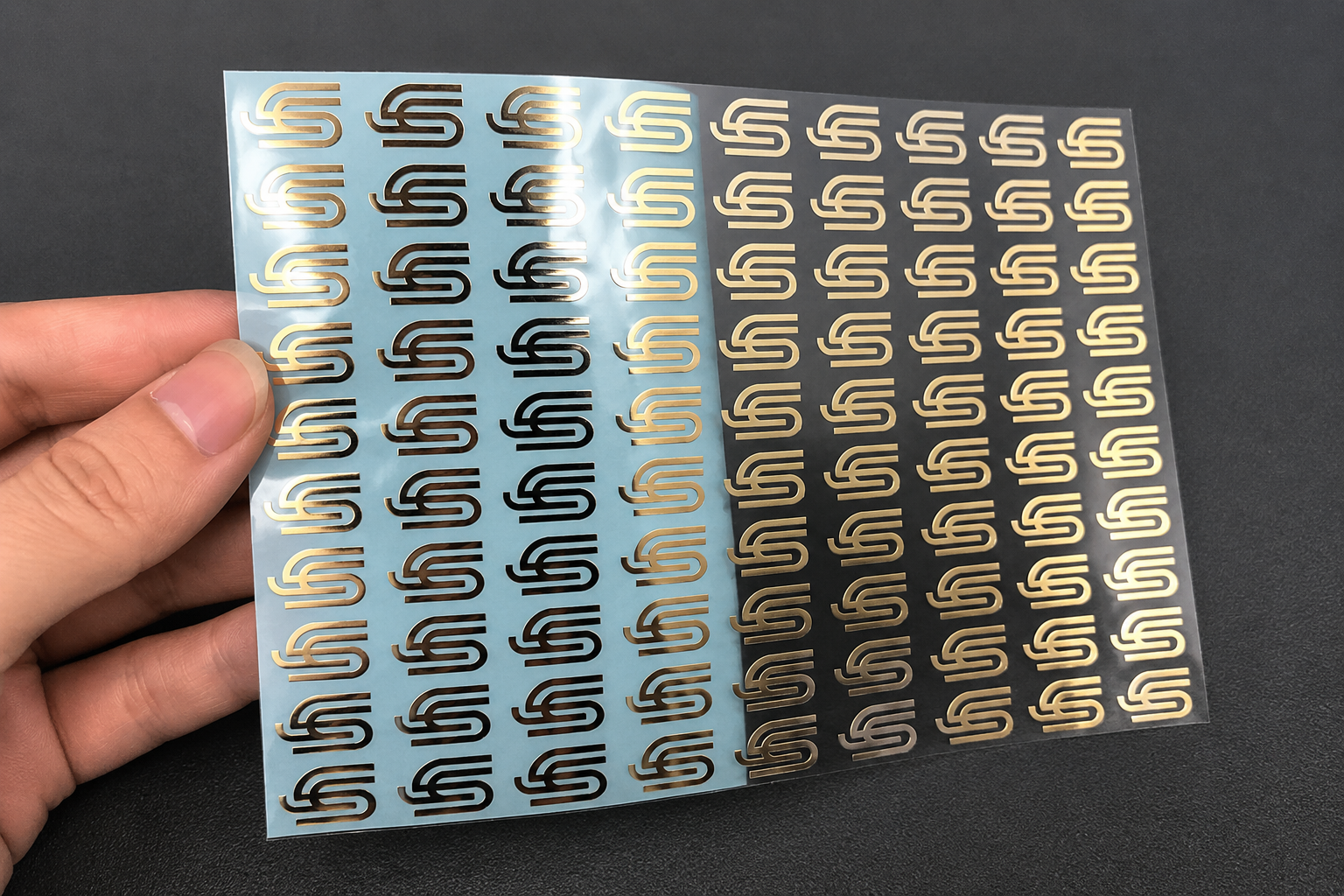
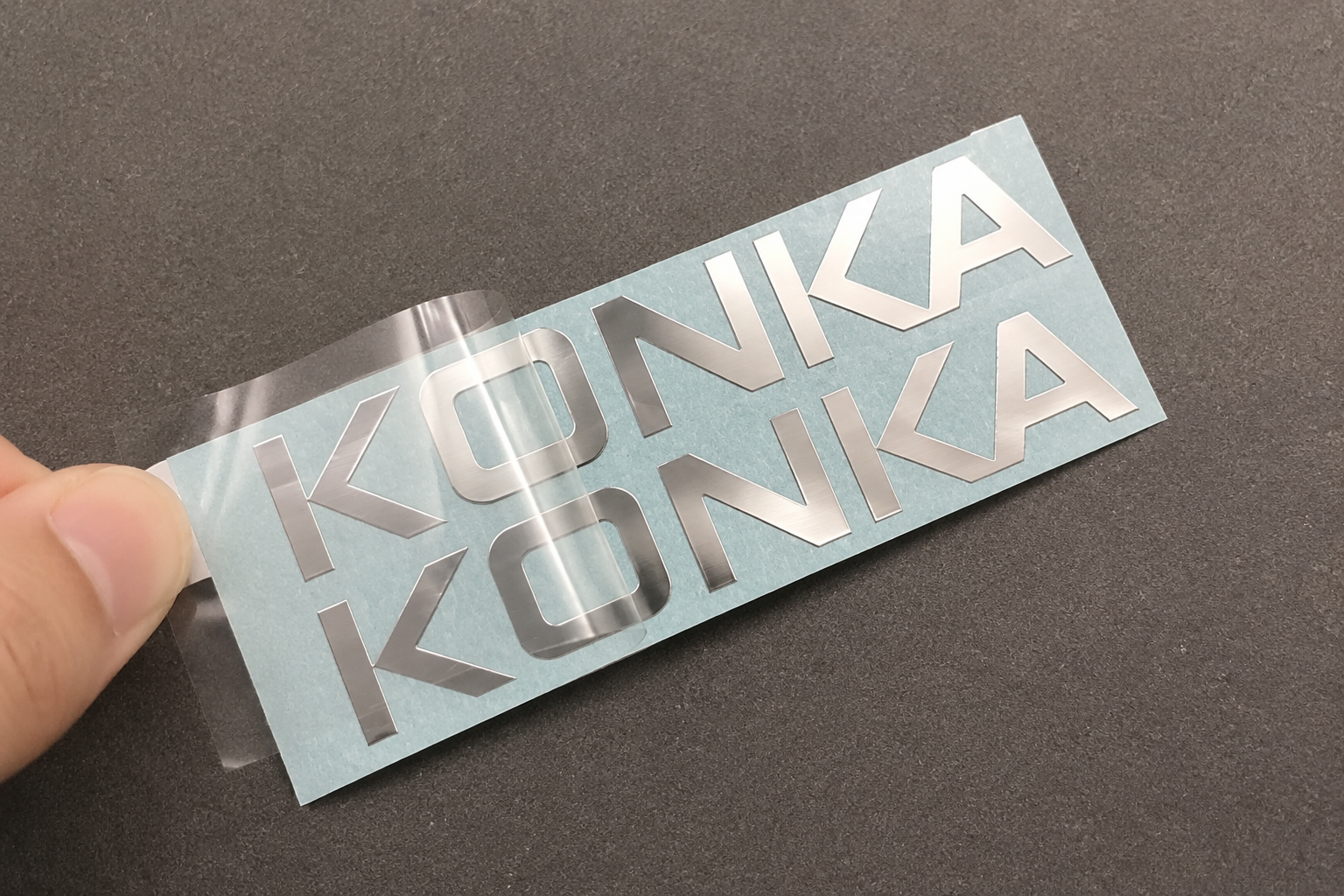
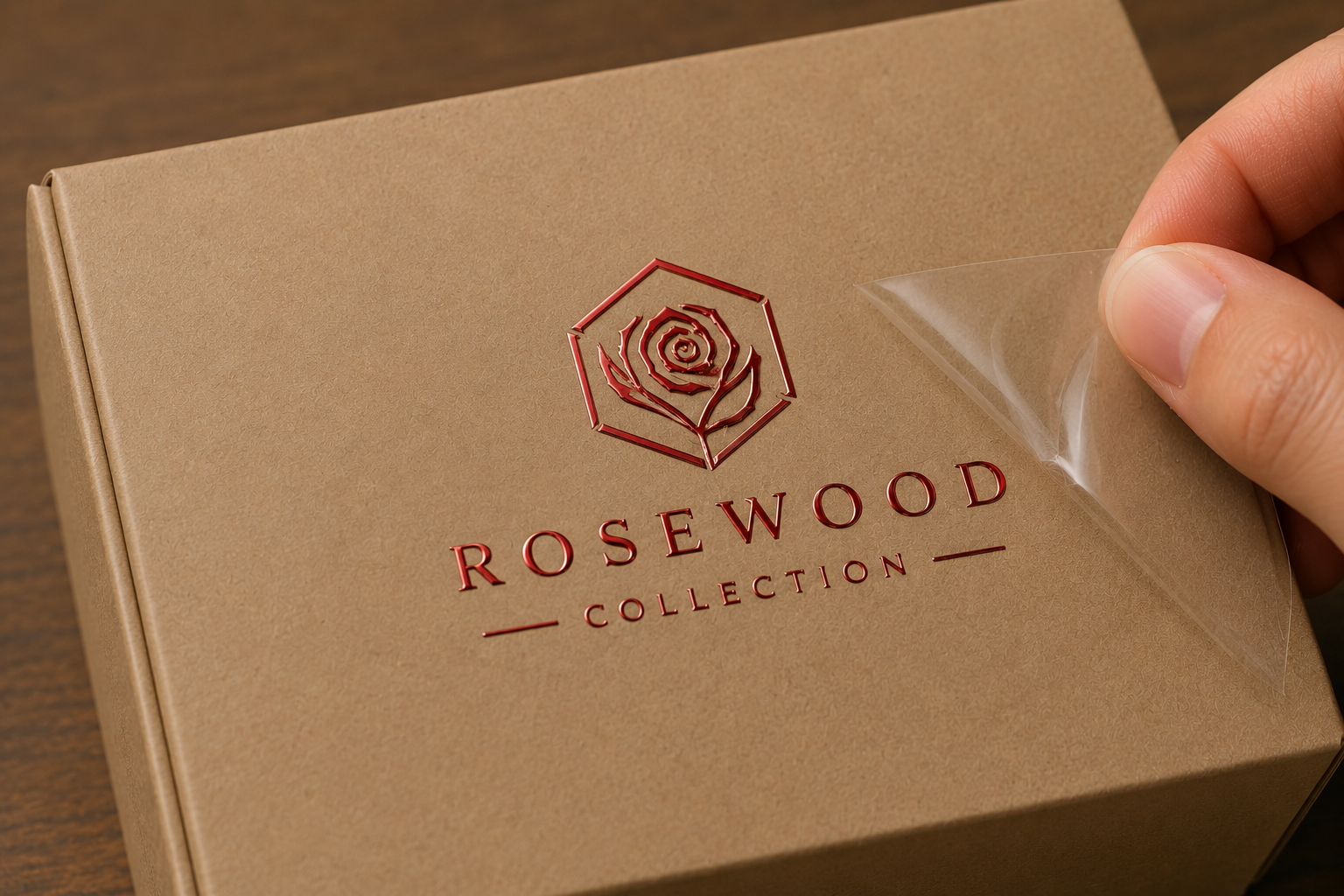
Custom thin metal transfer decals create a real metallic logo effect without a printed sticker background. Each decal is held on a clear carrier film for positioning, then transferred onto the final surface so only a thin metallic logo remains visible.
These are thin metallic transfer decals, not thick metal nameplates or ordinary printed PET stickers. Surface material, logo size, adhesive, carrier film, and application method should be reviewed before production.
Metal transfer decals are thin metallic logo transfers supplied on a clear carrier film. Instead of printing a metallic effect onto a visible sticker background, the metallic logo itself is transferred onto the product, packaging, card, or panel surface.
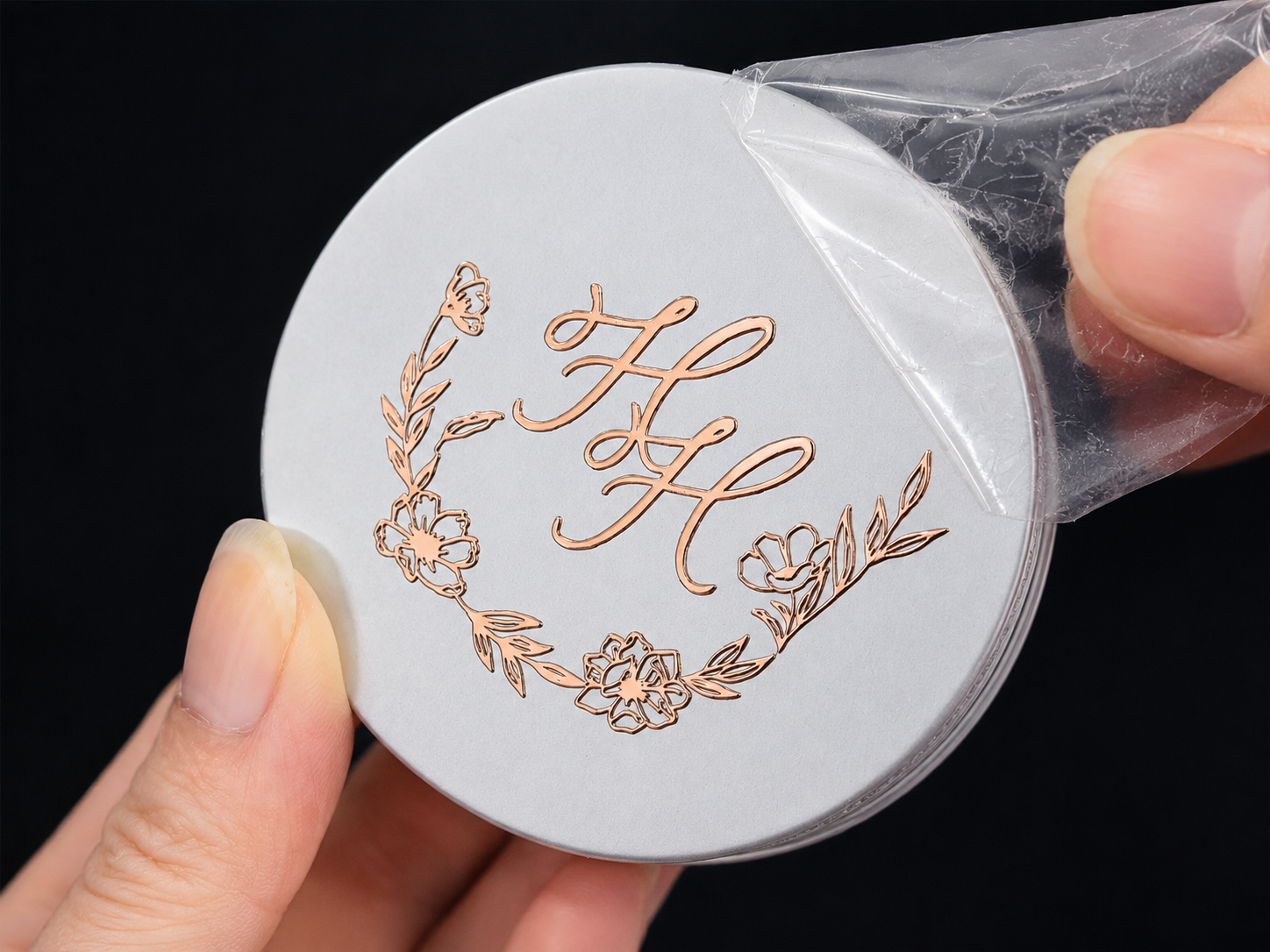
The key difference is the visible edge. A normal metallic adhesive label still has a film or sticker area around the design. A thin metal transfer decal is carried by a clear film during application, then leaves the metallic logo directly on the surface.
Metallic PET labels and printed adhesive labels are useful when the design needs a full label area. However, the film edge or label boundary can still be visible around the artwork.
After transfer, the clear carrier film is removed and only the thin metallic logo remains visible. This creates a cleaner premium branding effect for packaging, cards, bottles, rigid panels, equipment, and product surfaces.
The no-background effect depends on logo design, carrier film, adhesive compatibility, application pressure, and the customer’s final surface. Clean, compatible surfaces give the best result, while curved, soft, flexible, or heavily textured surfaces need careful review.
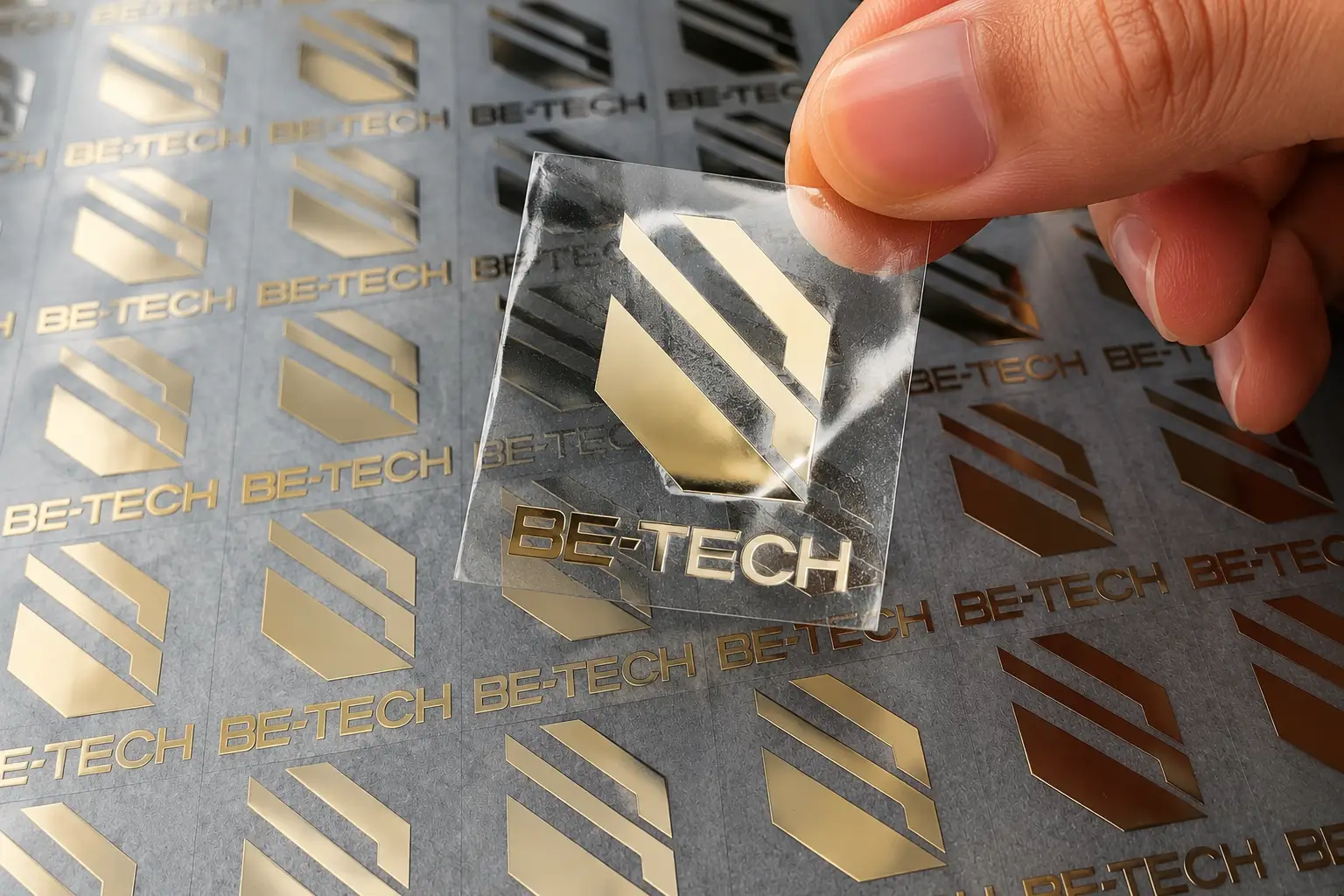
Metal transfer decals are usually arranged on a clear carrier sheet or full transfer sheet rather than supplied as loose pieces. This format keeps thin metallic logos protected, organized, and easier to ship, store, separate, and apply in batches.
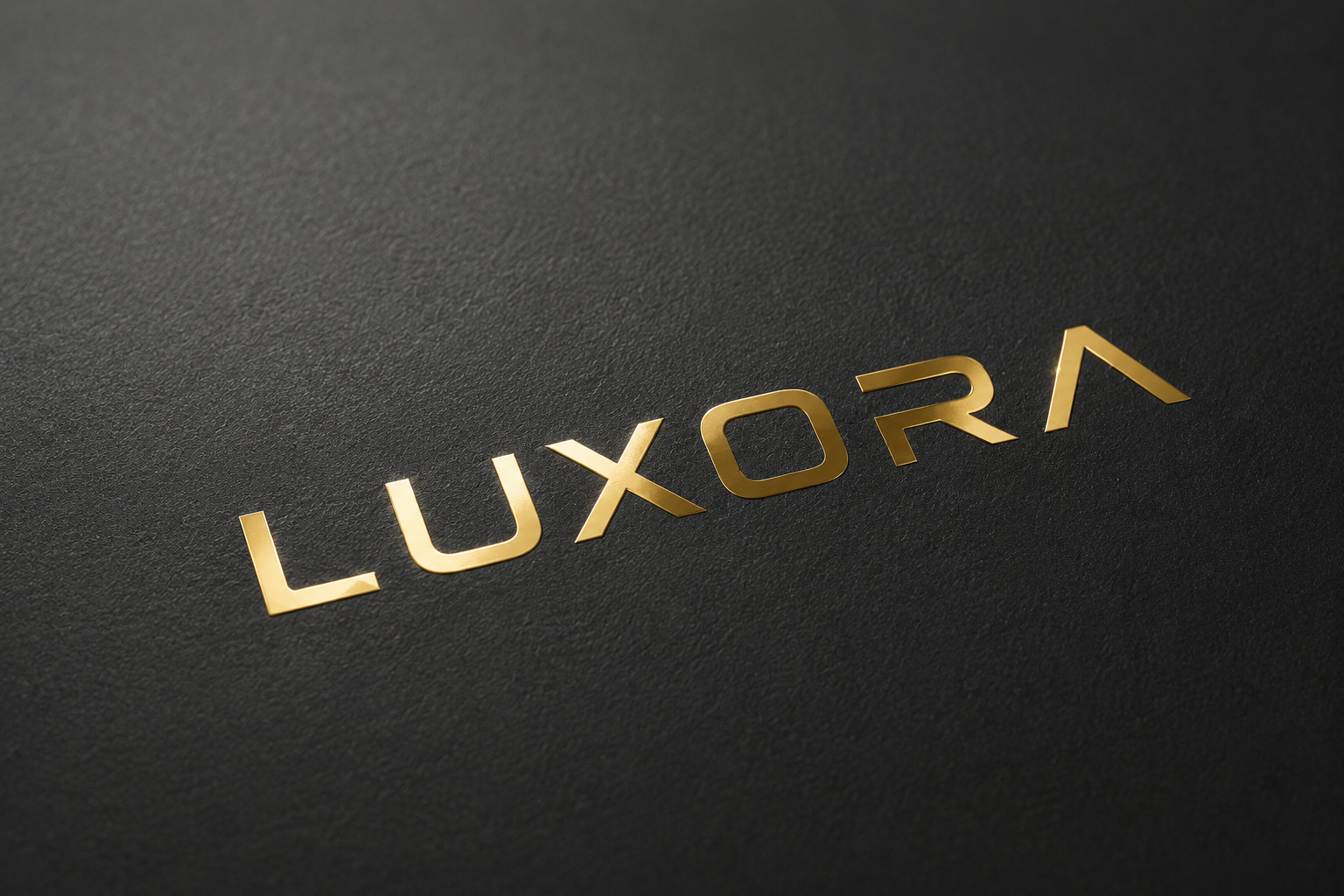
Metal transfer decals can be produced in multiple metallic colors and surface effects. These options should be reviewed as real metallic finishes, not ordinary printed ink colors, because reflection, coating, and surface contrast affect the final look.
Thin metal transfer decals need compatible surfaces and controlled application. Adhesive choice, carrier film handling, logo detail, surface texture, cleaning, pressure, and application method should be reviewed before production.
For smooth, clean, rigid surfaces, a standard adhesive structure can usually be reviewed first. The final result still depends on actual surface coating, pressure, and curing conditions.
For lightly textured, coated, or metal surfaces, a stronger adhesive direction may need to be reviewed. Open areas, hollow logo details, and fine strokes can increase glue overflow or edge-lift risk.
Metal transfer decals use a clear carrier film to place the thin metallic logo onto the product or packaging surface. Carrier film choice can affect positioning, peeling feel, residue risk, surface damage risk, and final application cleanliness.
Standard carrier film can be used for many durable hard surfaces, but it may be more difficult to peel on some smooth PVC, acrylic, coated surfaces, or delicate paper packaging.
A cleaner-release carrier film can be reviewed for luxury boxes, paper packaging, acrylic, PVC, glass, and smooth product surfaces to reduce residue, tearing, coating lift, or difficult peeling risk.
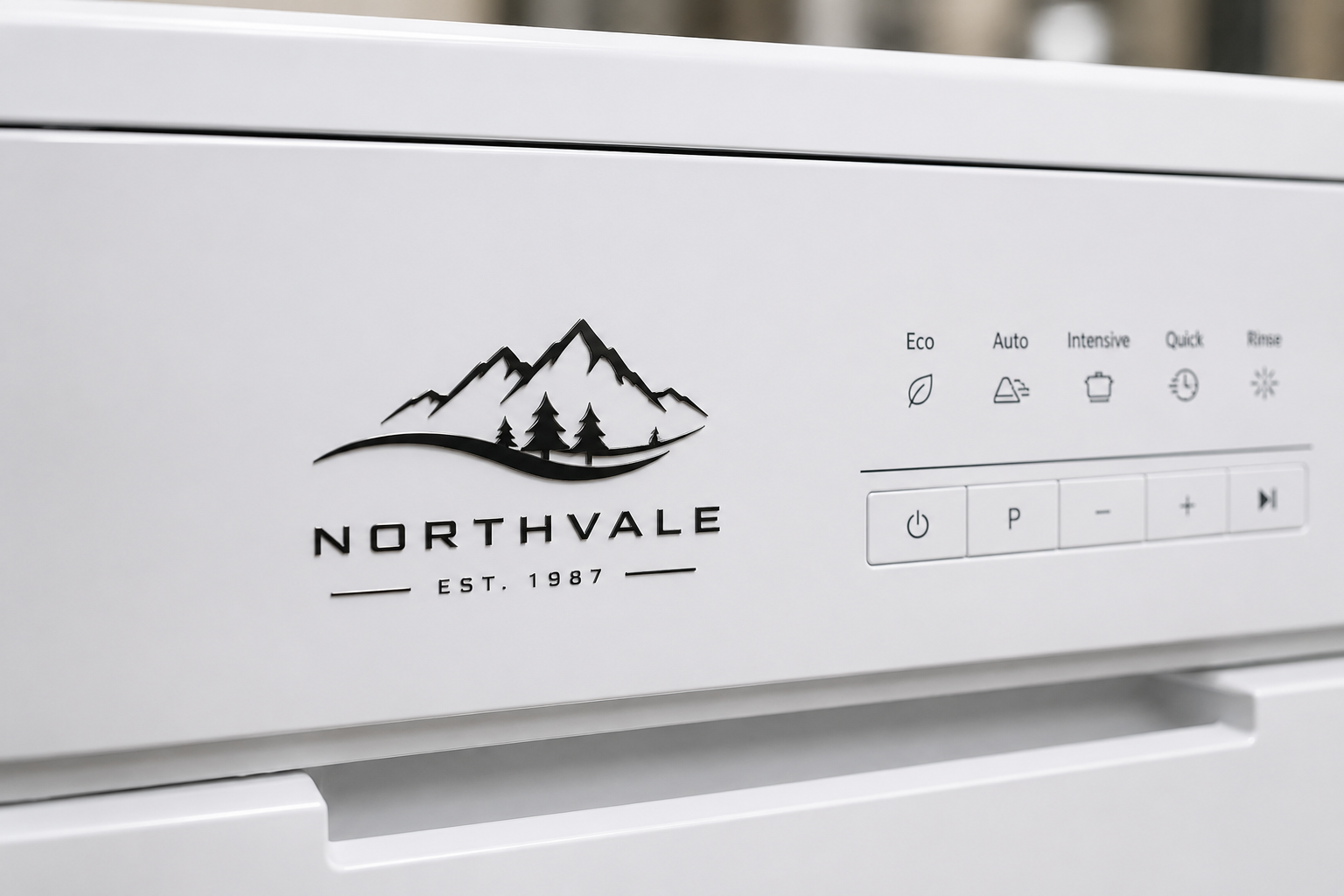
Thin metal transfer decals are best used as surface-mounted metallic logo marks on packaging, cards, bottles, devices, equipment panels, and rigid products where a no-background metal logo effect is more suitable than a printed label.
For flat device housings, control panels, electronics shells, and clean rigid product surfaces.
For paper boxes, coated packaging, gift boxes, and branded presentation packaging after surface review.
For cosmetic packaging, specialty containers, caps, compact boxes, and selected flat packaging areas.
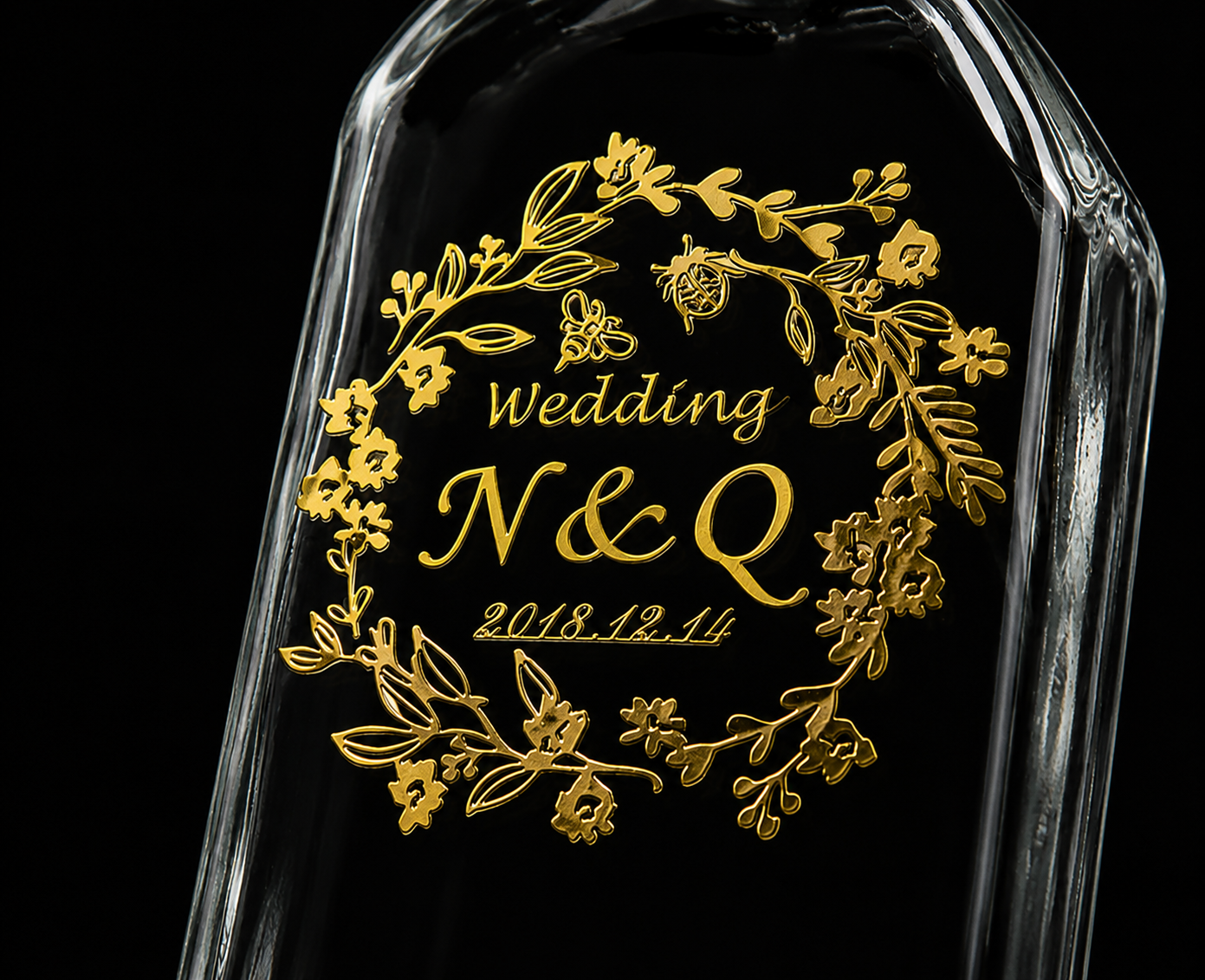
For glass bottles and rigid containers when the application area, curve, and coating are reviewed first.
For selected ceramic, plastic, coated, or rigid product items that need a premium metallic brand mark.
For machinery panels, tool cases, industrial products, and hard equipment surfaces after adhesion testing.
Thin metal transfer decals are surface-mounted metallic logo pieces. The best results usually come from clean, compatible, smooth, and stable surfaces. Surface testing is recommended when texture, coating, paint, curvature, glass coating, or packaging finish may affect adhesion or transfer.
Metal transfer decals depend on logo detail, metal color, adhesive, carrier film, and product surface. Sample references and surface review help confirm whether the selected thin metallic logo direction is suitable before bulk production.
Sample availability depends on existing finish references and project requirements. Not every size, color, adhesive, artwork structure, carrier film, or surface condition is stocked as a ready-made sample.
Share your logo size, surface, color target, adhesive requirement, transfer film preference, and artwork files. We will review whether your 3D metal logo sticker is suitable for production and application.
These answers help clarify the difference between electroformed nickel stickers, ordinary metallic labels, foil stickers, roll labels, and metal nameplates.
Electroformed nickel stickers are thin raised metal logo stickers made with a nickel-based electroformed structure, plating, and color layers. They are used to create a premium 3D metal logo effect on product surfaces.
No. Metallic PET labels are film labels with metallic appearance or metallic surface effects. Electroformed nickel stickers are formed metal logo pieces, so the finished look is closer to a separate raised metal logo.
After application, only the metal logo should remain visible. There is no ordinary printed sticker border around the artwork, which is the main reason customers choose this product for premium branding.
No. Electroformed nickel stickers are not normal roll labels. They are usually arranged on full master sheets for production and transfer. Standard nickel sticker master sheet size is approximately 200 × 295 mm.
Default supply is usually based on master sheet handling. If you need separate pieces, special packing, or single-unit handling, this should be reviewed before quotation because it affects labor, layout, and packing method.
Common options include bright gold, bright silver, black, red, blue, green, rose gold, and custom color review. Except for bright silver, plated or color-coated finishes may have slight batch variation.
Flat, clean, smooth, rigid surfaces are preferred. Examples include selected electronics shells, appliances, rigid packaging, acrylic, glass, equipment panels, and hard product surfaces after adhesive and transfer film review.
Strong curved, spherical, soft, flexible, or fabric surfaces are not recommended by default because the metal sticker is relatively hard. Slight curves may be reviewed case by case, but testing is recommended before production.
3M-7533 is usually reviewed for regular flat, smooth, rigid surfaces, with an adhesive thickness around 10–20 microns. 3M-467 is thicker, around 50 microns, and may be reviewed for sheet metal or lightly textured surfaces, but open or hollow artwork areas may have glue overflow risk.
Clean transfer film can be reviewed for paper boxes, acrylic, PVC, coated packaging, and smooth luxury product surfaces to reduce residue, tearing, or difficult peeling risk. It is not a universal guarantee, so surface testing is still recommended.
Vector artwork is preferred. AI, CDR, PDF, EPS, or SVG files are best for production review. JPG or PNG files can be used as references, but low-resolution images are usually not enough for accurate metal logo production.
Single isolated blocks or strokes smaller than approximately 4 × 4 mm may need metal bridge lines to prevent missing parts, shifting, weak attachment, or application issues. Very thin long lines and sharp points should also be reviewed.
Send your logo file, target size, surface photos, color preference, and quantity. We will review whether electroformed nickel stickers are the right fit.