
Specialty & Metallic Ink Guide
Learn how white ink, fluorescent ink, and metallic ink work on premium custom business cards. Specialty inks are printed ink effects, not foil stamping and not 3D metallic embellishment. They are useful when your design needs fine detail, controlled color, or high-contrast print on dark or specialty paper.
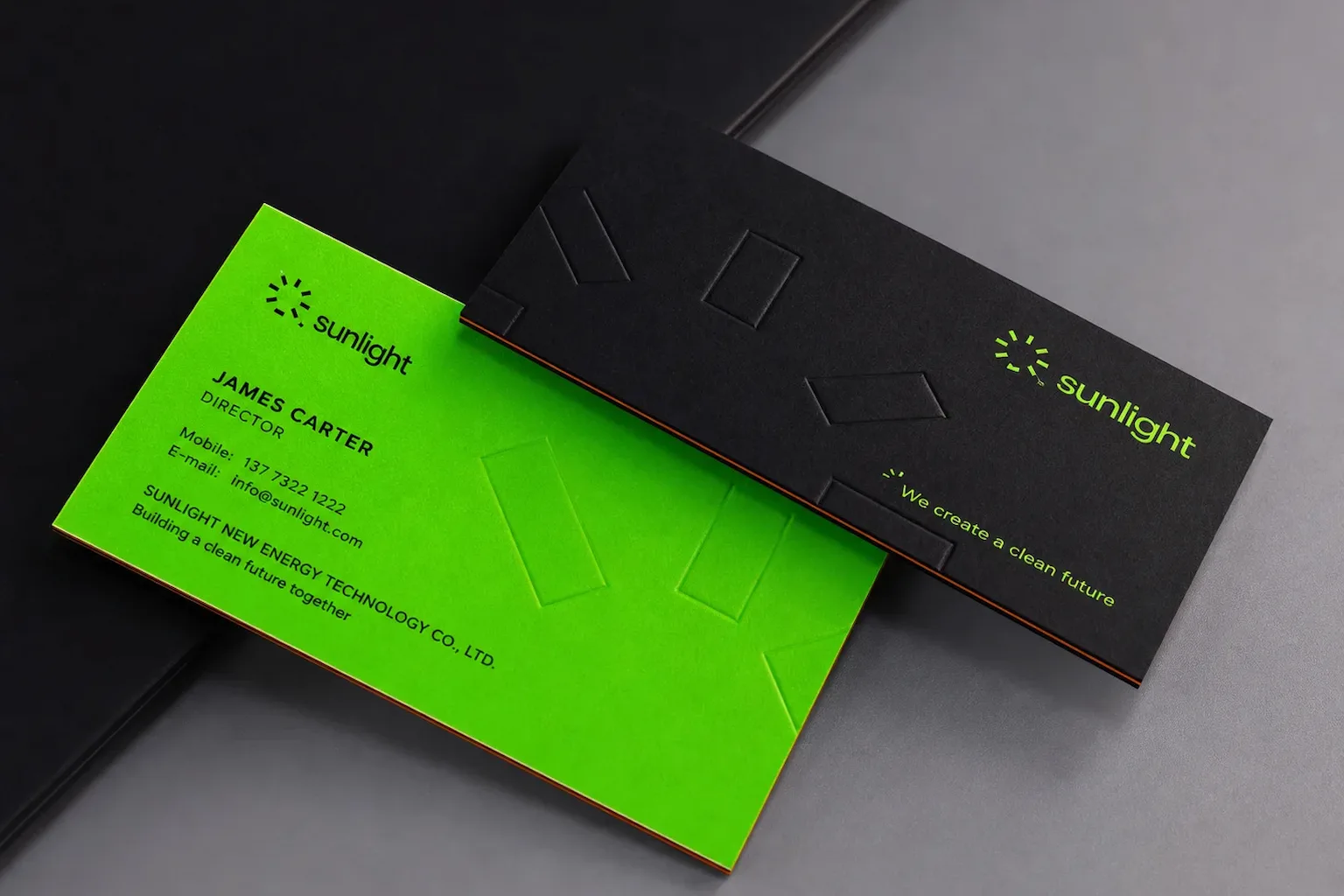
Specialty inks can create bold color, high contrast, and fine printed details while keeping the result flatter and more precise than foil or 3D metal transfer.
Specialty ink is printed color with a specific material effect.
Specialty inks are used when standard printing is not enough. White ink creates opacity on dark stocks, fluorescent inks create high-energy color, and metallic inks create satin metallic luster using suspended metallic pigments.
Opaque print on dark cards
White ink is essential for black stock, deep colored paper, transparent materials, and designs that need crisp light print on a dark surface.
High-energy accent color
Fluorescent red and green inks create a strong modern look for creative agencies, gaming brands, streetwear, events, and bold identity systems.
Satin metallic printed effect
Silver, red gold, and cyan gold metallic inks create a printed metal-like finish. They are more subtle than foil, but better for fine lines and smaller details.
Specialty ink color directions
Use these swatches as a practical reference for the main specialty ink options. Final color and reflectivity still depend on paper color, surface texture, ink coverage, lighting, and whether the ink is printed on white-based stock, black stock, pearlescent stock, or flood printed surface.
Specialty and metallic ink examples
These examples show how different inks behave on black stocks, white-based stocks, pearlescent stocks, and flood printed surfaces.

Neon Green Ink
High-contrast fluorescent ink on matte black stock for bold modern branding.
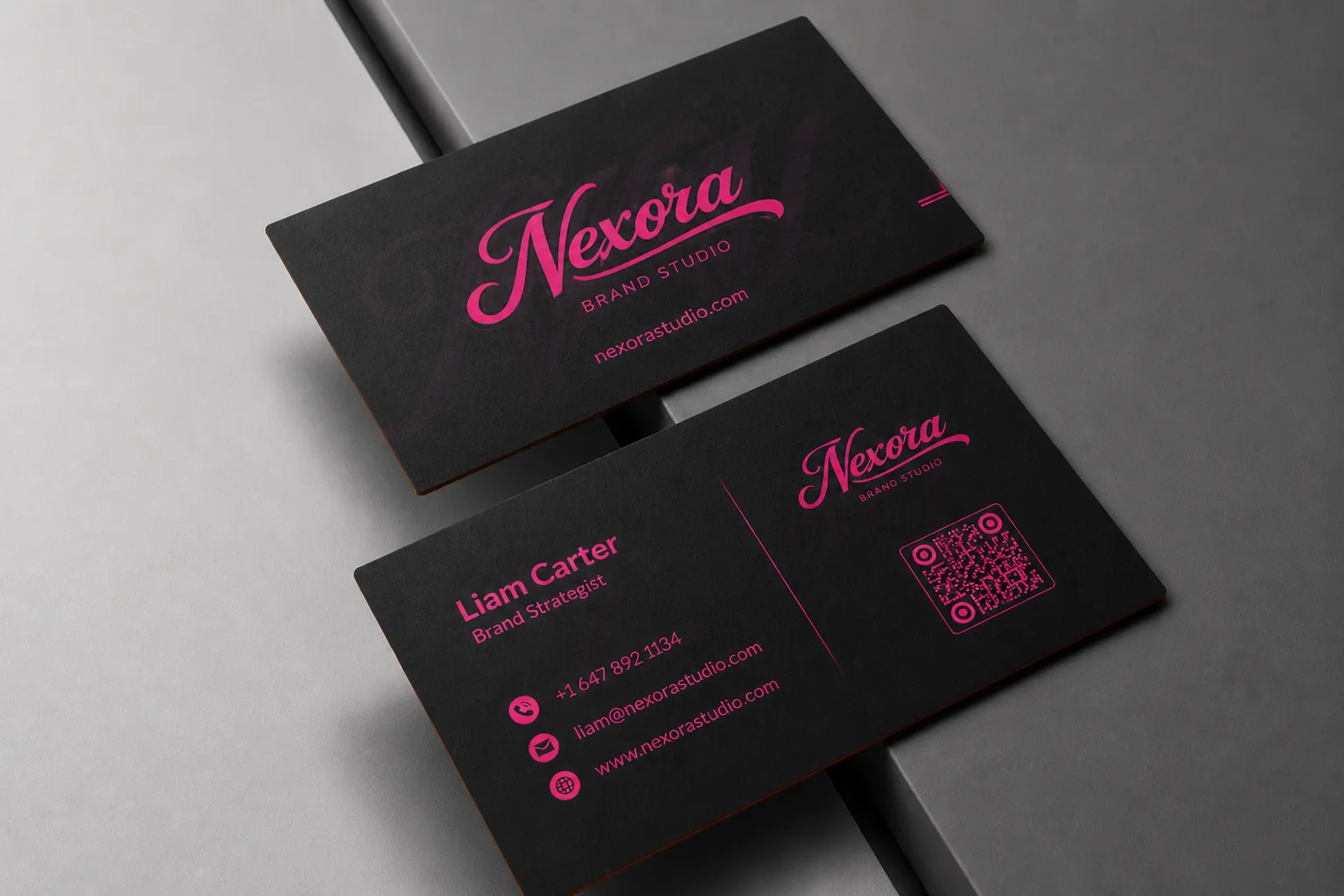
Neon Red Ink
Fluorescent red creates an aggressive and energetic visual direction.
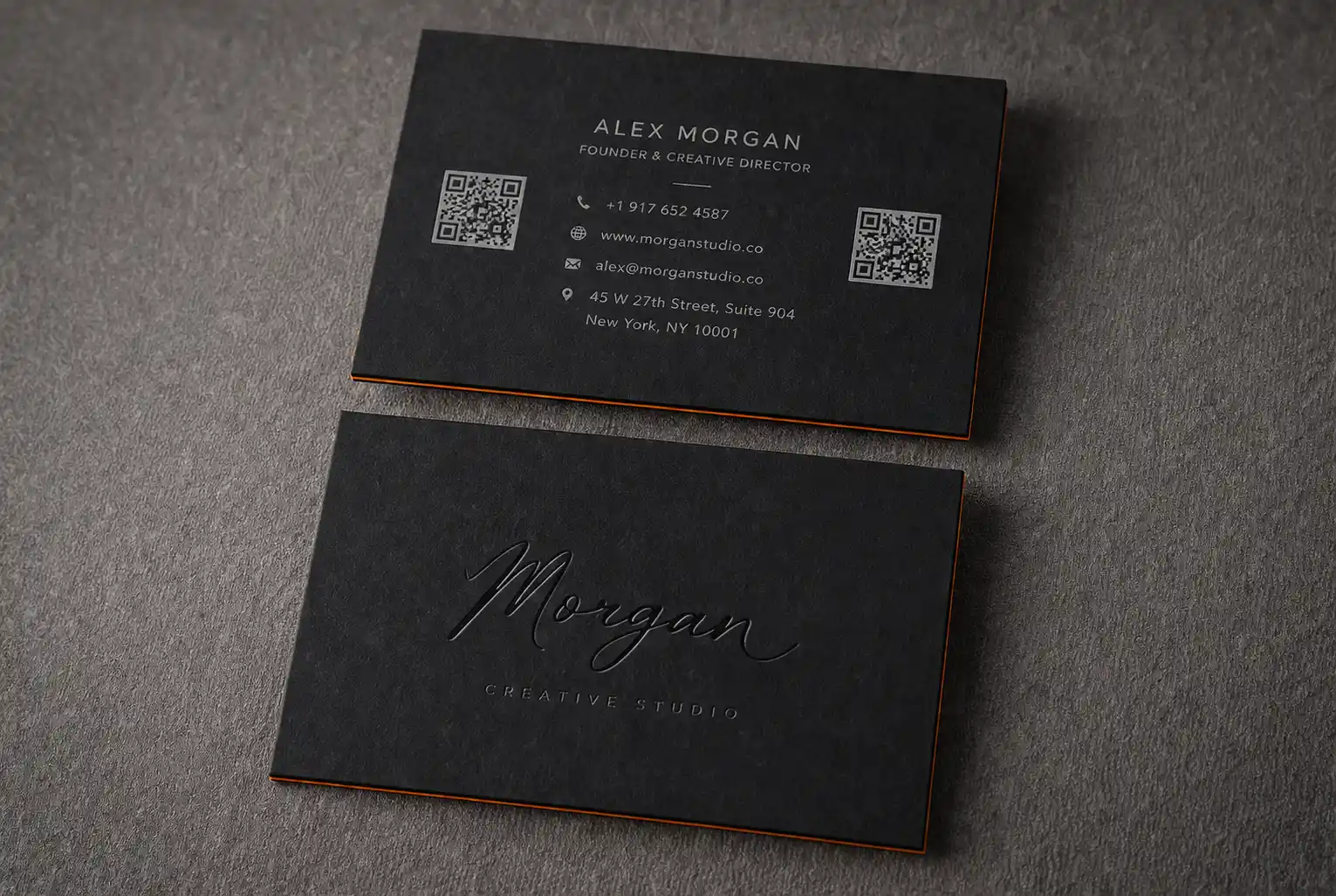
White Ink
Opaque white ink keeps small text and QR details readable on dark card stock.

Red Gold Metallic Ink
Warm metallic ink on white-based cotton stock with deep debossing.
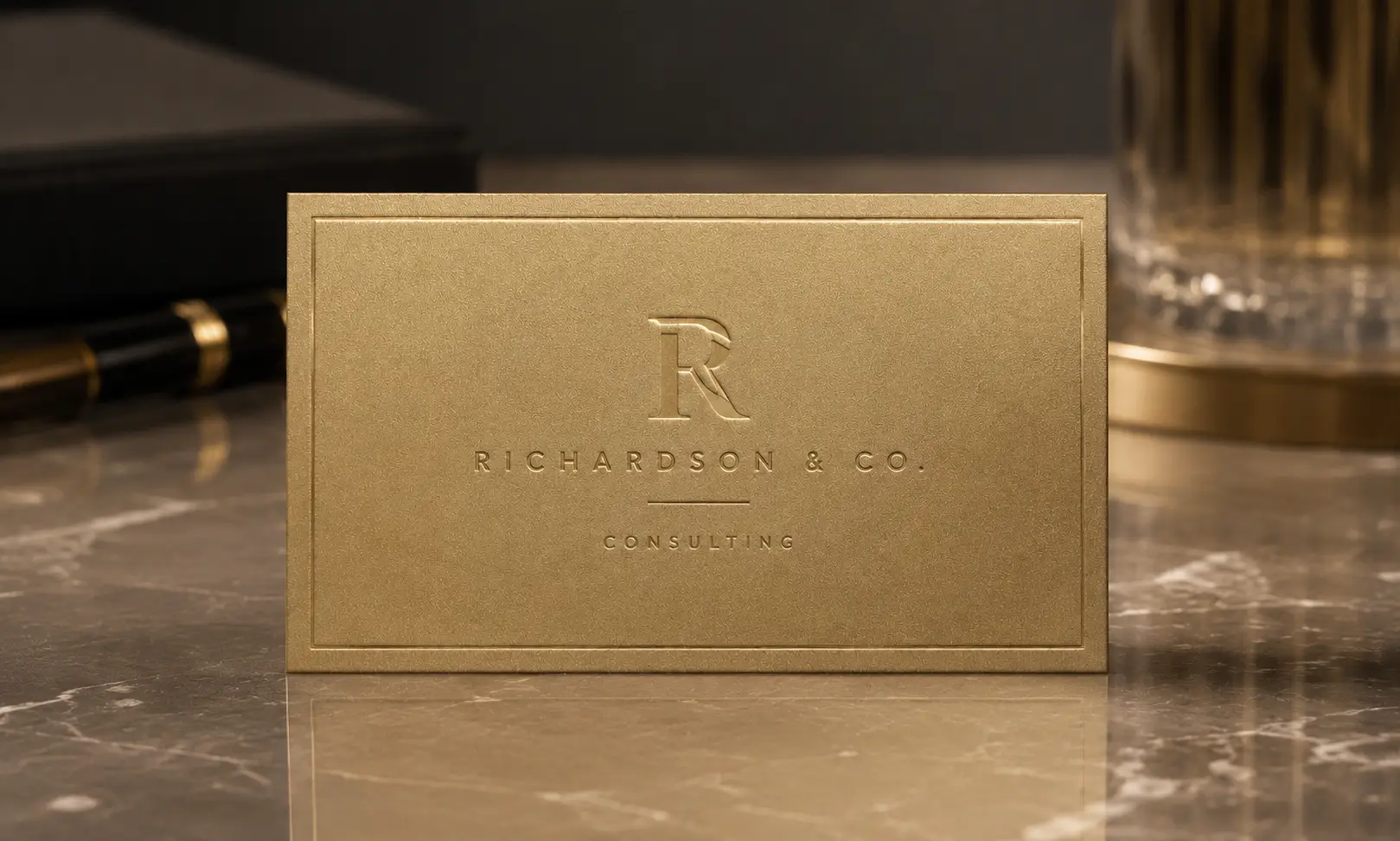
Cyan Gold Metallic Ink
Metallic ink can create a refined satin effect on pearlescent or flood printed surfaces.

Silver Metallic Ink
Silver metallic ink creates a soft industrial luster rather than a mirror-like foil reflection.
Specialty ink, metallic ink, and foil stamping are not the same.
These effects are often confused. The key difference is that specialty and metallic inks are printed, while foil stamping transfers a metallic film to the card surface.
| Feature | Specialty / Metallic Ink | Foil Stamping / 3D Metal |
|---|---|---|
| Production method | Printed ink applied to the card surface, including white, fluorescent, and metallic pigment inks. | Foil uses metallic film transfer. 3D metallic embellishment uses a thin raised metal-like piece or transfer. |
| Surface feel | Mostly flat printed effect, suitable for fine details and small typography. | More physical surface presence, stronger reflection, and more premium tactile contrast. |
| Reflection | Metallic ink gives satin luster, not mirror-like foil reflection. | Foil and 3D metallic effects give stronger metallic reflection. |
| Best detail level | Fine lines, small text, intricate graphics, QR support, and detailed print areas. | Larger logos, bold marks, premium accents, crests, and display details. |
| When to choose | Choose ink when precision and printed detail matter more than mirror reflection. | Choose foil or 3D metal when shine, raised impact, and strong luxury effect matter more. |
Choose specialty ink by contrast, paper color, and artwork detail.
Ink performance depends heavily on paper color and paper absorbency. For maximum metallic brilliance, white-based stocks usually produce cleaner results than dark or heavily colored papers.
Better for specialty ink
Choose specialty ink when the design needs high contrast, sharp detail, or a specific printed color effect.
Use caution
Colored or dark base papers can change how metallic and fluorescent inks appear.
File setup for specialty and metallic ink
Specialty ink areas should be supplied as clear vector artwork or separate layers so the production team can identify which areas require white ink, fluorescent ink, or metallic ink.
Mark ink areas clearly
Name the layer clearly, such as White Ink, Neon Green Ink, Red Gold Metallic Ink, Cyan Gold Metallic Ink, or Silver Metallic Ink.
Suitable for precision detail
Metallic ink is useful for delicate lines and small typography. Use 0.25pt as a practical minimum reference for fine printed details.
Send target color direction
Provide Pantone-style references, brand color values, or physical samples when color accuracy is important.
Combine specialty ink with the right card base.
Specialty and metallic inks work well with black cards, thick cards, flood print, debossing, and soft-touch surfaces when the design is planned as a complete system.
Common questions about specialty and metallic ink
Is metallic ink the same as foil stamping?
When should I use white ink?
Can metallic ink be used for fine lines and small text?
Will metallic ink look as shiny as foil?
Can fluorescent ink be used on black cards?
What file setup is needed?
Need help choosing white ink, fluorescent ink, or metallic ink?
Send your artwork, paper direction, quantity, target ink colors, and any finishing requirements. We can review whether specialty ink, foil stamping, or 3D metallic embellishment is more suitable before quoting.