
Good eco-friendly business cards start with a clear paper requirement. Recycled stock, an FSC paper option and a colored uncoated sheet may all suit an environmental brief, but they do not make the same claim. The best choice is the one that fits the brief and still keeps the logo, small type and QR code easy to use.
The decision usually comes down to the paper claim and the way the artwork behaves on that stock. Finish and sample review follow from those two points. ZIVFY’s custom eco-friendly paper business cards page shows the available commercial direction; this guide explains how to narrow it before requesting a quote.
FSC paper and recycled paper answer different briefs
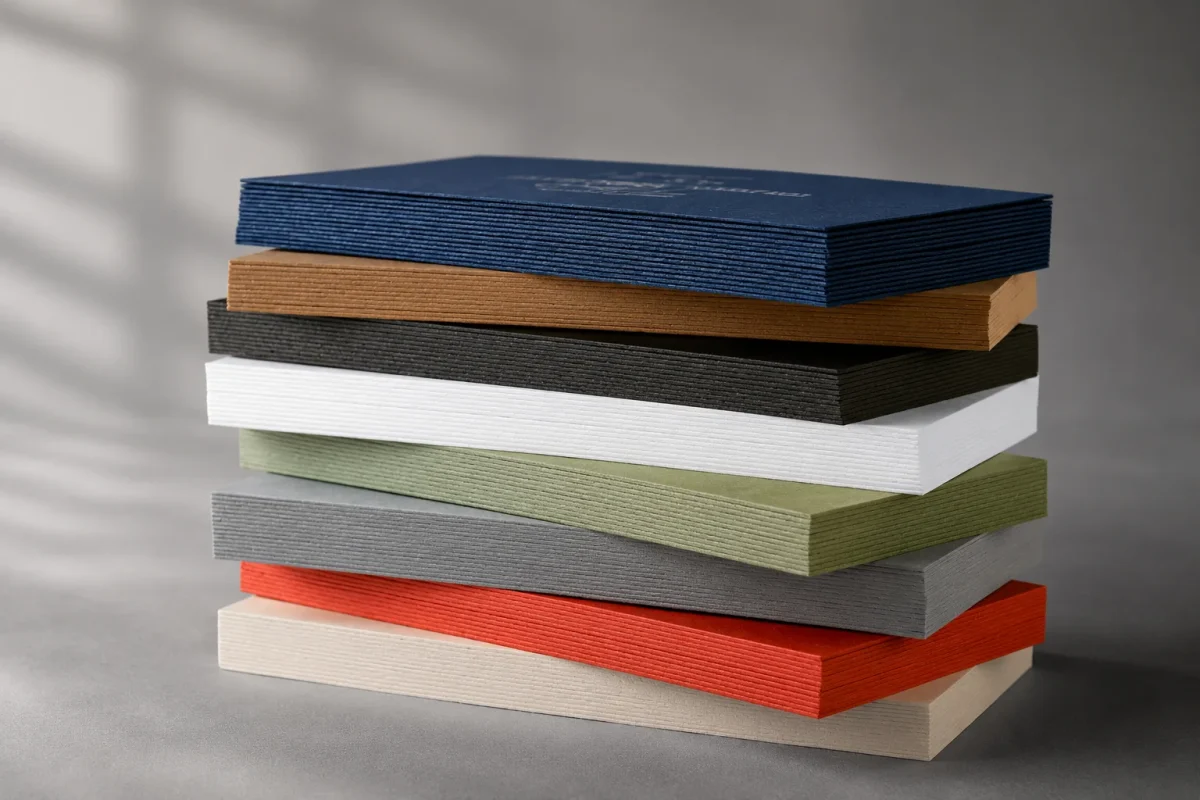
FSC and recycled content describe different things. FSC certification concerns responsible forest management and chain of custody. Recycled content concerns the fibers used in a particular sheet. The Forest Stewardship Council notes that FSC-certified paper can contain material from responsibly managed forests, verified recycled sources or a mix, depending on the stock.
That distinction matters when a company has a written sourcing policy. A buyer who needs recycled content should ask about the exact recycled sheet. A buyer whose policy calls for FSC paper needs the paper and documentation for that production route checked. A general "eco" description cannot answer either question on its own.
| Project priority | A sensible starting point | Where to continue |
|---|---|---|
| Responsible paper sourcing, colored uncoated paper or a layered paper structure | Available FSC eco-paper direction | Custom eco-friendly paper business cards |
| Recycled content or visible reclaimed-fiber character | Recycled stock | Recycled paper business cards |
| Surface texture and hand feel | Texture-led stock | Textured paper business cards |
| A soft sheet for restrained typography or pressed detail | Cotton paper | Cotton business cards |
These routes are alternatives, not equal environmental claims. The table is meant to place each question with the page that owns it, rather than turn one blog post into a catalogue of every paper ZIVFY supplies.
Paper color sets the limits before the finish
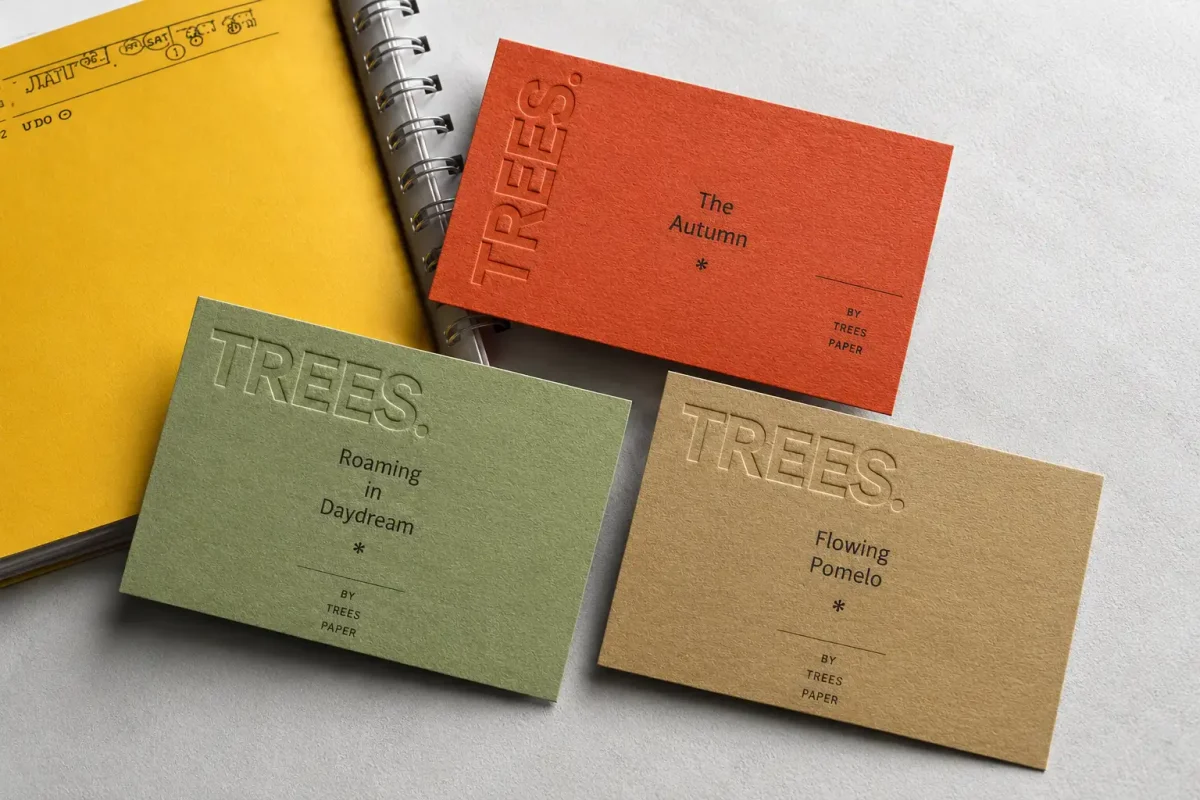
Eco paper does not have to be pale brown or visibly flecked. ZIVFY’s current references include natural grey, warm grey, forest green, indigo, red and brown papers, along with selected two-color layered structures. Those colors can do much of the visual work before foil or pressure finishing is added.
They also change the artwork. Black contact details can disappear on a dark green sheet. Pale brand colors may shift on warm grey paper. A QR code that scans from a bright PDF can lose contrast when printed on an absorbent or colored surface. This is why a dark paper project needs a contrast plan early, not after the material has been chosen.
Thickness adds another practical difference. Current ZIVFY references include 500g eco papers around 0.68 to 0.70mm, and selected 550g or 600g structures around 0.75mm. The numbers help compare directions, but the cut edge, stiffness and feel are easier to judge in a physical sample. A fixed two-layer paper also produces a visible colored edge; it is a paper construction, not a surface laminate.
Artwork should be reviewed at finished size on the intended paper. The smallest contact text, thin logo strokes and QR quiet zone matter more than a decorative effect. Large solid ink areas can also behave differently on an uncoated stock. A cleaner layout usually gives the paper more room to carry the design.
A finish has to work with the sheet
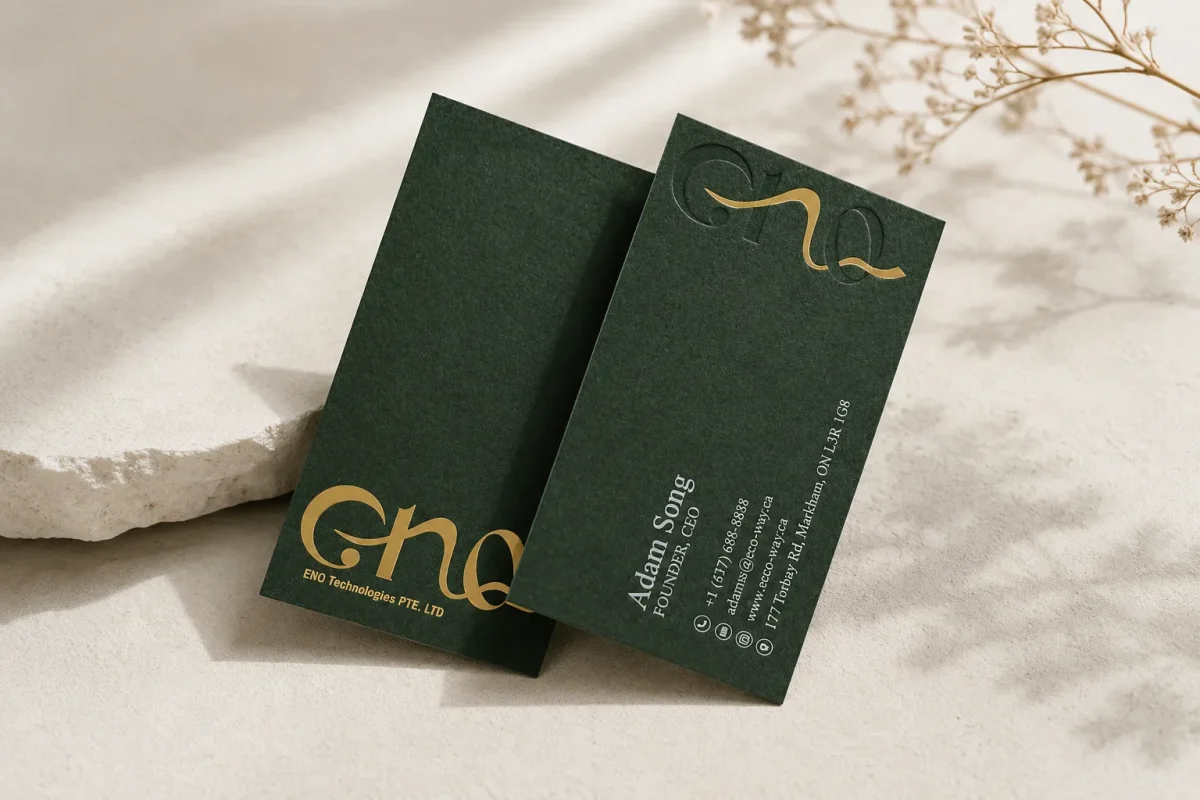
Foil, debossing and embossing can all work on eco paper, but each has a different job. Foil gives a controlled metallic accent and can improve contrast on a dark sheet. Blind debossing adds depth without another ink color. Embossing suits a simple raised mark when the paper and artwork can hold the detail.
The finish should follow the paper choice. Fine foil beside small printed text may crowd the layout, while deep pressure on a thinner sheet can show on the reverse. A two-layer structure needs clean front-to-back alignment because the edge is part of the result.
Environmental reporting needs the same precision. Foil on paper is not enough information to declare a finished card recyclable or non-recyclable. Paper, foil coverage, adhesives, coatings and local recycling rules can change the answer. When that claim matters to a project, the finished construction needs to be reviewed as one combination.
Samples settle the parts a screen cannot
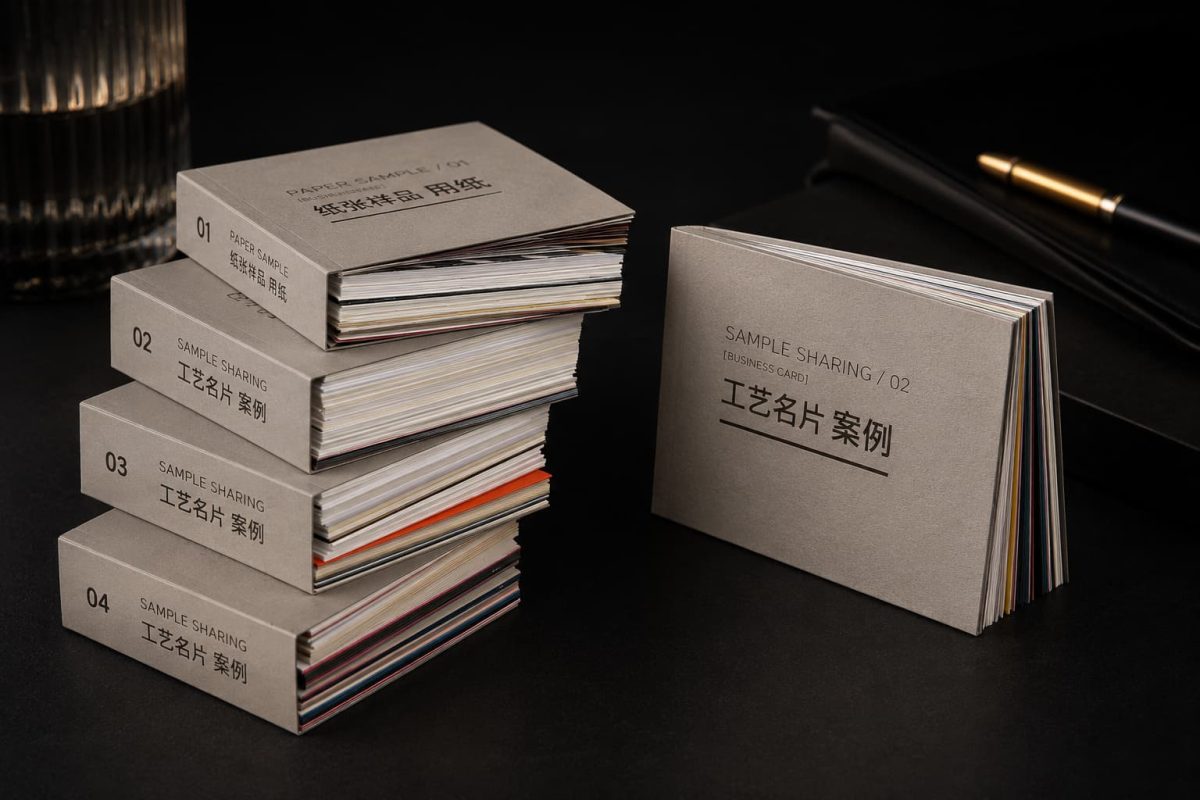
A screen can show color direction, but it cannot reproduce surface drag, stiffness, foil reflection or deboss depth. Those differences become important when two papers look almost identical online.
The business card sample book is useful at that point. It lets a buyer compare paper color under real light, feel the cut edge and thickness, and see how small text or foil sits on an actual surface. Samples are free; the customer pays shipping after the shipping cost is confirmed. Destination duties, taxes or customs fees are normally the customer’s responsibility.
The book is a reference rather than a proof of every possible custom combination. Once the direction is narrowed, the artwork and selected production route still need their own review.
Common questions about eco paper cards
Does FSC-certified paper mean recycled paper?
No. FSC certification and recycled content describe different material information. Confirm the exact paper when either point is part of the brand requirement.
Will a QR code work on colored uncoated paper?
It can, provided the code has enough size, contrast and clear space around it. A printed reference should be tested on more than one phone under normal indoor light.
Does foil prevent an eco-paper card from being recycled?
There is no universal answer. The selected paper, foil area, adhesive or coating and local recycling process all affect the result. Review the exact construction when recyclability needs to be documented.
From paper choice to a useful quote
A quote can be reviewed once the quantity, delivery country, artwork, paper direction and finish idea are known. ZIVFY’s public MOQ is 200 cards per design. If the paper is still open, start with the ECO product page and ask for a material recommendation. If the direction is already clear, send the project through the custom quote form so the paper and finish can be checked together.