
Foil business cards work best when the metallic detail has a clear purpose. A small logo, name, border, icon, monogram, or selected design area can use foil to create contrast without making the whole card feel busy.
ZIVFY handles foil business cards as a custom quote request, not as a standard online-store item. The final direction depends on your artwork, paper choice, foil color, quantity, size, and finish combination.
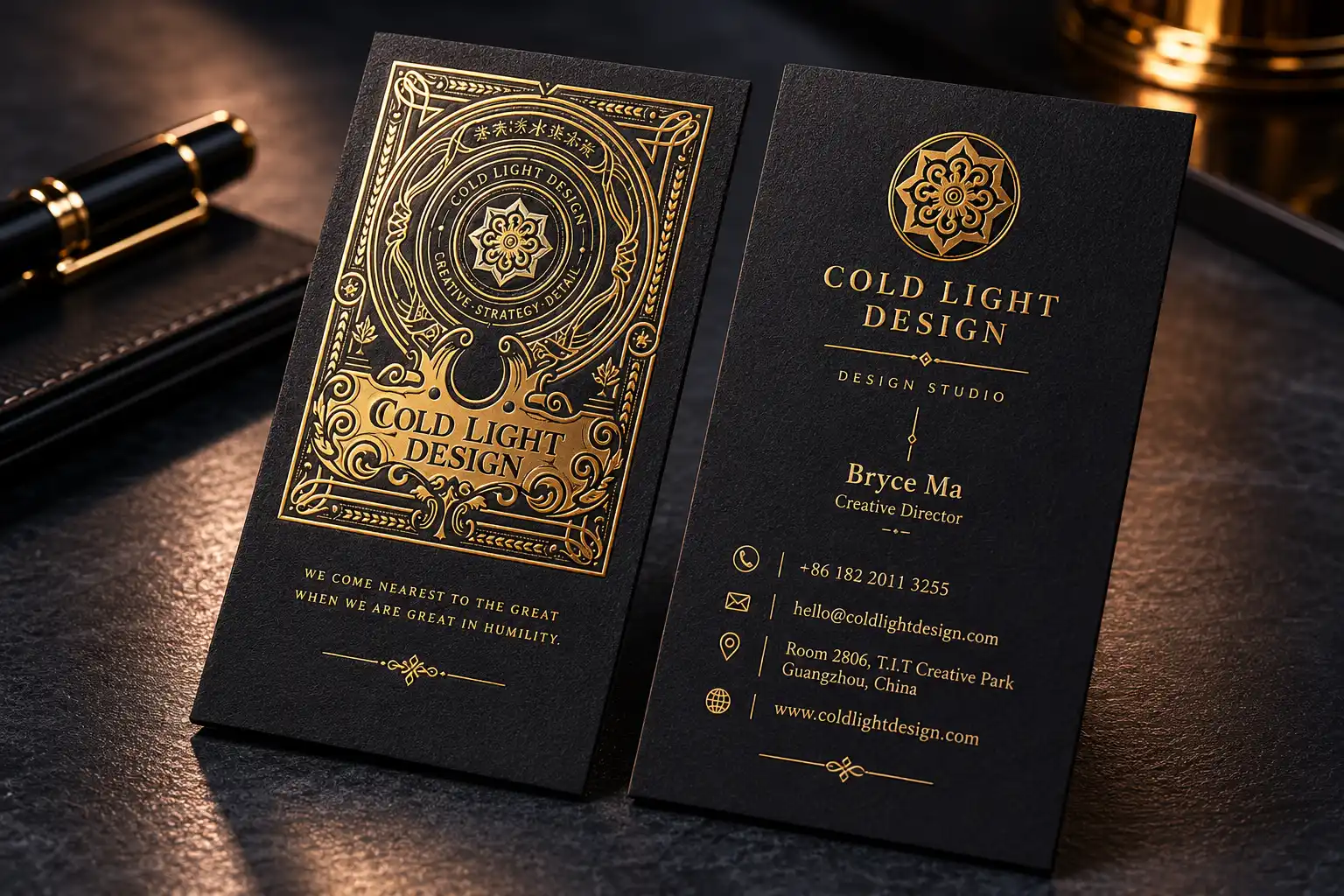
What Foil Business Cards Are
Foil business cards use Foil Stamping to apply metallic foil to selected parts of the card. Instead of printing every detail with ink, foil adds a reflective material effect to chosen artwork areas.
Common starting directions include gold, silver, holographic, colored foil, and specialty foil. Each option behaves differently depending on the paper surface and lighting. A gold foil logo on black card stock will feel very different from a subtle silver mark on soft touch paper or a holographic panel on a white card.
For ZIVFY projects, the best starting point is to assess the intended foil area, paper direction, and artwork file together. You can explore the main custom foil business cards page before preparing your quote details.
When Foil Stamping Works Best
Foil is strongest when it highlights something important rather than covering everything. Good areas for foil include:
- Logos and monograms
- Names or short brand marks
- Borders and thin decorative frames
- Icons or selected symbols
- Small patterns or controlled highlight areas
If the design includes a QR code, foil should usually be used around it as a border, frame, or accent instead of on the scannable code area itself. The QR area must remain readable, and the final placement should be confirmed before production.
Very tiny text, thin hairlines, or oversized solid foil areas may need adjustment before production check. If the foil area is too small, it may lose clarity. If it is too large, the card may need a different paper, pressure, or layout direction.
Choosing Paper for Foil Business Cards
Paper choice changes how foil looks and feels. The same foil color can appear warmer, cooler, sharper, or softer depending on the card base.
Black cards create strong contrast for gold, silver, holographic, or selected colored foil directions. They are useful when the brand wants a dramatic, high-contrast presentation. For this direction, see ZIVFY’s Black Business Cards page.
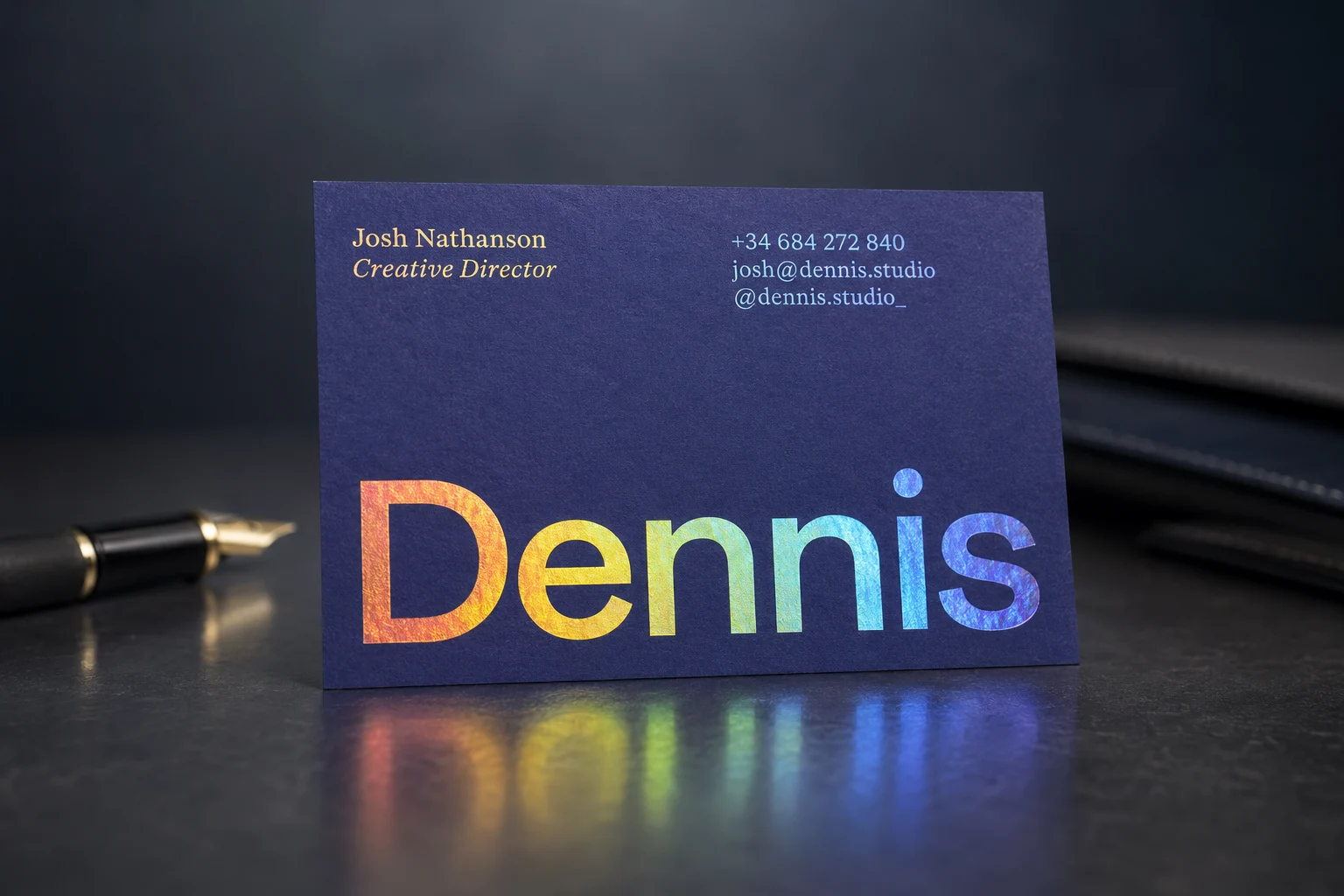
Soft touch paper gives the card a smooth matte surface. This can help foil details catch light while the rest of the card stays low-glare and refined.
For matte surfaces with foil, see ZIVFY’s Soft Touch option.
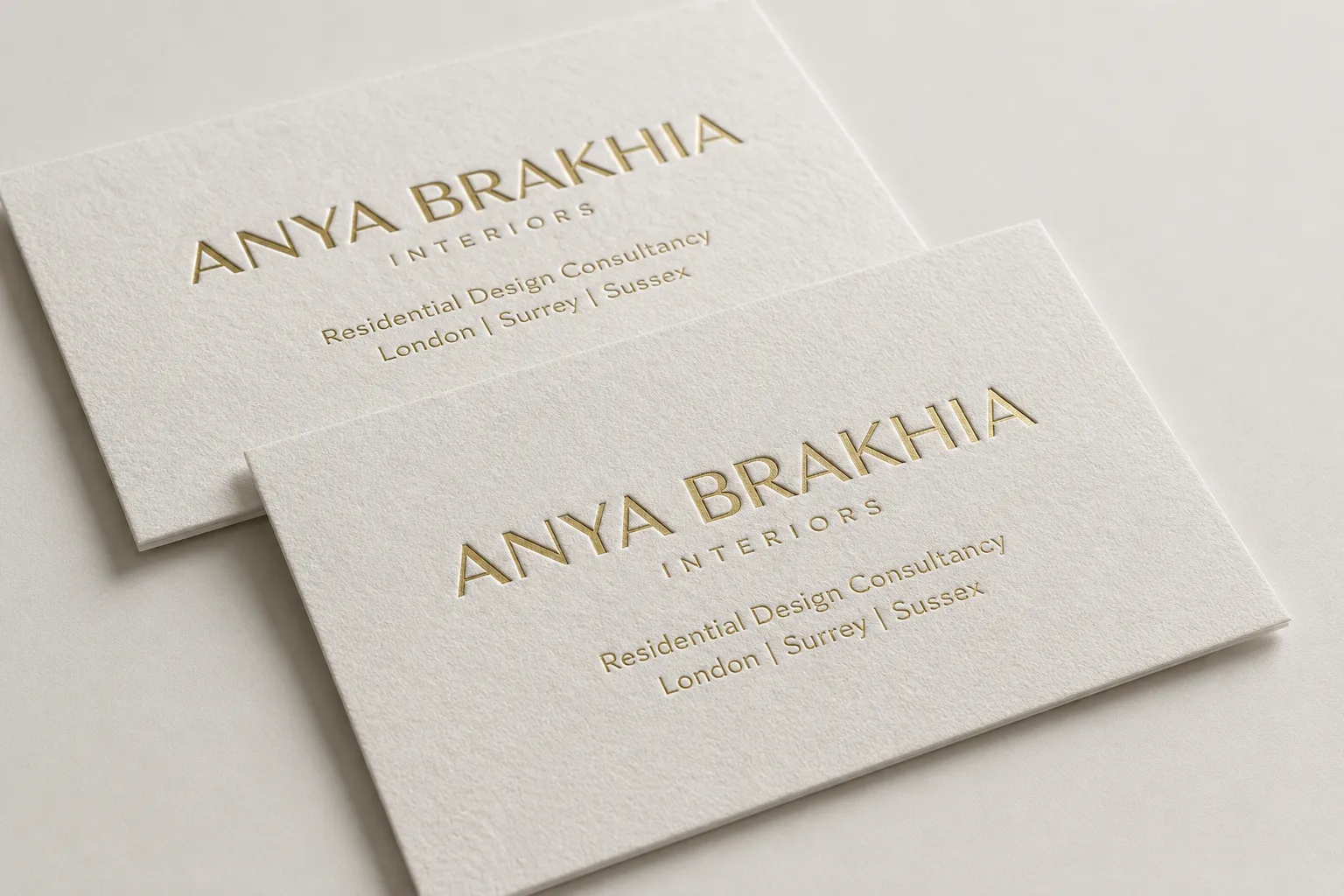
Cotton paper and textured paper create a softer, more tactile direction. These papers can work well for restrained logos, typography, stationery-style layouts, and brands that want a less glossy impression.
For a tactile paper direction, see ZIVFY’s Cotton Business Cards page.
Thick duplex, color core, and other premium papers can also be assessed with foil. These structures are useful when the buyer wants the card thickness, edge color, or layered construction to contribute to the overall brand feel.
Gold, Silver, Holographic, Colored, and Specialty Foil Options
Gold foil is often used for warm, classic, luxury, or hospitality-style cards. It can work well for logos, borders, names, and restrained pattern details.
Silver foil gives a cooler metallic highlight. It can suit clean service brands, healthcare, real estate, cultural projects, or designs where yellow gold feels too warm.

Holographic foil creates a rainbow reflection. It works best when the rainbow effect is contained in a selected area or deliberate foil panel, rather than spread across too many small details.
Colored and specialty foil options can be checked based on artwork, paper surface, and available foil direction. This is a safer approach than assuming every color or finish will behave the same way across every card material.
Metallic foil is a physical material, so it will not behave exactly like screen color or normal ink. If a brand color is very specific, the better approach is to check the closest suitable foil direction rather than assume an exact match.
Combining Foil With Other Finishes
Foil can be combined with debossing, embossing, Spot UV, die cutting, white ink, Pantone color, or thick card structures when the artwork supports the combination.
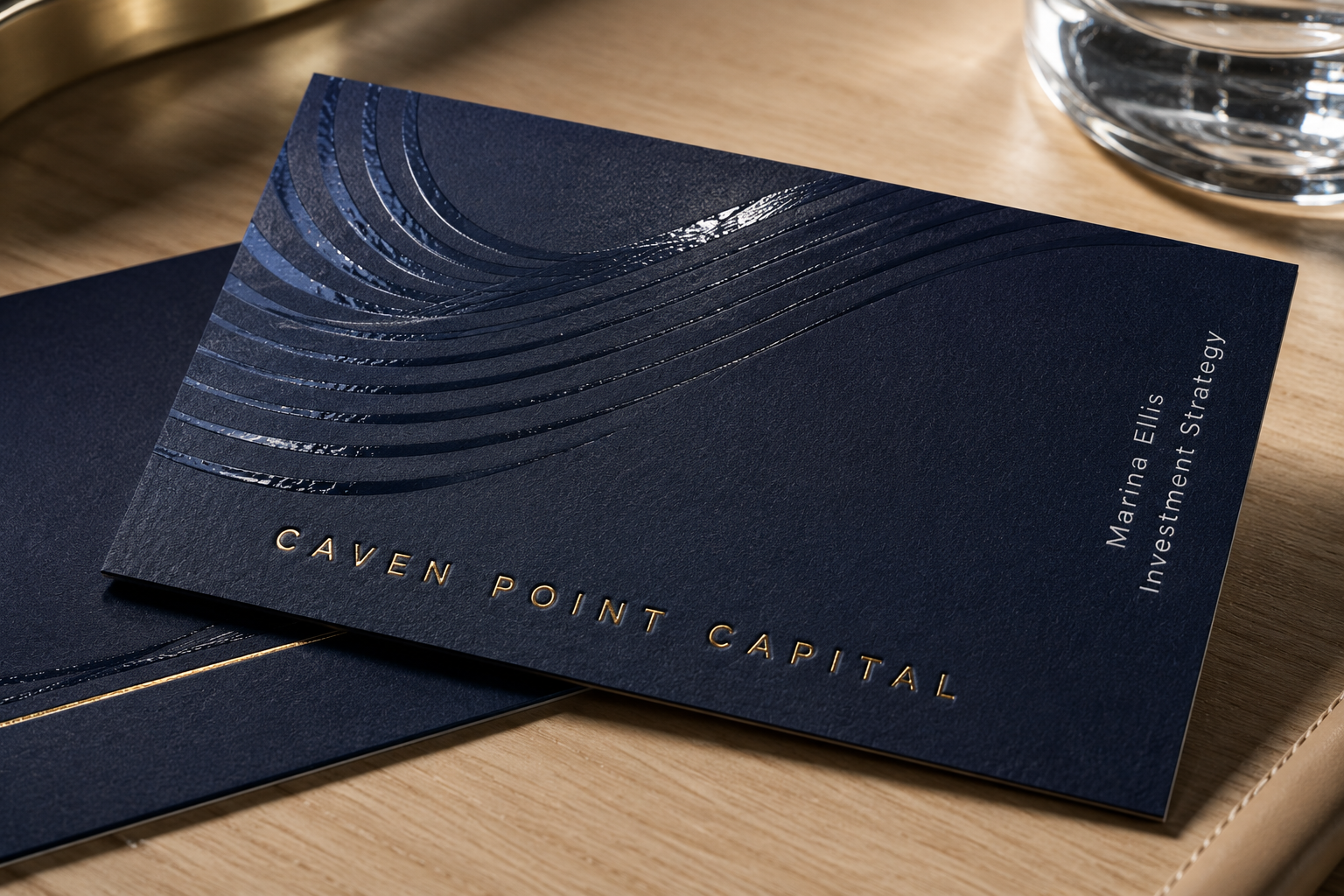
Foil plus debossing can create a pressed metallic effect. Foil plus embossing can add raised or pressed detail to logos, monograms, or icons. Foil plus Spot UV can create contrast between metallic reflection and glossy surface detail.
The key is separation and purpose. If foil, UV, embossing, and printed color all compete in the same small area, the card may become harder to read. A stronger layout usually gives each finish a clear role.
MOQ and Quote Details Buyers Should Prepare
For ZIVFY custom foil business card projects, minimum order starts from 200 pcs per design.
Before requesting a quote, prepare the details that affect production planning:
- Quantity per design
- Number of designs
- Finished size
- Paper or card structure direction
- Foil color preference
- Printing direction
- Whether foil appears on one side or both sides
- Whether the design uses debossing, embossing, Spot UV, die cutting, white ink, or other finishes
- Print-ready PDF, AI, or EPS files if available
- Logo files, rough layouts, reference images, or placement notes if print-ready files are not ready
ZIVFY can assess foil area, line weight, paper suitability, pressure tolerance, and production feasibility before confirming a custom quote.
Common Questions Before Requesting a Foil Card Quote
What artwork areas work best for foil stamping?
Selected logos, names, monograms, borders, icons, line artwork, patterns, and controlled highlight areas usually work best. Very tiny text, thin lines, or oversized solid foil areas may need adjustment.
Can foil be used on black cards?
Yes. Black cards can create strong contrast with gold, silver, holographic, or selected colored foil directions. The final foil choice should still be checked with the card surface and artwork.
Can foil be used with cotton paper?
Yes. Cotton-style and textured papers can give foil a softer, tactile presentation. This is useful for brands that want a less glossy and more paper-focused feel.
Can foil be combined with Spot UV or debossing?
Yes, but the suitability depends on paper, artwork detail, foil area, and tolerance. Each finish should have a clear role in the layout.
Can foil be used with QR code designs?
Foil can be used as a border, frame, or accent around a QR code area. The QR code itself should stay readable, and the final artwork should be checked before production.
Do I need print-ready files before requesting a quote?
Print-ready artwork is helpful, but buyers can also submit logo files, text, rough layouts, or reference images so the foil area and paper direction can be assessed.
Requesting a Custom Foil Business Card Quote
Foil business cards are not one-size-fits-all. The best result depends on how the paper, foil color, artwork size, finish combination, and quantity work together.
To request a quote, send your card size, quantity, paper direction, foil color ideas, artwork files or reference images, and any finish requirements through ZIVFY’s Contact page. ZIVFY can then assess the project details and help confirm the right production direction for custom foil business cards.