
Actually, most people want to get cotton paper business cards because they’ve seen them on social media or in short videos. The embossed or debossed designs, printing effects, and the unique feel of cotton paper make them look particularly attractive and high-end, so they want the same.
However, most people don’t know where to begin. Don’t underestimate the power of cotton paper; there’s a wide range of choices. Some people don’t even know how to ask a vendor, "Which type of cotton paper business card should I choose?"
Today, we’ll clarify these questions, making it much clearer for you to choose the right type of cotton paper business card.
What is a Cotton Paper Business Card?
First, we need to understand what a cotton paper business card is. Cotton paper business cards aren’t actually made of 100% pure cotton. If they were, like clothing, they wouldn’t be stiff enough—this is something we must understand. It’s actually made from a blend of cotton fibers and paper.
Once we know the composition of cotton paper business cards, we can naturally imagine their characteristics: the feel and appearance of cotton, and its flexibility.
However, if it’s too soft, it will easily bend when made into business cards. So how is this problem solved? This brings us to a very important factor when choosing cotton paper business cards: density.
How should we consider density, thickness, and stiffness?
Typically, when asking vendors, people will say, "I want embossed or debossed paper, printed paper, a QR code, thicker paper, or thinner paper." In fact, these requirements all relate to one prerequisite: density.
Cotton paper has a significant characteristic: thicker paper doesn’t necessarily mean heavier or stiffer; similarly, thinner paper doesn’t necessarily mean softer or lighter.
Furthermore, density also affects whether there will be noticeable cotton fibers at the edges after the finished product is cut. In other words, the higher the density, the stiffer the paper, and the heavier it is.
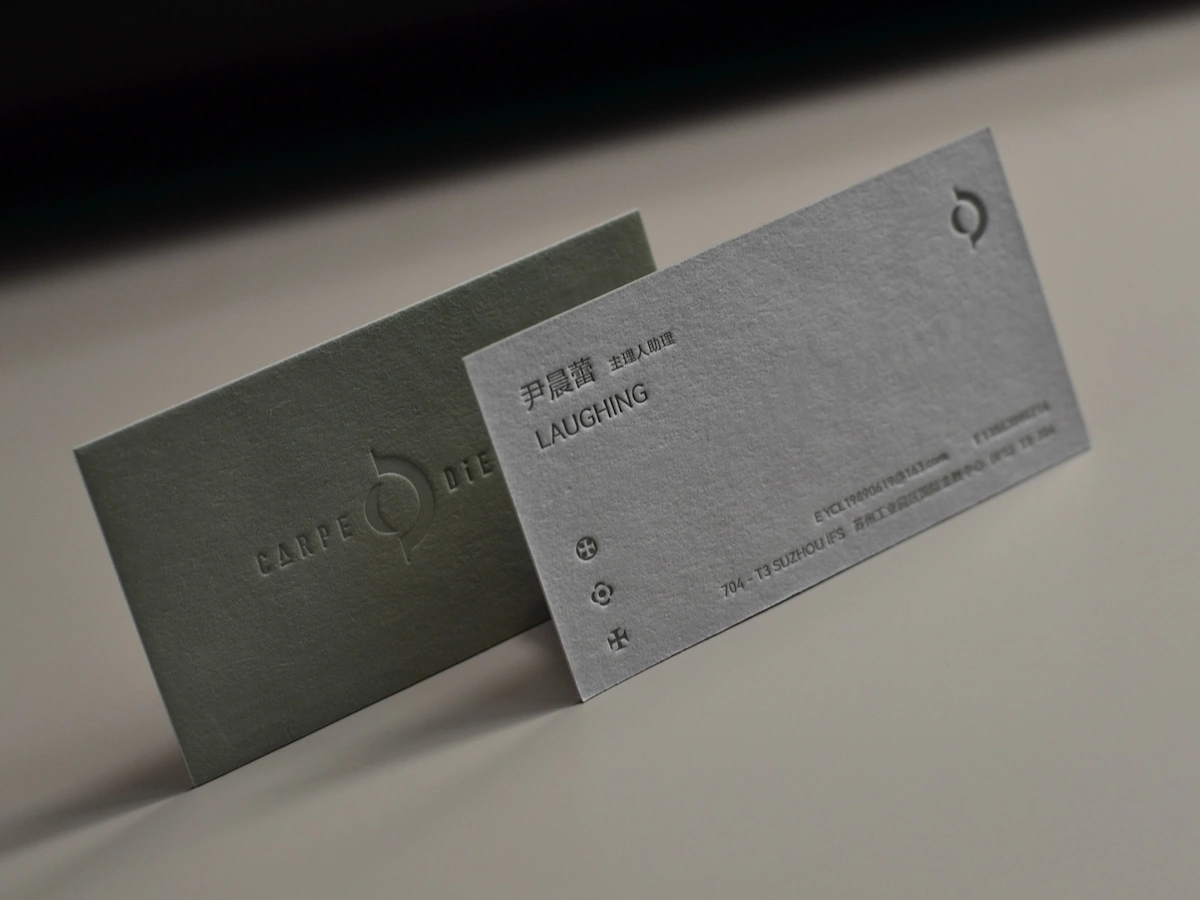
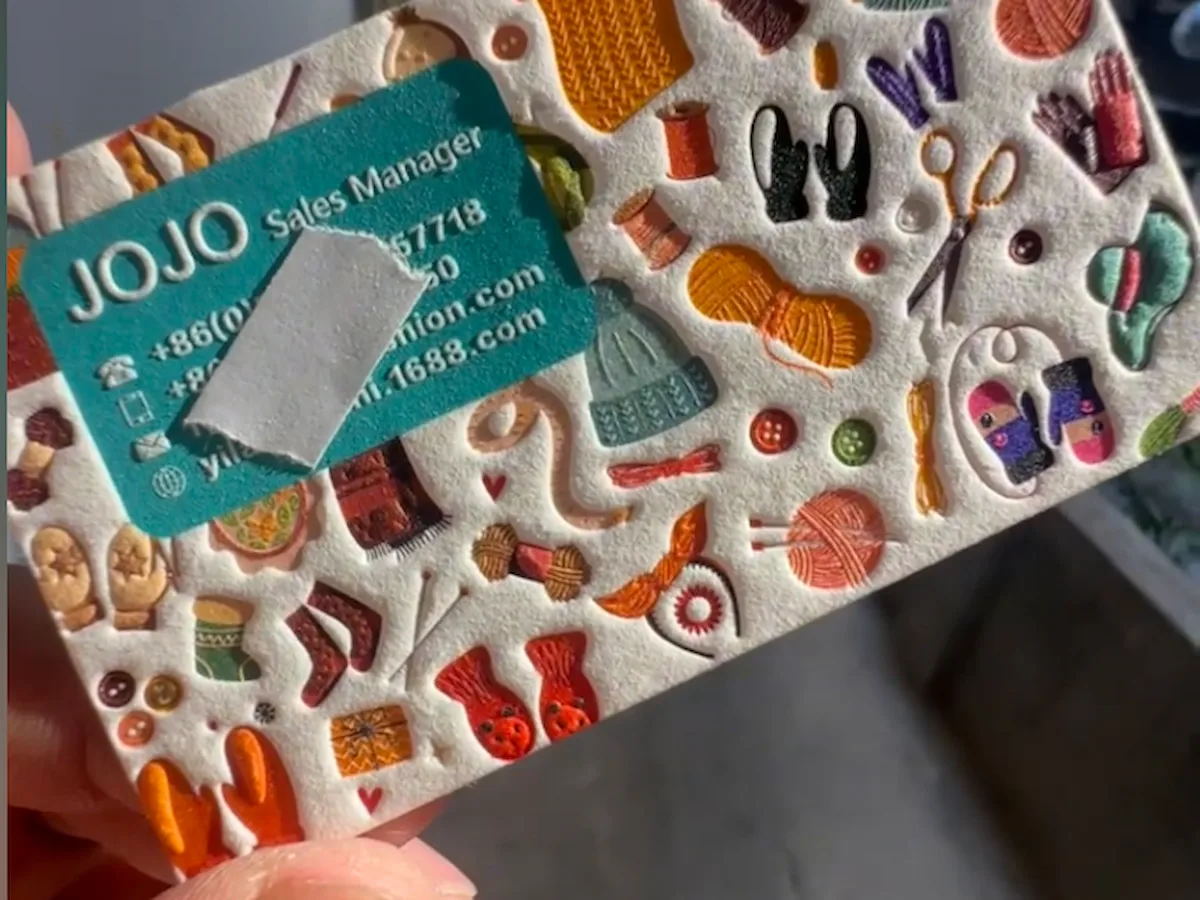
How to Choose Cotton Paper for Different Embossing and Debossing Effects?
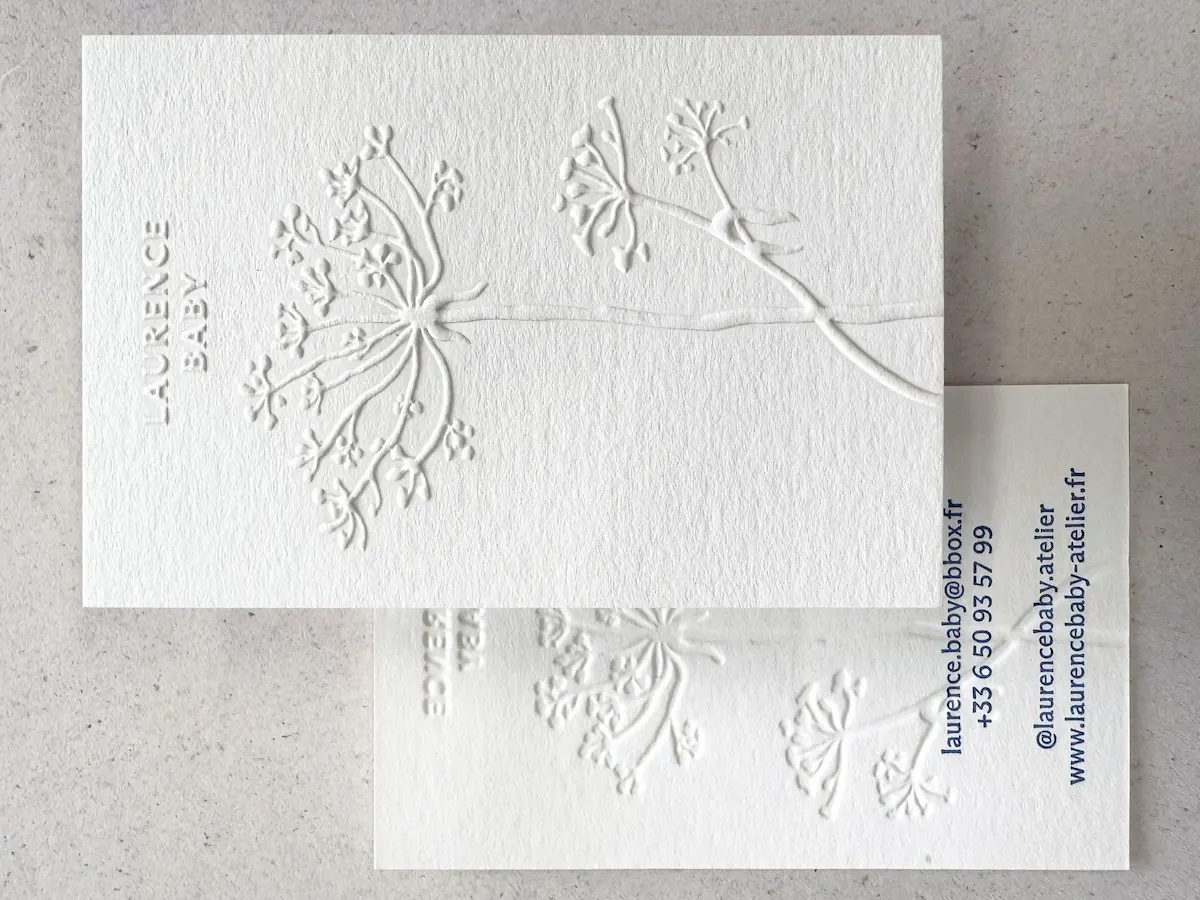
First, let’s talk about embossing and debossing effects. Many people choose cotton paper because of its embossing and debossing effects, which are difficult for other materials to match.
Many customers will send a photo of someone else’s business card or describe the effect they want, but they don’t know which type of cotton paper to choose.
Subtle Debossing
If you only want a subtle debossed impression, without needing too much depth, we recommend choosing a higher-density paper, with a thickness of at least 24pt.
Deeper Debossing
If you want a very noticeable debossed impression, even exceeding the thickness of the business card itself, we recommend choosing a lower-density paper, also with a thickness of at least 24pt.
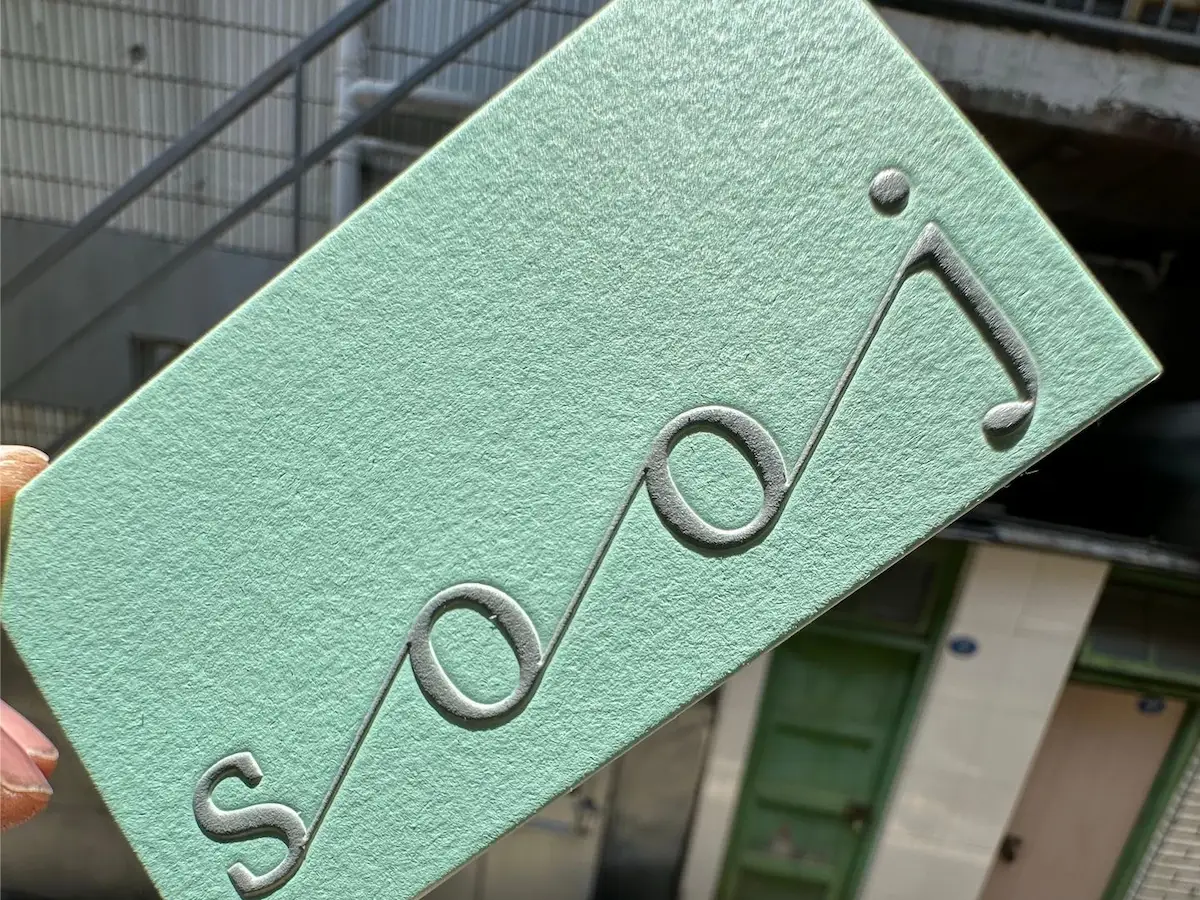
While it will have a slight degree of flexibility, it will still feel perfectly fine to hold.
Thickness, Stiffness, and Front/Back Requirements
If you feel the thickness or stiffness is insufficient, or if you want one side to be embossed while the other side remains flat, we can bond two sheets of paper back to back (duplexing).
Printing, Text Size, and Color on Cotton Paper
Cotton Paper Printing Effect
Secondly, a major characteristic of cotton paper is its printing effect. Printing on cotton paper gives a three-dimensional, high-end feel, which is difficult to match with other materials.
Text Size, QR Codes, and Blind Debossing
Next, let’s discuss text size and QR codes, which are of great interest to many.
Many people also prefer another option: blind-debossed text. This is also a good way to highlight the characteristics of cotton paper business cards.
We use CNC-engraved copper plates. Theoretically, regardless of the size of the text, it can be engraved and printed on cotton paper.
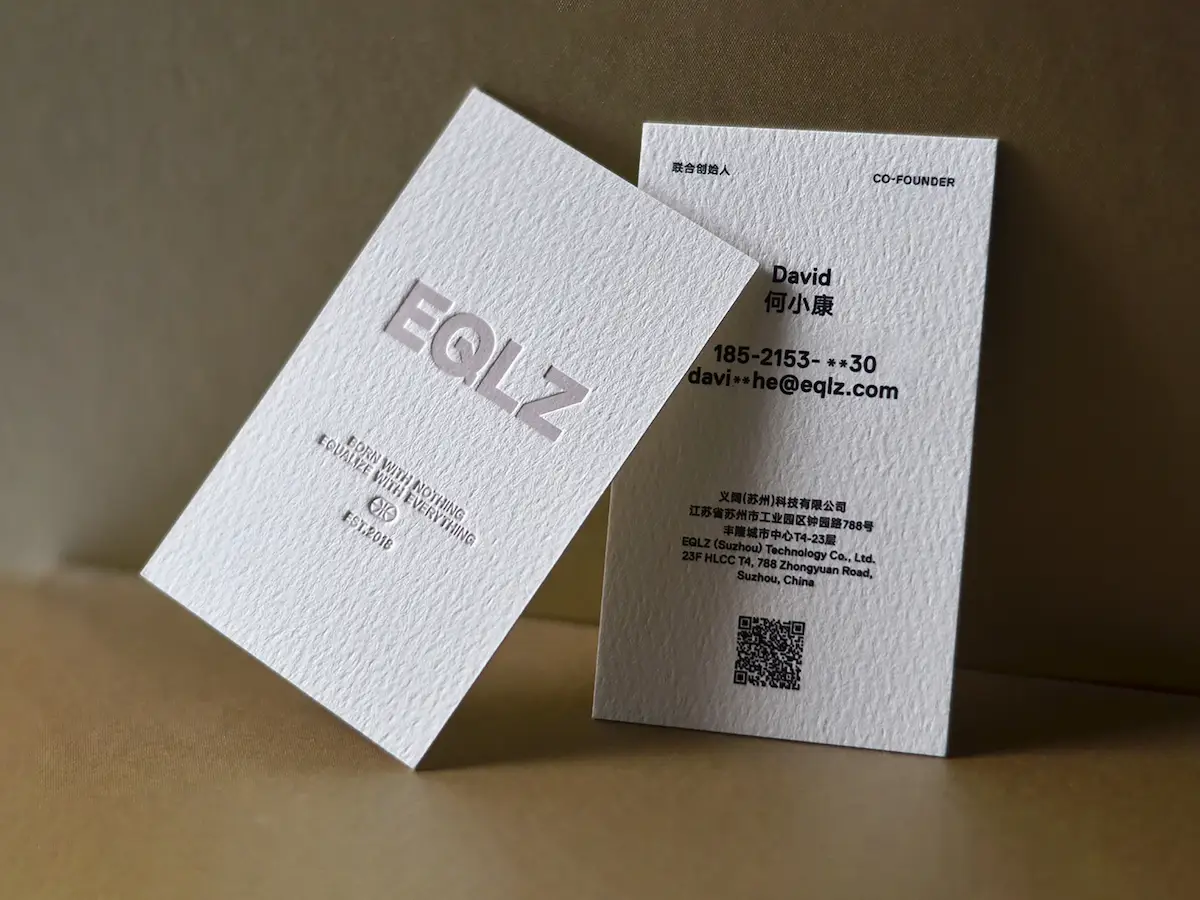
When it comes to QR codes and text, if you want to print a QR code and smaller text on your business card, we recommend choosing a material with a smoother surface. Some cotton paper materials have a more pronounced texture to show off the special qualities of cotton. If you print a QR code on that kind of paper, phones will have a harder time scanning it, and the same goes for text.
Printing Colors and Film Lamination
Next is the issue of printing colors. Cotton paper is highly absorbent, and the color of the ink will vary slightly after it adheres to it.
Therefore, for clients with extremely high color accuracy requirements, we do not recommend spot color printing on cotton paper. Coated art paper or white cardstock is best suited for spot color printing.
Another important point is that cotton paper, due to its fibrous surface structure, cannot be film-laminated.
Daily Use: Curling Edges and Writing
Will the edges curl up when placed in a wallet or business card holder?
This raises the question: Since cotton paper is not waterproof and has varying degrees of stiffness, will the edges curl up over time when placed in a wallet or business card holder?
My answer is yes, they will curl up.
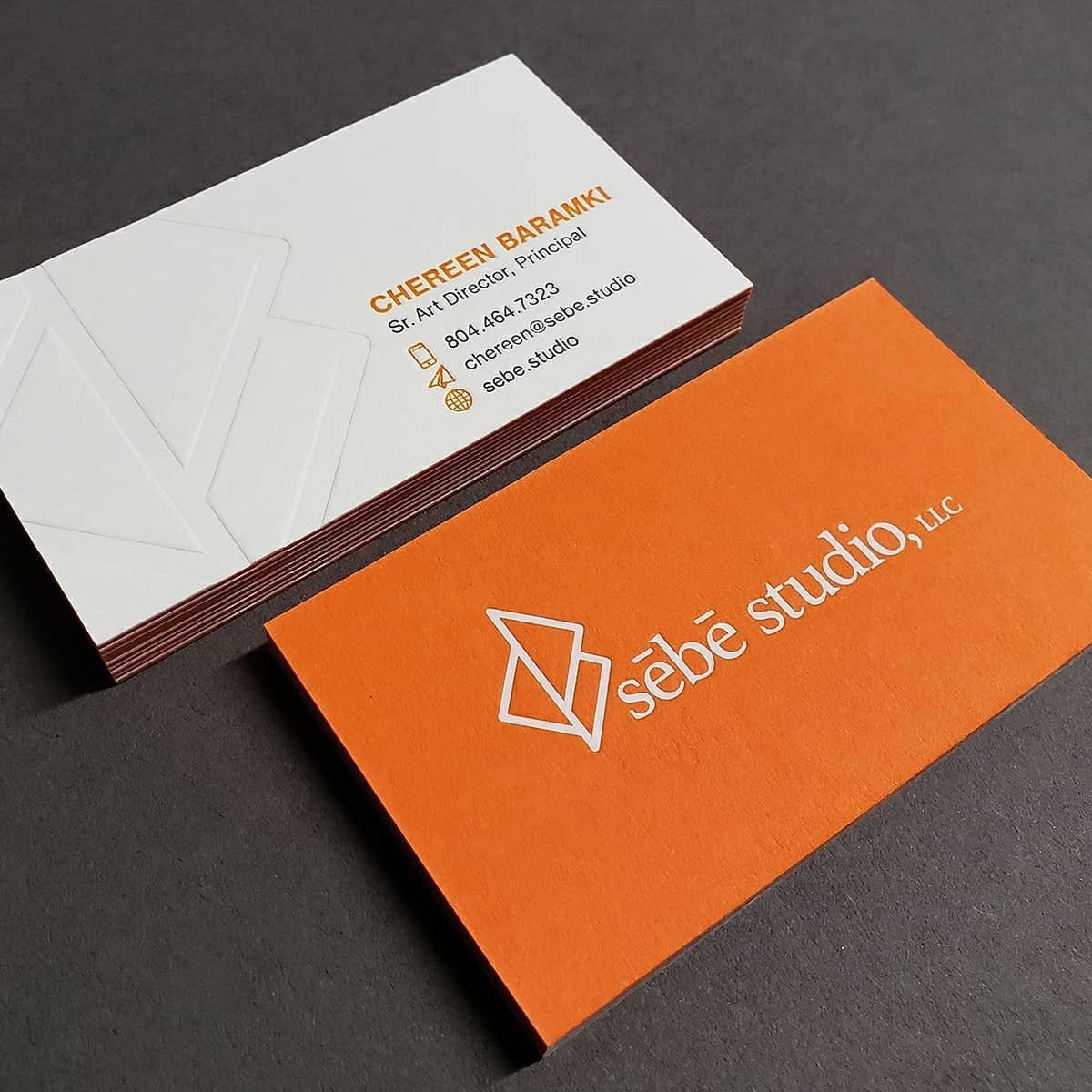
The solution is to round off the four corners, which can effectively reduce this problem. Because nothing is without its advantages and disadvantages.
Can you write on cotton paper?
During our communication with clients, a frequently asked question is: "Can I write on cotton paper?"
My answer is yes, but only if you choose high-density cotton paper.
Regarding hot foil stamping on cotton paper
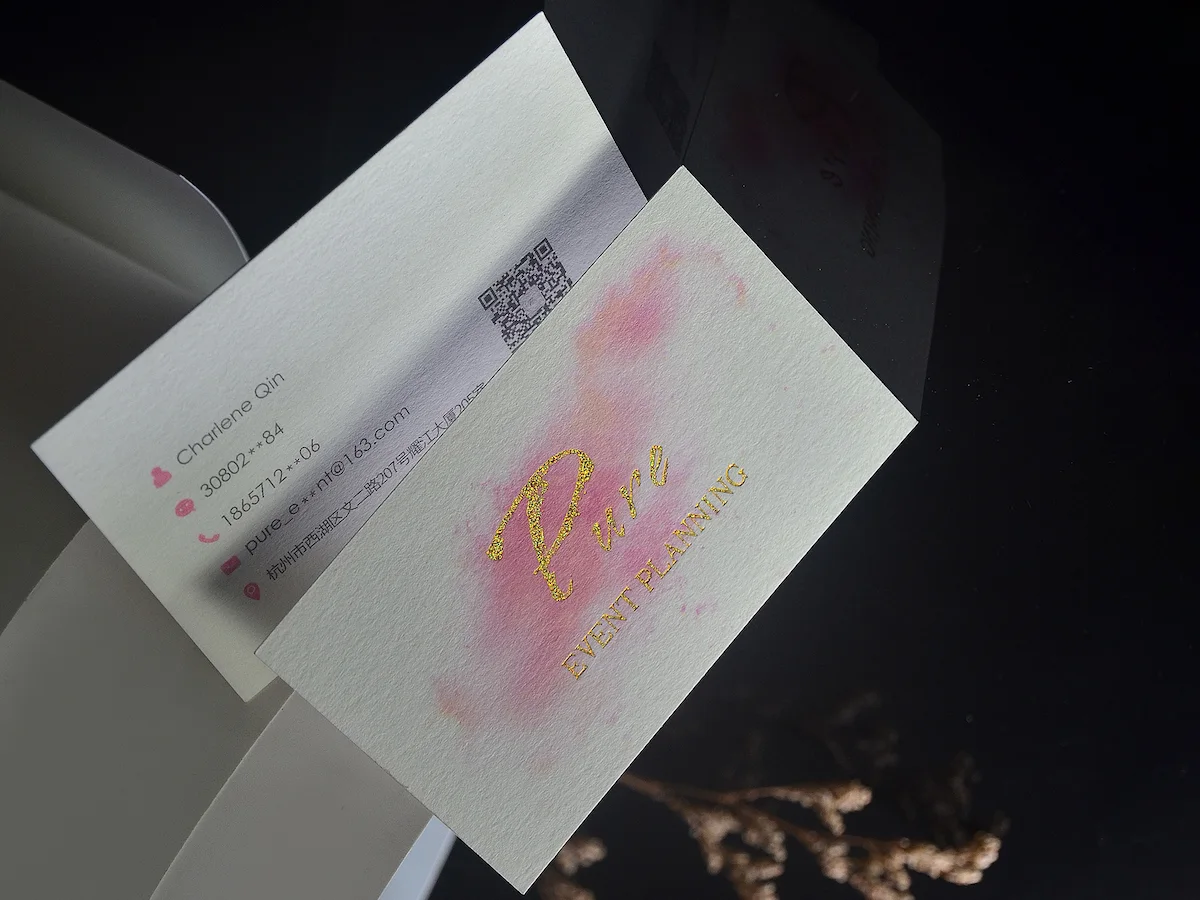
Cotton paper can be hot foil stamped in various metallic colors. However, in my personal opinion, cotton paper is more suitable for blind debossing and inked impressions of patterns or text.
Because, in our view, the effect of hot foil stamping on cotton paper isn’t as strong. This is mainly related to the unique feel and fibrous nature of cotton paper; if you look closely, the gold foil coverage doesn’t look completely solid.
Of course, it’s not that you can’t, it depends on personal preference. But if you absolutely need my advice, my answer is that I don’t recommend it.
Summary: Which type of cotton paper should you choose for your business cards?
In summary, we now have a better understanding of which type of cotton paper to choose for your business cards.
For a deep debossed impression, choose low-density paper; for a subtle debossed impression, choose high-density paper; for more solid ink coverage, also choose high-density paper.
As for the thickness, you can choose according to your preference. We offer different thicknesses of 15pt, 24pt, 32pt, or higher.
Specific considerations regarding various processes and designs will be explained in detail in the next blog post.