
A blank back isn’t always a back you can write on. If the card is laminated, most everyday pens will skip or smear, even though the surface looks empty.
One of our customers is a painter who’s ordered black business cards from me many times. We put gold foil on one side and leave a space with a line for his signature on the other.
That doesn’t mean you have to settle for a plain business card just because you need to write on it. You can enjoy the feel of specialty paper, have foil stamping or debossing on the front, and still leave room for a few handwritten notes on the back. We can plan for all of that together.
The Blank Back May Still Be Laminated
Leaving the back blank in your design just means there’s no text or artwork there. But if that side is laminated during production, the blank area gets the film too. When you write on it, your pen touches the film, not the paper underneath.
 specialpapers.fedrigoni.com
Think about trying to use your everyday gel pen on a laminated menu. The tip slips, and whatever you manage to write can smear easily. A laminated business card can be much the same.
Take the stock we use for our soft touch business cards. It has a layer of soft-touch lamination. It feels soft and smooth, a bit like the matte finish on a phone case, but that doesn’t make it a good writing surface. So if you need to write on your cards regularly, this isn’t the surface we’d recommend.
You’re only trying to jot down a time. There’s no need to wait until the cards are made, then hunt around for a pen that will just about work. Tell us about this when we’re choosing the paper, and we can pick the right material from the start. That’s much easier.
So What Makes Paper Easy to Write on Without Smudging?
Take the cotton and white eco-friendly papers we recommend for writing. We don’t laminate these papers, so their absorbent surfaces are left exposed. These papers aren’t waterproof, either.
Think of the ink in your pen as a liquid. Without a film in the way, the paper fibers can “drink in” some of that ink. Once the writing is dry, it’s less likely to smudge when you handle the card.
 scriveiner.com
The soft-touch film we mentioned, on the other hand, separates your pen from the paper underneath. With an ordinary gel pen, the ink stays on that surface. The pen can slip as you write, and your hand can smear the ink before it dries.
So when we choose a writing surface for you, we don’t just look at whether the back is blank. We look at what your everyday pen will actually be touching.
So Which Papers Are Good for Writing?
Among the papers we offer, our denser, firmer cotton papers are a good choice for handwriting.
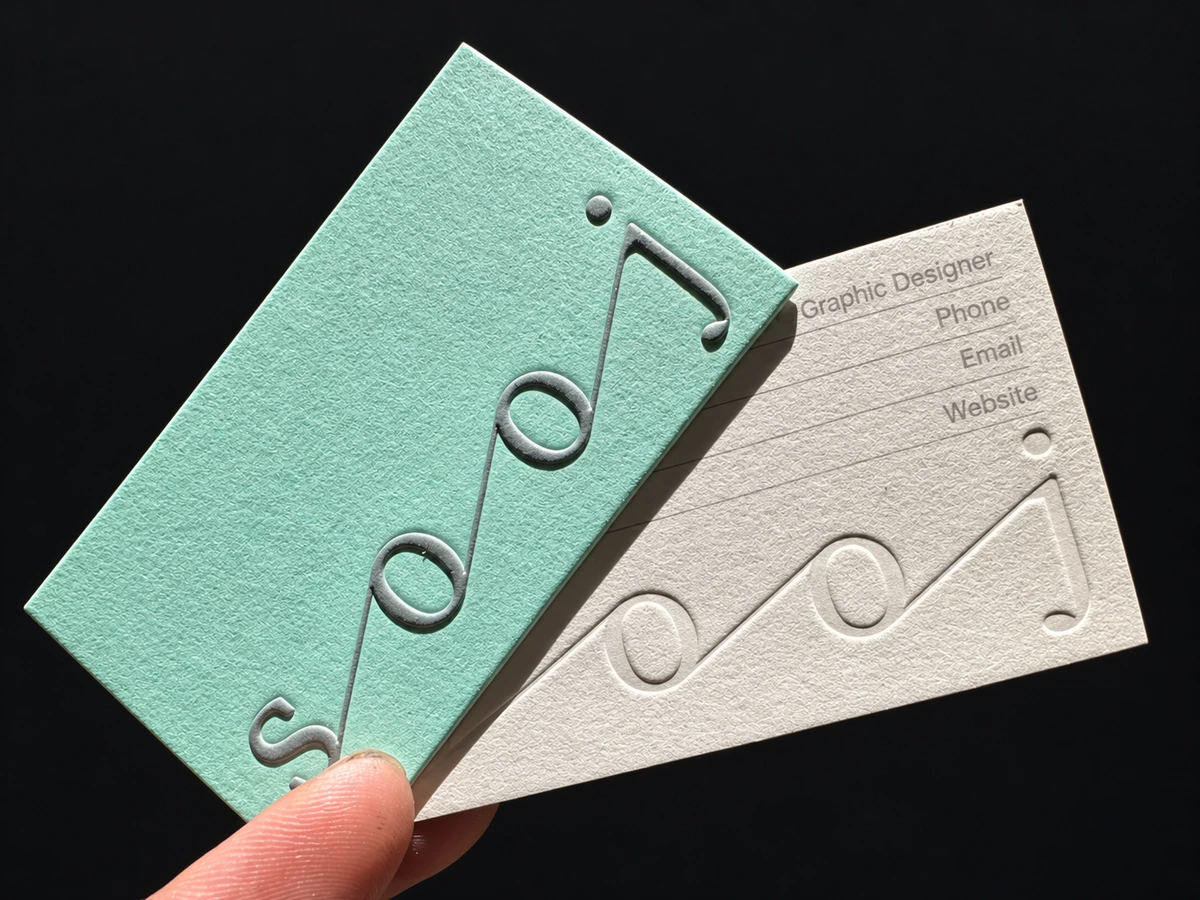
We don’t laminate these cotton stocks, so they keep their natural, ink-absorbent surface. If you like the feel of cotton paper and need to write appointment times, names or notes on the back, this is a direction worth considering.
You can still have foil stamping or debossing on the front. Just leave the paper exposed where you need to write.
Of course, cotton isn’t the only option. Some of our white eco-friendly papers have no special surface coating and are easy to write on too. These papers feel different, so start with the one you like, then work out how to make the card.
Can You Still Write on Textured Paper?
When you’re looking at textured paper, you might wonder: will my pen still write smoothly over it?
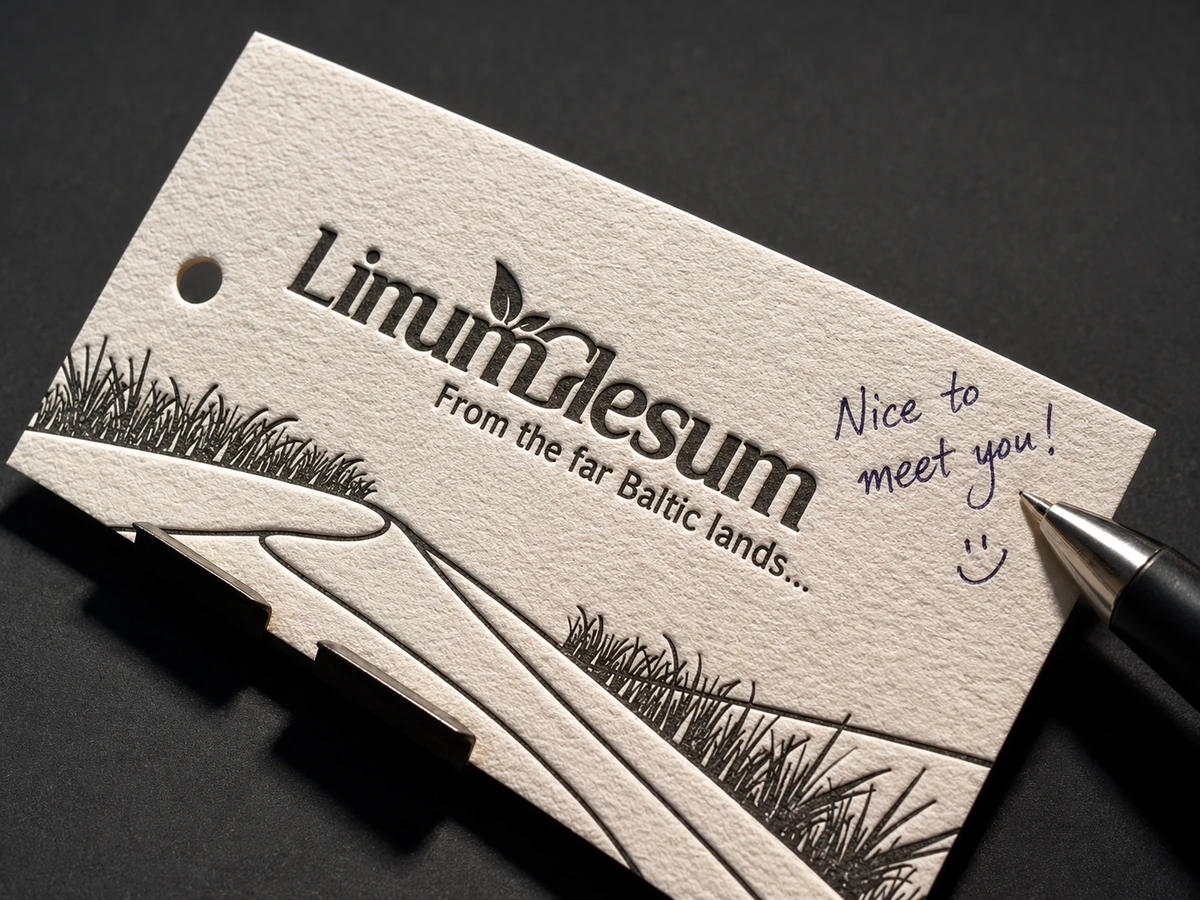
Don’t rule out a fine, shallow texture as soon as you see it. Think of letter-writing paper with those fine ridges—it’s made for writing in the first place. Some of our finely textured papers without special surface treatments are suitable for handwriting too.
 fabriano.com
A little texture and a writable surface can go together.
The ones to pay closer attention to are papers with deep, pronounced textures. If you’ll be writing small letters, try a line on a sample of the paper with your usual pen. Does the tip move smoothly? Are the strokes complete?
You don’t have to give up a texture you like just because you need to write a few words. A fine paper grain and a deeply textured surface aren’t the same thing.
Can You Write on Black Business Cards?
Yes. You just need ink that shows up against the black.
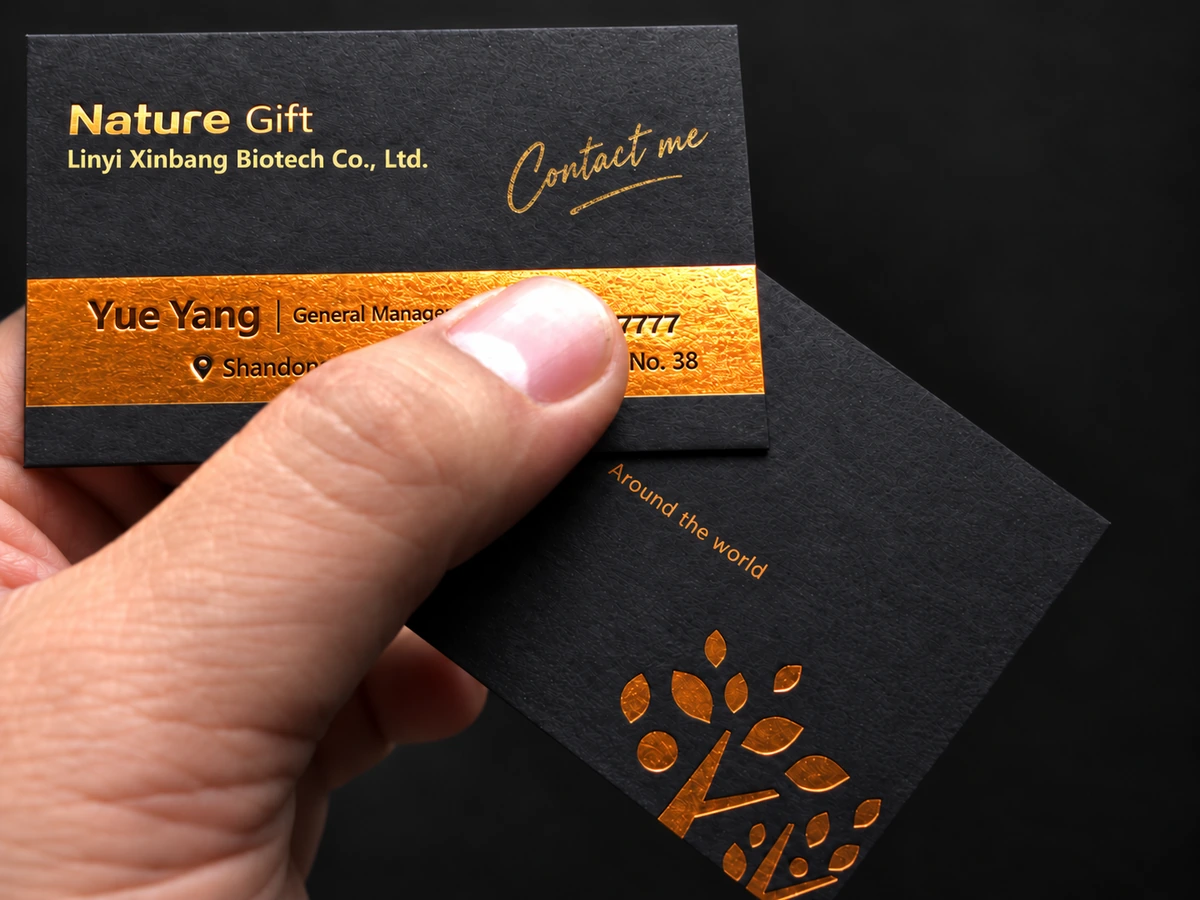
When I asked the painter what the signature line was for, he said people in his circle liked to add their own signatures when they exchanged business cards.
It honestly hadn’t occurred to me at the time that some people needed to sign their business cards by hand. So I asked him what kind of pen he used.
He said he used colors that stood out clearly against the black paper, such as metallic or white, to add his signature and other notes.
I thought that made his cards even more personal. It really was a good idea.
So don’t look at a black card and assume it’s just for show, not for writing. With a suitable pen, you can write on black card stock too.
 sakuraofamerica.com
But if you’re writing on cards several times a day, usually grab an ordinary black pen from your desk, and don’t want to keep a separate white pen around, make the writing side a lighter color instead. Like the look of black paper with gold foil on the front? You can keep it: with a duplex business card, use black stock on the front and a suitable warm-white cotton paper or another white paper on the back. The front keeps the look you want, and the back is easy to write on. Go with what’s convenient for you, rather than working around the card.
Of course, if you like one of our cotton papers and it works for writing on both sides, there’s no need to bond two sheets together just for handwriting.
Need a Writable Back? Here’s What to Tell Us
When you talk to us, don’t just say, “Leave the back blank.” Tell us how you’ll be using it too.
Blank space is only one option. The writing area could have a light-colored background, or you could choose dark paper and use a white or metallic pen. These combinations can give your card a look of its own too.
For example, a nail salon owner might say:
“I need to write the next appointment time here. I normally use an ordinary black gel pen.”
A photographer might say:
“I’d like black cards, and I’ll occasionally sign the back. I’m happy to use a white pen.”
That way, we can keep your writing needs in mind when choosing the paper and planning the finishes on each side.
You can also start with our business card sample book. Try writing a line with the pen you normally use. Does it write smoothly? How quickly does it dry? Trying it is much more useful than judging from a photo.
High-end business cards and handwritten notes can go together. Just tell us in advance: “This is where I need to write.”