
If getting your brand color right is the priority, choose coated business cards. If you want people to see and feel the paper itself, choose uncoated paper, such as recycled or cotton stock. Want both? Let's look at the color and the paper together.
What does “coated” mean? It's simple: a coating is added to the paper's surface, filling in its tiny dips and uneven areas. The ink stays on that coating, so colors come out brighter and more accurate. Uncoated paper doesn't have that layer. You feel the paper fibers themselves, and some ink sinks into the sheet, giving colors a softer look and the surface a more papery feel. Paper supplier The Paper Mill Store explains coated and uncoated paper in much the same way.
That coating is added at the paper mill. It's different from laminating a business card with a film after printing.
Definitions only get you so far. Here's an illustrative plant-shop example showing the choices you might face.
She had her eye on an uncoated recycled paper
The customer owned a small plant shop, and her brand color was dark green. She wanted new business cards. While looking through the sample book, she was drawn to a warm white recycled paper with small, visible flecks. It had a natural look that suited her shop.
The visible flecks and natural feel of that uncoated recycled paper were exactly what she liked about it.
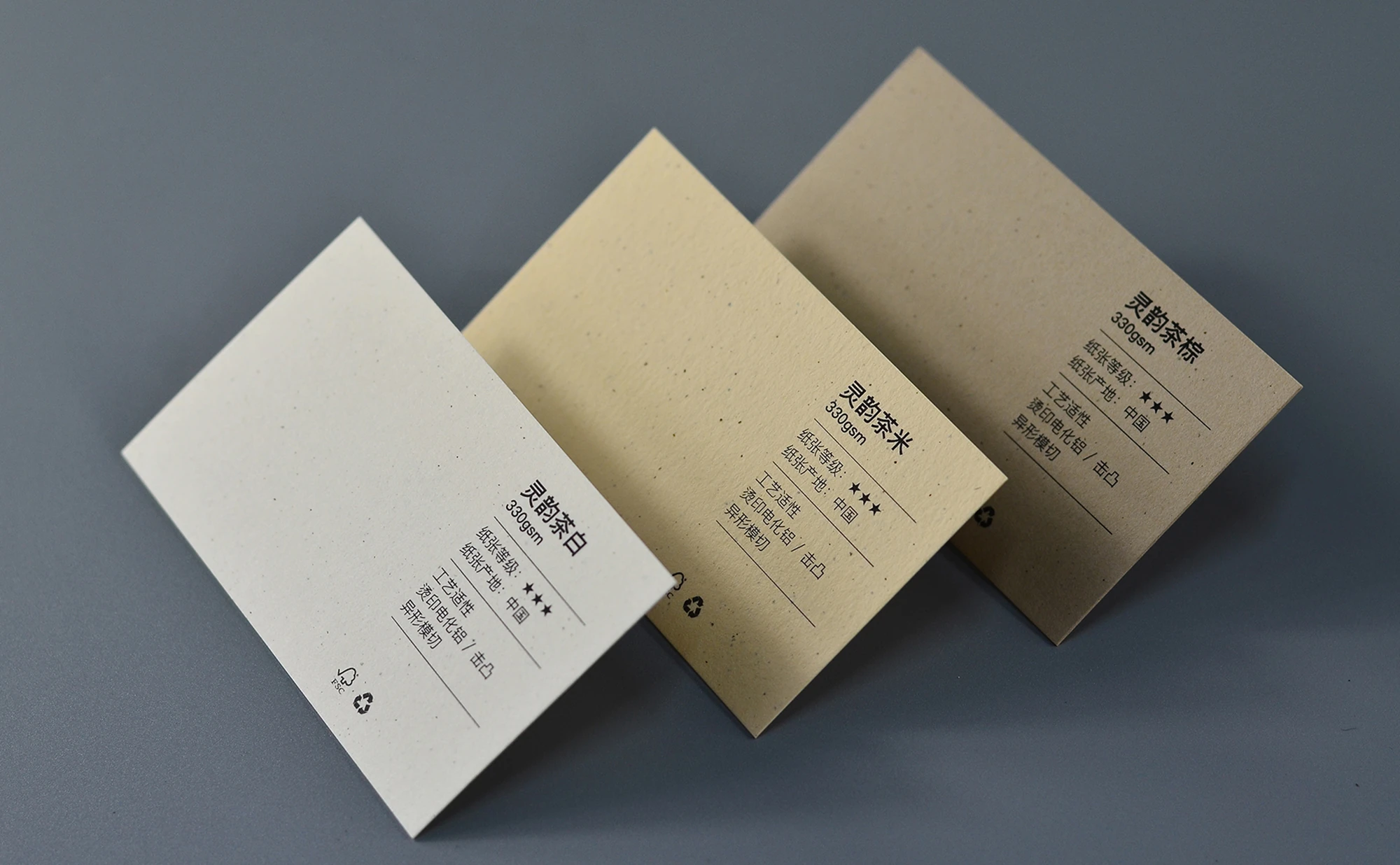
Then she had another thought: wouldn't the front look good covered entirely in dark green?
We asked her, “It was those little flecks that drew you to this paper, right?”
She said yes.
“If we cover the whole front in green, most of those flecks will be hidden.”
In our experience, printing a solid color across the whole surface can hide the visible character of this kind of paper. It's still recycled paper, and the recycled content is still there. You might still feel some texture. But the details that first caught her eye would be much less noticeable.
Coated or uncoated: keep the color or keep the paper's character?
She realized she wanted two things: an accurate dark green and visible flecks in the paper.
The first option was to keep the paper. Use the green for her logo and text, and leave the surrounding paper showing. When someone picked up the card, the paper itself would be the first thing they noticed. She would need to keep one thing in mind, though: most uncoated papers absorb some ink, so the printed green would look softer and might not look quite the same as it did on her screen.
The second option was to put the color first. If a shift in the green would bother her most, she could switch to coated paper. When color accuracy is a high priority, we generally recommend coated paper first. Suitable white papers with a tactile surface can also be worth comparing.
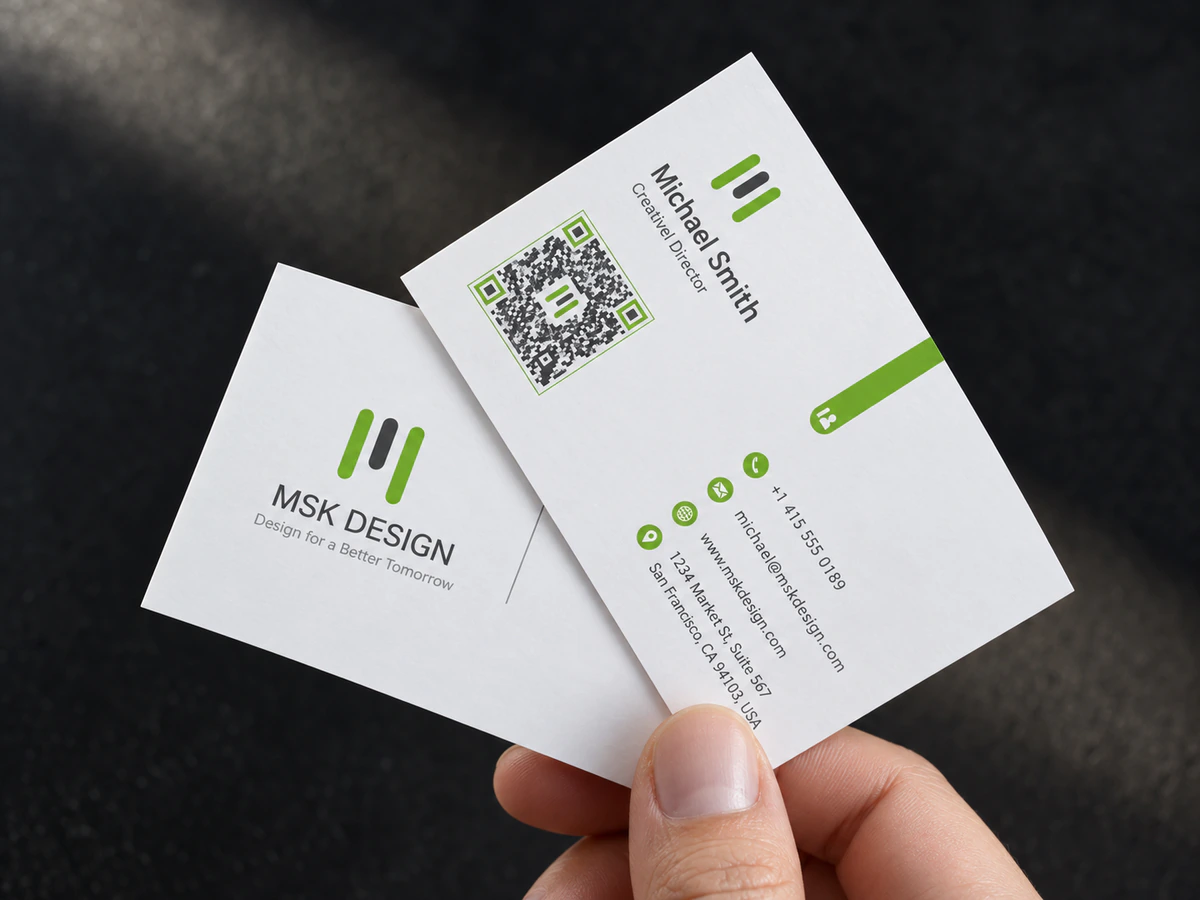
She asked another question: “Can I have a cleaner white background and still use recycled paper?”
Yes. Recycled paper doesn't always have visible flecks. White options exist too, such as this recycled paper from Favini. Before choosing recycled paper business cards, think about what you want: the recycled material, the visible flecks, or both.
 favini.com
What do C and U mean after a Pantone number?
She later sent over her brand color: a Pantone number followed by the letter C.
C stands for Coated, and U stands for Uncoated. The same Pantone color can look different on these two paper types because the ink interacts with each surface differently. Pantone explains the distinction here.
If you have a Pantone number, include the C or U when you send it to us. If you use CMYK values, send those instead. Even with those values, changing the paper or printing conditions can change how the color looks, as Pantone explains in its discussion of CMYK. That's why we would look at her color reference alongside her chosen paper, rather than looking only at the numbers.
Which business card papers can you write on? Try your pen
She also had a habit of writing a short care tip on the back of a business card when someone bought a plant. Something like “Water once a week.”
That's worth thinking about before choosing the paper. We have a separate article on which surfaces you can write on and which can give you trouble: Why Can't You Write on the Blank Back of a Business Card?.
How is soft touch different from the feel of the paper itself?
Finally, she said she liked business cards that felt soft and smooth.
There's a distinction here. Our soft touch finish gets its feel from a layer of film, not from the paper itself. A white paper that feels soft to the touch doesn't necessarily have that laminate.
If she likes the softness of the paper itself and wants details pressed into its surface, cotton business cards are also worth a look.
How do you choose between coated and uncoated business cards?
This example gives you four things to decide: how closely the color needs to match, how much paper should show, whether you need to write on the back, and whether you want the feel of paper or film.
You can take those same questions to our paper and finish sample book and compare the colors, surfaces and feel. The sample book can help narrow down your choices. It isn't a proof made for your design, and it doesn't include every possible combination.
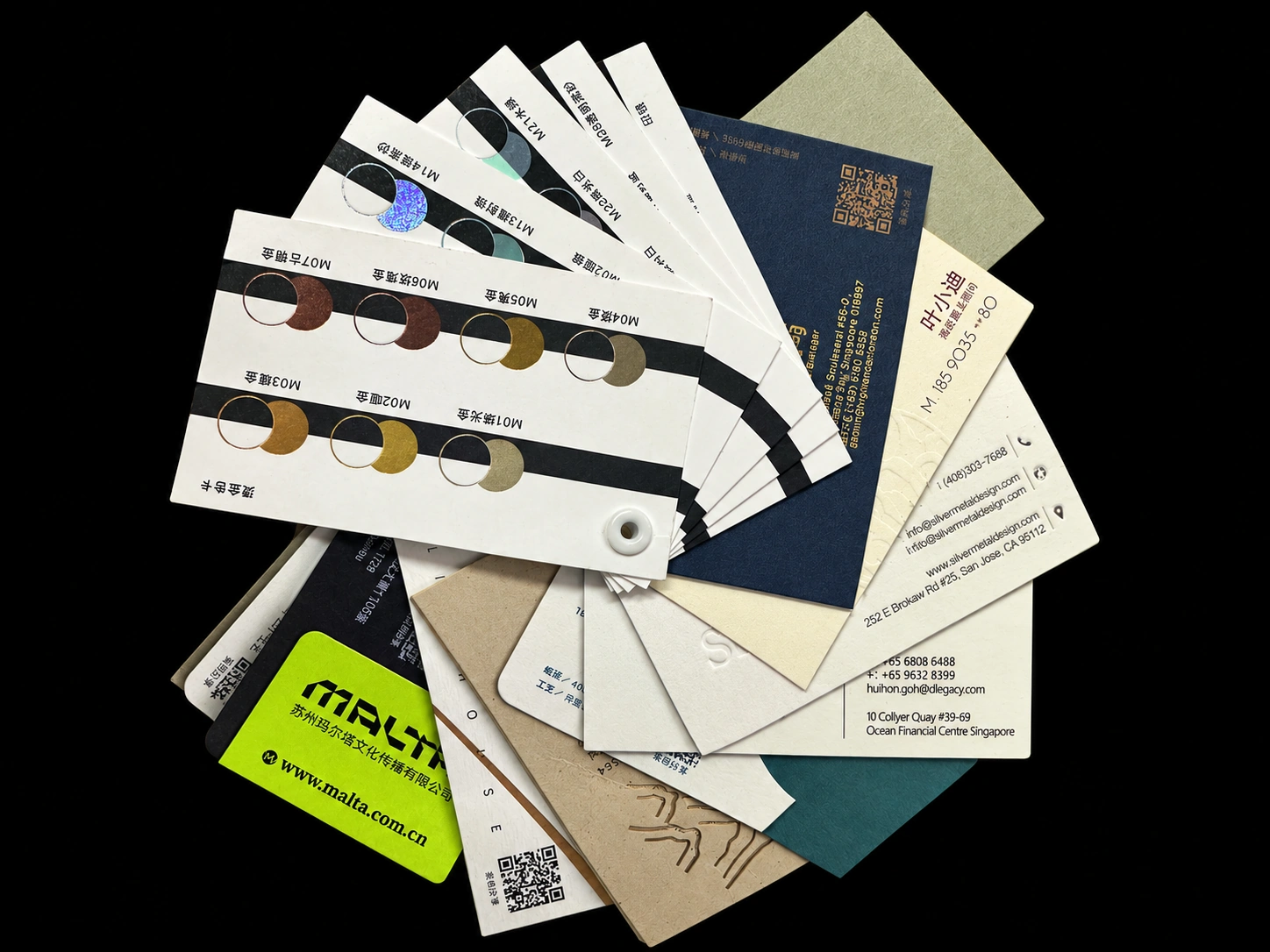
You can come to us with just a logo, a reference photo or a rough idea. That's enough to start a conversation.
If cotton paper is on your list, read our cotton paper business card guide.