
3D Metallic Embellishment Guide
Learn how 3D metallic embellishment works for premium custom business cards. This process uses ultra-thin metallic transfer decals bonded to the card surface, creating a real raised metallic accent with stronger physical presence than metallic ink and a different structure from foil stamping.
3D metallic embellishment adds a physical metal-like logo or detail onto the card surface without creating a reverse-side emboss mark.
What is 3D metallic embellishment?
3D metallic embellishment uses precision metal transfer decals. These thin metallic elements are carried by a transfer film and bonded onto premium card stock, giving the logo or detail a raised profile, cold metallic touch, and mirror-like reflection.
Raised metal-like accent
The metallic element sits on top of the paper surface. It feels more physical than metallic ink and creates a stronger dimensional accent than flat print.
No emboss mark on the back
Unlike true embossing, the design is not pushed up from the reverse side. The back of the card can remain flat and clean.
Works for detailed logo marks
Precision transfer allows disconnected typography and logo pieces, but extremely microscopic details should still be avoided for secure adhesion.
3D metallic transfer examples on premium card stocks
The effect changes with base paper, metal color, logo size, and lighting. Bright silver gives a clean chrome effect, gold creates a stronger luxury impression, bronze feels warmer, and black gold creates a more restrained stealth look.
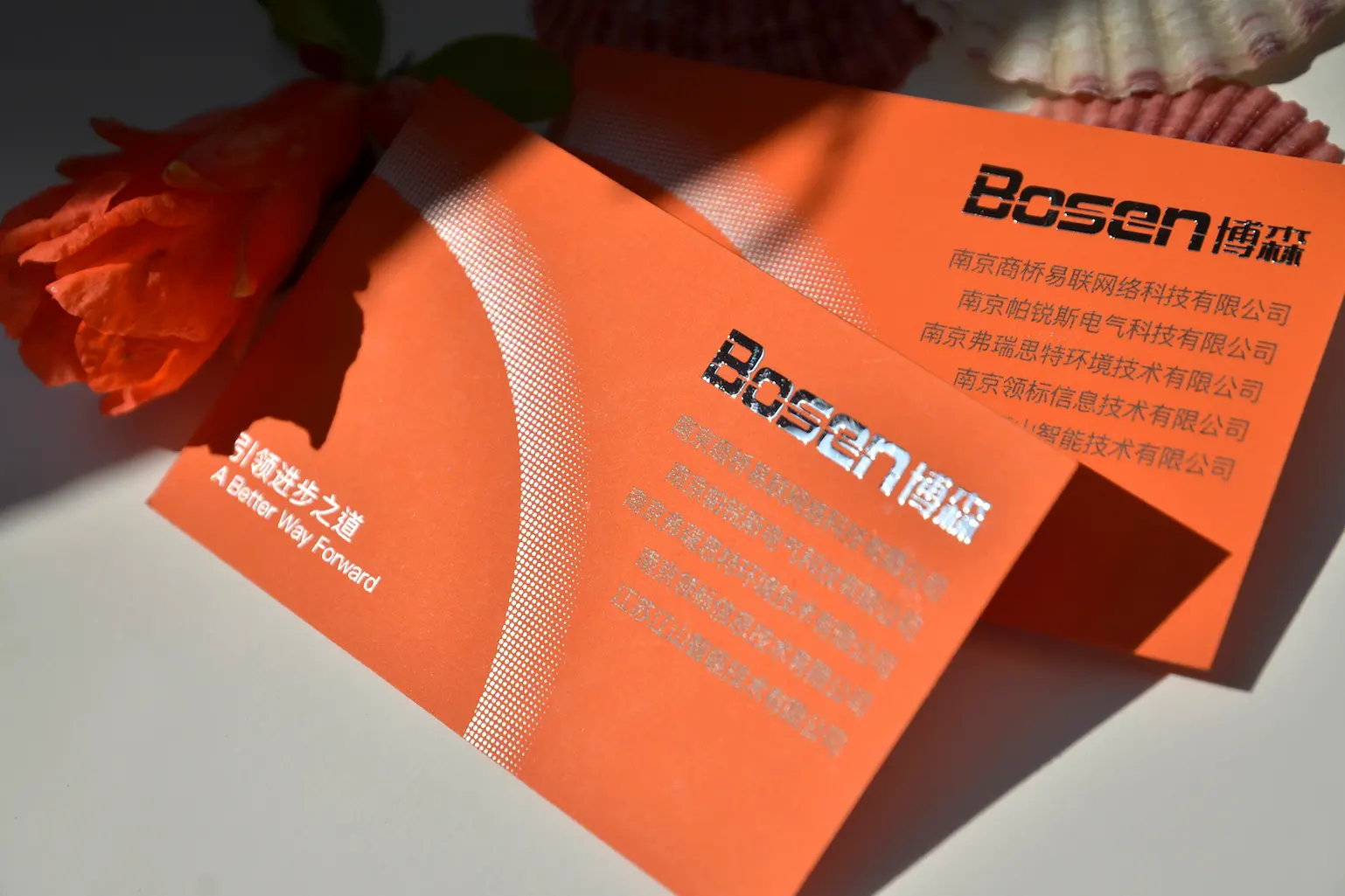
Bright Silver Decal
Chrome-like silver detail on orange soft-touch stock for strong contrast.
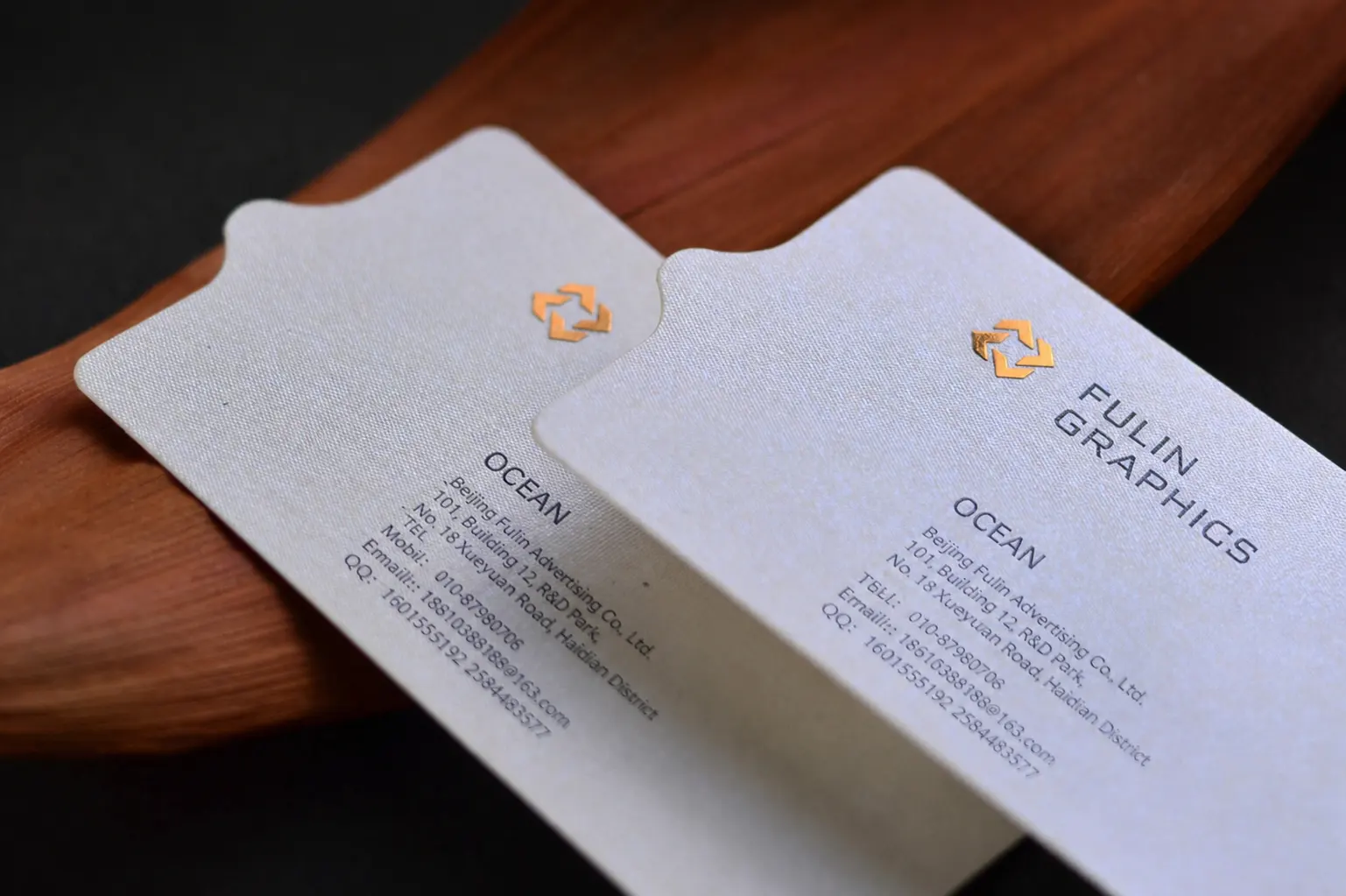
Bronze Gold Decal
Warm metallic accent on pearlescent stock with embossed texture.
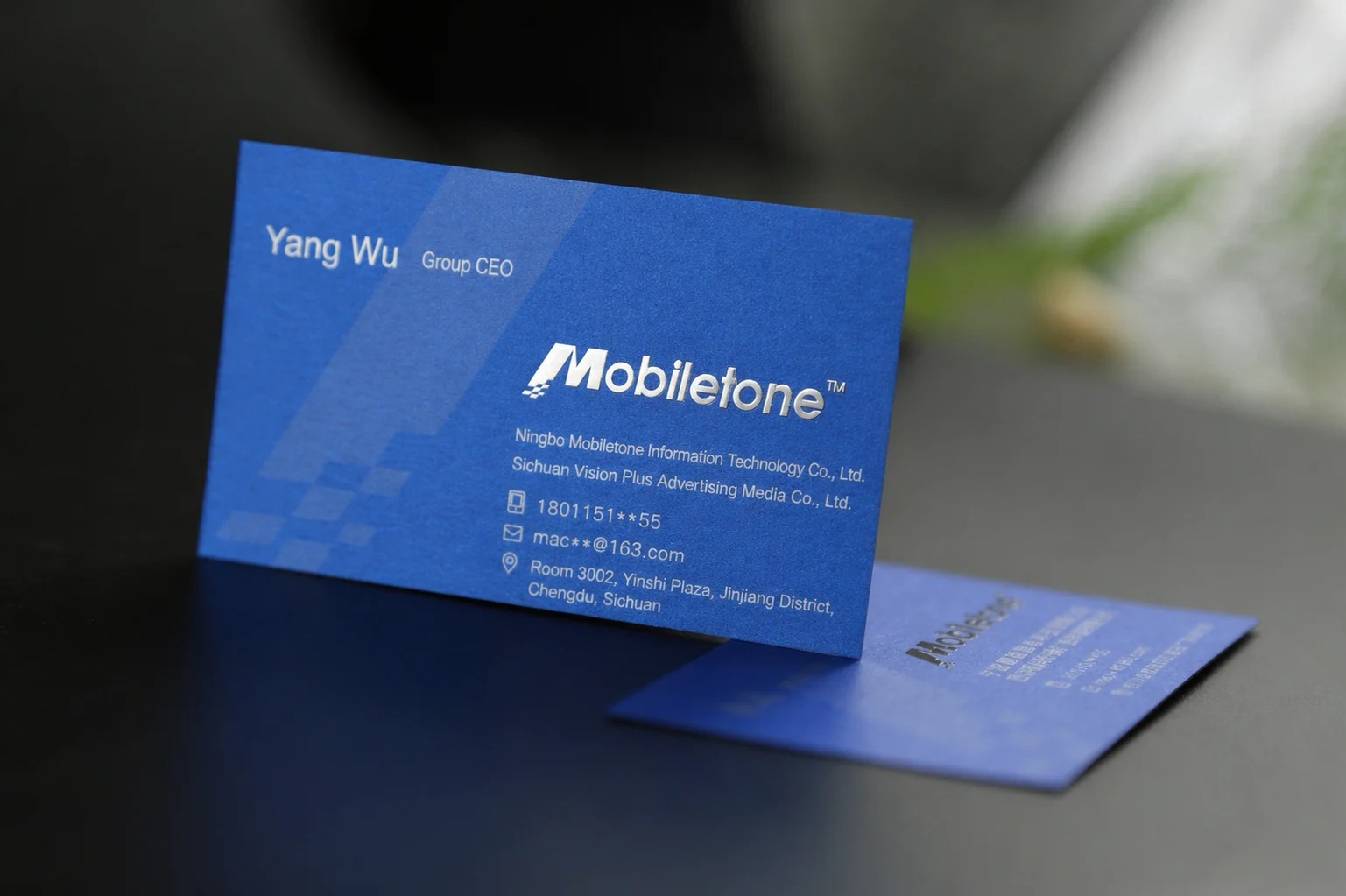
Silver on Blue Stock
Bright silver transfer can make a logo highly visible on colored soft-touch cards.

Bright Gold Decal
Gold metallic detail on cotton paper creates a refined luxury impression.
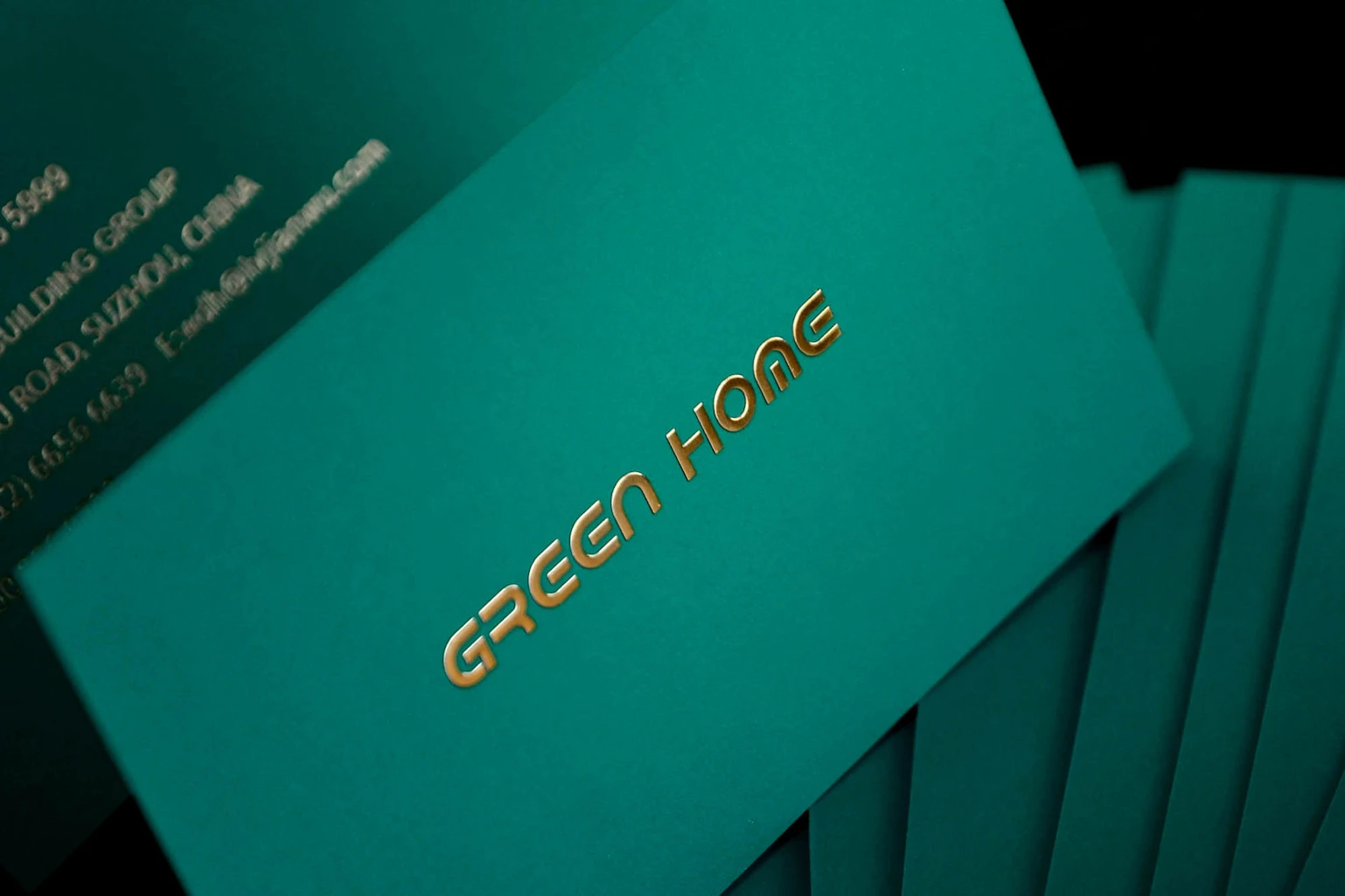
Warm Gold Decal
Warm gold sits strongly against deep green soft-touch stock.
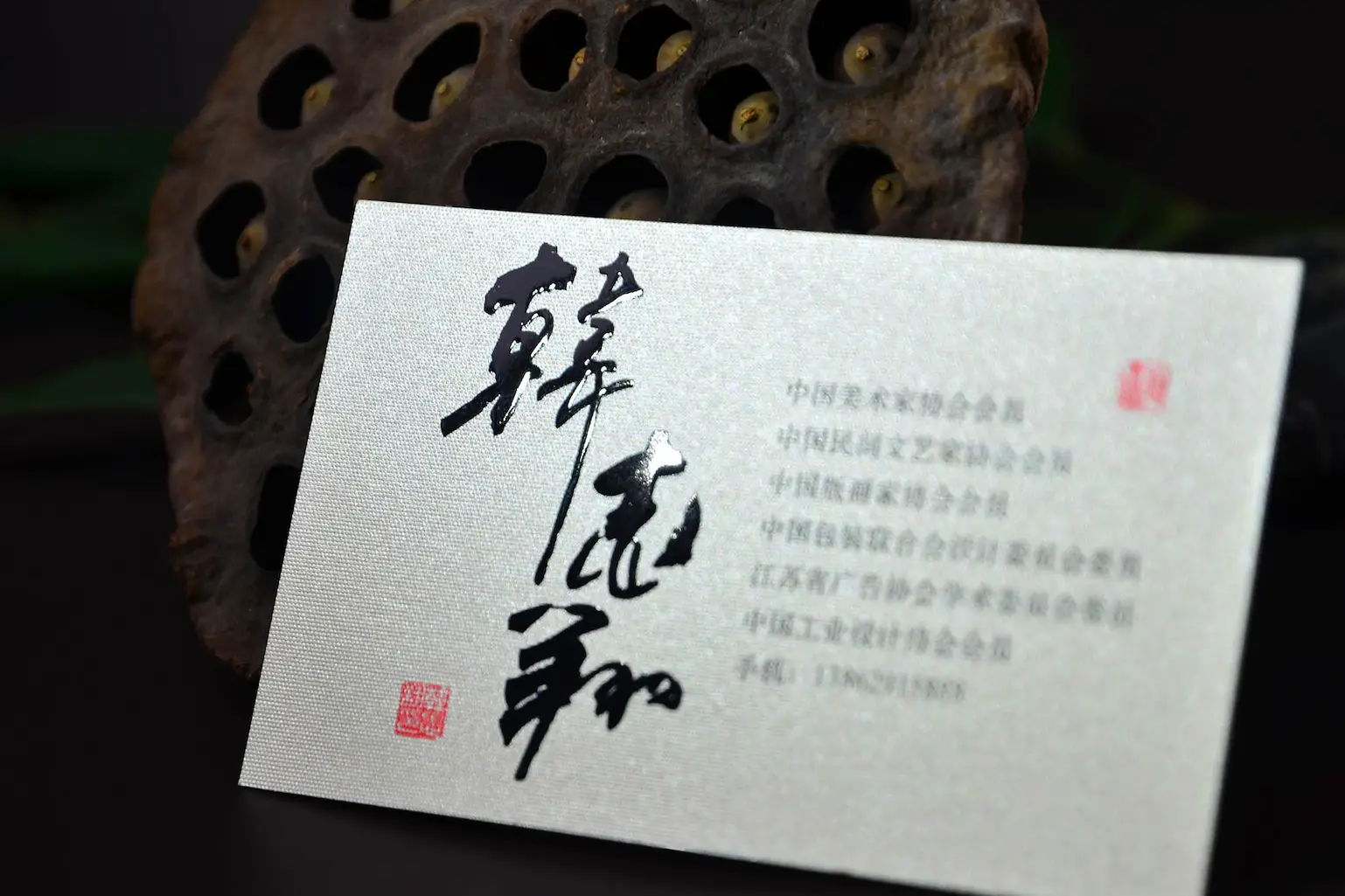
Black Gold Decal
Dark metallic detail creates a more subtle stealth-luxury effect.
3D metallic embellishment vs. foil, metallic ink, and embossing
These processes are often confused. This comparison helps customers understand when a true raised metal-like accent is more suitable.
| Feature | 3D Metallic Embellishment | Foil / Metallic Ink / Emboss |
|---|---|---|
| Production method | Ultra-thin metallic transfer decal is bonded onto the card surface. | Foil transfers a metallic film; metallic ink is printed; embossing reshapes the paper. |
| Surface profile | Raised metal-like accent sits on top of the paper. | Foil is usually flatter or pressed; ink is flat; embossing raises paper from the back. |
| Reverse side | Back side can remain flat because the metal element is applied from the front. | Embossing usually creates a reverse-side recessed mark; foil and ink do not create a metal piece. |
| Best use | Premium logos, crests, icons, luxury marks, and high-value brand signatures. | Foil for metallic reflection, metallic ink for fine printed detail, embossing for raised paper texture. |
| Visual impact | Strongest physical metallic presence among these options. | Depends on process: foil shines strongly, ink is subtle, embossing is dimensional but paper-based. |
Use 3D metal for bold, valuable brand marks.
This process works best when the metallic detail has enough area to be seen and touched. It should usually be used as a hero accent rather than as dense background decoration.
Better for 3D metallic embellishment
Use the process when the logo or mark should feel more like a physical object than a printed graphic.
Use caution
Although fine details are possible, this should not be treated like normal ink printing for microscopic elements.
File setup for 3D metallic transfer decals
Artwork should be supplied as clean vector paths so each metallic piece can be produced and transferred accurately.
Use 100% vector paths
Do not use low-resolution images or screenshots for the metal transfer area. Vector artwork is required for clean production.
Keep details practical
Use 0.25pt minimum line thickness as a practical reference. Avoid extremely microscopic elements that may reduce adhesion.
Mark the metal area clearly
Keep the metal transfer layer separate from print, foil, UV, debossing, and cutting layers so production can review each finish.
Combine metal accents with the right card base.
3D metallic embellishment works best on cards with enough thickness, surface stability, and brand value to justify the premium process.
Common questions about 3D metallic embellishment
Is 3D metallic embellishment the same as foil stamping?
Is it the same as metallic ink?
Does it affect the back of the card like embossing?
Can it be used for small typography?
Which card stocks work best?
What file setup is needed?
Need help deciding between 3D metal, foil, and metallic ink?
Send your artwork, logo size, quantity, card material direction, and preferred metallic effect. We can review whether 3D metallic embellishment, foil stamping, or metallic ink is more suitable before quoting.