
Emboss & Deboss Guide
Learn the difference between debossing, standard embossing, and sculpted embossing for custom business cards. Debossing presses artwork into the paper surface, while embossing raises artwork above the surface for a tactile relief effect.
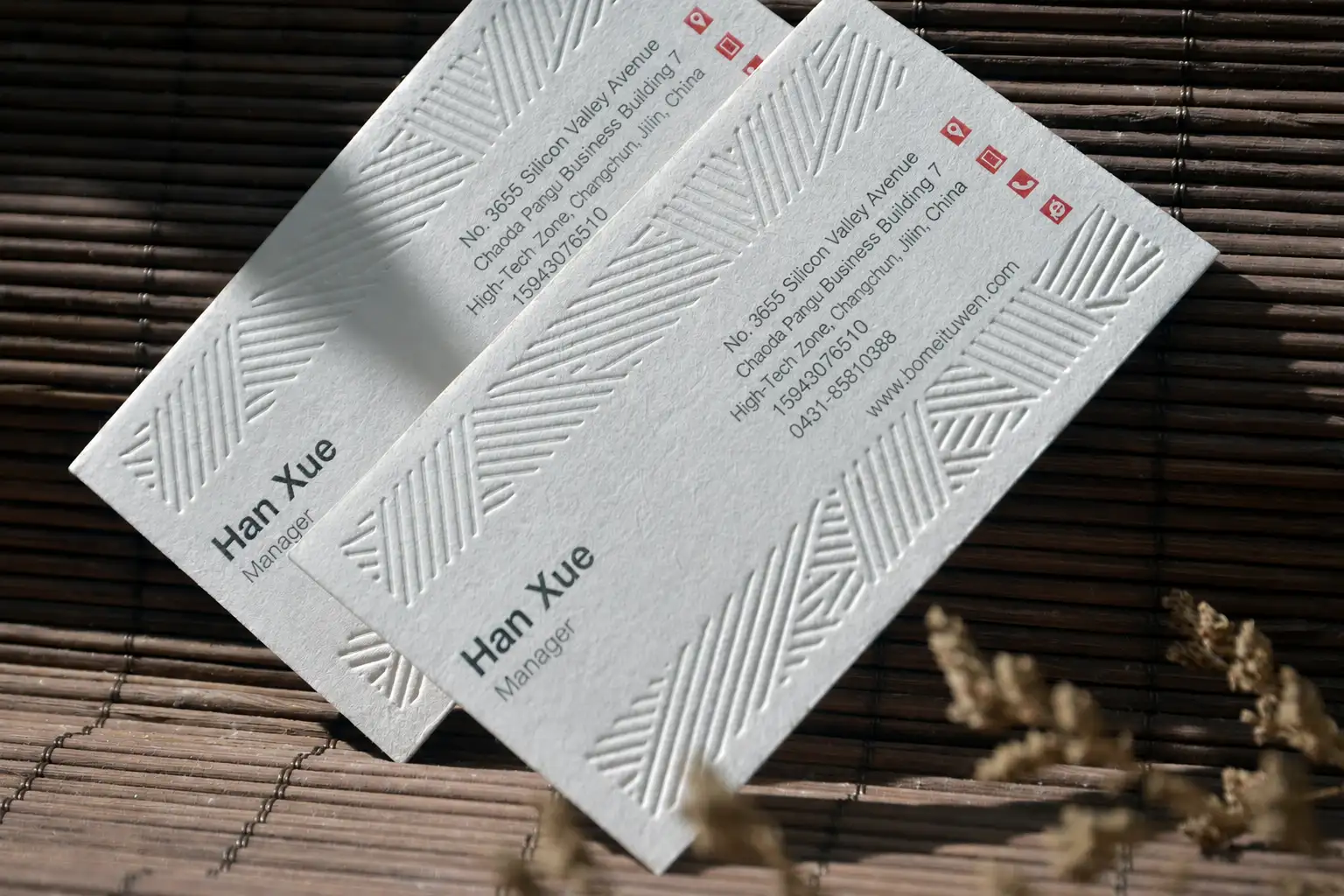
Debossing, embossing, and sculpted embossing all reshape the card surface, but each finish creates a different tactile direction.
Two tactile finishes, opposite surface effects
Debossing compresses paper fibers downward. Standard embossing pushes artwork upward in a simpler raised level. Sculpted embossing uses a more dimensional multi-level die to shape logos, crests, initials, and illustrations with stronger light-and-shadow relief.
Debossing Examples
Deep Deboss
Strong recessed logo and typography depth on cotton stock.
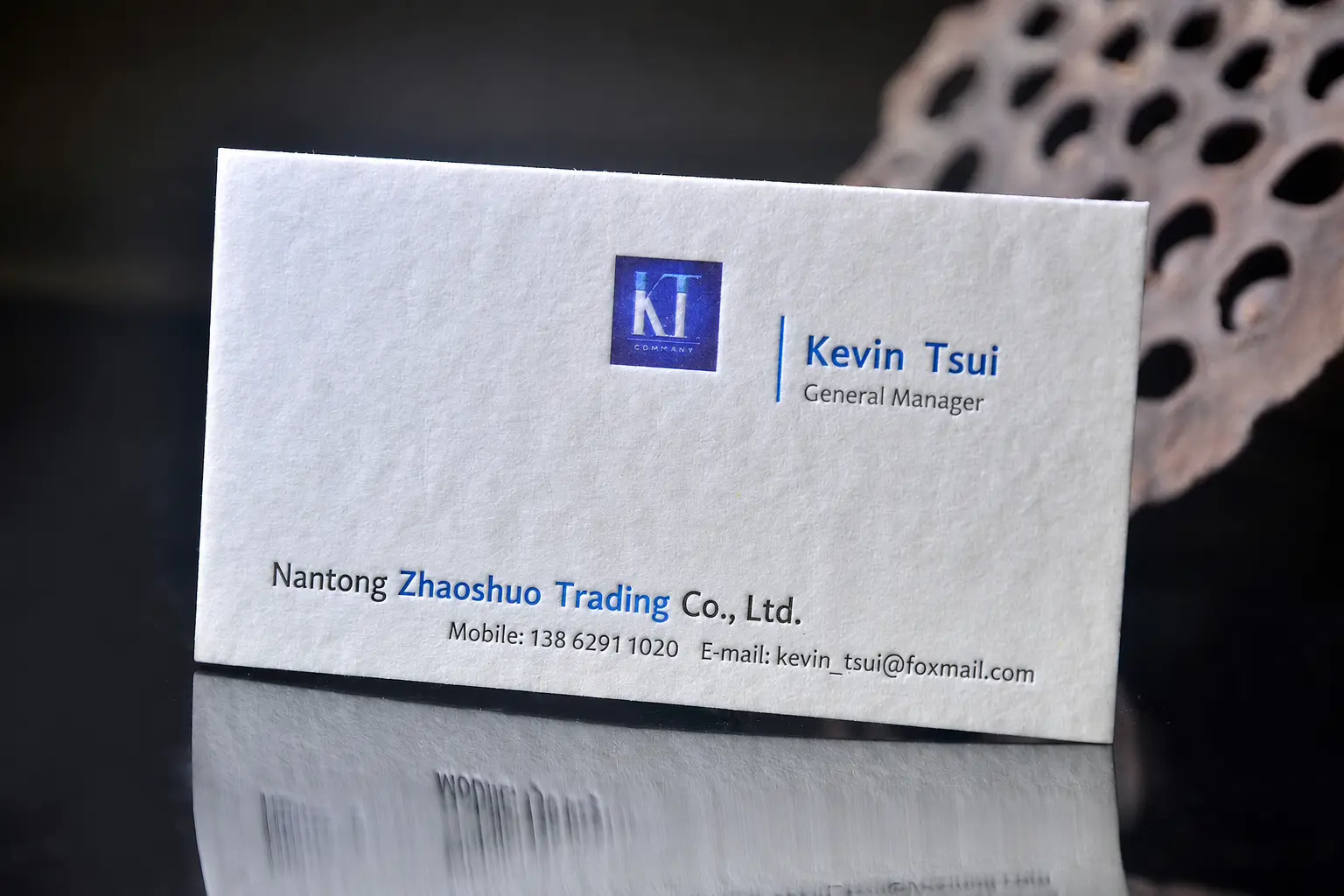
Colored Deboss
Printed color combined with tactile pressed-in detail.
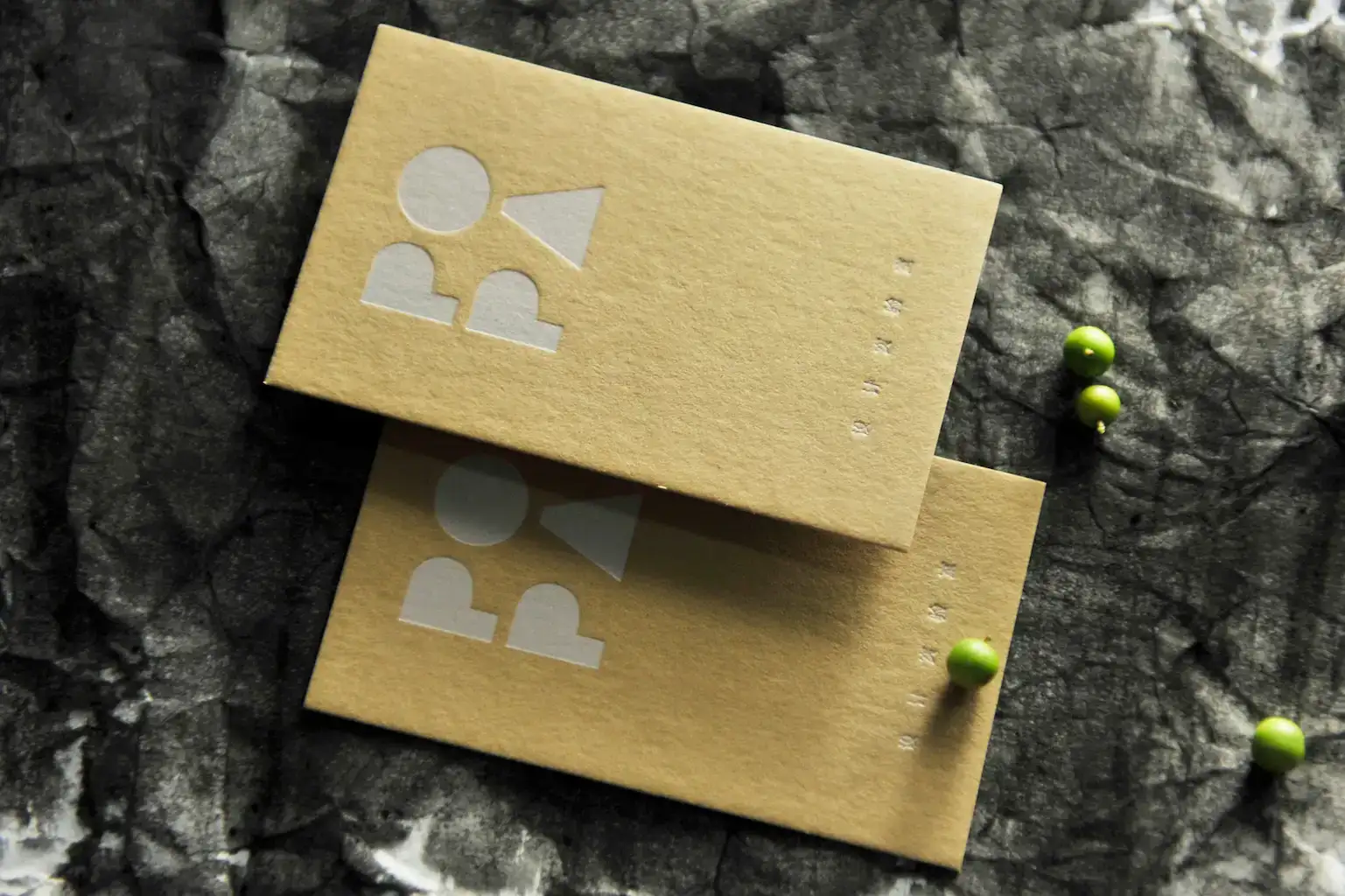
Double-Sided Deboss
Front and back tactile structure with carefully planned placement.
Embossing Examples
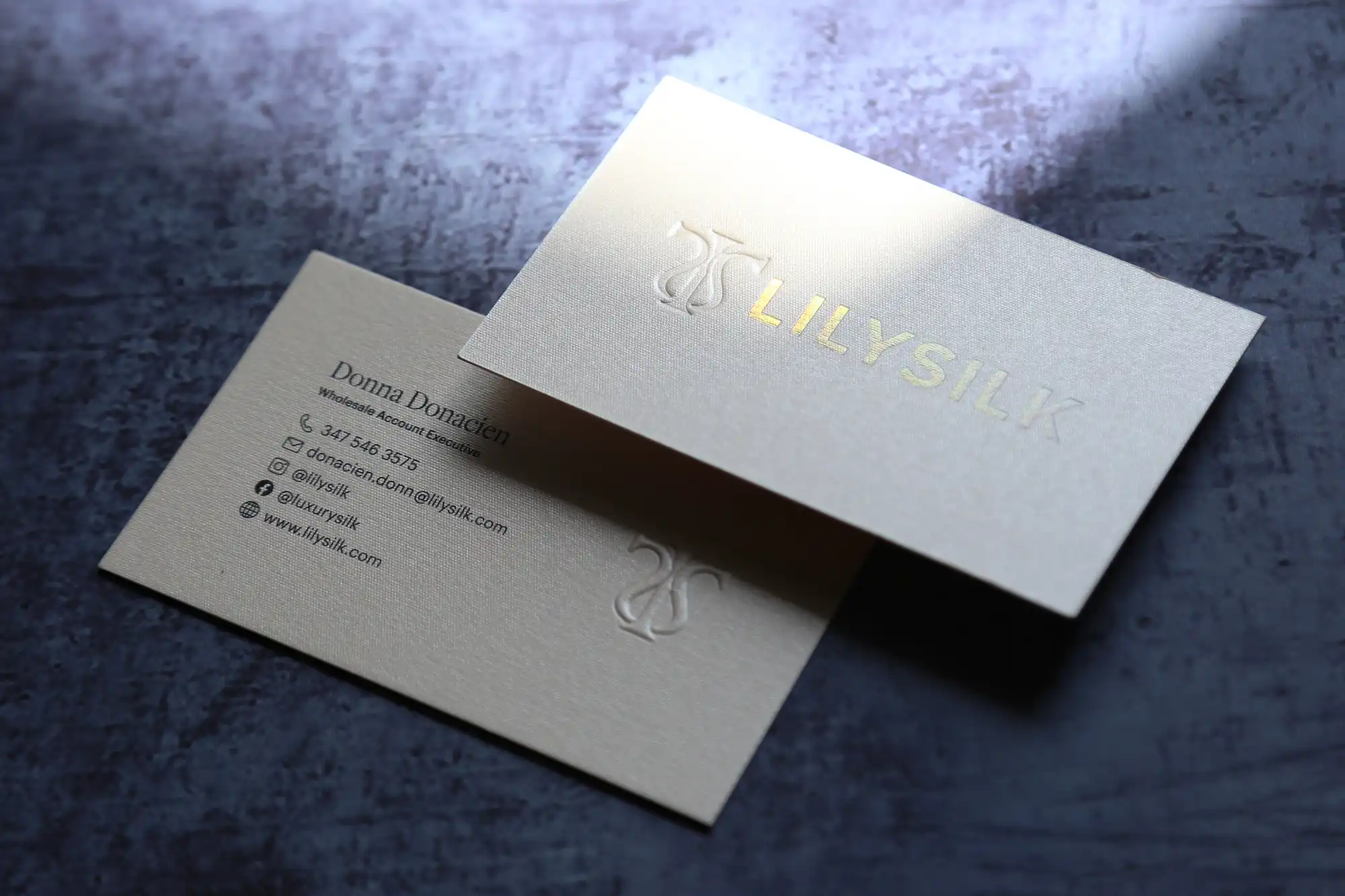
Blind Emboss
No foil and no ink. The surface shape creates the visual effect.
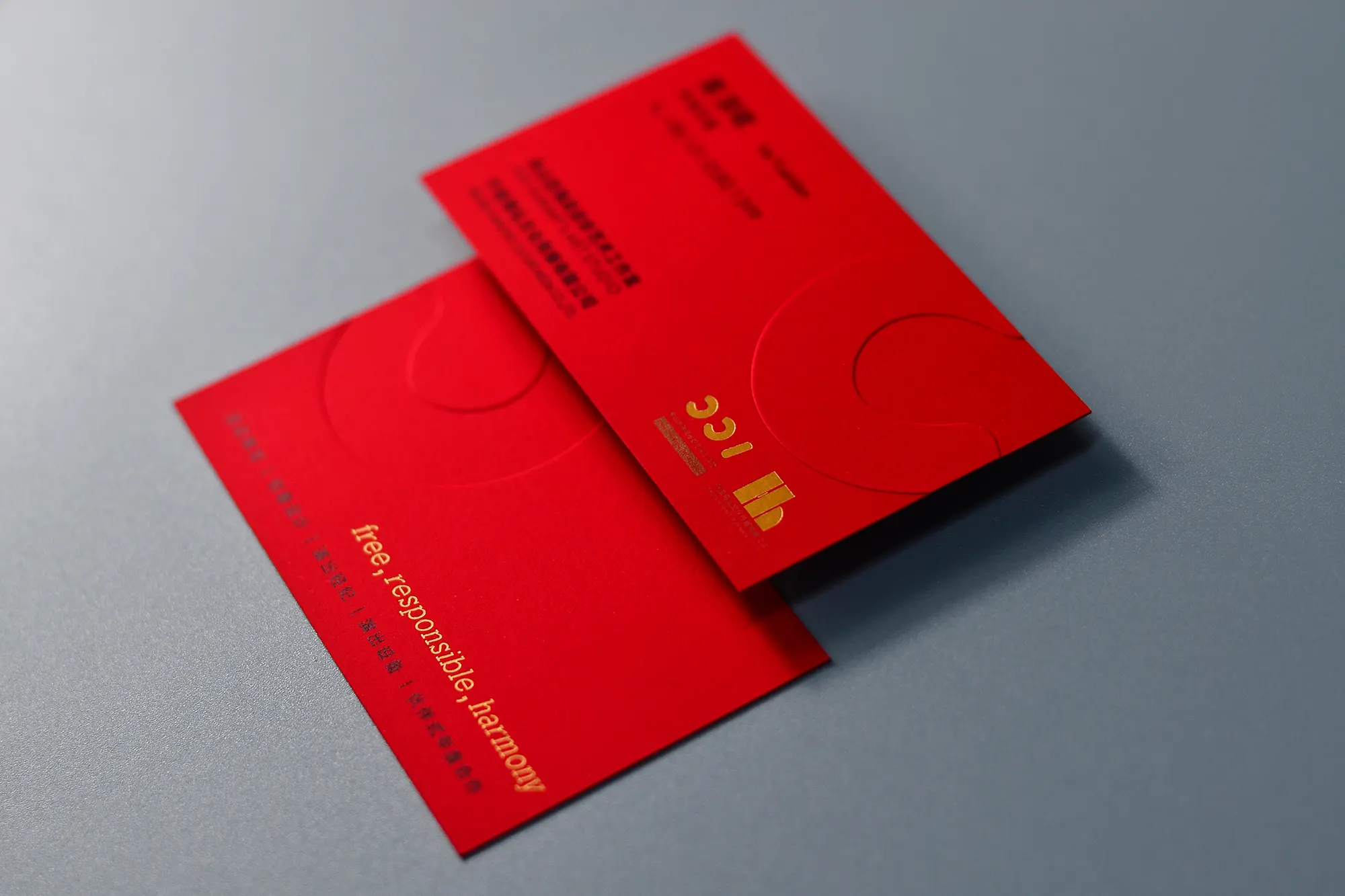
Foil Emboss
Raised metallic details with stronger visual impact.
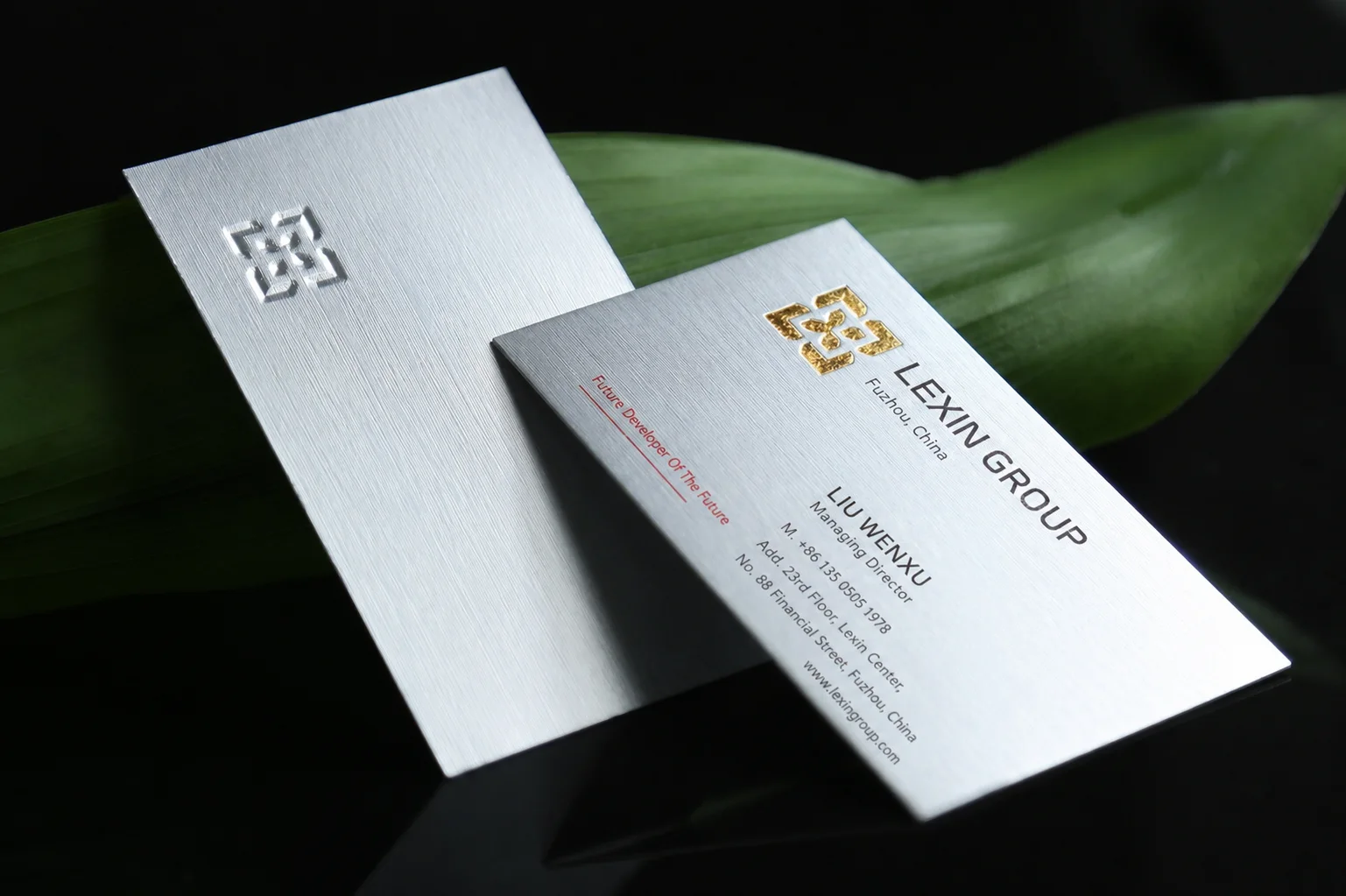
Premium Emboss
Raised finishing combined with metallic shimmer stock.
Embossing vs. debossing comparison
Use this comparison to decide which tactile direction fits your design, paper stock, and brand tone.
| Feature | Debossing | Standard Embossing | Sculpted Embossing |
|---|---|---|---|
| Surface effect | Artwork is pressed into the card surface. | Artwork is raised above the card surface, usually with a simpler single-level profile. | Artwork is raised into shaped relief with multiple heights, curves, and stronger shadow transitions. |
| Visual tone | Subtle, refined, quiet luxury. | Clear raised effect with stronger 3D presence than flat printing. | More dimensional and sculptural, suitable for premium logos, crests, initials, and illustrations. |
| Best artwork | Logos, monograms, large typography, borders, blind impressions. | Crests, icons, larger logos, foil embossing, premium symbols. | Large letterforms, botanical artwork, brand crests, emblem marks, and artwork with enough shape to hold relief. |
| Paper behavior | Works especially well on cotton and thick compressible stocks. | Needs flexible stock that can stretch and hold the raised profile. | Works best on thick cotton, duplex, or triplex cards where the paper can show depth without tearing or flattening. |
| Reverse side | Deep pressure may create a slight witness mark on the back. | True embossing creates a corresponding recessed impression on the back. | Multi-level pressure may show reverse-side relief, so front/back placement should be reviewed before production. |
| Common combination | Blind deboss, colored deboss, letterpress, foil deboss. | Blind emboss, colored emboss, foil emboss. | Blind sculpted emboss, sculpted logo emboss, sculpted floral detail, foil plus sculpted emboss after artwork review. |
Blind, colored, and foil-assisted tactile finishes
Embossing and debossing can be used without ink, with printed color, or with foil stamping. Each direction creates a different visual mood.
Blind emboss or blind deboss
No ink and no foil. The effect relies on light, shadow, paper texture, and physical depth. Best for subtle luxury branding.
Printed + tactile detail
Color can be aligned with the raised or recessed area. This helps make logos, icons, or typography more visible.
Foil emboss or foil deboss
Foil adds metallic reflection to the tactile area. Foil embossing is stronger and more sculptural; foil debossing feels more pressed and refined.
When a normal raised emboss is not dimensional enough
Sculpted embossing uses a custom multi-level die to form shaped relief, not just one flat raised layer. It works best when the artwork has enough size, shape, and paper depth to create visible highlights, soft shadows, and a premium hand-feel.
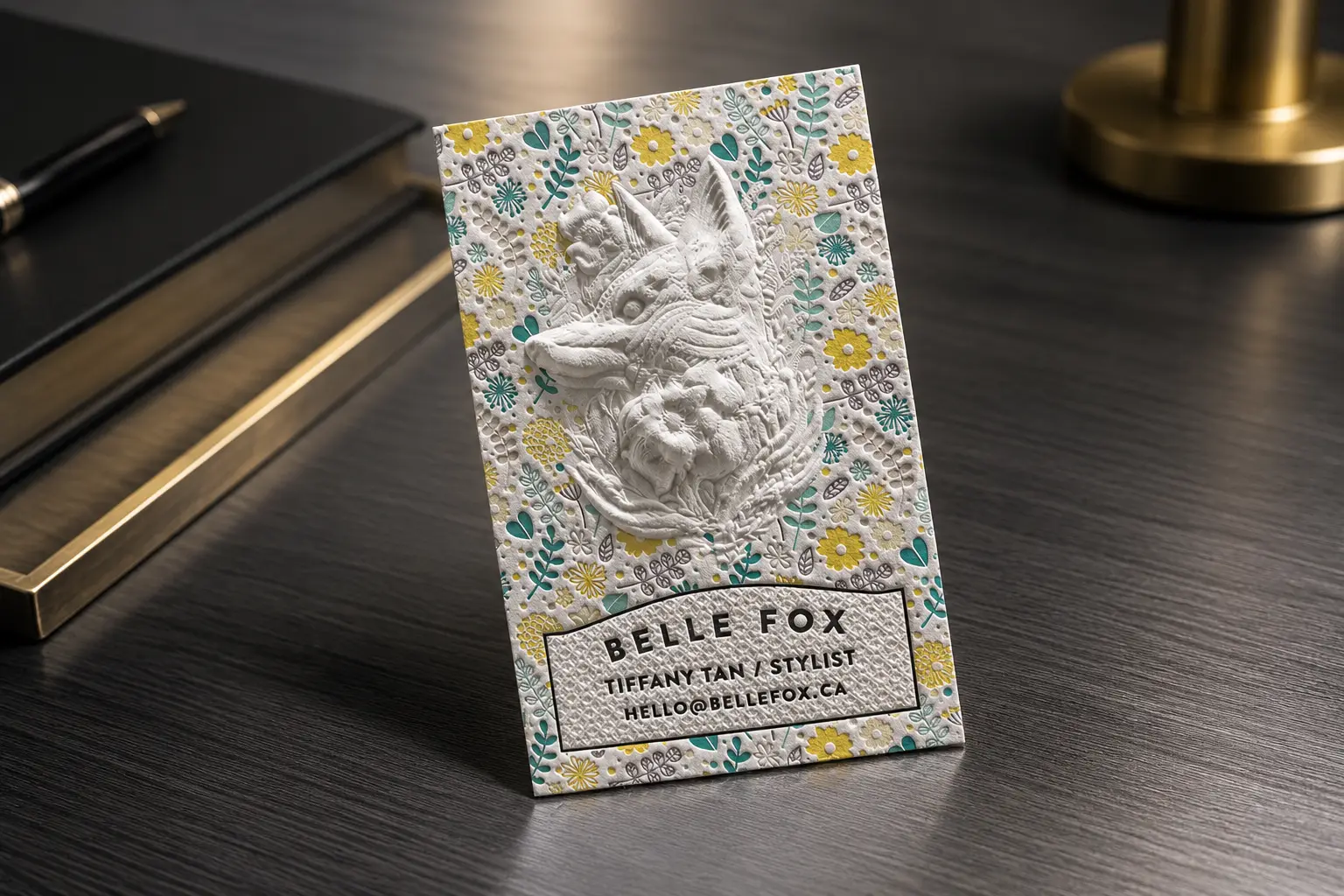
Sculpted Emboss Cotton Card Detail
Raised, curved relief on thick cotton paper, shown in close-up so the tactile depth can be read through light and shadow.
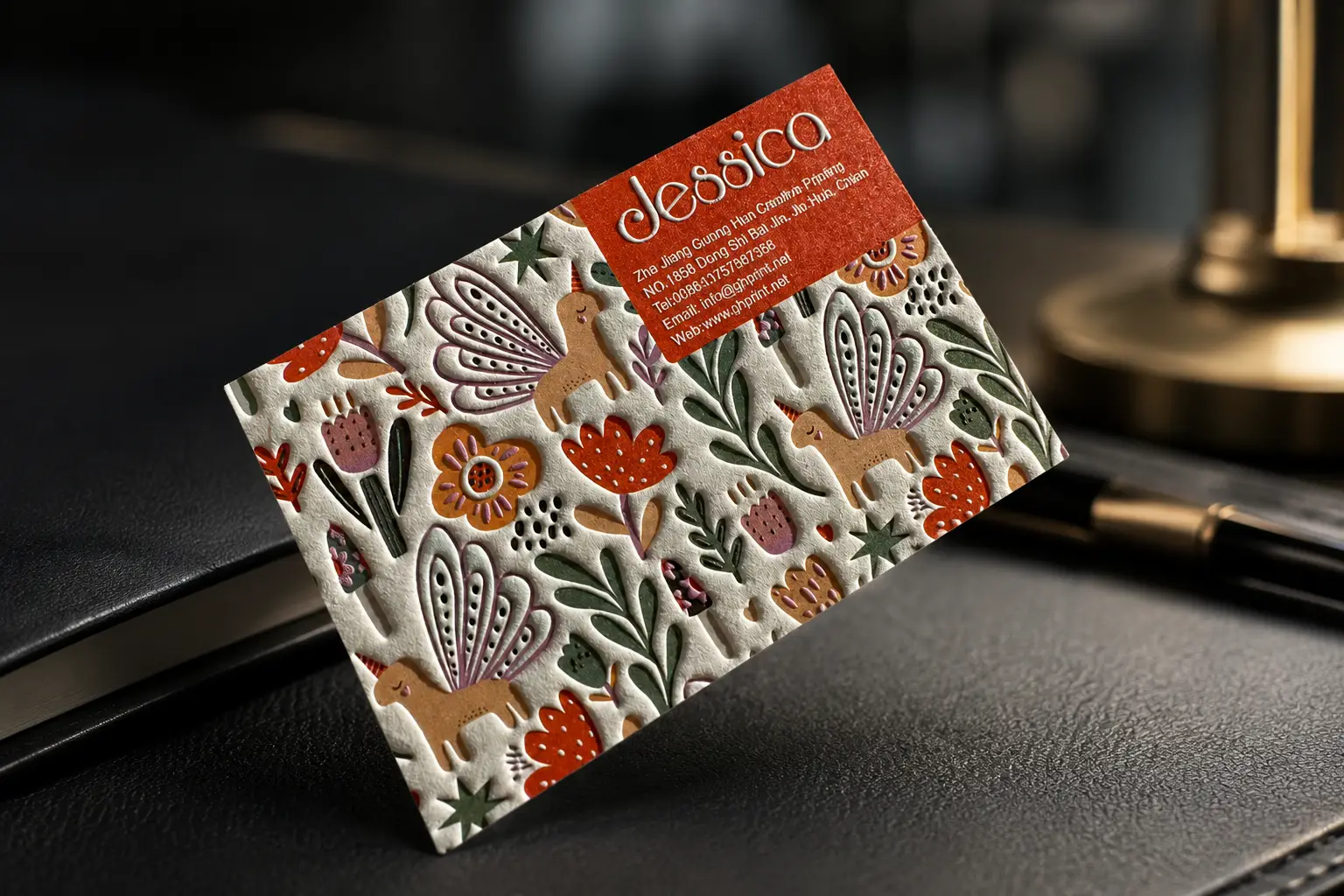
Floral Sculpted Emboss Pattern
Decorative botanical artwork with shallow height transitions, suitable for luxury patterns, crests, and refined brand marks.
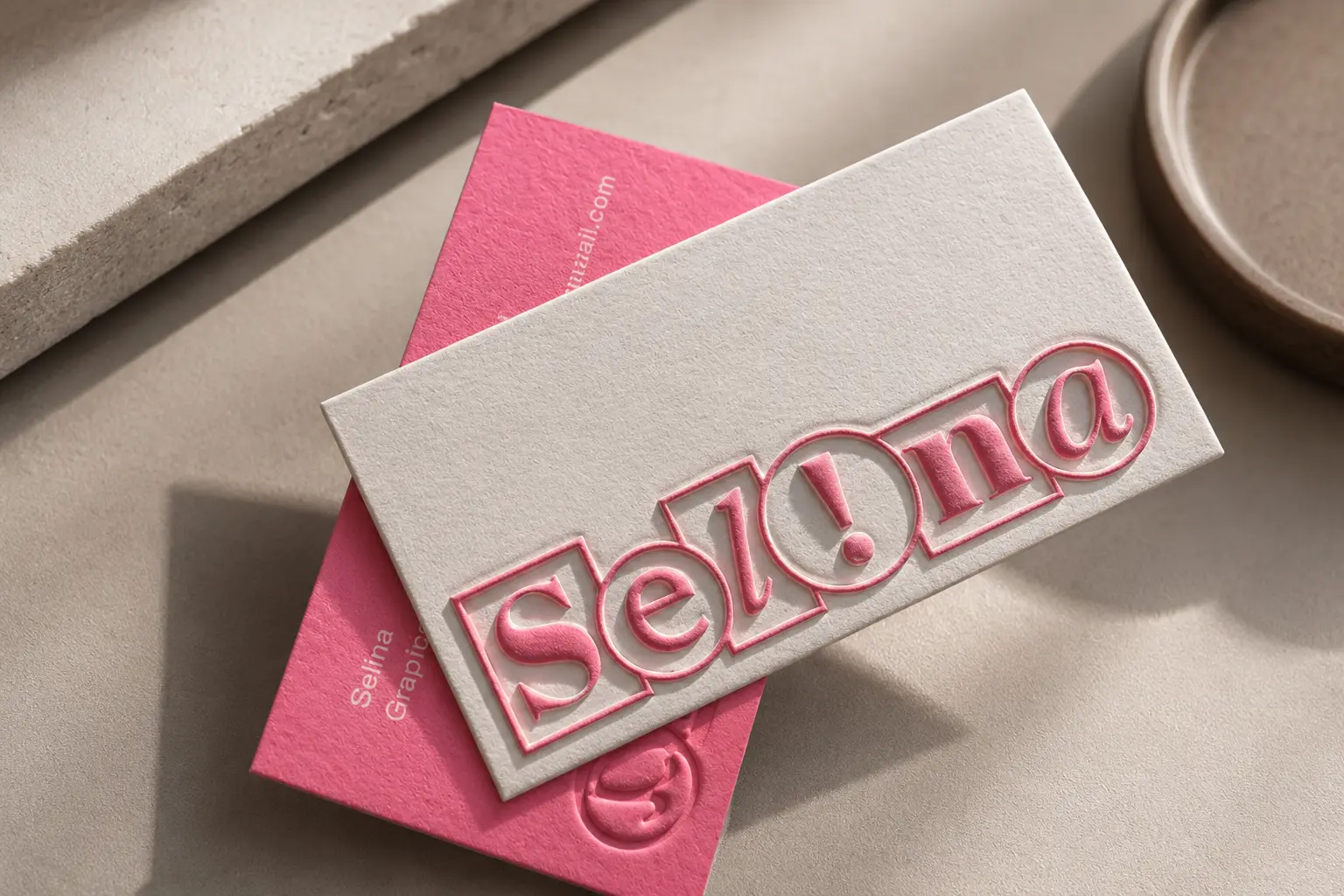
Sculpted Emboss Letterform Detail
Large initials and monograms show sculpted relief more clearly than tiny thin lines or small text.
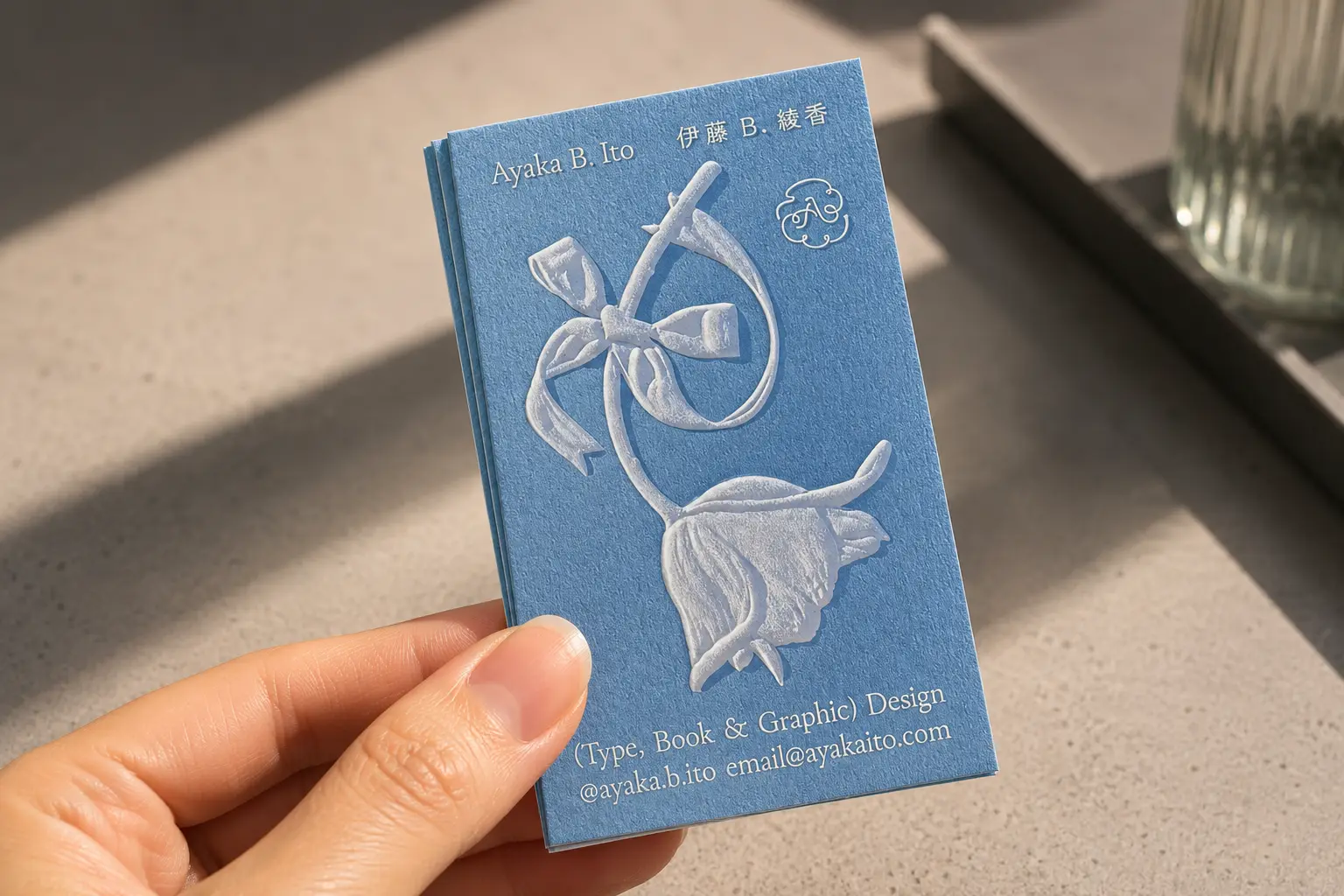
Blind Sculpted Emboss Illustration
A paper-only relief effect without foil or ink, relying on pressure, paper texture, and directional lighting.
What buyers usually need to confirm
For sculpted emboss business cards, the key question is not only whether the artwork can be embossed, but whether it has enough size, line weight, and relief direction to hold a clean multi-level shape.
Common production risks
Very small artwork can lose definition after pressure. Dense lines may merge, thin strokes may disappear, and reverse-side placement can conflict with deep relief.
How to design for clean raised or recessed results
These finishes physically move paper fibers, so the artwork should be bold enough to hold shape after pressure. Sculpted embossing needs even clearer shape planning because the die forms multiple relief levels instead of one simple raised or recessed area.
Better for embossing and debossing
Use artwork that has enough surface area to create visible shadows and tactile contrast.
Use caution
Fine textures, tiny gaps, and complex micro-patterns can merge or become unclear after pressure.
File setup for embossing and debossing
Submit tactile artwork as a separate vector layer. This helps the production team identify which areas should be raised, recessed, sculpted, blind, colored, or combined with foil.
Use vector artwork
Emboss and deboss artwork should be supplied as clean vector paths. Avoid low-resolution images for die-making areas.
Use bold enough detail
Use at least 1pt line thickness as a practical reference for clean raised or recessed edges. For sculpted emboss, larger shapes and clearer relief zones are safer than dense micro-detail.
Separate front and back
Clearly mark front and back tactile areas. For double-sided emboss or deboss, avoid direct overlap unless the structure has been reviewed.
Choose the right card base for tactile finishing
Embossing, debossing, and sculpted embossing depend heavily on paper structure. Cotton stocks, soft-touch surfaces, thick duplex builds, and color core cards can all create different tactile results.
Common questions about embossing and debossing
What is the difference between embossing and debossing?
What is sculpted embossing?
Is sculpted emboss the same as raised spot UV?
What artwork works best for sculpted emboss business cards?
Which one looks more premium?
Can embossing or debossing be combined with foil?
Can sculpted emboss be combined with foil?
Will embossing affect the back of the card?
Can both sides use embossing or debossing?
What file setup is needed?
Not sure whether your design needs debossing, embossing, or sculpted embossing?
Send your artwork, reference image, quantity, paper direction, and finishing requirements. We can review whether recessed debossing, standard raised embossing, blind sculpted embossing, or foil-assisted tactile finishing is more suitable before quoting.