
Foil can be applied to both sides of some business card constructions, but it is not a universal option. Feasibility depends on the paper or layered structure, foil areas, artwork separation, alignment, and production handling. Before requesting double-sided foil, prepare separate front and back artwork, mark each foil area and color, and share the paper direction, quantity, and any raised or debossed effects for production and quote review.
When is double-sided foil the better choice?
Use one-side foil when the back only needs clear information. Consider foil on both sides only when the reverse has a specific metallic purpose and the card construction passes production review.
A front logo or monogram is often enough to establish the metallic detail. The back can then carry the name, role, contact information, and QR code in print. This keeps the reverse easy to read and gives the front a clear focal point. Two-side foil makes more sense when the back has its own branded element, such as a small mark, border, or short line that genuinely needs the same metallic treatment.
| Option | Best fit | Artwork required | Production review |
|---|---|---|---|
| Foil on one side | The front carries the metallic brand element and the back prioritizes readable details | Front print artwork, back print artwork, and one clearly marked foil layer | Review the paper, foil area, and any other finishes |
| Foil on both sides | The reverse has a distinct metallic element with a clear visual purpose | Separate front and back layouts, with each foil area and color identified | Review the paper or layered construction, both foil areas, alignment, and combined effects |
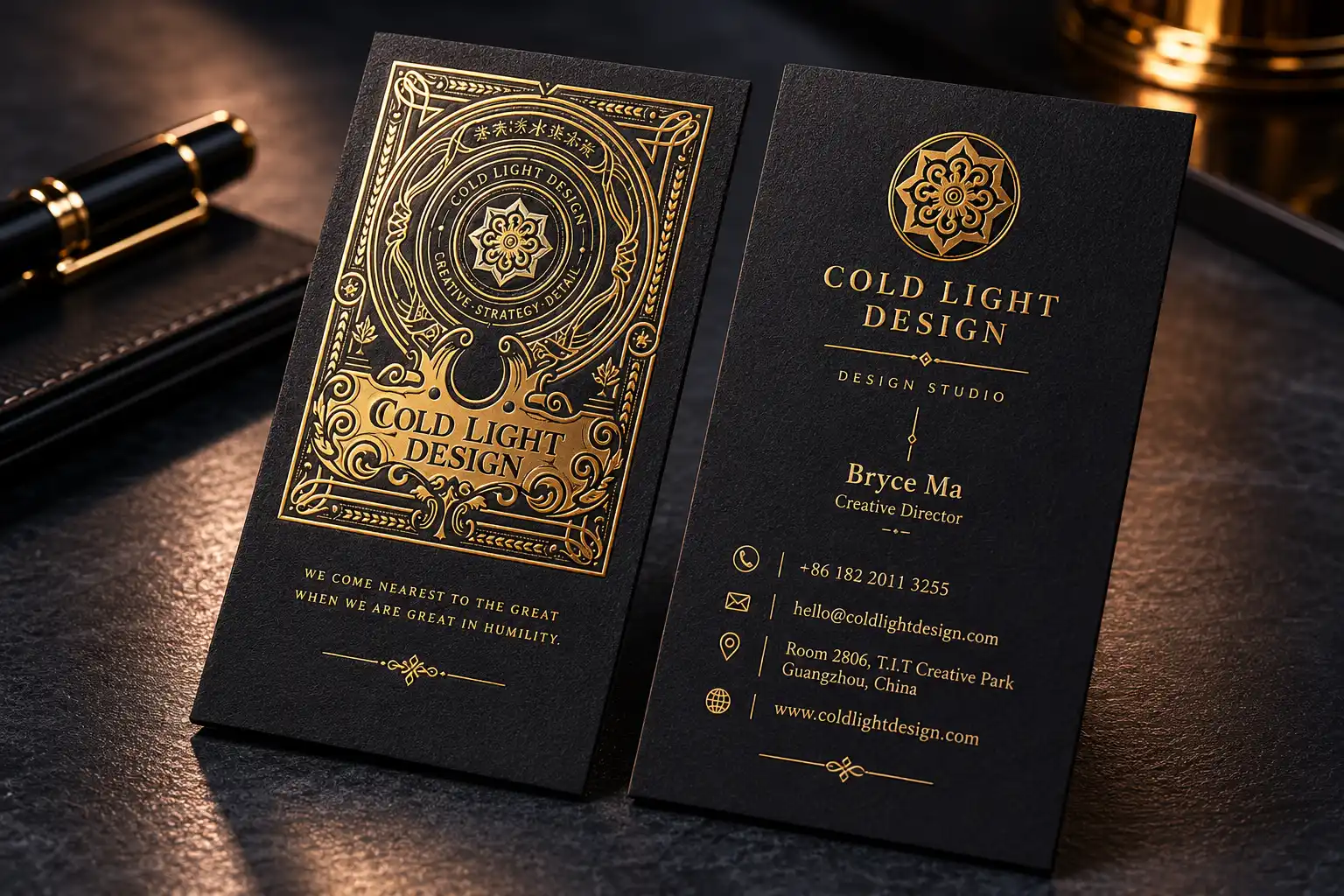
If the back foil has no job beyond filling empty space, it usually adds artwork and review work without making the card easier to use. Buyers who already know the paper and finish direction can start with ZIVFY's custom foil business cards page and send both sides for review.
What should go on the back of a foil business card?
Keep the reverse useful first. Foil should support the information hierarchy without making the contact details harder to scan.
Start by assigning a job to each side. The front might carry the logo, company name, or a restrained foil border. The back can hold the person's name, role, phone, email, website, address, or QR code. If the reverse needs foil, apply it to one deliberate brand element rather than treating every line as a finish area.
Contact details still need enough contrast and breathing room in the artwork. Very small type, fine strokes, and crowded foil areas should be flagged for review instead of assumed suitable. A clean printed information block with one foil accent is often more practical than a reverse side where the finish competes with the details.
Which card and foil details need production review?
Paper or layered construction, surface, foil area, alignment, and combined effects can change whether a two-side design is suitable. ZIVFY should review the exact combination before the card is quoted or treated as production ready.
Paper and card construction
The paper name alone does not settle the decision. A single stock, a mounted or duplex construction, a coated surface, and a textured surface can require different handling. Tell ZIVFY the material direction you want, even if you have not chosen the exact paper. The foil stamping guide explains the process and foil directions without turning a general example into approval for a specific card.
Foil area and combined effects
Mark the foil area on each side and identify every requested color. Large areas, fine details, front-to-back positioning, and nearby print all belong in the review. If the card also uses raised foil, embossing, debossing, edge color, or another finish, list those effects separately. Standard foil stamping should not be treated as another name for raised or embossed foil.
This is where a short note saves time. State which effect belongs on which side and which element matters most if the original combination needs adjustment.
How should front and back artwork be prepared?
Prepare separate front and back layouts, then identify each foil area and color clearly. Do not merge both sides into one unlabeled visual or leave the printer to guess which metallic element belongs where.
Keep printed artwork separate from foil artwork. A clearly named foil layer or separate foil mask for each side makes the intended finish easier to review. Show the correct orientation of the back, especially when the design rotates or flips. If more than one foil color is requested, label each color in both the file and the accompanying note.
Do not invent production tolerances in the artwork. Send the design at its intended finished size and let the review identify any spacing, line, coverage, or alignment issue. ZIVFY's artwork support can help when the print and foil layers still need to be separated. The foil business card artwork, paper and MOQ guide covers the wider quote-preparation route.
What should you send for a double-sided foil quote?
Send both sides, the paper direction, foil details, quantity, finished size, and every other requested finish. A complete review set is short:
- Front and back visual artwork in the correct orientation
- A separate or clearly named foil layer for each side
- The foil color or colors, with each area labeled
- The preferred paper or card construction, if known
- The finished size and quantity, with ZIVFY's public MOQ at 200 cards
- Any raised, embossed, debossed, edge color, or other finish request
Send this information through the custom foil business cards quote path for feasibility and pricing review. If the files still need clean foil masks or clearer layer names, use artwork support before the quote review.
Frequently asked questions
Can the same foil color be used on both sides?
Yes, you can request the same foil color on both sides. The selected paper or card construction and the two foil areas still need review before the combination is confirmed.
Can raised or embossed foil be used on both sides?
Do not assume that it can. Raised foil, embossing, and debossing are separate effect requests, and the full front-and-back combination needs production review. Label each effect by side so standard foil stamping is not mistaken for a raised or embossed process.
Is double-sided foil available on every paper?
No. Double-sided foil is not a standard option for every paper, surface, or card construction. Share the material direction and both artwork sides so ZIVFY can review the exact request.