
Foil Stamping Guide
Learn how hot foil stamping creates metallic shine, pressure detail, and premium contrast on custom business cards. This guide explains recessed foil stamping, raised foil embossing, foil color directions, artwork setup, and when foil is more suitable than metallic ink or 3D metallic embellishment.
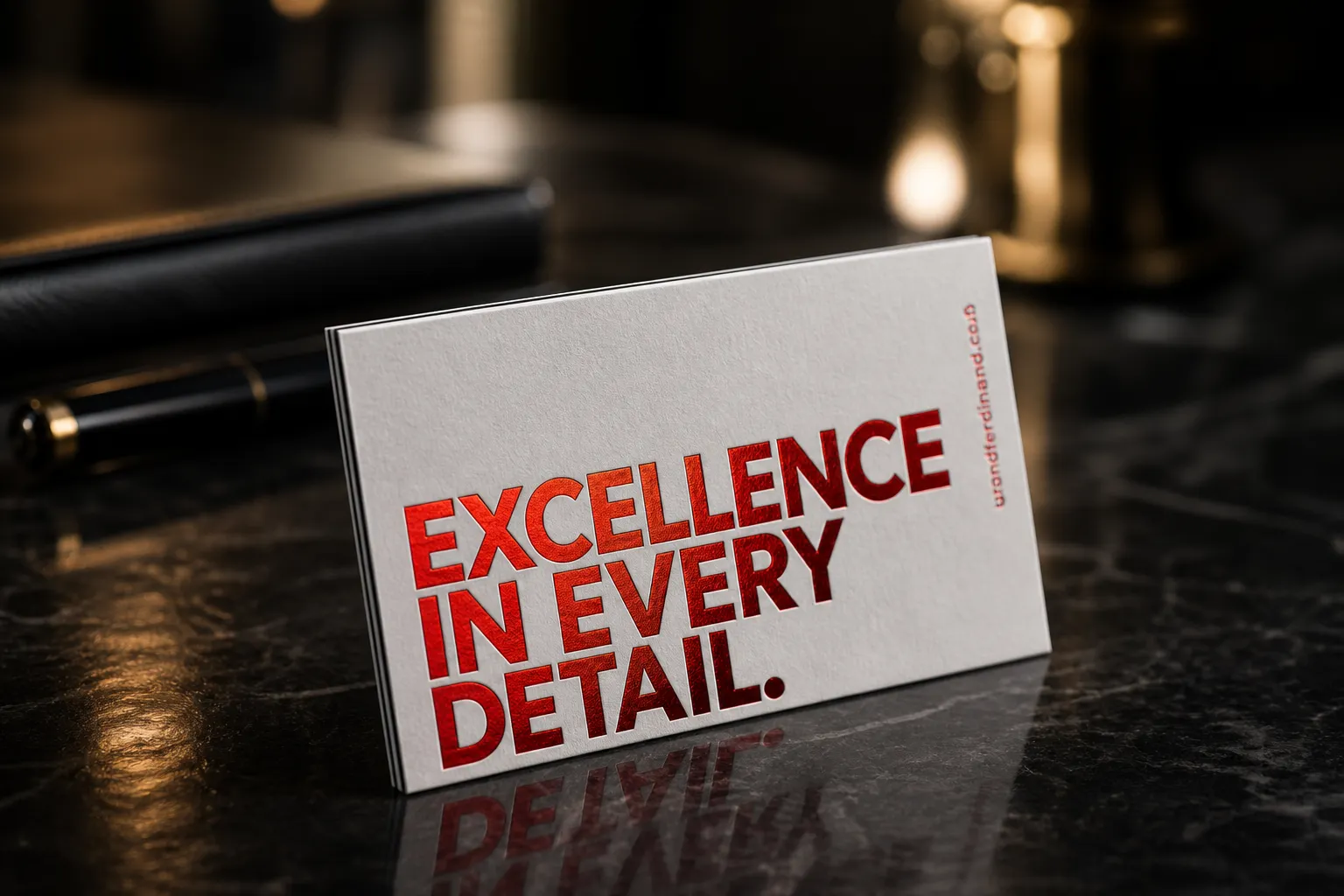
Hot foil stamping uses heat, pressure, and a metal die to bond metallic foil onto the card surface. On thick stocks, the pressure can create a refined recessed tactile effect.
Foil stamping is a physical metallic transfer process.
Unlike metallic ink, foil stamping transfers a metallic film onto selected artwork areas. The result is stronger reflection, clearer metallic contrast, and a more premium physical surface than flat printed metallic color.
Metallic foil transfer
A heated die activates the foil layer and transfers it onto the card surface only where the artwork is specified.
Recessed tactile detail
Traditional foil stamping usually presses the foil slightly into the paper, creating a clean recessed feel on heavy stocks.
Stronger shine than ink
Foil creates metallic reflection that normal printing cannot reproduce. It is best for logos, monograms, borders, icons, and bold accents.
Foil color directions for premium business cards
Foil color should support the card stock, brand tone, and other finishes. Use these foil library images as practical color direction references before confirming final production.
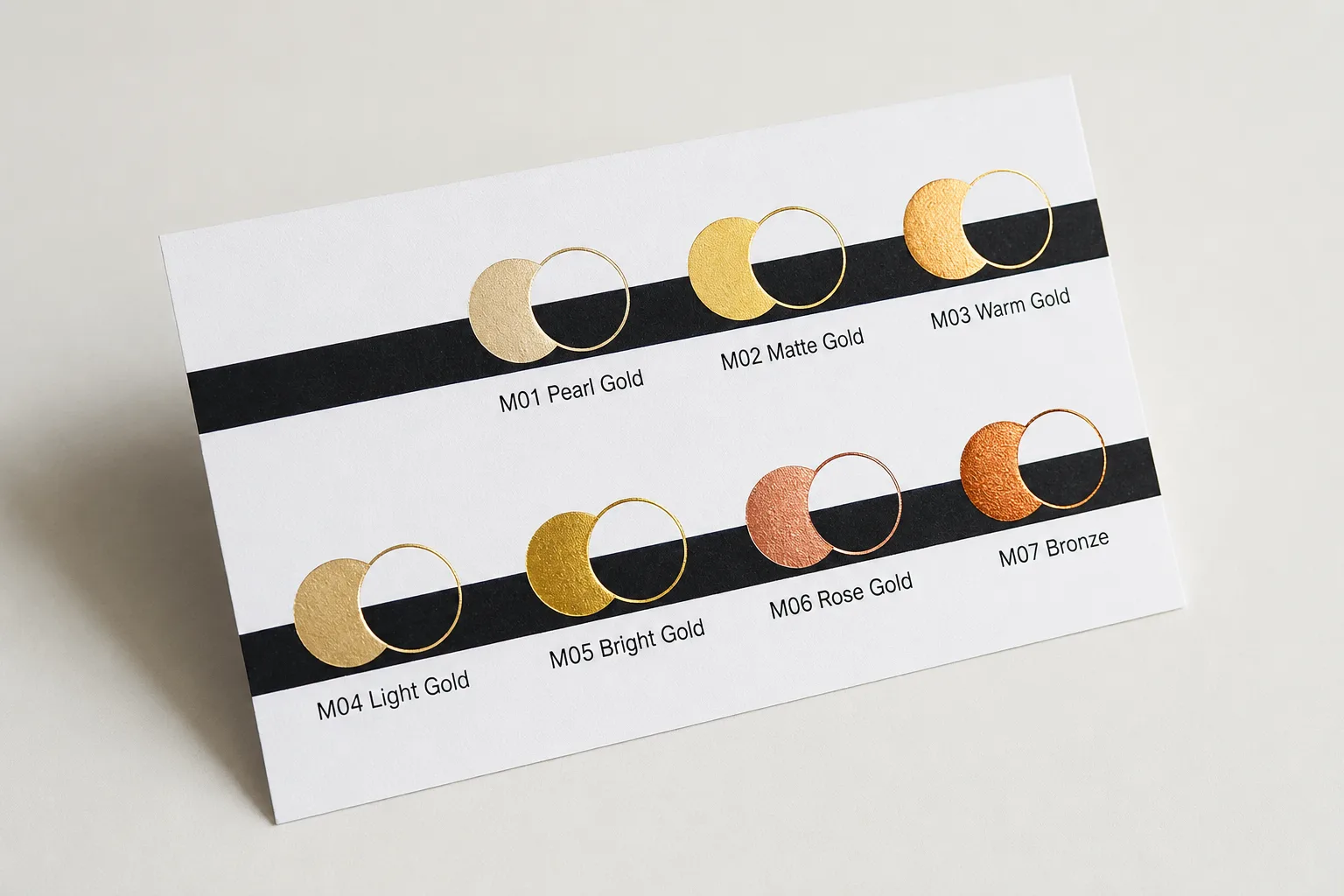
Gold & Bronze Collection
Pearl Gold, Matte Gold, Warm Gold, Light Gold, Bright Gold, Rose Gold, and Bronze directions.
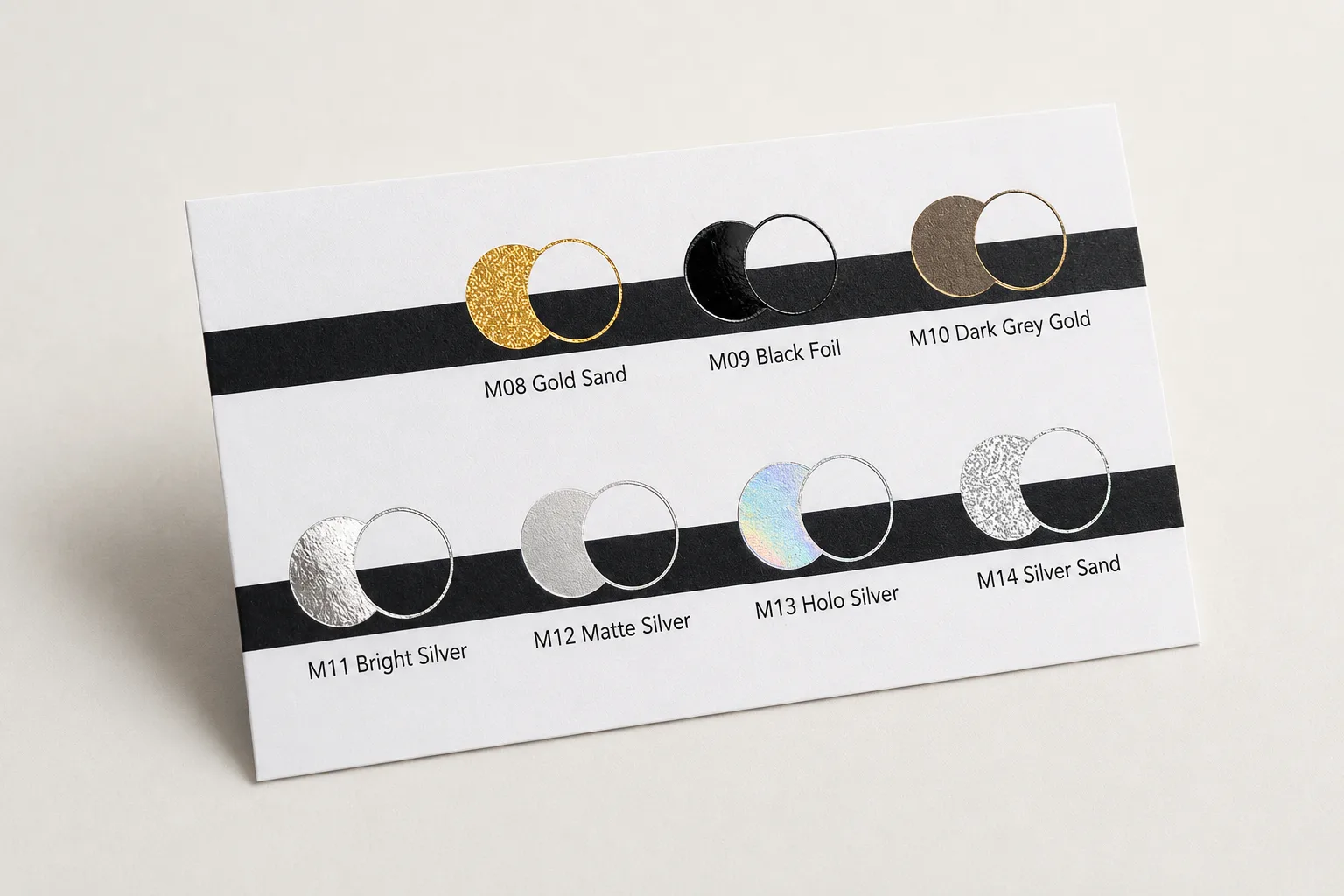
Silver, Black & Holographic
Bright Silver, Matte Silver, Holo Silver, Black Foil, Dark Grey Gold, Gold Sand, and Silver Sand options.
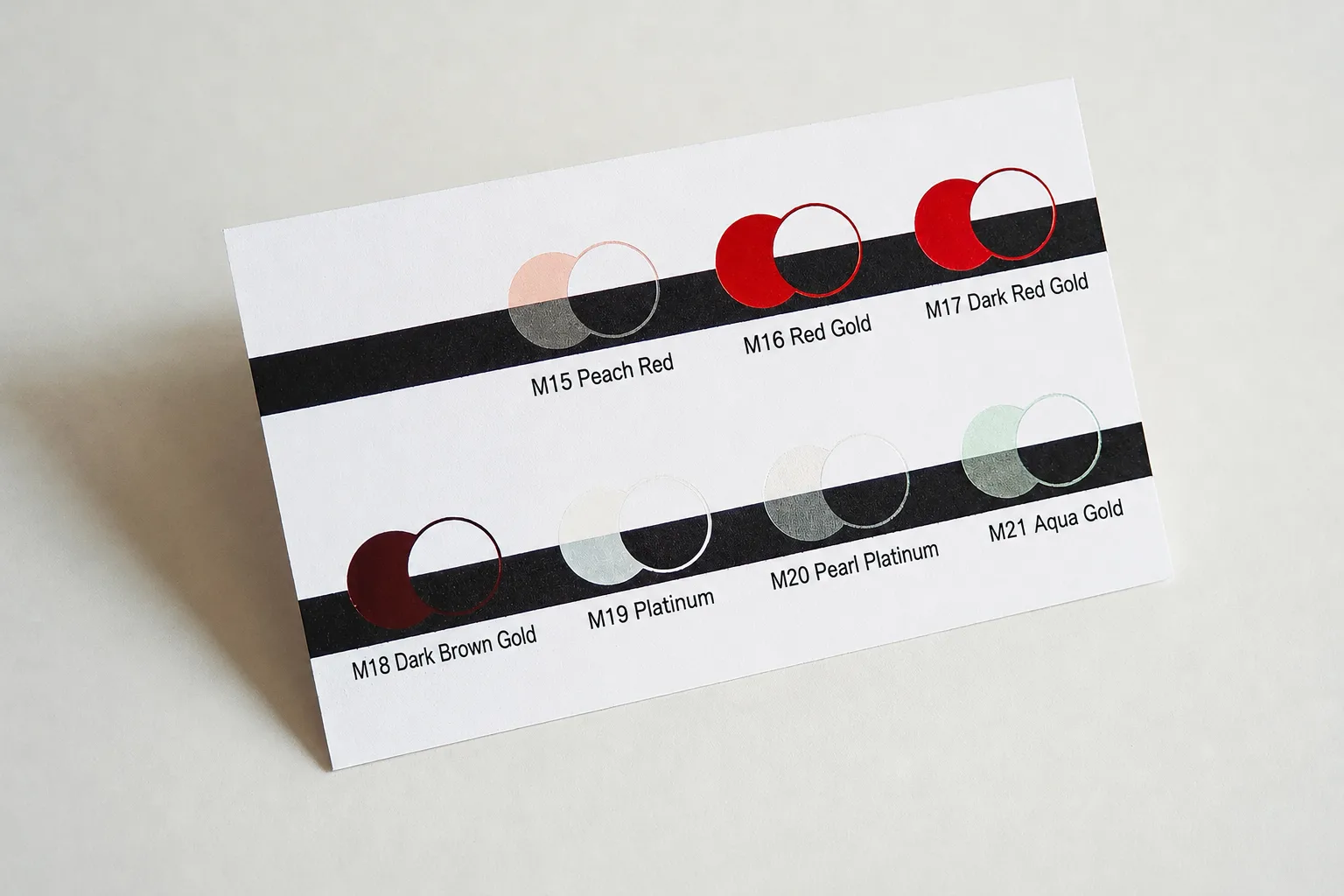
Red & Platinum Collection
Peach Red, Red Gold, Dark Red Gold, Dark Brown Gold, Platinum, Pearl Platinum, and Aqua Gold directions.
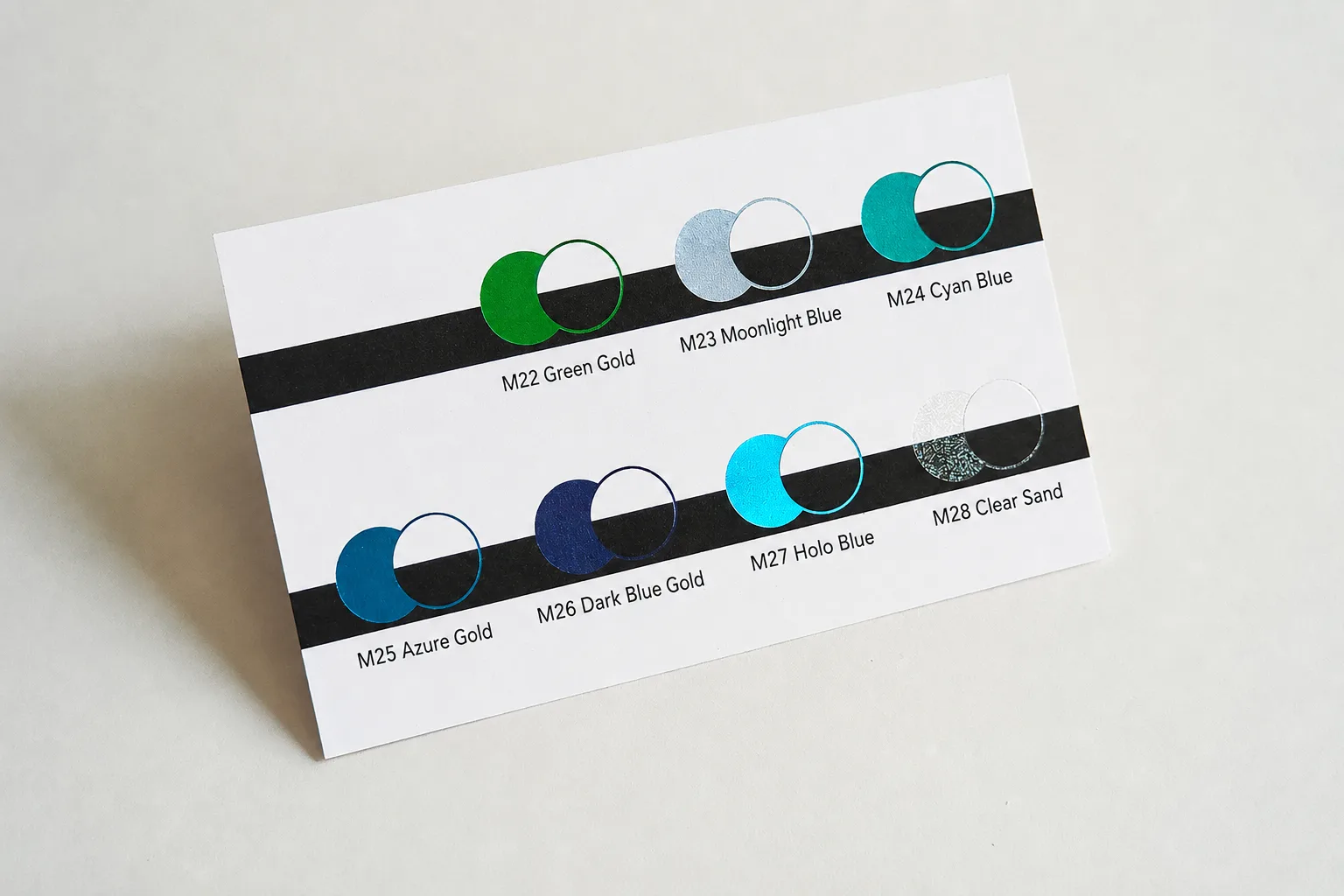
Blue & Green Collection
Green Gold, Moonlight Blue, Cyan Blue, Azure Gold, Dark Blue Gold, Holo Blue, and Clear Sand options.
Foil stamping on different card stocks and structures
Foil can feel restrained or dramatic depending on foil color, paper base, pressure, artwork size, and whether the card uses a thick duplex or triplex structure.
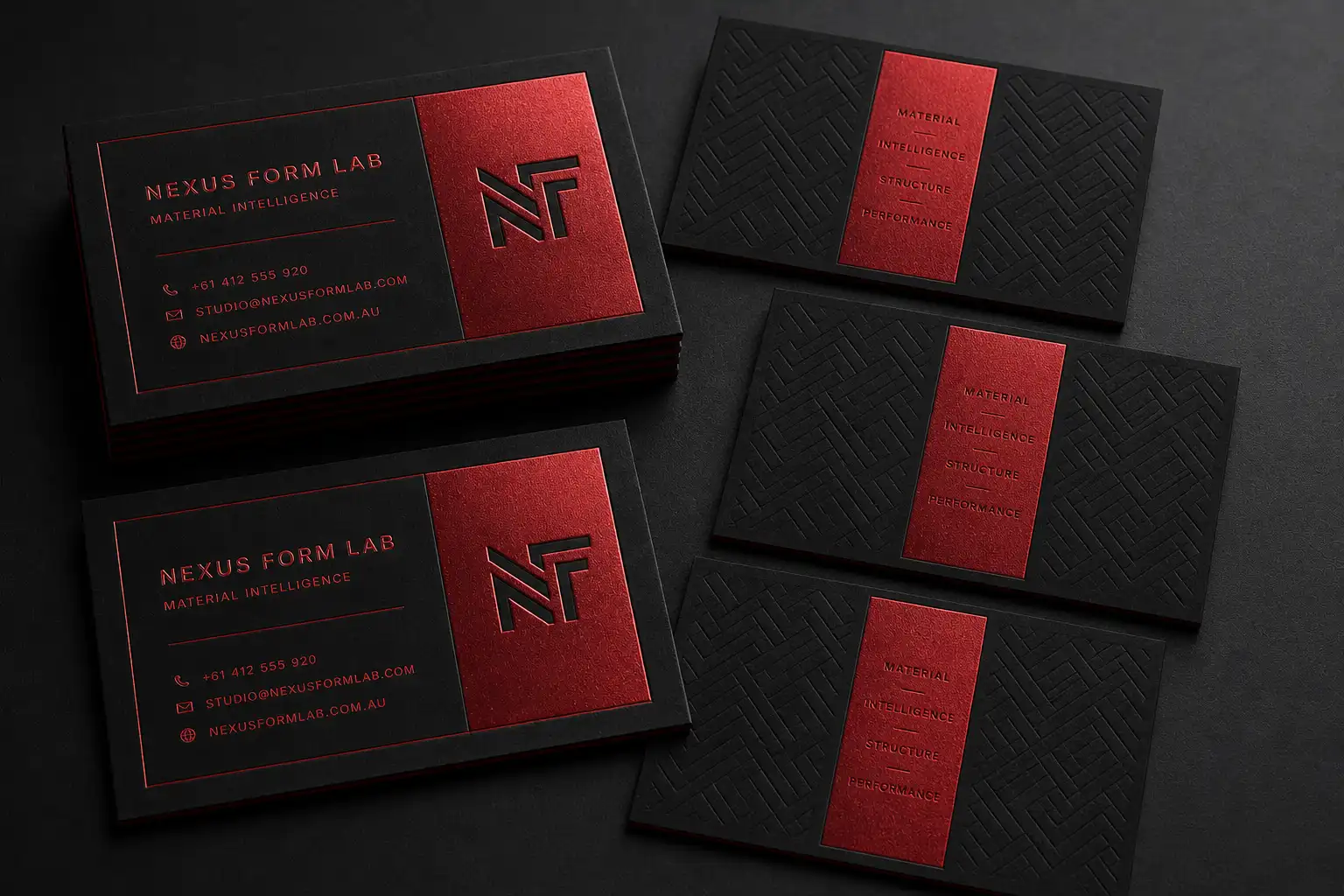
Large Red Foil
Bold red foil on matte black stock creates a strong luxury contrast.
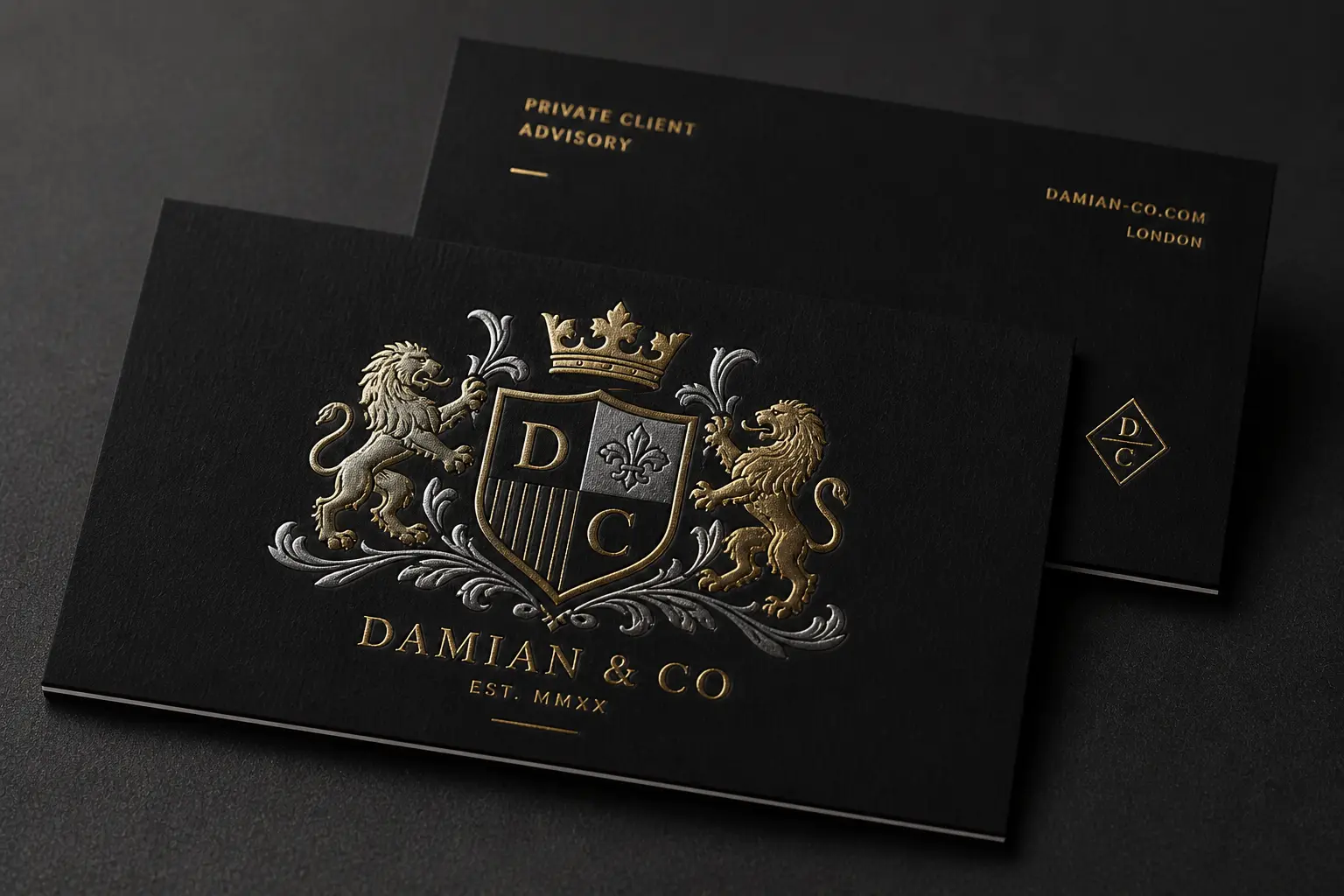
Gold & Silver Foil Detail
Multi-color foil can create a high-end crest or emblem when artwork is bold enough.
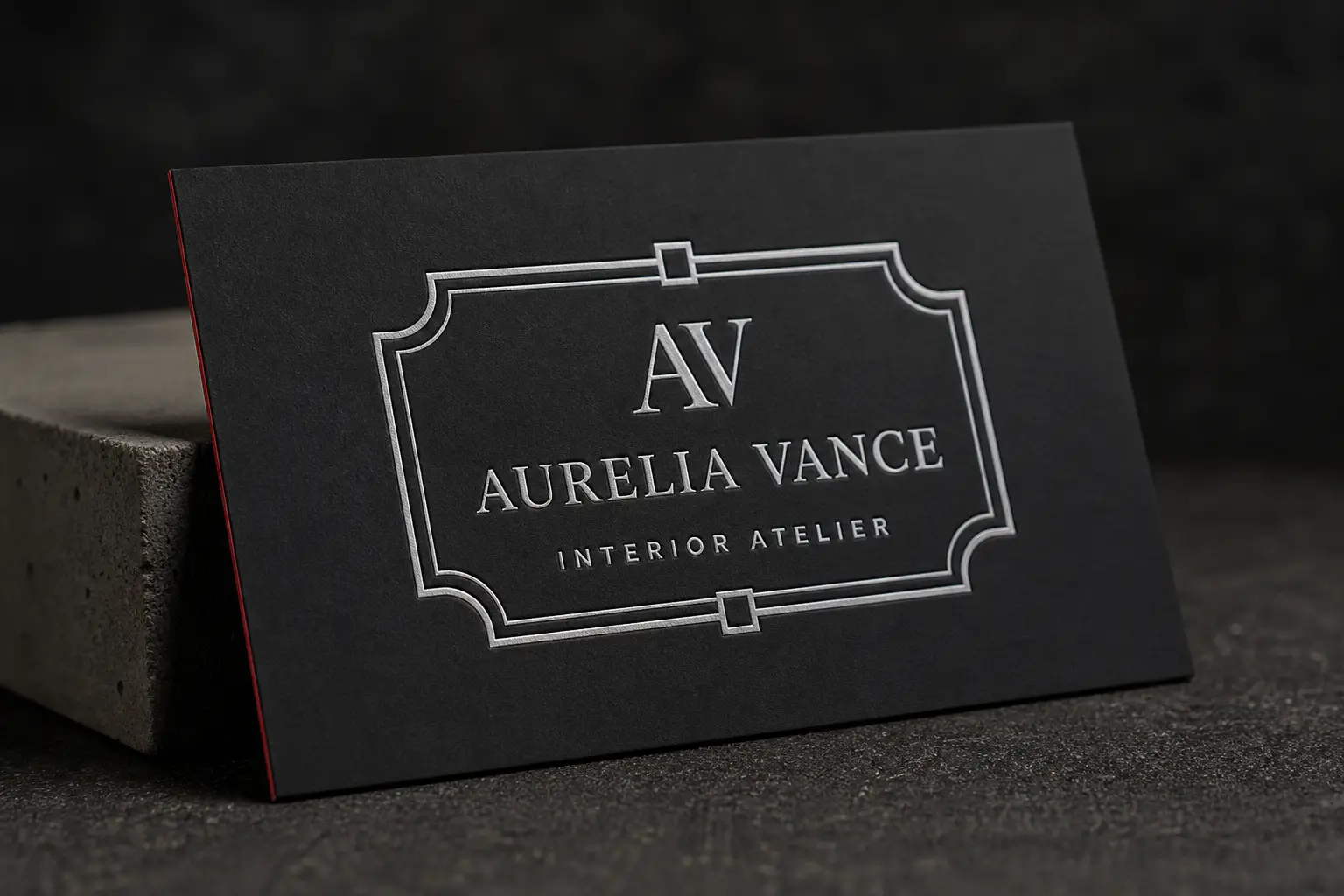
Silver on Black Stock
Bright silver foil gives clean reflection and contrast on ultra-matte black cards.

Green Gold Foil
Colored metallic foil can support sustainable, botanical, or modern luxury identities.
Red Foil Typography
Large foil typography shows metallic texture more clearly than small thin text.
Holographic Direction
Holographic foil works best as a controlled accent rather than excessive decoration.
Traditional foil stamping vs. foil embossing
Both use metallic foil, but the tactile structure is different. Traditional hot foil stamping is usually pressed into the paper; foil embossing creates a raised metallic surface.
| Feature | Traditional Foil Stamping | Foil Embossing |
|---|---|---|
| Surface effect | Foil is transferred and usually pressed slightly into the card surface. | Foil sits on a raised paper shape created by embossing pressure. |
| Visual tone | Clean, refined, sharp, suitable for logos, borders, and text accents. | More sculptural and dimensional, best for larger marks and premium crests. |
| Reverse side | Usually minimal reverse-side impact unless pressure is heavy. | Can leave a corresponding recessed impression on the back because paper is physically raised. |
| Best artwork | Logos, icons, borders, monograms, bold typography, selected contact details. | Crests, emblems, large logos, decorative symbols, and high-value brand marks. |
| Production caution | Very tiny foil details may fill in, break, or lose clarity. | Reverse-side design must be reviewed to avoid conflict with the emboss footprint. |
Design foil artwork with enough area to catch light.
Foil is most effective when the artwork has enough surface area to reflect light. Extremely thin details can be technically possible, but they often do not show the foil effect clearly.
Better for foil stamping
Use foil when the design needs controlled metallic contrast and a premium focal point.
Use caution
Foil is a physical transfer process, so artwork scale and spacing matter more than normal print artwork.
File setup for foil stamping
Foil artwork should be supplied as a separate vector layer so the production team can identify exactly which elements require foil.
Use clean vector paths
Foil areas should be supplied as 100% vector artwork. Avoid low-resolution images or screenshots for foil stamping areas.
Use practical line thickness
Use 0.25pt minimum line thickness as a practical reference for very fine foil details. Bolder artwork usually produces a better visual result.
Name foil color clearly
Keep foil separate from print artwork and name the layer clearly, such as Bright Gold Foil, Red Foil, Silver Foil, or Holographic Foil.
Combine foil with the right structure and finish.
Foil stamping can be used alone or combined with debossing, embossing, soft touch, spot UV, edge painting, or thick triplex structures.
Common questions about foil stamping
Is foil stamping the same as metallic ink?
Does hot foil stamping feel raised or recessed?
Can foil be combined with embossing or debossing?
Which foil colors are most popular?
Can foil be used for very small text?
What file setup is needed?
Need help choosing the right foil color or foil structure?
Send your artwork, paper direction, quantity, target foil color, and finishing requirements. We can review whether traditional foil stamping, foil debossing, foil embossing, metallic ink, or 3D metallic embellishment is more suitable before quoting.