
You’ve got fabric samples ready to show your customers. Start with what you’d like them to do with the card:
- To compare several colors at once, try a side-by-side layout.
- To hide cut edges and frame the fabric you want visible, consider windows.
- If one panel feels crowded, add folding panels or spread the samples across book pages.
- For cards that spread out and gather into a compact stack, look at a fan deck. If they’ll hang on display, consider hanging sample cards.
- Yarn can be wrapped around card strips, while fine cord can hang through punched holes.
These ideas can work together. A folding card can have windows or a hook, and a ring-bound book can hold flat or overlapping swatches. The images below are design references to help you find a starting point. Your cards are made to order around your samples, so you don’t have to copy a fixed style or have a finished design before talking to us.
Single-panel cards: give the fabric and its label room
If you have a small collection and the samples and labels fit comfortably, a single card may be all you need. The cut size, thickness and number of samples give us a starting point for the layout.
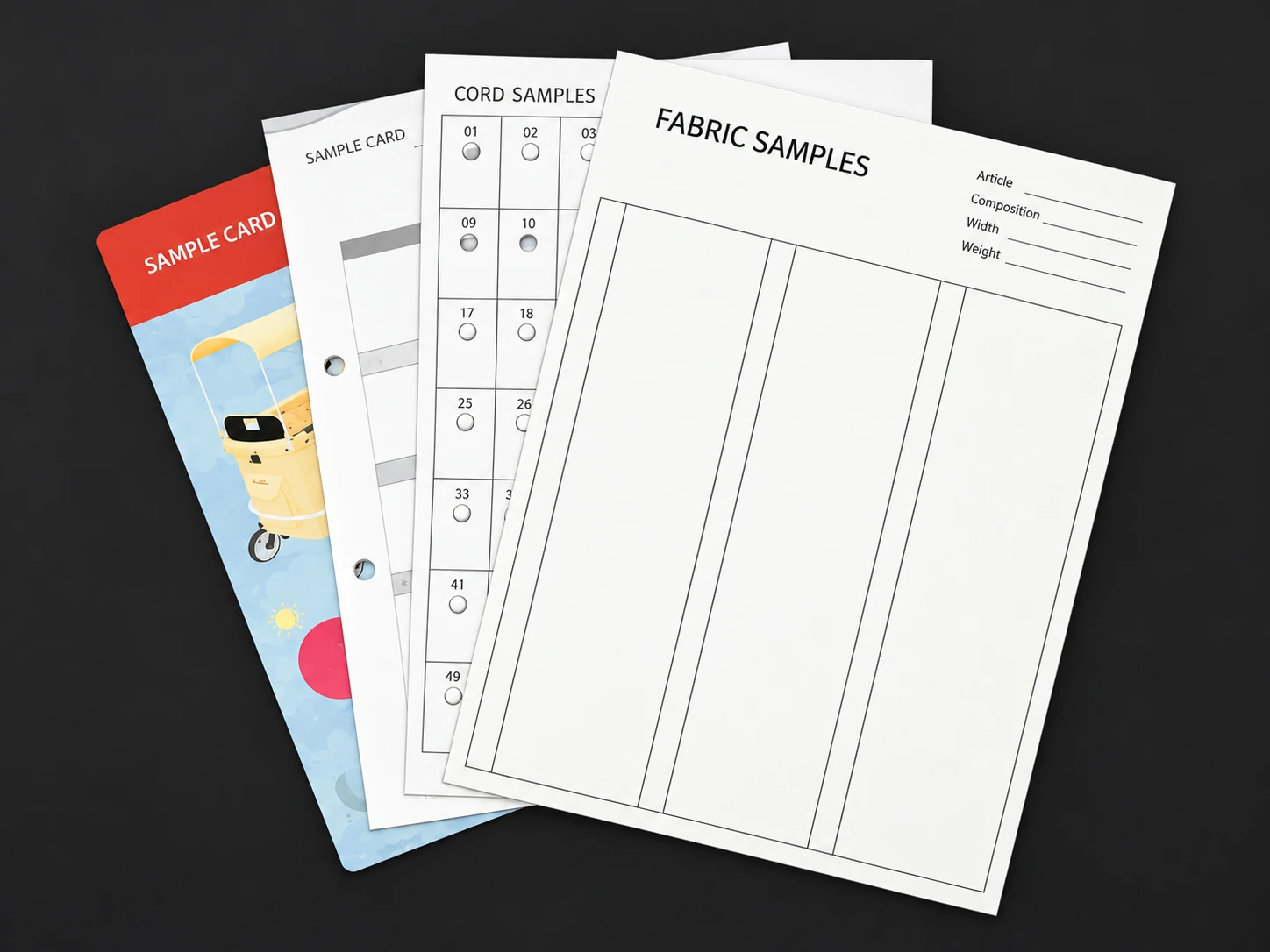
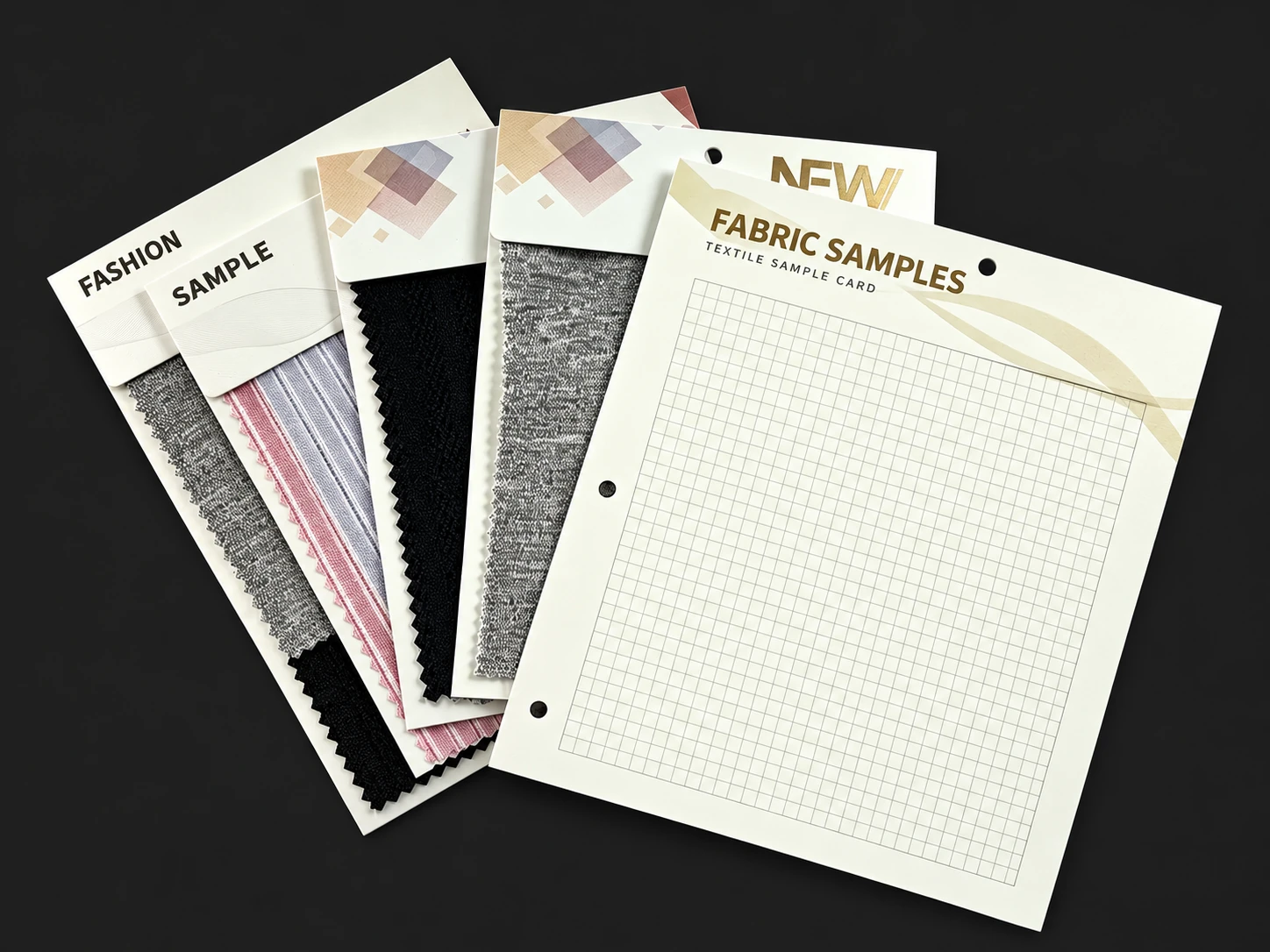
Haven’t settled on a cut size yet? Let us know whether you can arrange cutting locally. For a small batch, that may cost less than sending fabric to us just to have it cut. Once we know the size you can supply, we can work around it.
Neatly cut, flat pieces can work well in a flat-mounted layout. We usually print placement boxes slightly smaller than the fabric, so the sample covers the line when you stick it down.
Using the same point or edge to line up each piece makes mounting easier. Those boxes help you position the fabric; they aren’t cutting templates.
Leave room for the product name, code and material details too. You don’t want to finish mounting the swatches and find that the information is hidden underneath.
Flat layouts and folding cards: easy to compare, neat when closed
A flat layout lets customers see several fabric swatches at once. They can compare colors and surface textures without turning a page for every sample.
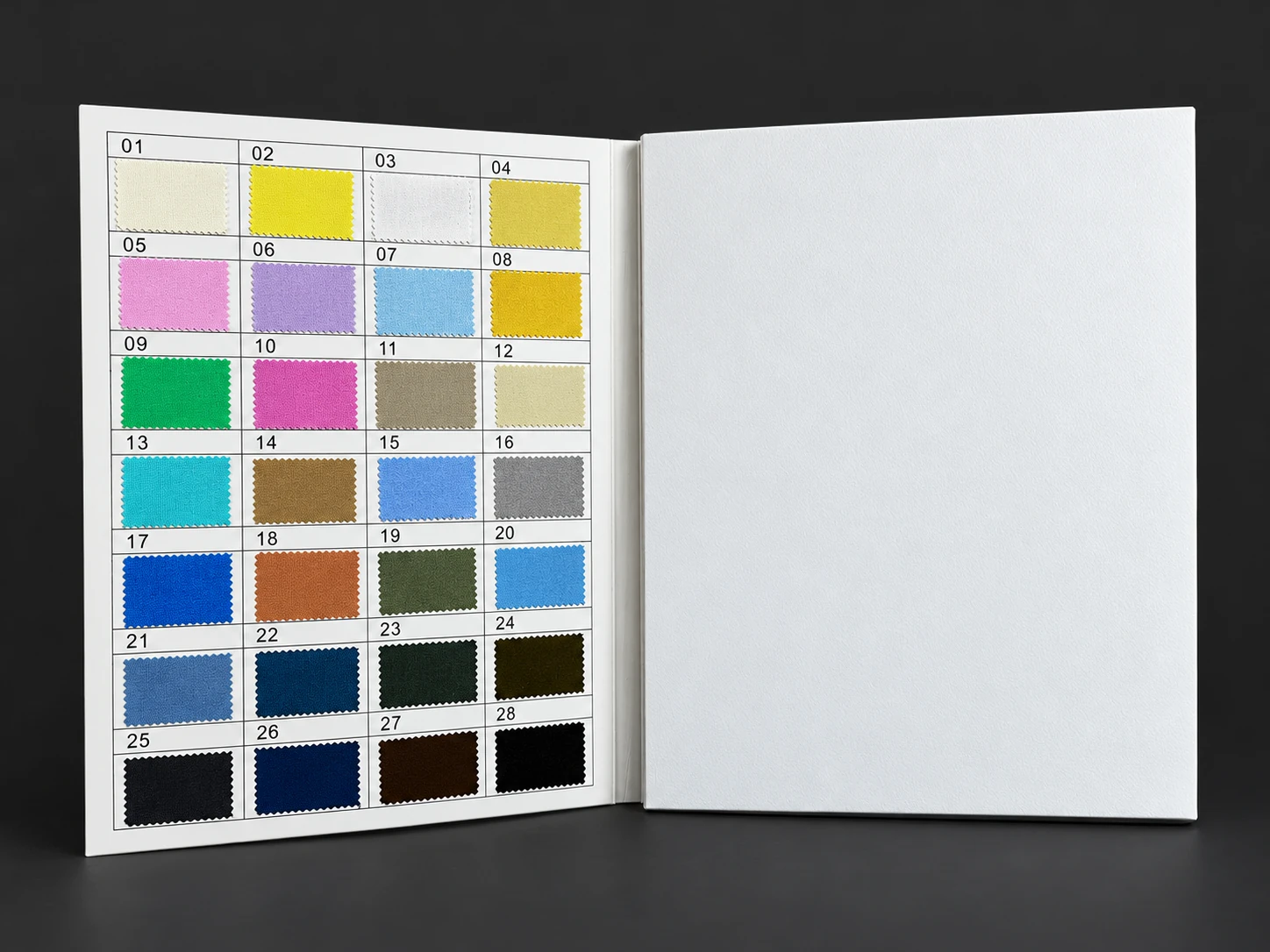
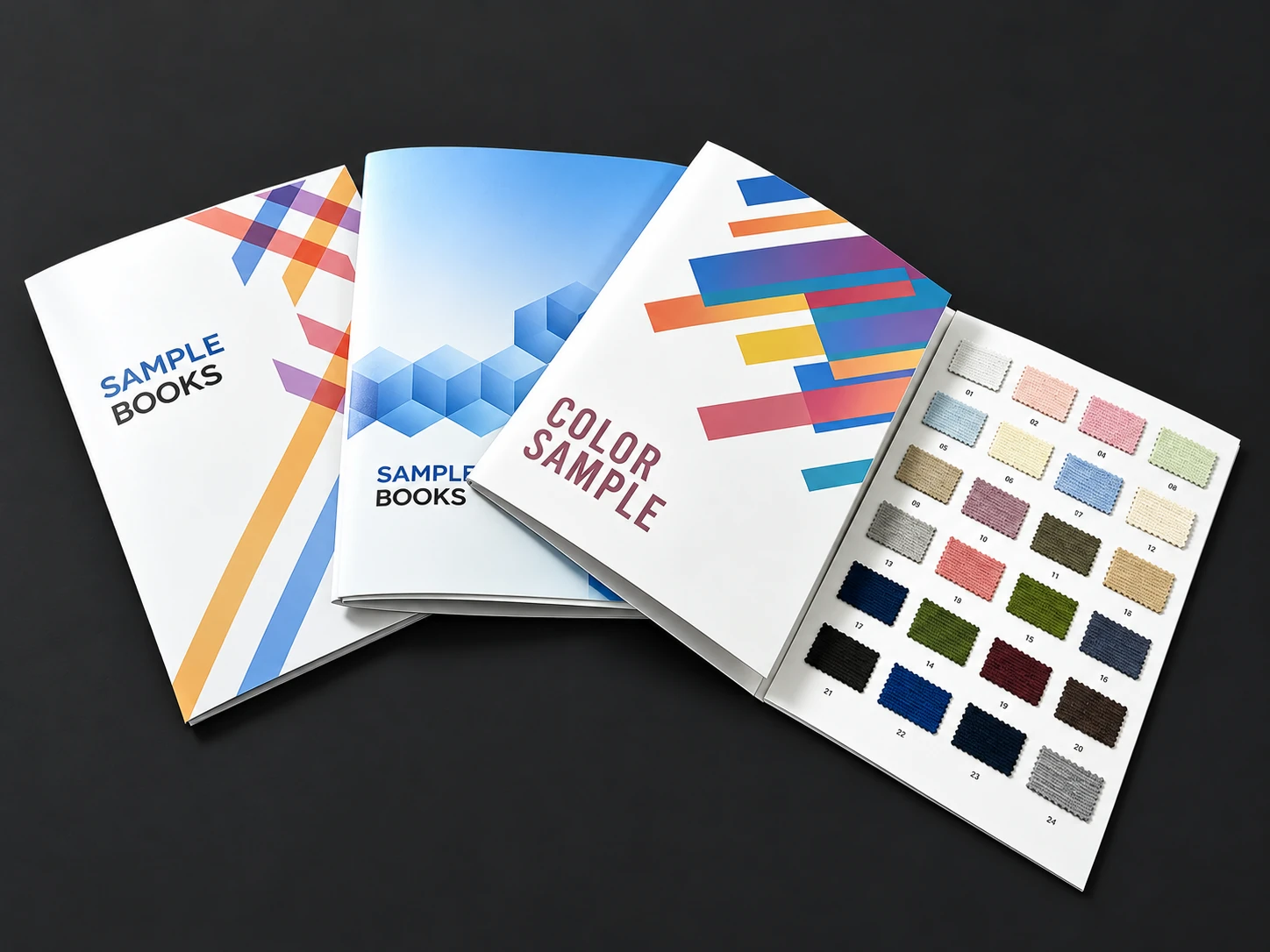
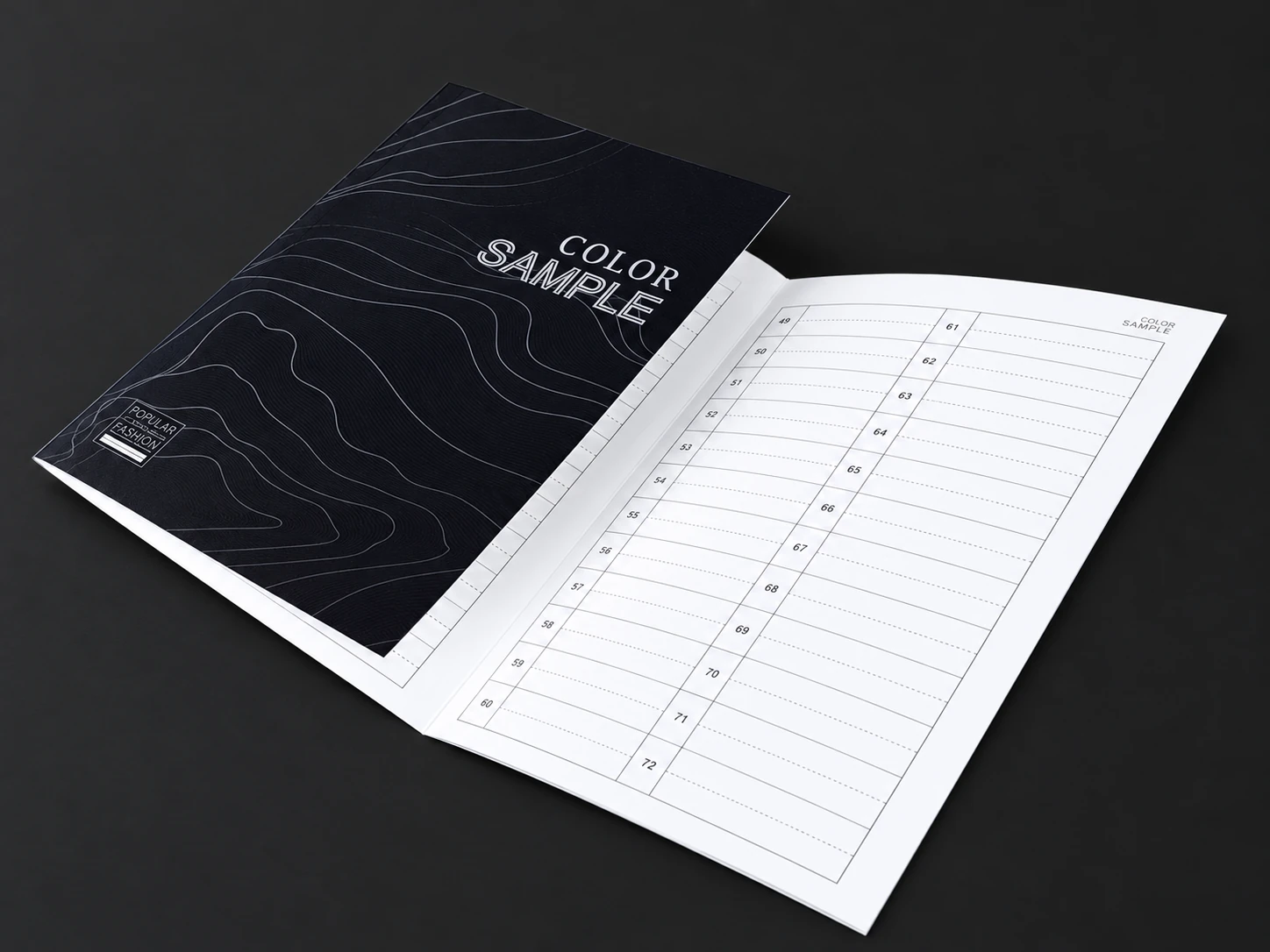
How much fabric they need to see depends on what you’re showing. Take a printed fabric: a tiny patch may show the colors but reveal very little of the pattern. Giving that sample more space can help.
With more samples, you could use two, three, four or more panels, or move to a book with separate pages. The number of samples is only part of that decision. Their size and thickness matter too.
An empty card can close neatly and still become uneven once the fabric is attached. Thicker swatches, or samples concentrated in one area, change the thickness of the closed card. Sample positions, folds and the finished thickness need to work together.
Whether a swatch can lift up comes down to how it’s attached. Double-sided tape along the top can leave the rest free to lift; sticking down the whole back won’t. If customers need to see the reverse of the fabric, tell us so we can allow for that when planning the attachment.
Window cards: show the fabric and hide uneven edges
Windows give each fabric sample a clear outline. Small and large openings can share the same card, and the shape doesn’t have to be rectangular. Windows can also be combined with folding panels.
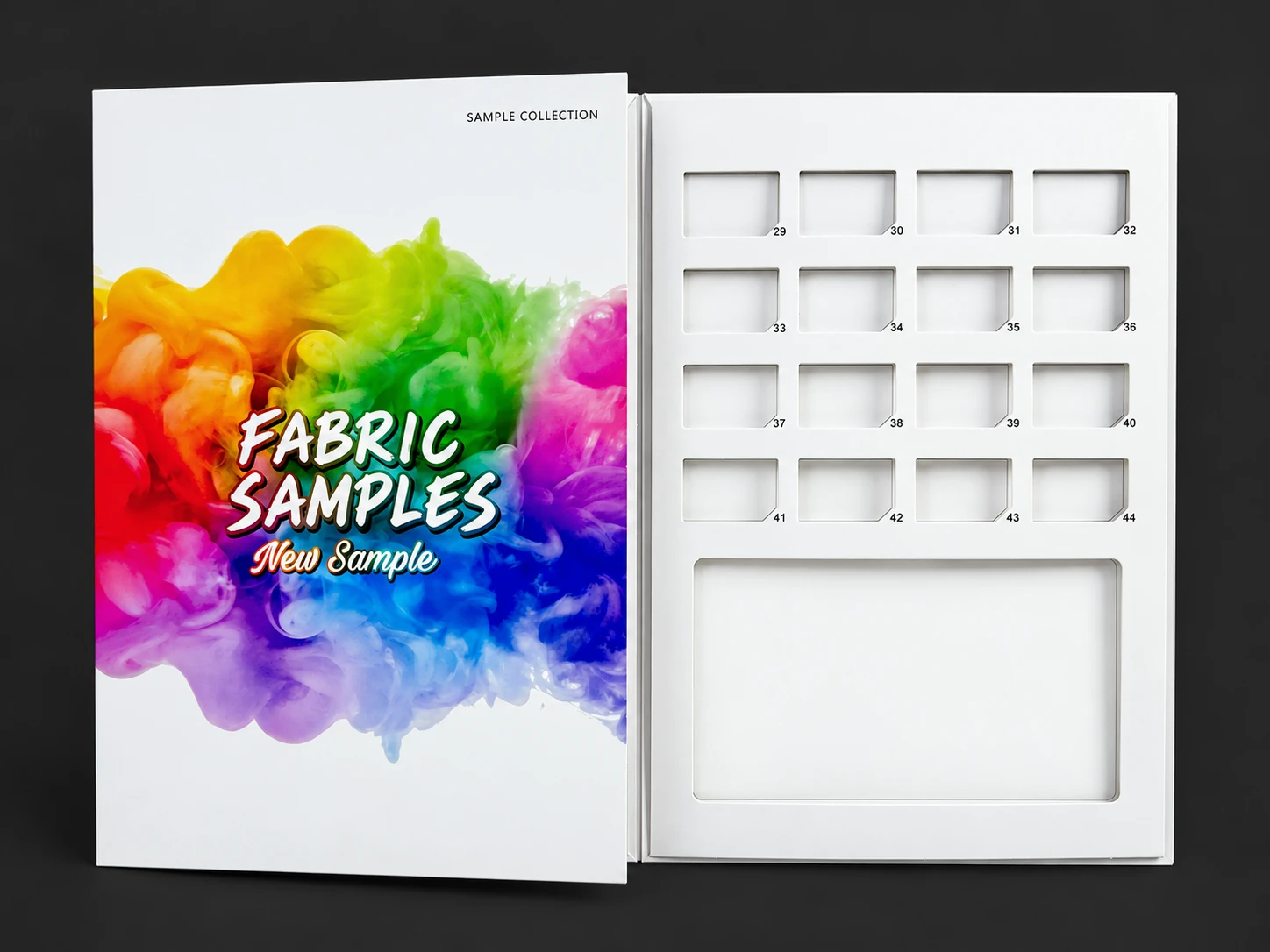
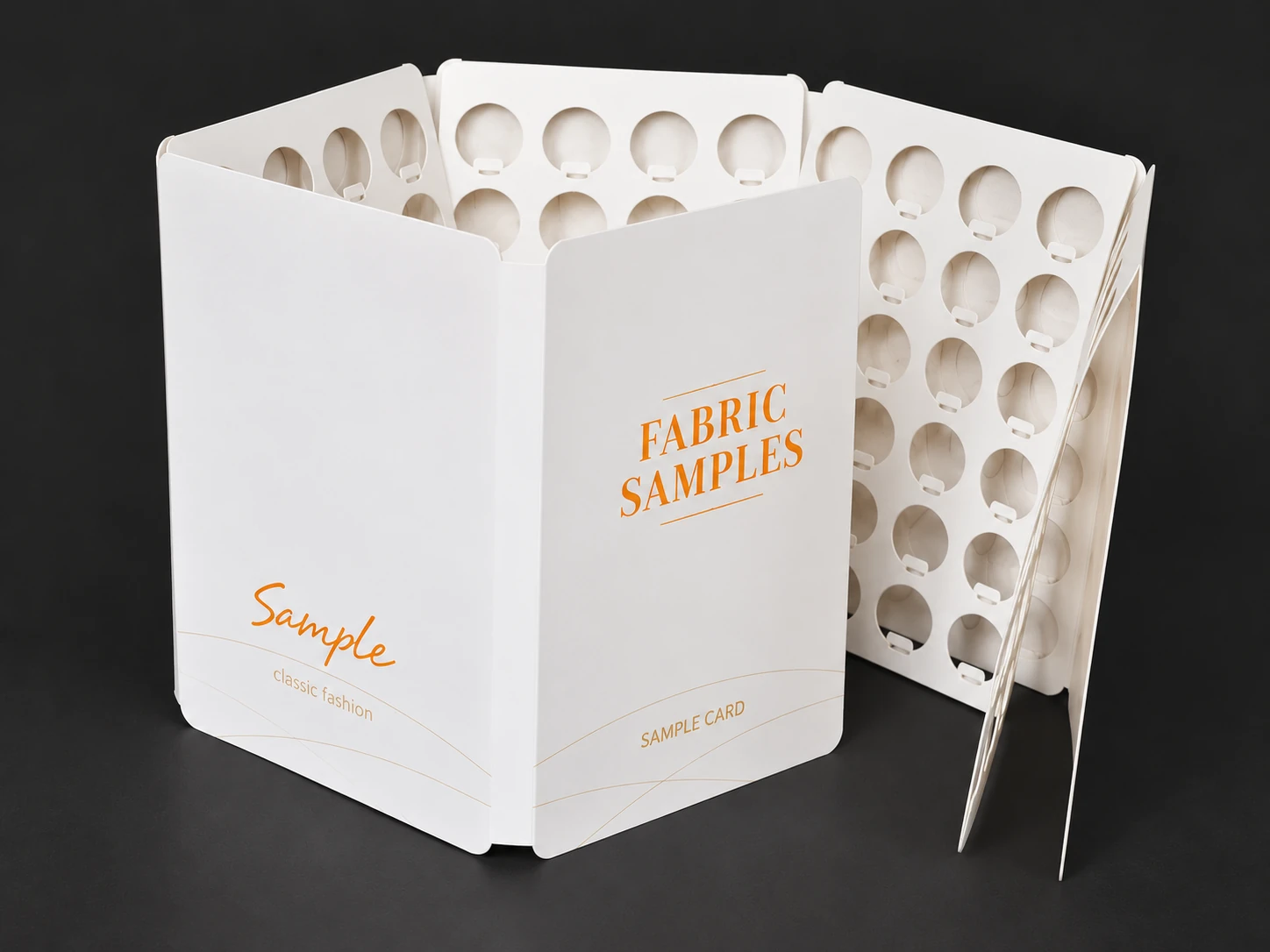
They have another practical use: hiding cut edges.
Soft fabric can compress when several layers are cut together, leaving small differences between pieces. The fabric itself may look fine while the edges aren’t quite even. A paper layer around the window can cover those edges and leave the chosen area on view.
There are two sizes to keep separate: the visible window and the full piece of cut fabric. Fabric mounted behind an opening needs extra material around it for the paper to cover. Cutting it to the window size won’t leave that allowance.
Some of our window constructions fold back or use a covering layer to hide the fabric edges and mounting area. That can involve die cutting, extra paper or more bonding work, so the cost depends on the construction.
A window card doesn’t automatically mean you need to send us the fabric. Some can be supplied empty for you to mount locally. But if the sample sits inside the card with all four sides sealed, it needs to go in while we bond the layers. That mounting arrangement has to be planned before production. For sheer curtain and roller blind fabric, our guide to curtain and upholstery fabric sample books shows how window pages let buyers check the light.
Hanging cards: think about where they’ll hang
A sample header can have a hook shape cut into the card itself, or it can use a separate hook. If you want to show several fabrics together, a hanging card can also include windows and numbered sample positions.
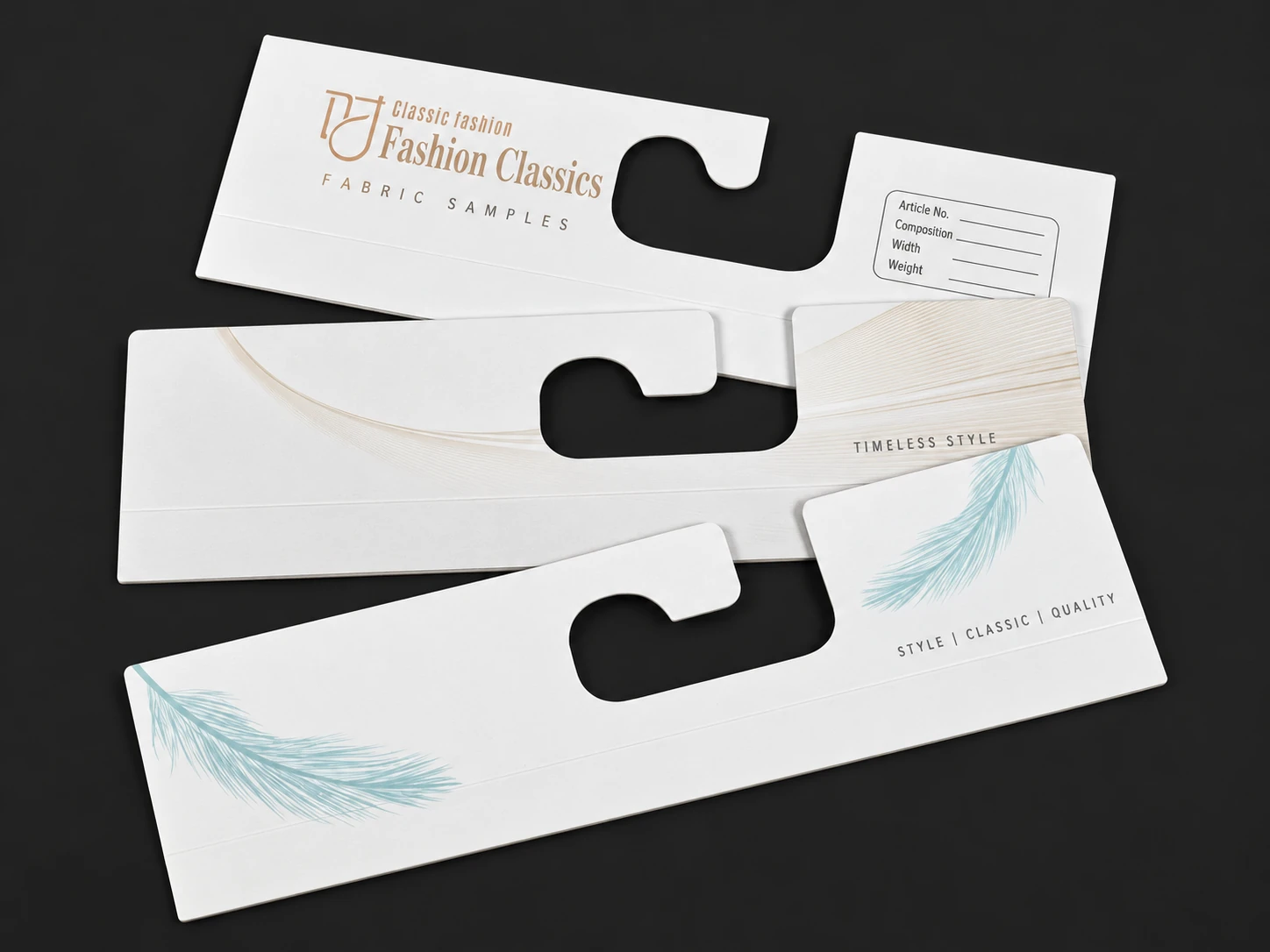
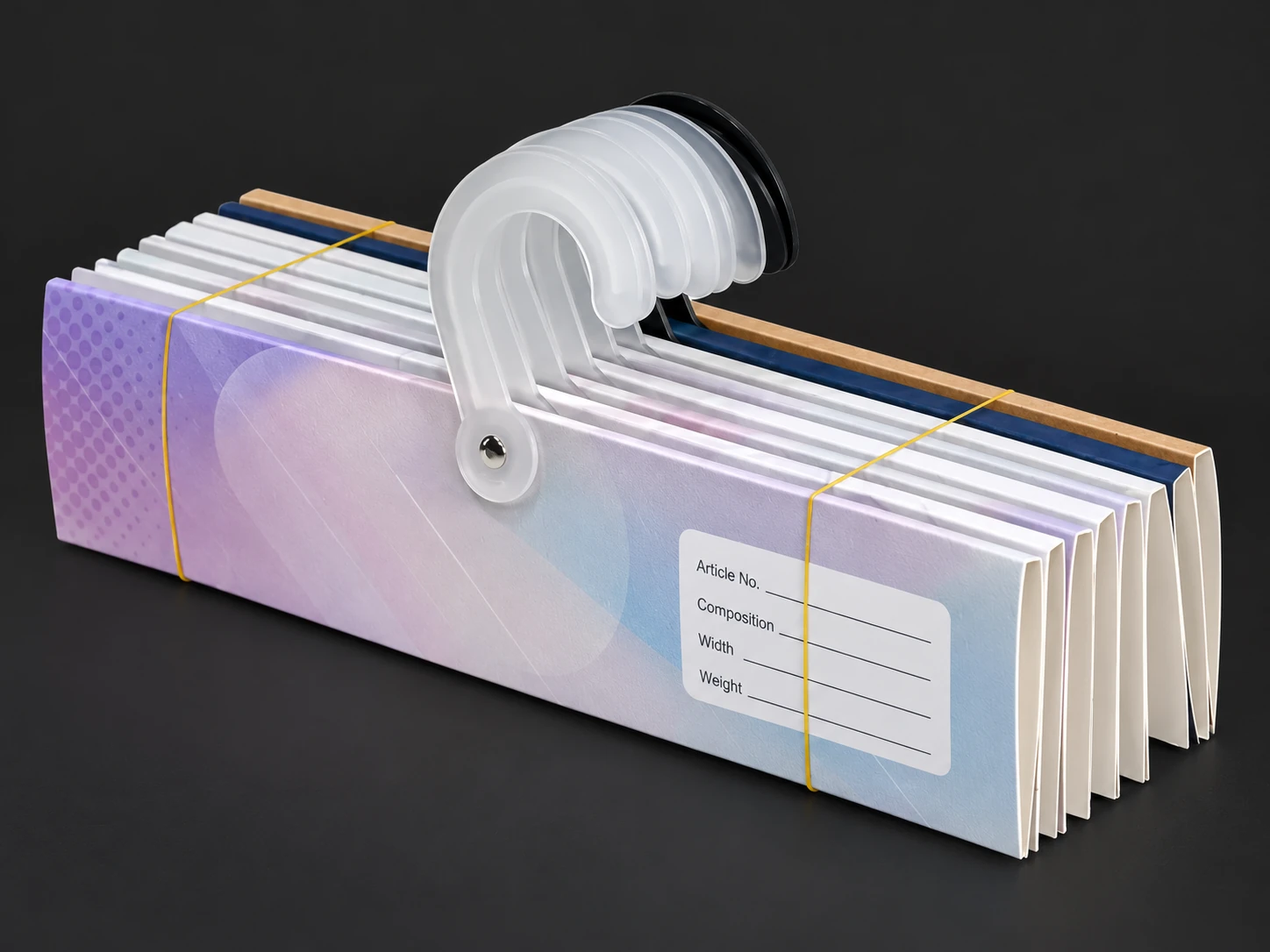
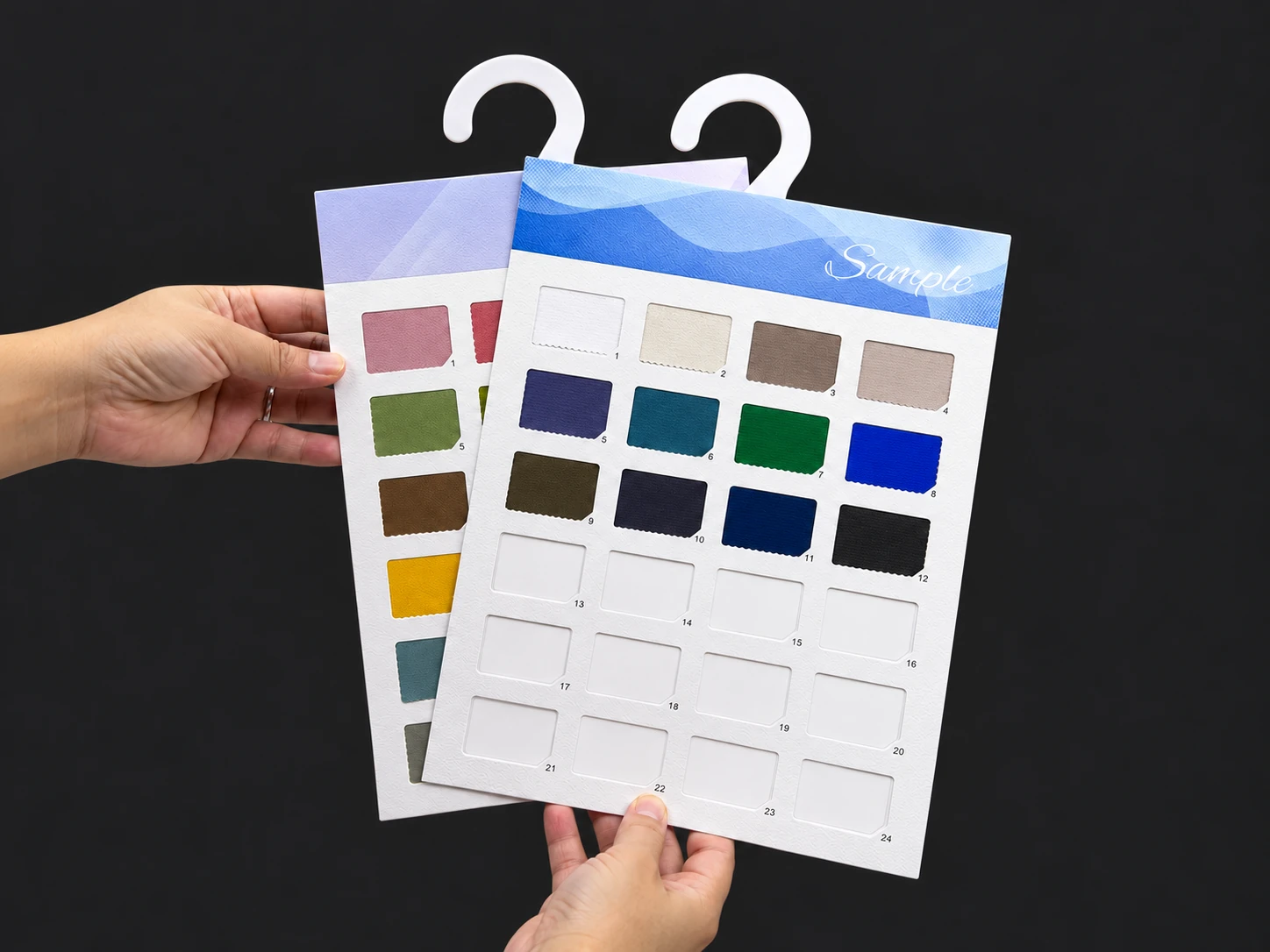
The hanging arrangement depends on where you’ll display it and the size and weight of the samples. We can discuss the header size, hook, printed details and sample layout together. You don’t have to keep the reference design exactly as it is.
Ring-bound sample books: leave room for future updates
A ring-bound sample book can spread a larger collection over several pages or group it by material or product range. The pages can use flat or overlapping swatches, whichever suits the collection.
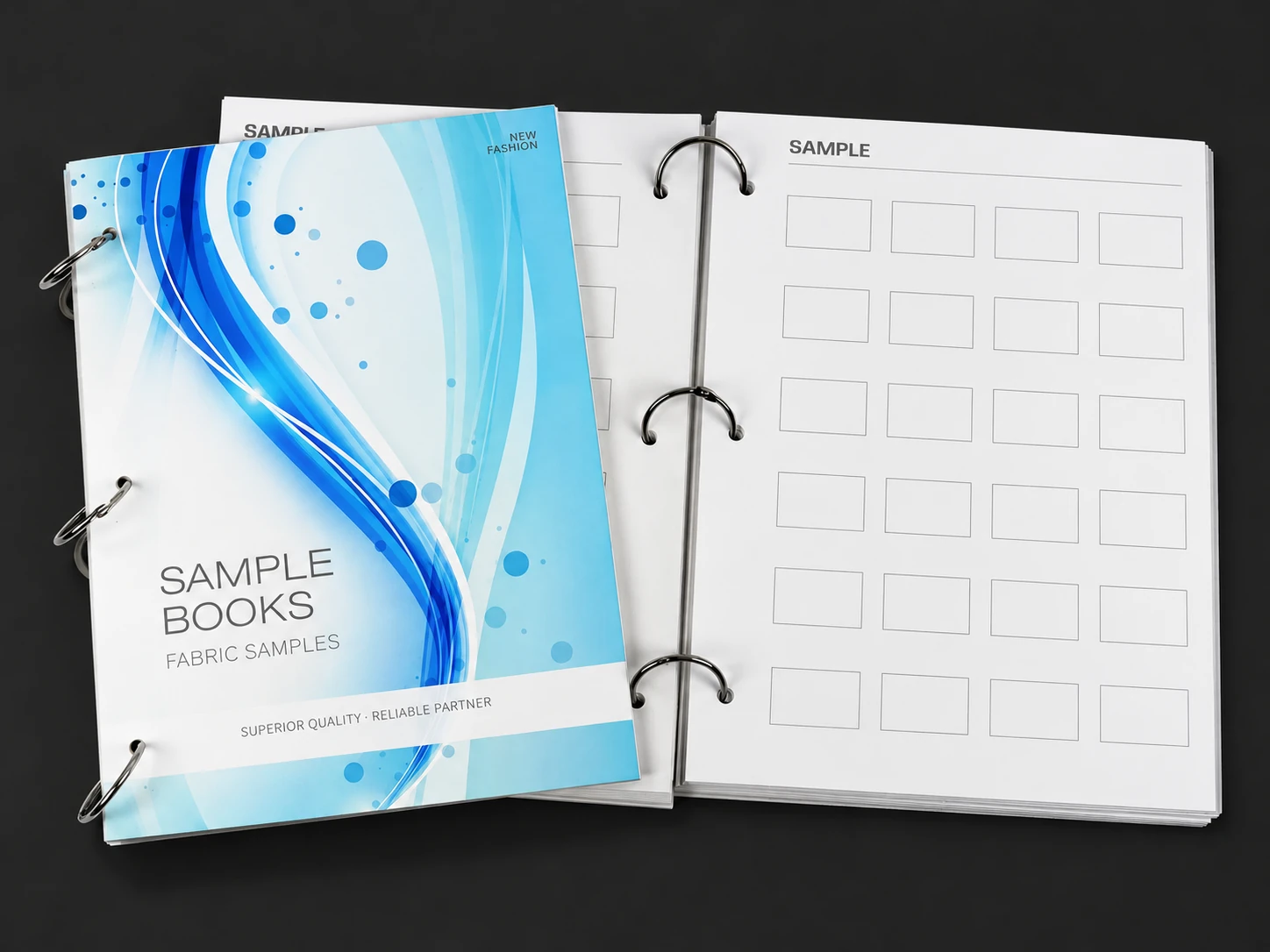
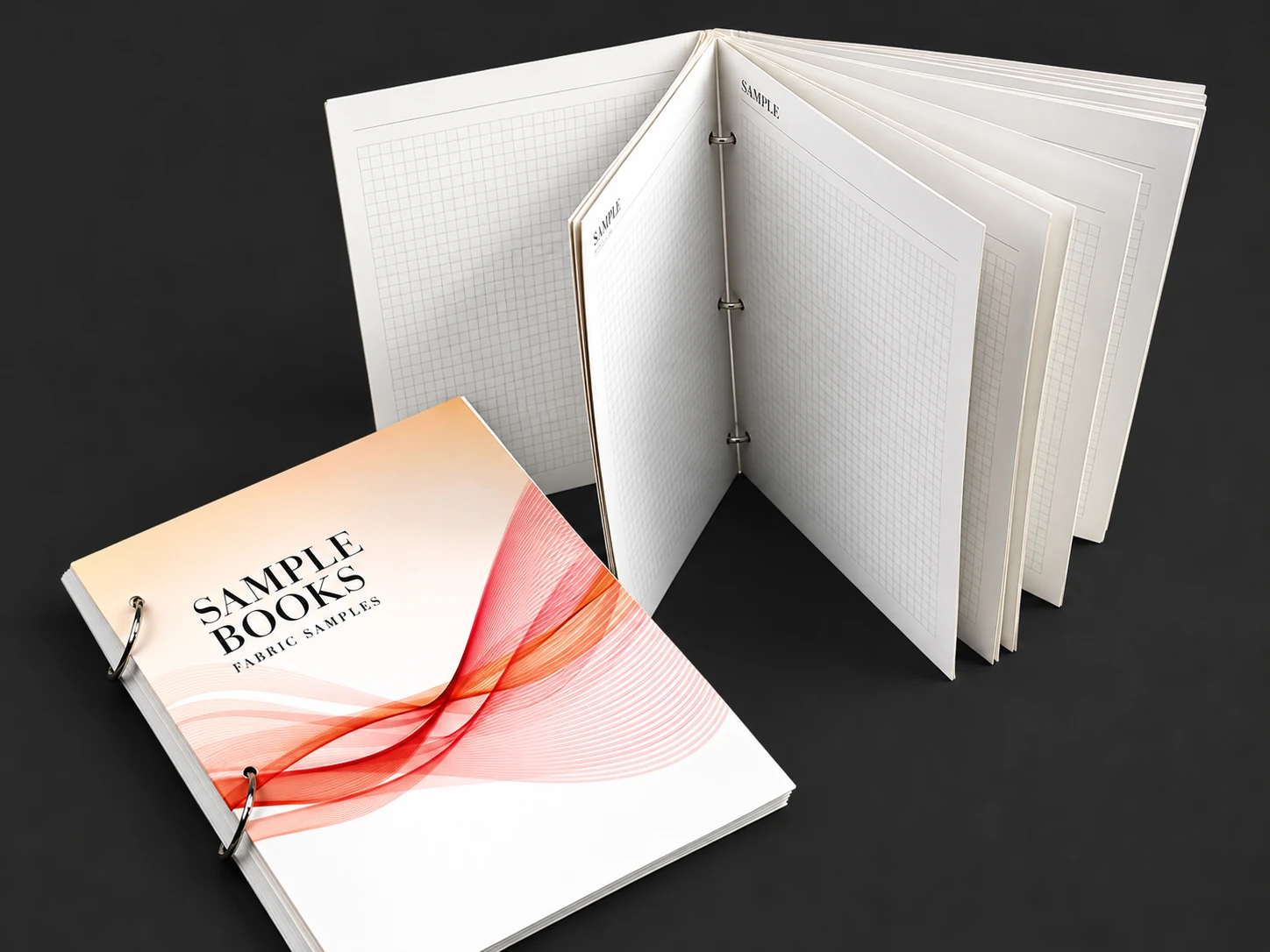
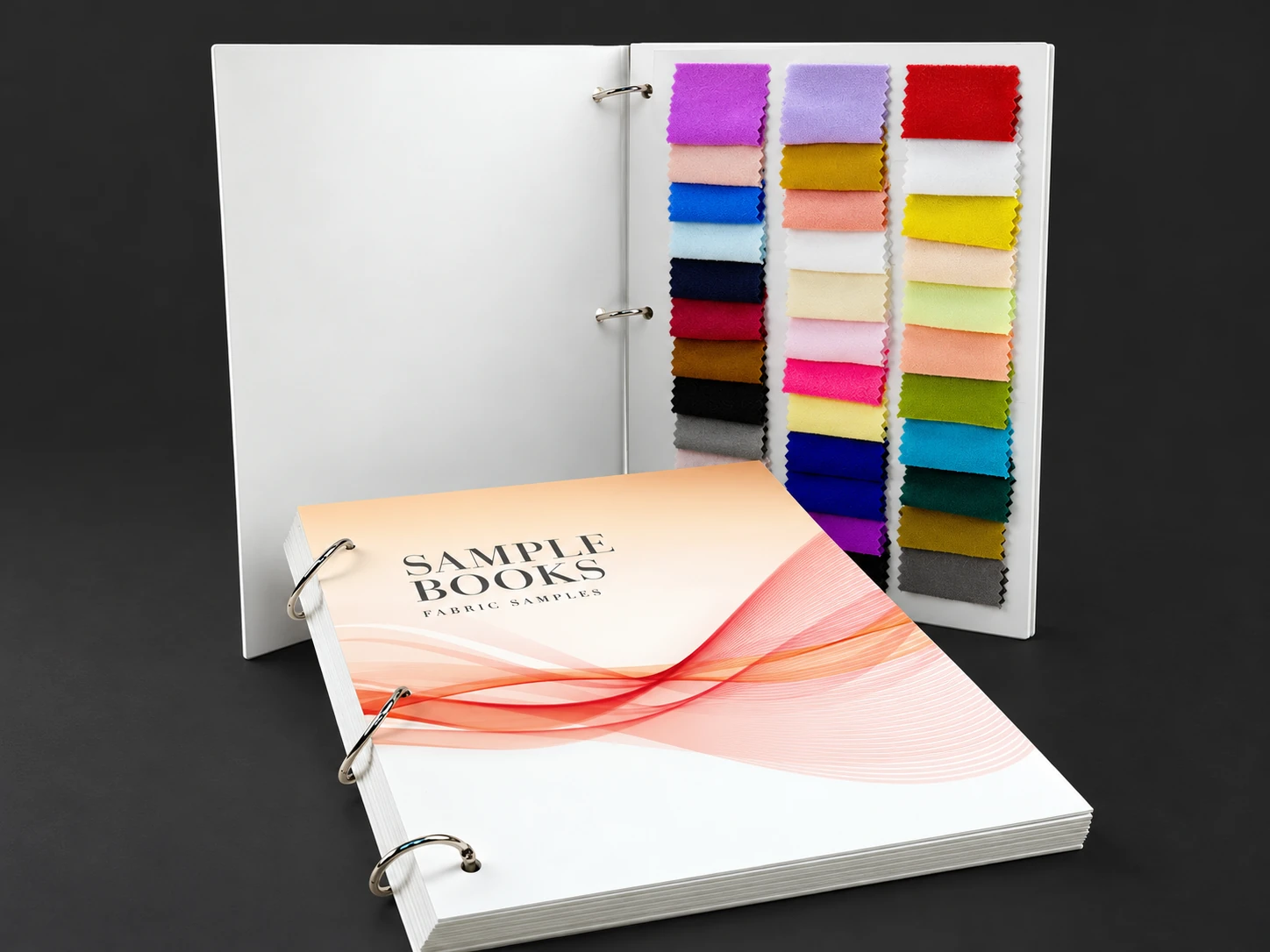
The rings we use for these books can be pulled open, so you can add, remove or replace pages. If you expect to add samples later, allow for the thickness of the pages and fabric when planning the book.
Here’s a small way to save on future updates: use removable labels for product names and codes that may change. Fixed position numbers can stay printed.
If names or codes change often, printing them directly on the card makes updates harder. A removable label lets you change that information without reprinting an otherwise usable page.
Labels can go on the card, or on the fabric where suitable. When the information changes, peel off the old label and replace it. Choose a label suited to the surface it will touch.
Replacing a page and pulling off a glued swatch are two different things. Removing fabric can take some of the paper surface with it, so we generally don’t recommend repeatedly changing directly glued samples. If updates are likely, plan the removable pages and labels together.
Waterfall layouts: decide how much of each fabric shows
A waterfall layout leaves a strip of each fabric visible. A narrow strip may be enough for comparing colors; a pattern may need more space.
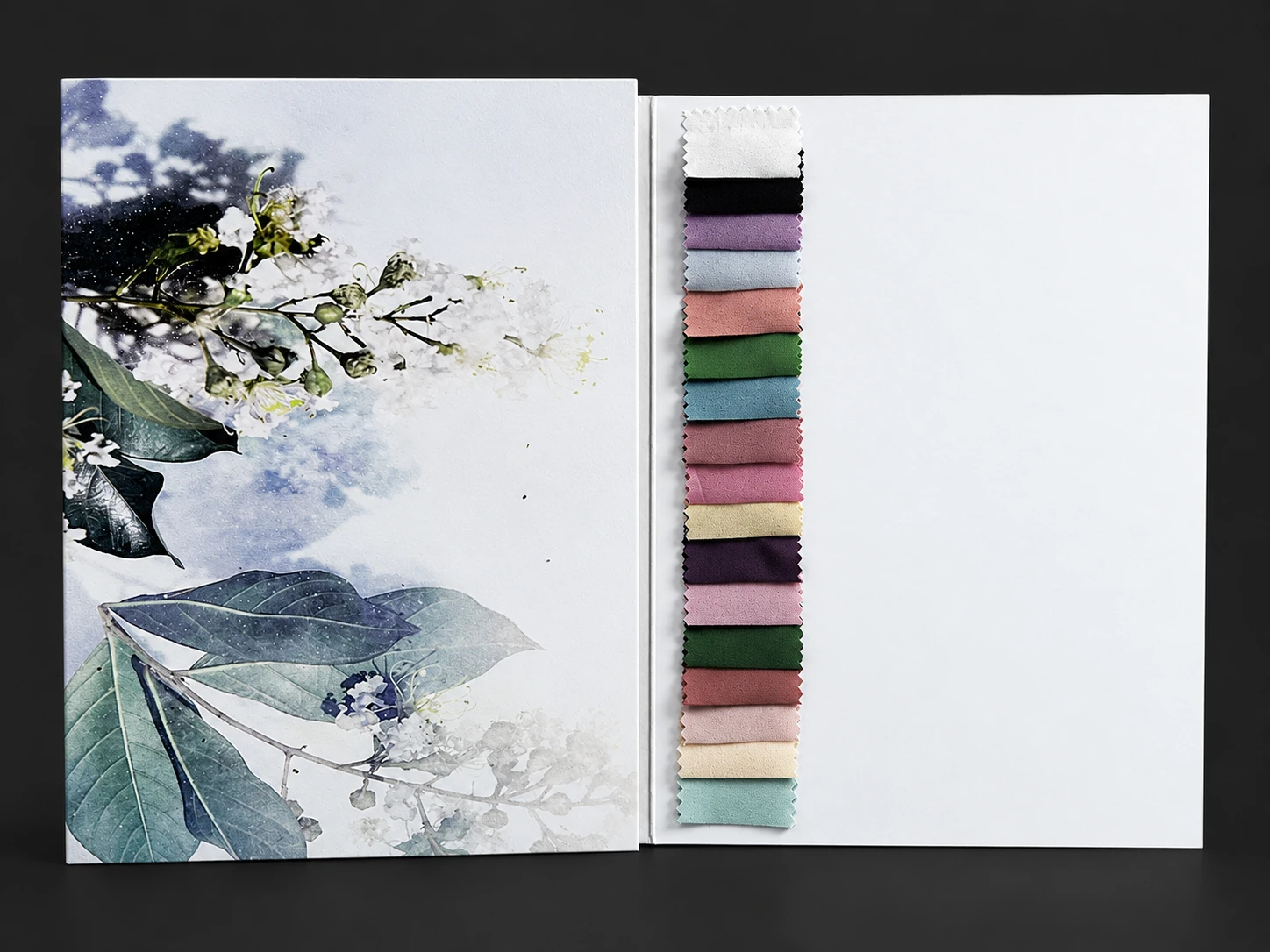
For the folded waterfall construction we make, we fold the fabric first, then attach the pieces in layers with double-sided tape. To add a layer, we lift the unsecured part of the previous swatch and position the new piece underneath.
Before you start mounting, work out how much of each swatch will show and where each piece will sit. Positioning marks can guide you, but the finished column still depends on careful folding and even spacing.
This arrangement can also go inside a ring-bound book. It doesn’t have to be a separate card.
Fan decks: spread them out, then gather them for carrying
A fabric swatch fan deck joins narrow cards at one end. Spread them out to compare the samples, then gather them into a small stack to take with you.
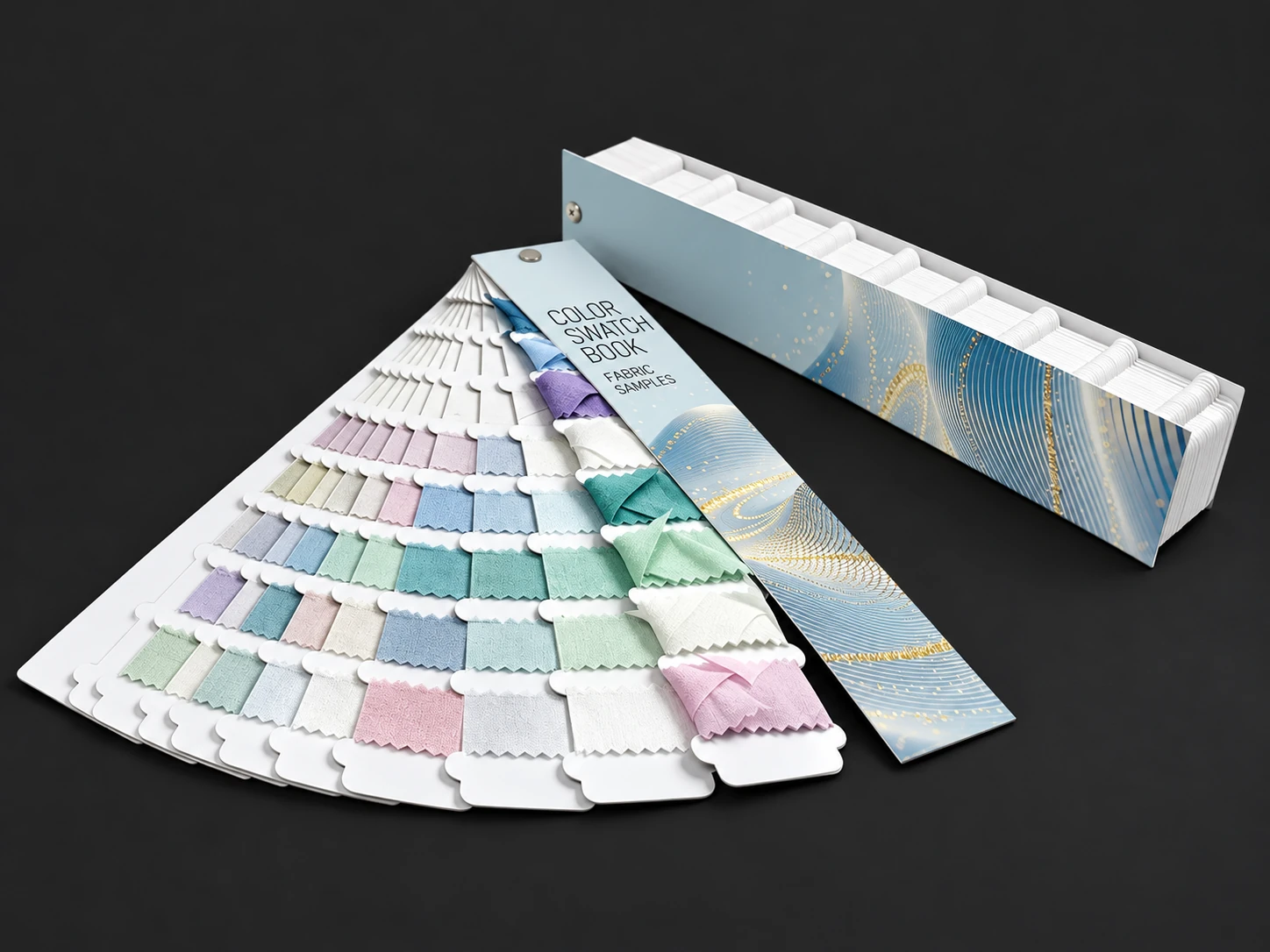
Our fan decks use a screw post, also called a binding screw. Unscrew it with a screwdriver to add, remove or replace cards.
The posts come in different lengths. Adding cards may call for a longer post; removing some may let you use a shorter one. The right length depends on the total thickness of the cards and their samples.
If product names or codes will change later, removable labels can work on fan cards too.
Yarn and cord sample cards: give each color its own space
For yarn sample cards, yarn can be wrapped around narrow strips so each color has its own visible band. Customers choosing colors can compare those bands side by side.
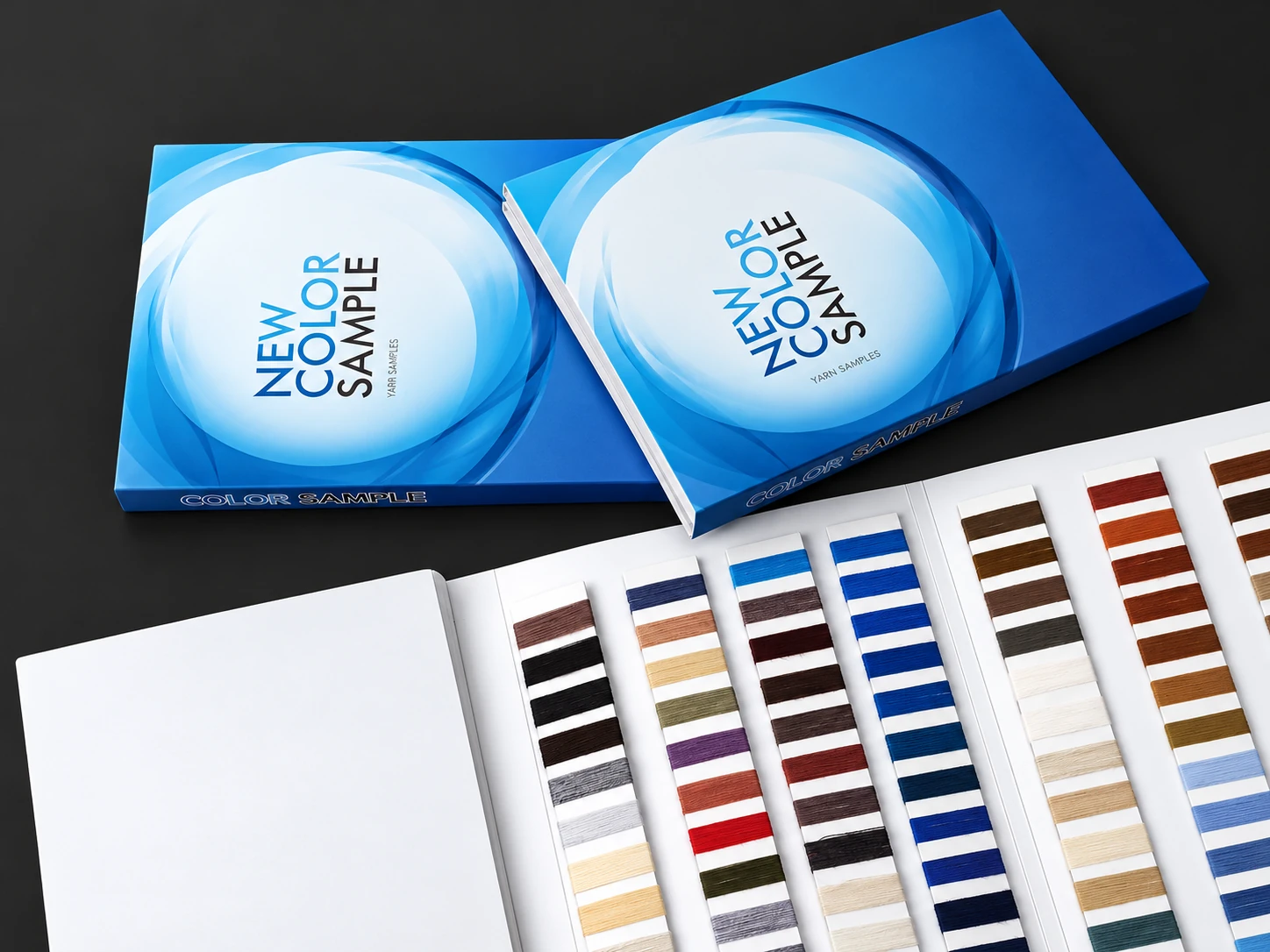
Cord sample cards can use punched holes to hang samples, with room beside them for a reference number or label. The hole arrangement and number of panels can be planned around how many samples you have.
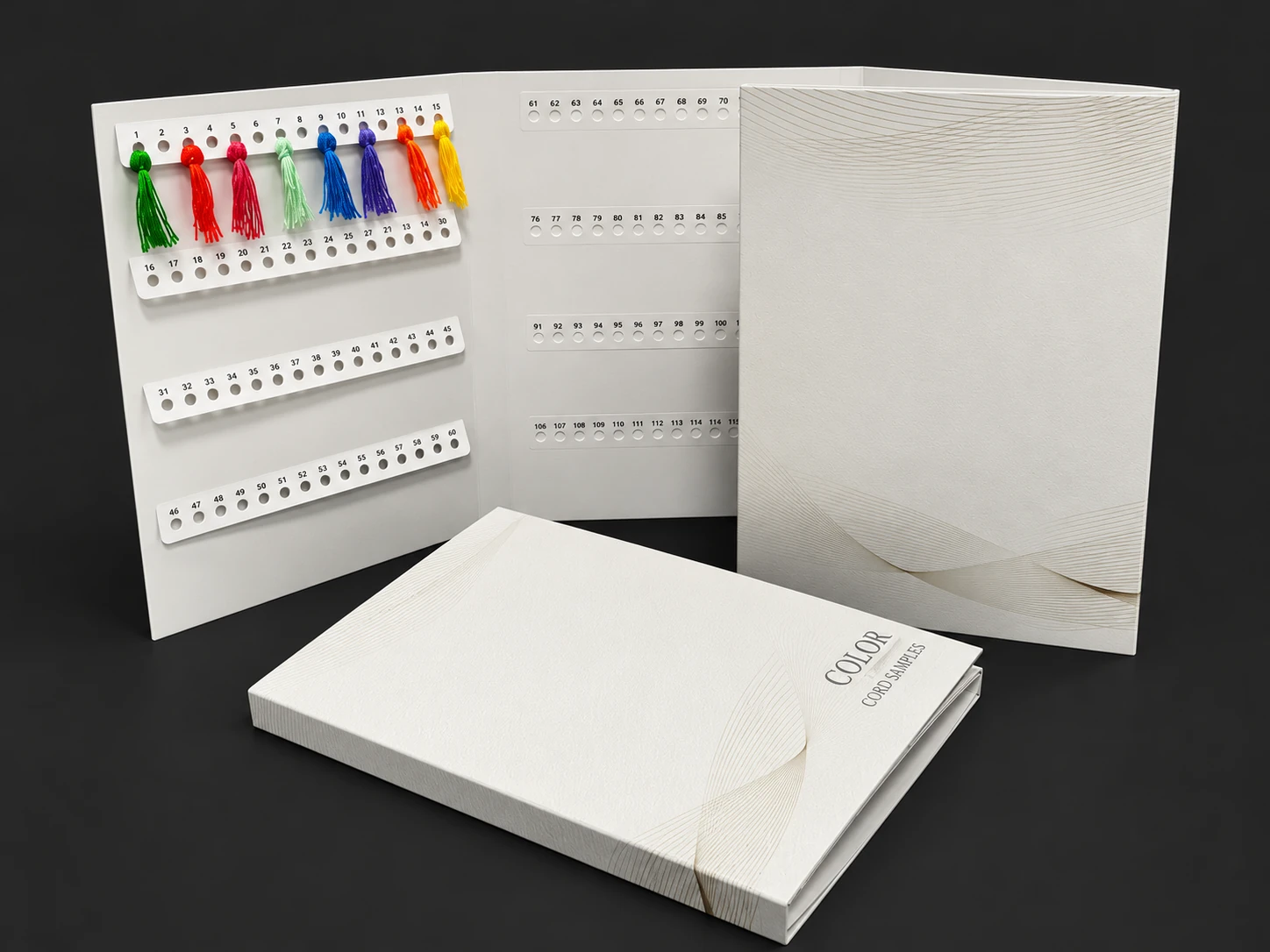
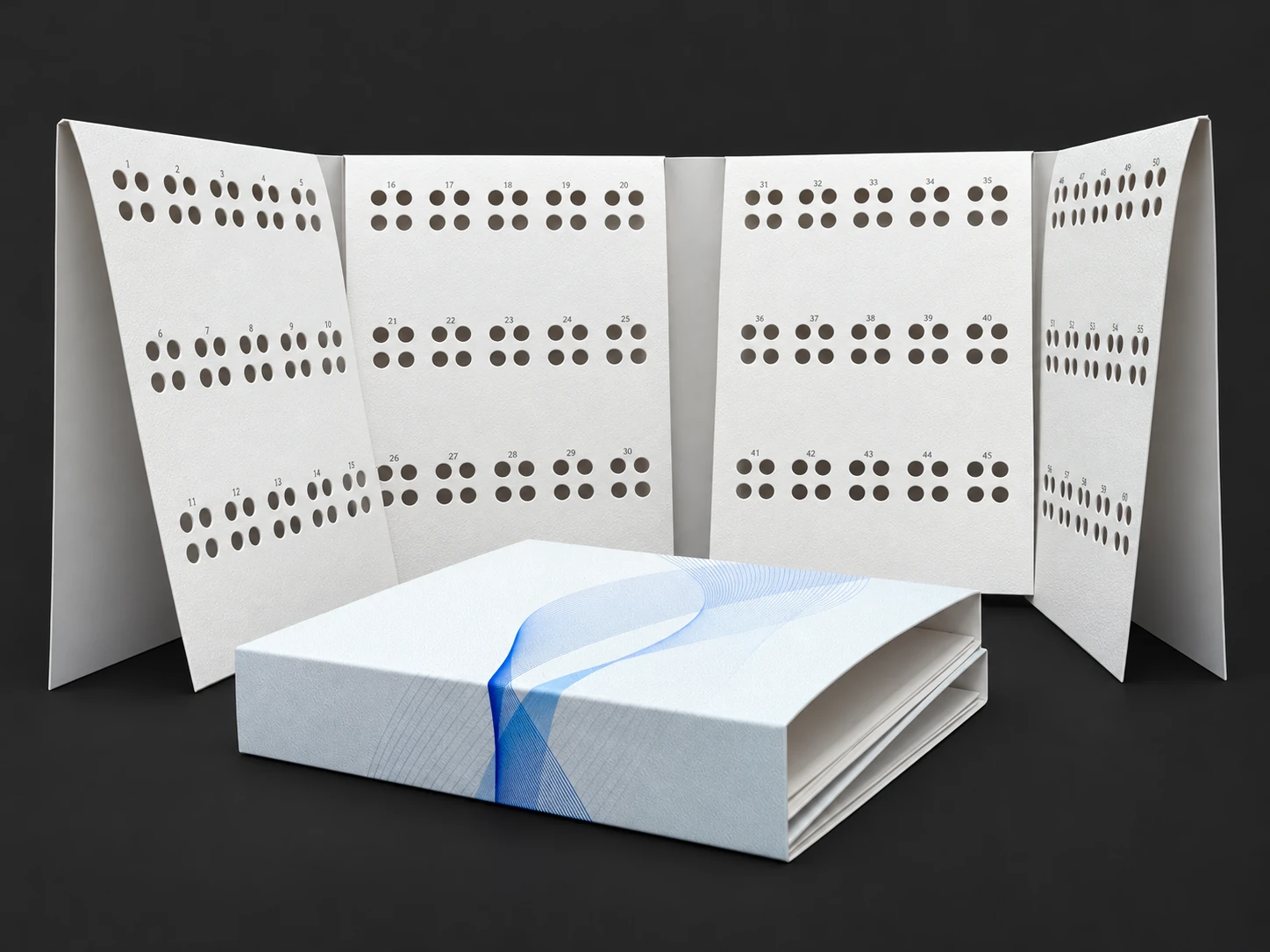
Both can be supplied as empty cards for you to wrap the yarn or attach the cord locally. If you’d like us to do the mounting, you’ll need to send the material, and mounting is quoted separately.
Wrapped yarn and hanging cord add thickness too. If the card folds, leave room for the samples inside. An empty card that closes is only the starting point.
Like one of these ideas? Make it your own
You don’t need to work out the whole design first. Start with an idea you like and tell us what you’d change: "I’d like more sample spaces, another panel and the codes over here." We can then work through the layout with your samples in mind.
Window shapes, hooks, cover artwork, product information and numbering can all be customized.
It helps to know the cut size and thickness, how many samples each card or book needs to hold, and how many cards or sets you’d like. If some details are still undecided, tell us what you know: whether you can arrange cutting locally, who will mount the samples and whether the collection will need updating.
Many regular constructions can be made in quantities of five cards or five sets. A single card can also be quoted separately as a prototype, depending on the structure and samples. Free design is available once the plan and quotation are agreed and payment has been made.
To discuss a display for your fabric, yarn or cord, visit our custom fabric swatch cards page and share the sample details or reference ideas you already have.
Here’s what happens next: custom fabric swatch cards from quote to delivery.