
Choose foil when you need a sharp metallic accent; embossing or debossing when raised or recessed texture matters; and Spot UV only when the paper surface, coating and artwork can support clean gloss contrast. On pearlescent envelopes, the finish must be reviewed against the paper colour, shimmer, artwork detail, size and flap layout before production. A physical sample or proof is the safer route when appearance is critical.
Compare foil, embossing, debossing and Spot UV
For buyers comparing foil vs embossing on pearlescent envelopes, the practical split is straightforward. Foil changes colour and reflection. Embossing and debossing change the paper surface. Spot UV adds a clear gloss detail, but only when the surface can support it.
| Finish route | Main effect | What the paper changes | Artwork input | Project check |
|---|---|---|---|---|
| Foil stamping | Metallic or coloured reflective accent | Paper colour and shimmer affect contrast | Clearly separated foil area | Confirm foil colour, coverage, placement, size and flap layout |
| Embossing | Raised impression | Paper and envelope construction affect how the relief behaves | Simple, clearly defined raised area | Confirm construction, placement and reverse-side impact |
| Debossing | Recessed impression | Paper and envelope construction affect depth and definition | Simple, clearly defined recessed area | Confirm construction, placement and reverse-side impact |
| Spot UV | Clear gloss contrast | Surface and coating compatibility determine whether the effect is suitable | Separate Spot UV mask | Confirm surface compatibility, mask and proof route |
Use the table as a routing tool, not a production specification. The right route still depends on the actual paper colour, envelope size, artwork and finish placement.
How pearlescent paper changes the finish decision
Pearlescent paper changes the choice because it already carries colour, shimmer and reflected light. A finish has to work with that surface instead of competing with it.
The current custom pearlescent envelopes page uses 210gsm pearlescent paper and reviews colour, size, flap, artwork and finish by project. The 210gsm figure is the paper weight. It is not a claim about the finished envelope thickness.
Some buyers call these shimmer envelopes. The same foil or gloss detail may read differently as the paper colour and viewing angle change. A screen mockup is useful for checking placement, but it cannot reproduce hand feel or changing shimmer.
When foil stamping suits the artwork
Foil is the clearest route when the artwork needs a defined metallic accent rather than a raised or recessed surface. It works best as a deliberate part of the layout, not as a label added after the envelope design is finished.
A foil stamped envelope brief should name the preferred foil colour and show exactly which artwork receives foil. It should also identify the envelope size and flap orientation. Those details help ZIVFY check whether the intended area and placement make sense for the project.
Fine detail, broad foil coverage, folds and flap placement all need artwork review. Avoid assuming that a foil result shown on another paper will look identical on a pearlescent stock.
Embossing and debossing: raised or recessed texture
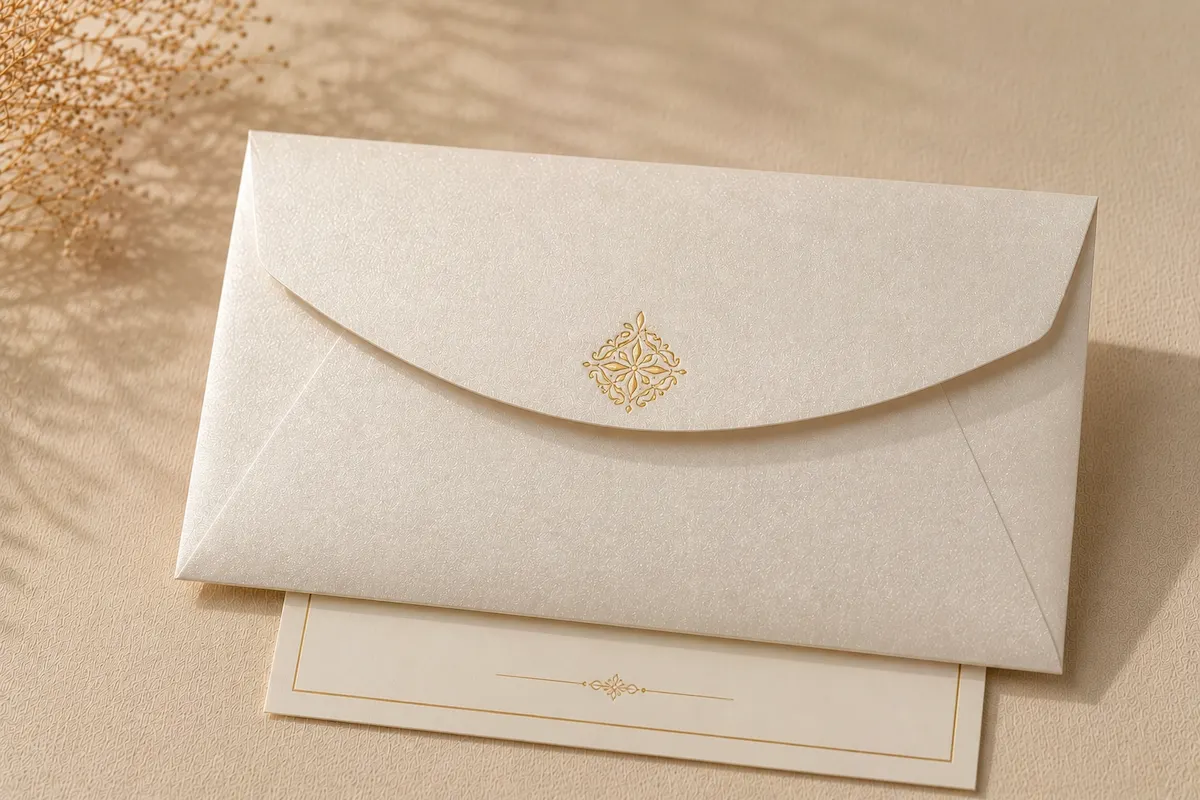
Embossing raises the paper surface; debossing creates a recessed impression. Both add texture, but they do not produce the same visual or tactile result.
Embossing
Embossed envelopes suit artwork that needs a raised mark the buyer can see and feel. A simple logo, monogram or defined shape is usually easier to assess than a dense illustration. The artwork and placement still need to be checked against the envelope construction.
Debossing
Debossed envelopes press the selected area inward. The effect can feel quieter than foil because it relies on depth and shadow rather than reflection. As with embossing, artwork simplicity, position and the reverse side of the affected area should be part of the review.
If the mark must catch the eye immediately, foil may be the clearer direction. If touch is central to the decision, embossing or debossing deserves closer consideration.
Spot UV: confirm the surface before relying on gloss contrast
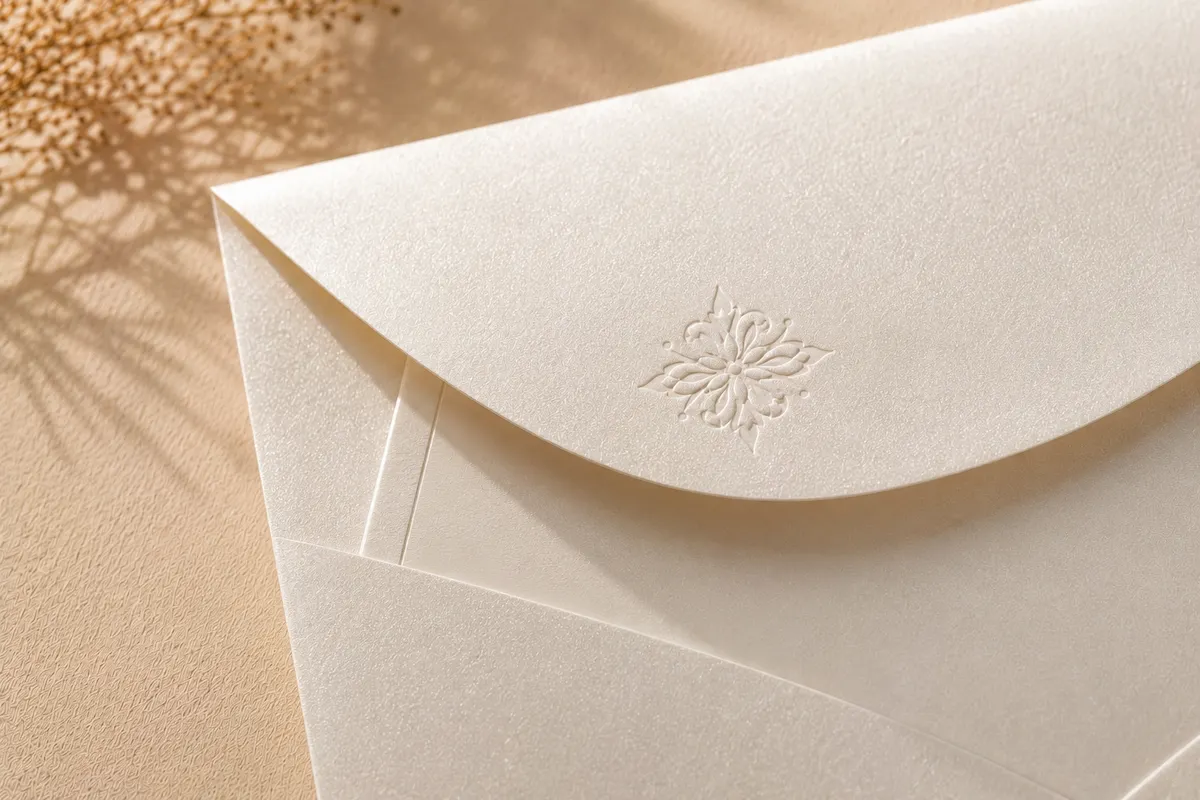
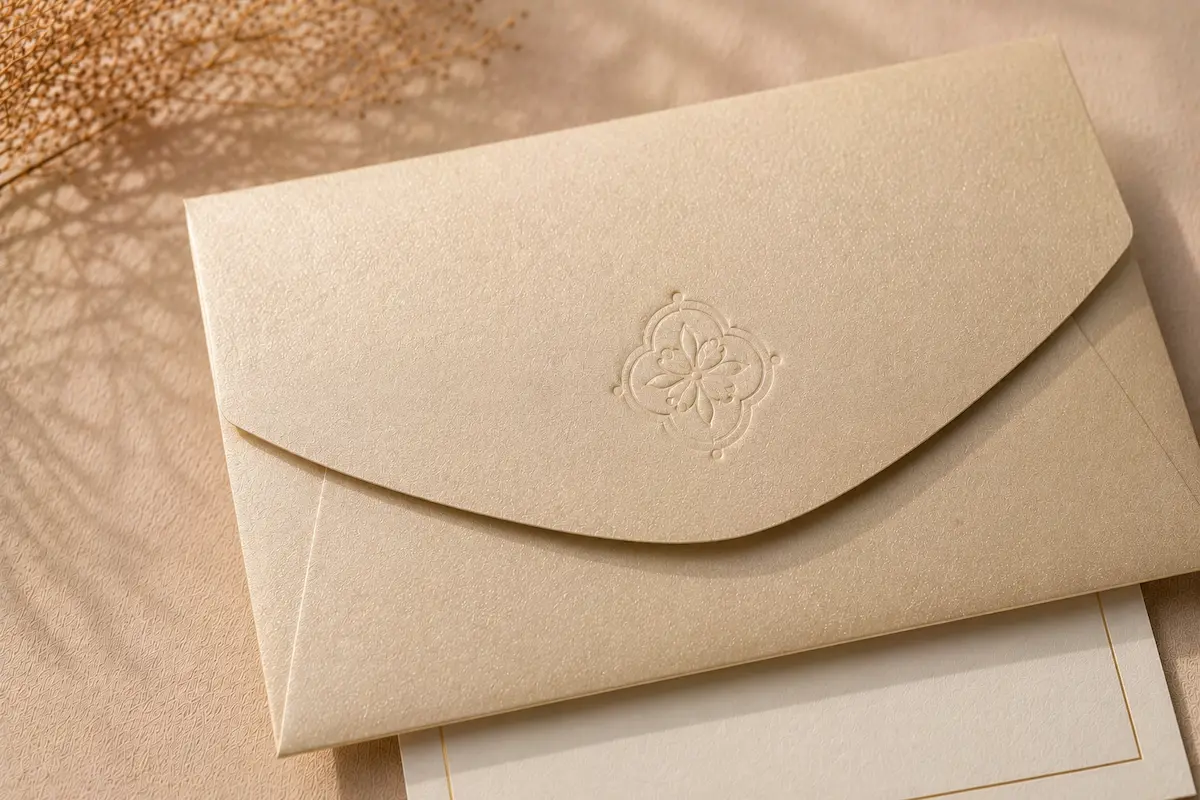
Spot UV is conditional on pearlescent envelopes. The surface and any coating must be checked before clear gloss is treated as a suitable finish.
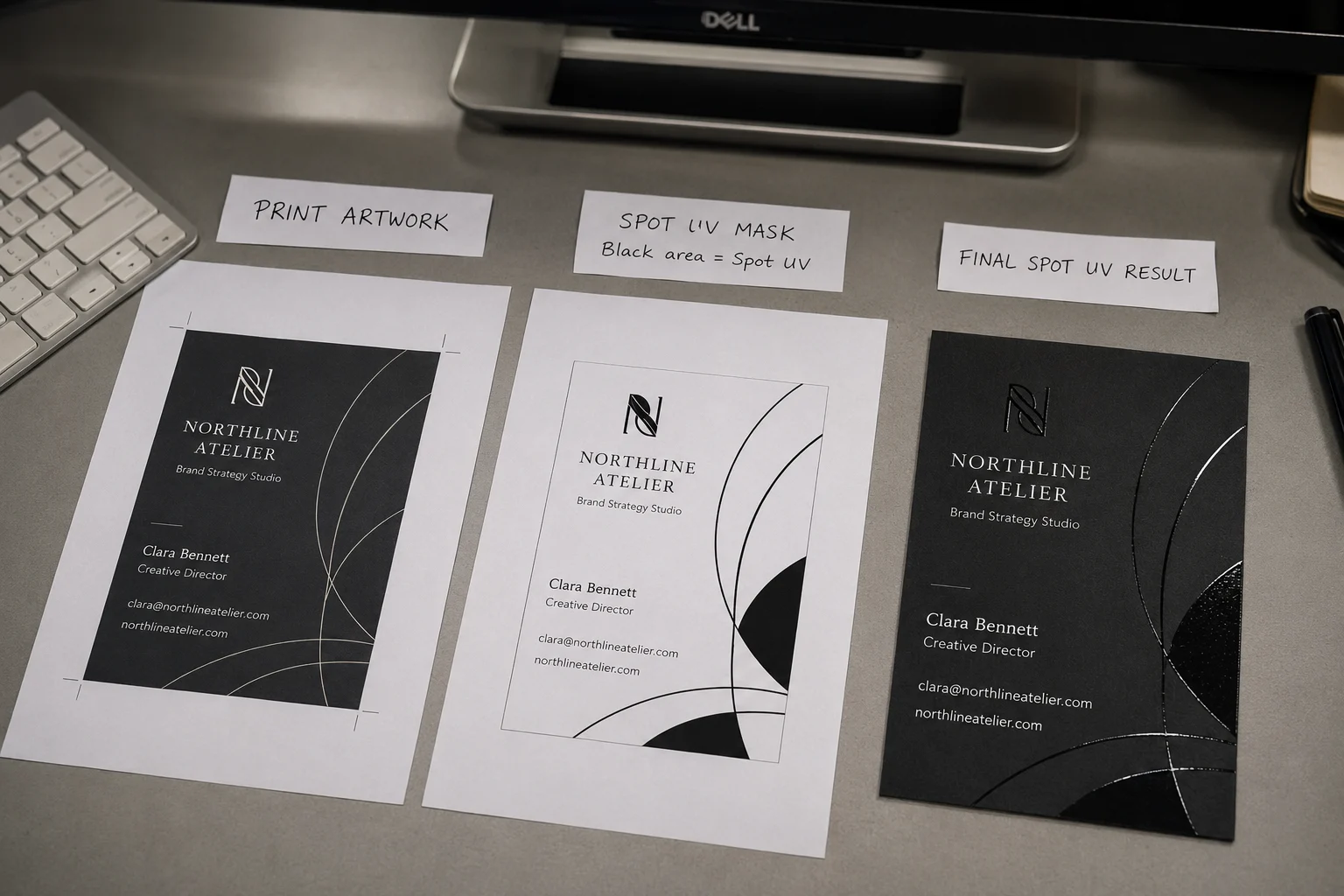
The Spot UV artwork and gloss guide explains how clear gloss details and artwork masks are handled on business cards. It is useful process context, but it does not prove compatibility with every pearlescent envelope paper.
A Spot UV envelope brief may need a separate mask showing the exact gloss areas. Because the paper already reflects light, the gloss contrast can be subtler or behave differently from the same design on a matte stock. Confirm the surface first.
Artwork and proof checks before production
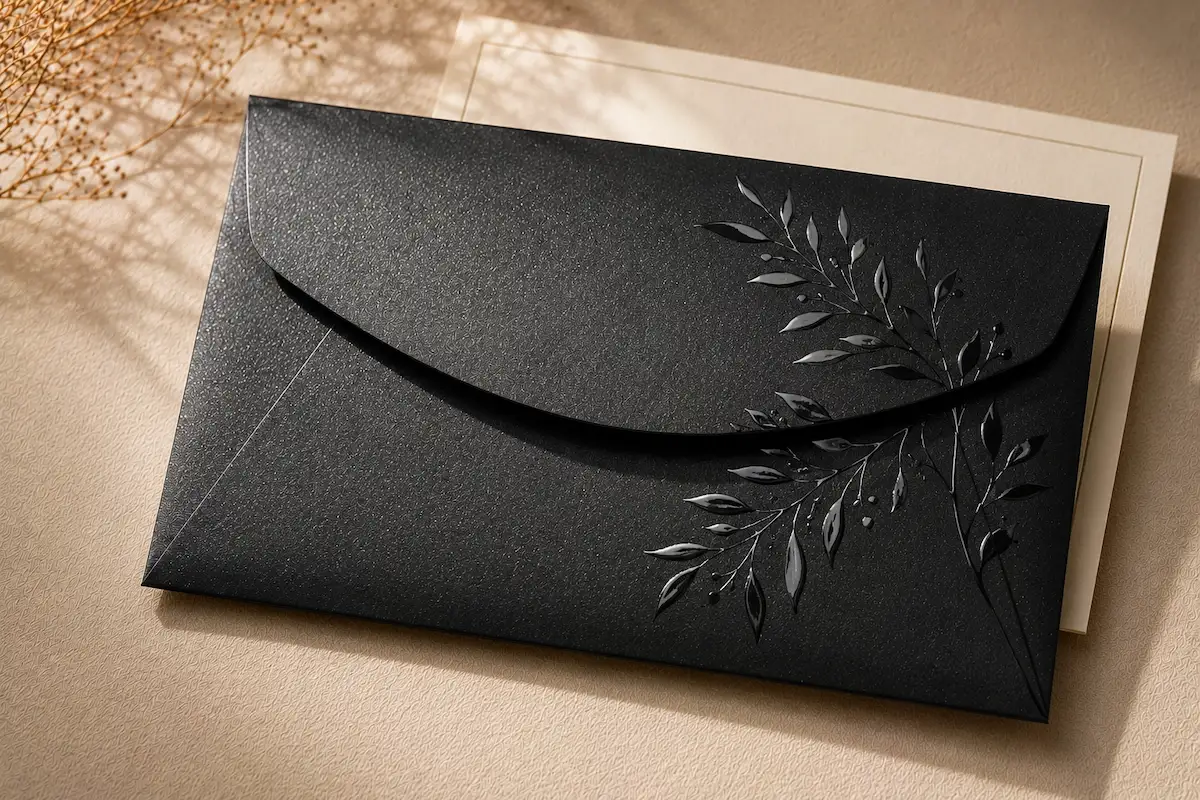
Start with one base artwork file and clearly separate every special-finish area. The file should show what prints normally and what receives foil, embossing, debossing or Spot UV.
Use ZIVFY’s artwork support for foil, embossing, debossing and Spot UV when the finish layer, bleed, safe area or vector setup is unclear. Do not add invented line weights, registration tolerances or coverage limits to the file.
A proof is useful for checking size, position and assigned finish areas. It does not promise an exact screen-to-paper colour, shimmer or tactile result. When those qualities drive the decision, pair the proof review with a relevant physical sample.
What to include in a pearlescent envelope quote request
Send the envelope size or insert dimensions, paper colour, artwork, quantity, preferred finish, delivery country and required timing. That gives ZIVFY enough context to review the project direction without guessing.
- Envelope size, or the insert dimensions if the size is not settled
- Preferred pearlescent paper colour
- Artwork or a clear reference file
- Quantity
- Foil, embossing, debossing or Spot UV direction
- Delivery country
- Required timing
Add any concern that could change the choice, such as a finish close to a fold, a logo on the flap or a specific tactile effect. The quote review can then address the actual combination instead of a generic finish name.
When a sample is more useful than another screen image
Use a physical sample when the decision depends on shimmer, colour, surface texture, gloss or the feel of a raised or recessed mark. Those details are difficult to judge from a monitor.
The ZIVFY sample book helps buyers compare real material and finish directions. Samples are free; the customer pays shipping after the shipping cost is confirmed. Destination duties, taxes or customs fees are normally the customer’s responsibility.
The sample book cannot include every custom combination and may not contain the exact finished envelope being planned. It supports the material and finish decision, but it does not replace artwork, proof or quote review.
Frequently asked questions
Can foil and embossing be combined on one pearlescent envelope?
They may be combined only after the paper, artwork, size, placement and proof route are reviewed for the specific project. Do not assume that a combination shown on another stock is available or suitable for the selected envelope.
Does Spot UV work on every pearlescent paper?
No. The paper surface and coating must be checked before Spot UV is approved as the finish direction. The artwork mask and expected gloss contrast also need project review.
Can existing envelope artwork be used for foil, embossing or Spot UV?
Sometimes, but the base artwork may need a separate finish mask or simpler detail. Send the current file through Artwork Support so the finish areas can be checked without inventing production specifications.
Will a sample book show the exact finished envelope?
Not necessarily. It helps compare real materials, surfaces and finish directions, but it may not include the exact paper, colour, size and finish combination. It is a decision reference, not the final proof.
Request a project-specific finish review
Once the size, paper colour, artwork, quantity and preferred finish are clear, the useful next step is a project review. Review ZIVFY Luxury Envelopes and send your envelope size, paper colour, artwork, quantity and preferred finish for a project-specific quote.