
When you order premium business cards for a whole team, the simplest way to keep costs down is to split everything on the card into two groups: what's the same for everyone, and what's different for each person.
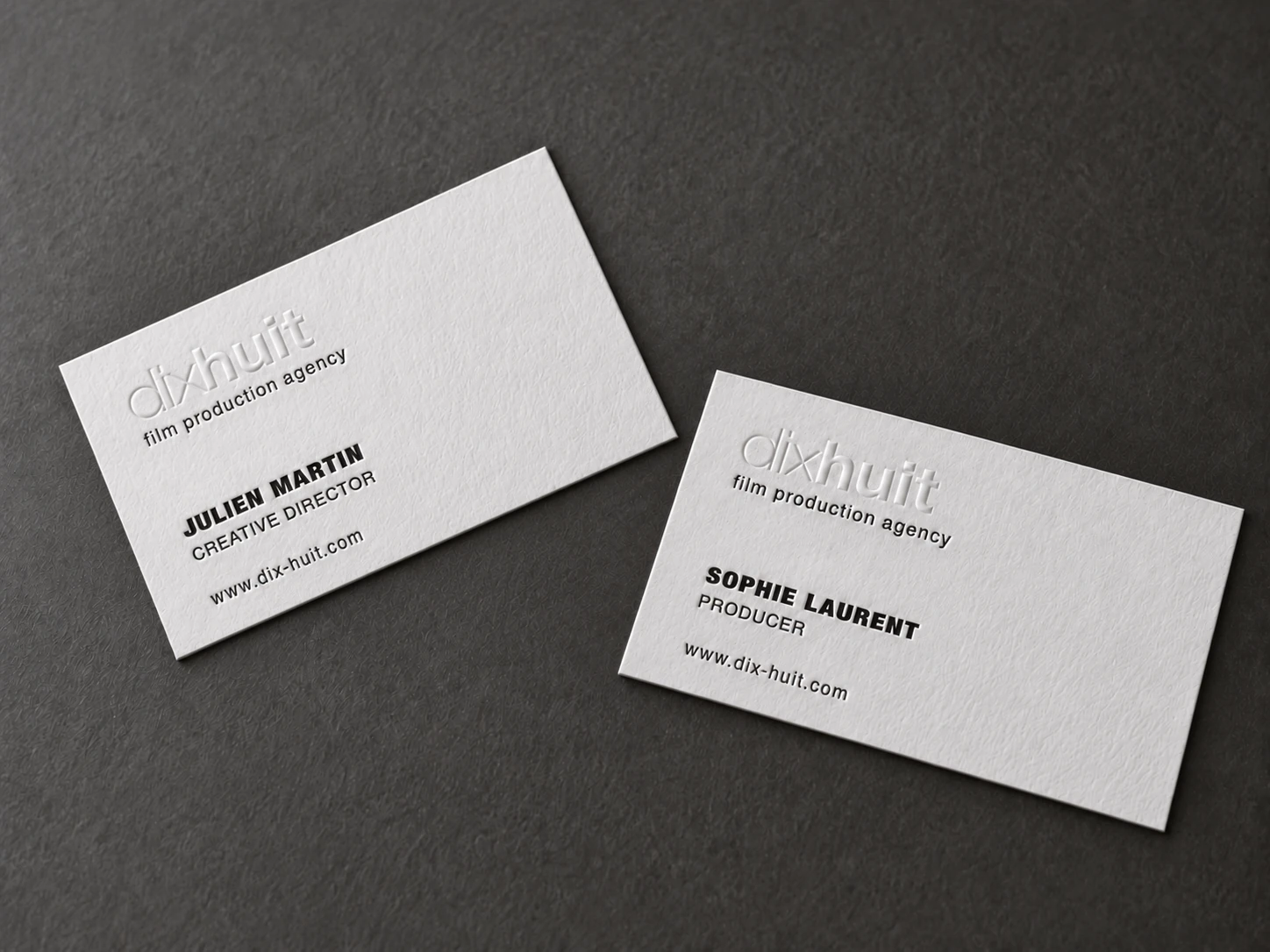
The shared parts, like your logo, borders and background color, can get foil stamping or debossing without a second thought. The die is made once, and the whole team uses it. The parts that change from person to person, like name, job title and phone number, are printed. Adding another person just means changing a few lines of text, which costs far less.
Names can be foil stamped or debossed too. It just means every person needs their own die. Whether that's worth it depends on whether your team cares more about the effect or the budget.
How Is Ordering Premium Cards for a Team Different from Ordering Cards Online?
When most printing websites talk about multi name business cards, they mean digital printing: each name is its own file, you add it to your cart, and changing names costs almost nothing extra.
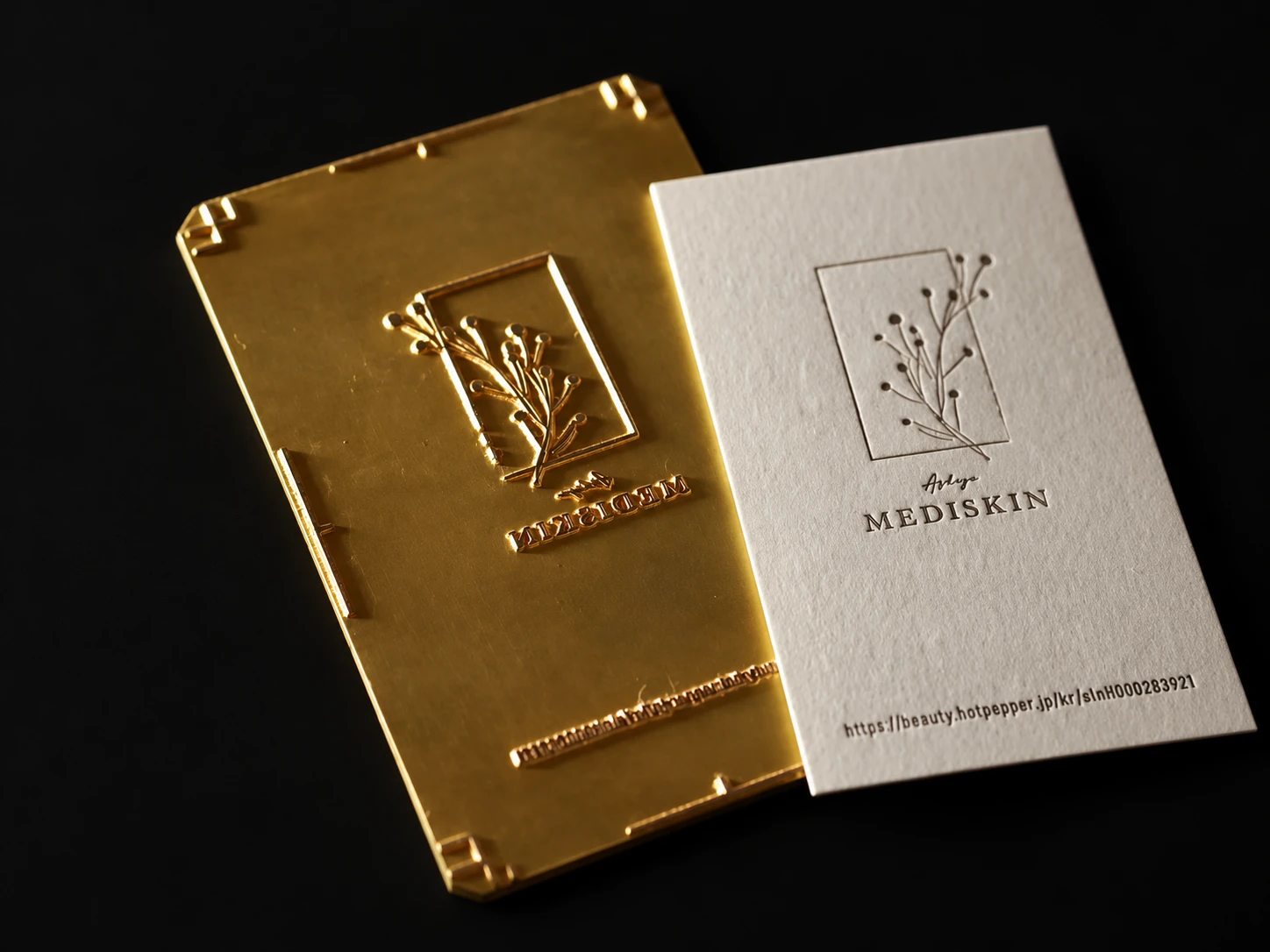
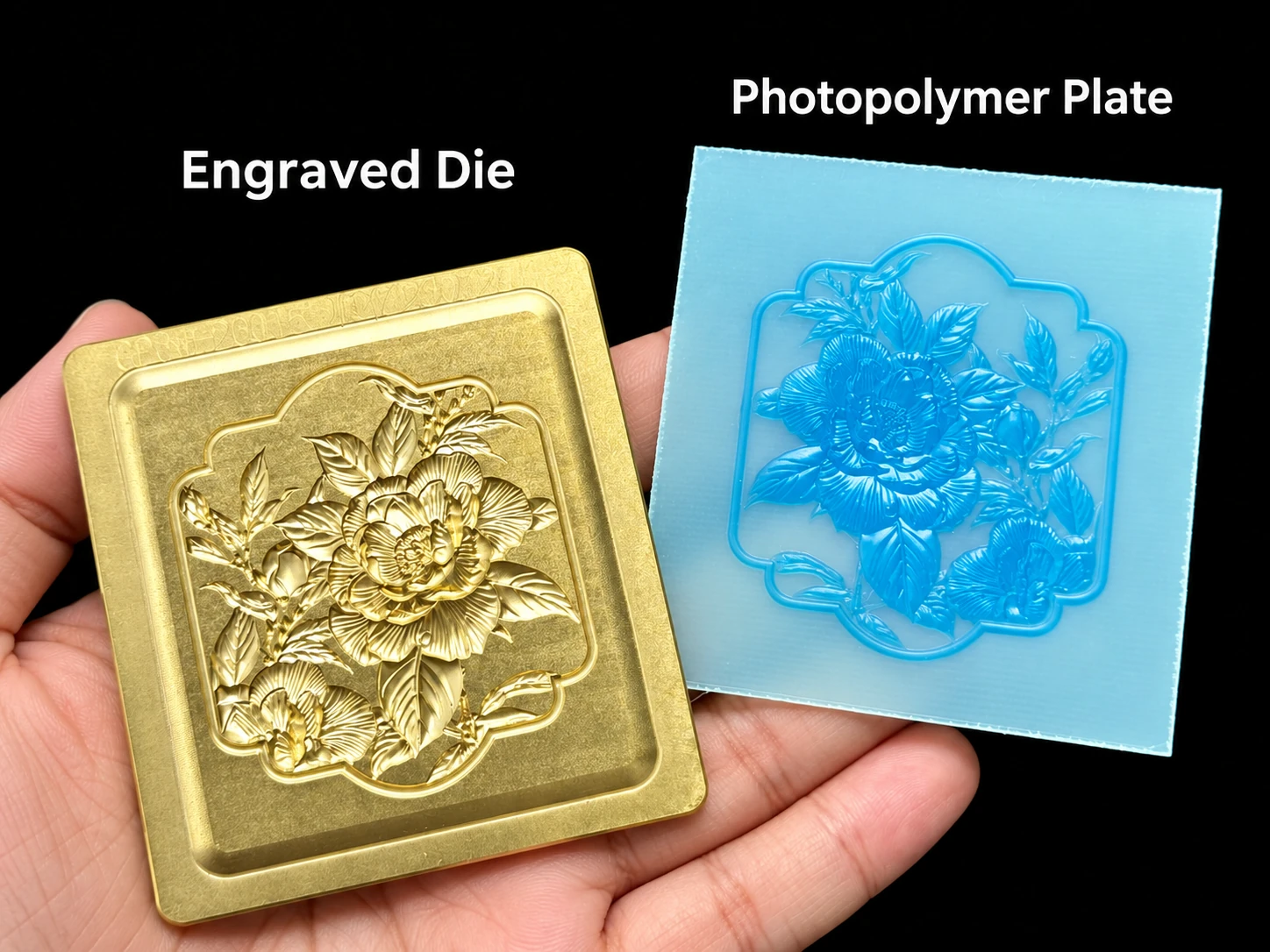
Premium business cards aren't made that way. Finishes like foil stamping and debossing need a die first. Think of it as a metal stamp engraved with your design. The machine uses it to press foil onto the paper, or to press an impression into the paper.
The catch is that one die carries one design. Your logo is the same for everyone, so one die covers the whole team. Names are different for each person, so if the names get foil or debossing too, each person needs their own die.
So when you order premium cards for a team, the first question isn't how many cards to order. It's which elements are the same for everyone.
Which Parts Should Get Special Finishes, and Which Should Be Printed?
The advice we give team clients most often is simple: put the finishes on the shared parts, and print the parts that change.
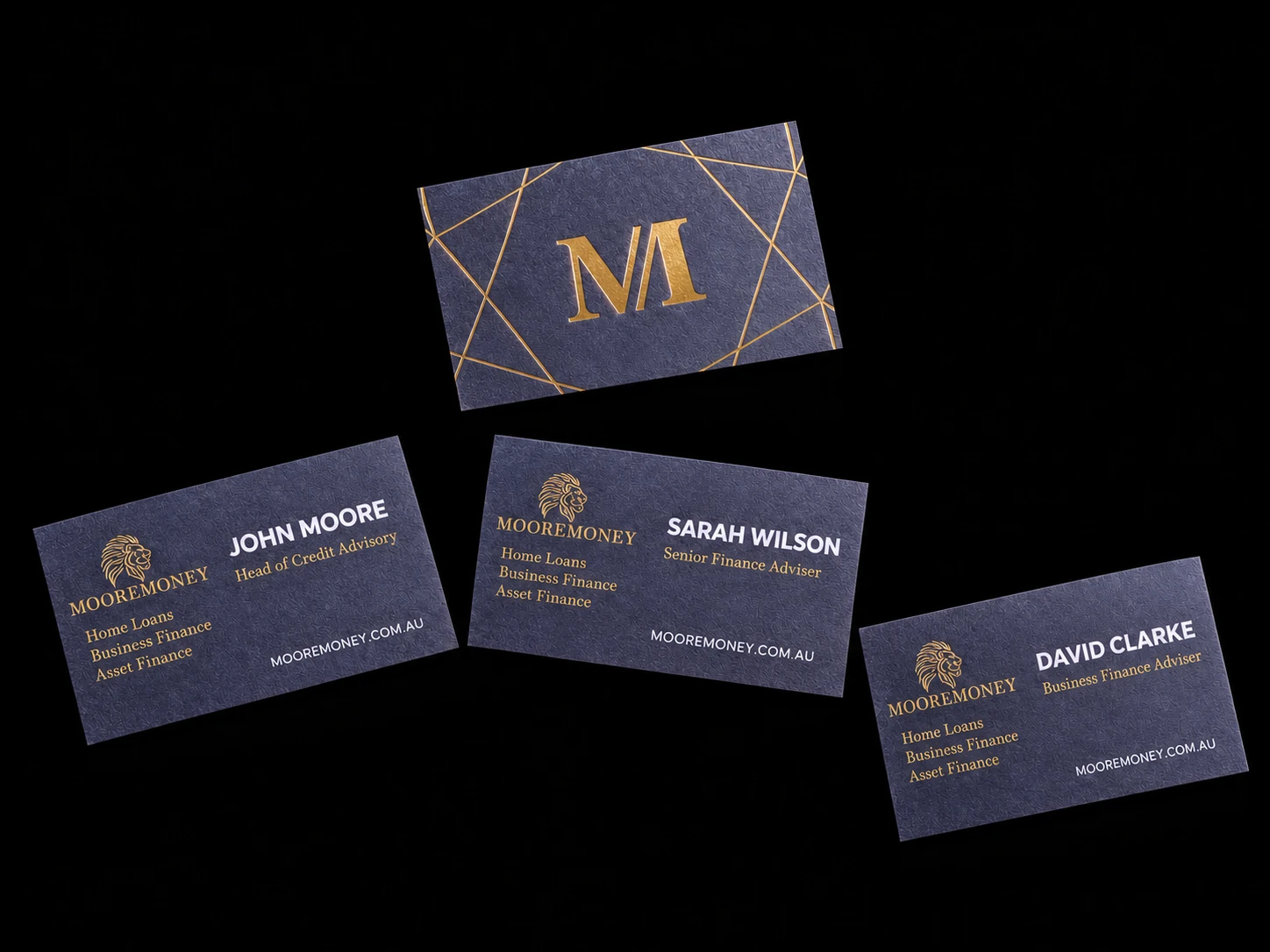
Here's an example. A five-person design studio uses black paper for its cards. The front has a gold foil logo, and the back has each person's name, job title, phone number and email. The foil logo uses one die shared by all five people. The back is printed in white ink, and only the text changes from card to card.
We print this changing information with photopolymer plates, which cost less. A photopolymer plate is a printing plate made from light-sensitive resin. After exposure, it's washed out with water and dried, and then it's ready for the press. These plates cost much less.
The ink color matters too. It's best to choose colors that stay consistent from card to card, such as black ink on white paper or white ink on black paper. Put the five cards side by side, and no one's text looks a shade darker or lighter than anyone else's. The set looks unified.
This is a trade-off. The names won't catch the light the way the logo does, but the set looks more consistent and you save a fair amount. If what matters most to your team is that the cards look like one set, this approach is usually the best fit.
Can Names Be Foil Stamped or Debossed Too?
Yes, but every person's name needs its own engraved die. There's no way around that. Five people means five engraved dies, and ten people means ten.
This isn't a rule we made up. It's how the industry prices this kind of work. In a U.S. Government Publishing Office business card contract, for example, foil stamping dies are charged per die, and typesetting is charged per name.
 gpo.gov
Some clients simply want that effect. They want names that catch the light and that you can feel with your fingertips, and price isn't the top concern. That's completely fine, and we'll make them that way.
But if you're working within a budget and just want the whole set to feel premium, we'd suggest saving the finishes for the logo and printing the names. The money you save on dies can go toward the paper or somewhere more noticeable.
Can the Owner and the Staff Have Different Specs?
Yes, we take orders like this. The cost will just be different. For example, the owner's name might be foil stamped while staff names are printed, or the owner's card might be a thicker duplex card.
Different specs don't mean the cards stop looking like a set. As long as the logo, layout and colors stay consistent, anyone can tell they come from the same company. The owner's card just has a little more detail.
How to divide it up is the owner's or the purchasing team's call. Before ordering, it helps to agree internally: should everyone's card be identical, or can management's cards be different? Once that's settled, send us a quote request and we can price that plan directly.
What If Everyone Needs a Different Number of Cards?
It's normal for people on the same team to go through cards at very different rates. A salesperson out meeting clients might hand out hundreds a year, while someone in the office might take years to finish one box.
Our premium business cards usually have a minimum order of 200 cards per design, but team orders can be handled differently. As long as the whole set adds up to 200 cards, not everyone needs to reach 200. For example, if the owner needs 100 cards and four colleagues need 25 each, that's 200 in total, and you can place the order.
The condition is that most of the content is shared. Foil stamping and debossing should use the same die for the whole team, with only the printed name, job title and phone number changing. If everyone's special finishes are different, it's like making a new set for each person, and the cost gets too high to make sense.
When you request a quote, just list how many cards each person needs. You don't need to round anything up.
What's the Easiest Way to Send Us Your Team List?
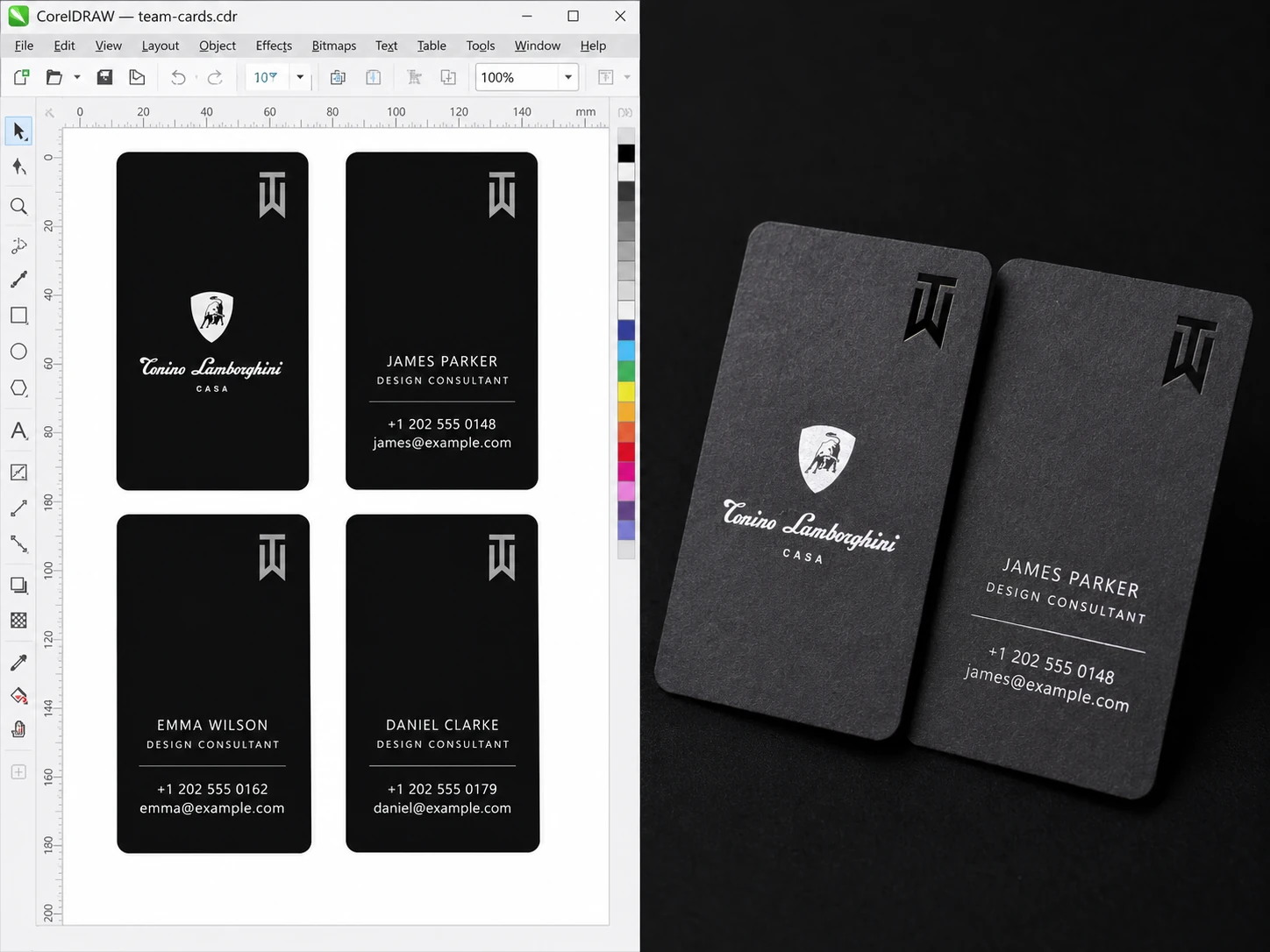
Just send a spreadsheet with one row per person: name, job title, phone, email and the number of cards they need. Mark which parts are the same for everyone on your design file, or describe them in a note. Leave the layout and file checks to us. You don't have to build a dozen separate files.
There's one thing you really need to think about early: the person with the longest name.
A short name looks great centered on the card. A long name needs room on both sides. Otherwise it gets squeezed toward the edges, or the type has to shrink, and that card stops looking like the rest of the set. Job titles work the same way. "Founder" and "Senior Business Development Manager" look very different in the same spot.
So when you settle the layout, test it with the longest name and the longest job title on the team. If the short ones fit, that doesn't mean the long ones will. But if the long ones fit, the short ones are usually fine.
Before you send the spreadsheet, it's a good idea to have everyone check their own row. One missing digit in a phone number or one wrong letter in an email address means a whole box of cards nobody can use.
Once we have your spreadsheet, we make a separate proof for each person's card, then put them all together in one PDF for you. When you look at the whole team's cards side by side, you can spot right away which name is too cramped or which phone number is formatted differently. When a new team member joins later, we edit from the PDF you already approved, so the font and type size stay exactly the same.
Will Cards for a New Hire Match the Original Batch?
Very closely. Put an old card next to a new one, and most people can't tell the difference. Still, there are two small things worth knowing up front.
The first is position. The foil logo, for example, might sit very slightly off compared with the last batch. Foil dies are positioned by hand, so a tiny variation is hard to avoid. Unless you stack two cards and compare them closely, you'll hardly notice, and in everyday use almost no one does. We also take steps to keep this in check. We usually keep one or two cards from a client's previous order, so the next time we make them we can check the finish, color and position against the originals.
The second is paper color. Every batch from a paper mill is slightly different, and paper makers themselves treat batch-to-batch shade variation as something that has to be controlled. It's something we can't fully avoid. Overall, you won't see an obvious difference, but if you need two batches of paper to be identical, we have to be upfront with you: we can't guarantee that 100%.
The good news is that reorders don't need new dies. We keep the more expensive copper dies for foil stamping and debossing on file long term. When someone new joins, we use the original dies and only change the few printed lines.
Ready to Order Cards for Your Team? Here's Where to Start
Get your design file and team spreadsheet ready. Note how many cards each person needs and which parts you'd like foil stamped or debossed, then send everything to us through our quote request page. If you haven't chosen a paper yet, you can request print samples first and decide once you've had them in your hands.
If you're not sure whether the names should get special finishes, mention that in your quote request too. We'll show you how the two approaches compare.