
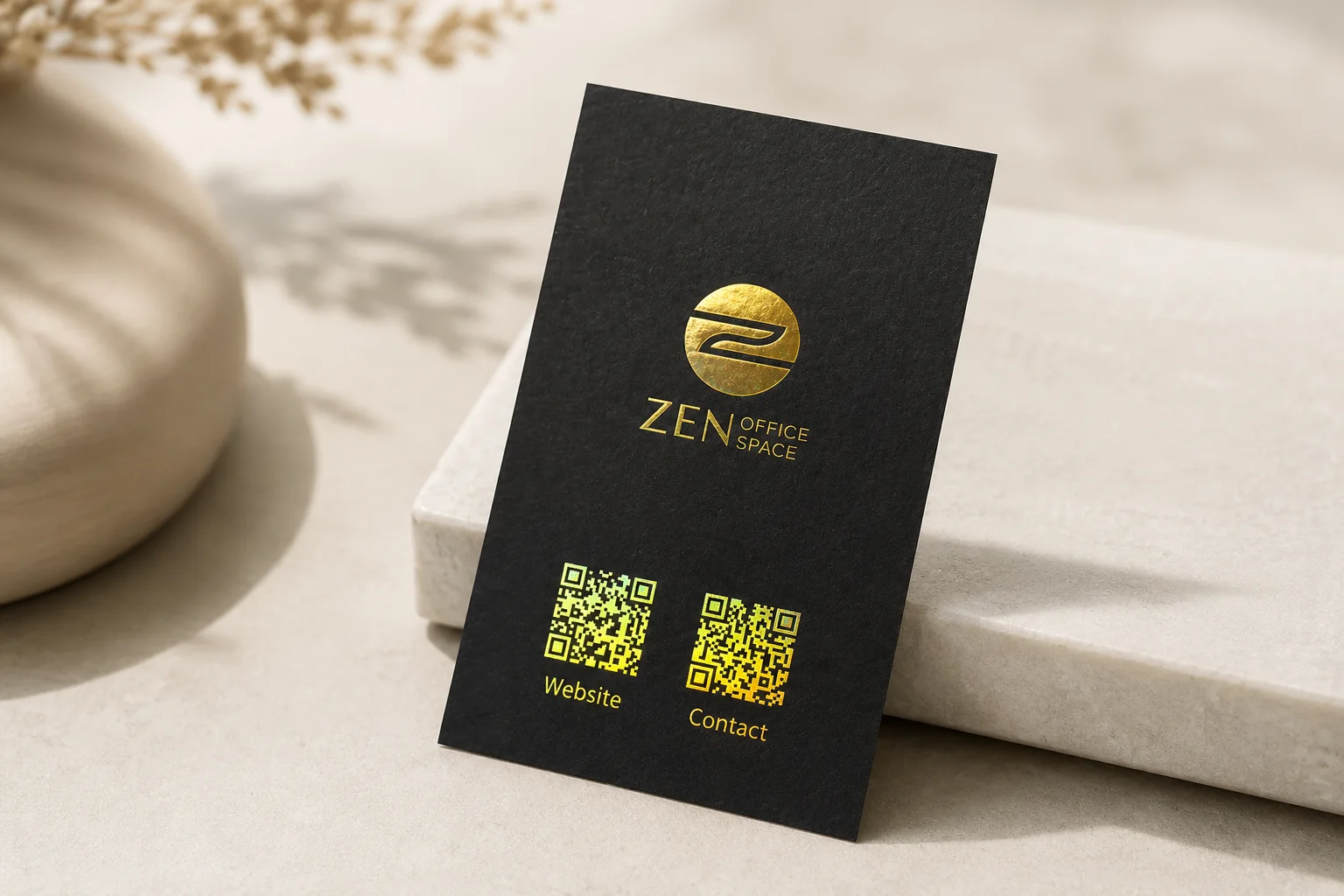
You’re meeting a client for the first time. You shake hands, then hand over your business card.
They look down at it for three to five seconds. In those few seconds, they start forming an opinion: Is this someone I can trust? Do they care about the details?
You say a lot during that meeting. They might not remember all of it. But your business card is the only thing they can take away and hold in their hand.
So today, we’re not talking about whether business cards are expensive. We’re asking a different question: What are those three to five seconds worth?
First, Let’s Be Clear: Luxury Business Cards Aren’t Just Upgraded Standard Cards
Standard business cards are inexpensive, produced in bulk, and printed with accurate colors. You can laminate them too, so you don’t have to worry about water. For exchanging contact details, they do the job.
Luxury business cards do something else: they make the person holding one pause for a little longer.
Where Does the Extra Money Go?
It goes into the things you can actually feel when you pick up the card. Let’s take cotton business cards as an example.
First, the paper. Cotton paper feels thicker and more textured than the paper used for standard business cards. It doesn’t have that thin, slippery feel. It’s not made entirely of cotton. Cotton fibers are mixed with paper pulp, giving it that cotton feel while keeping it firm.
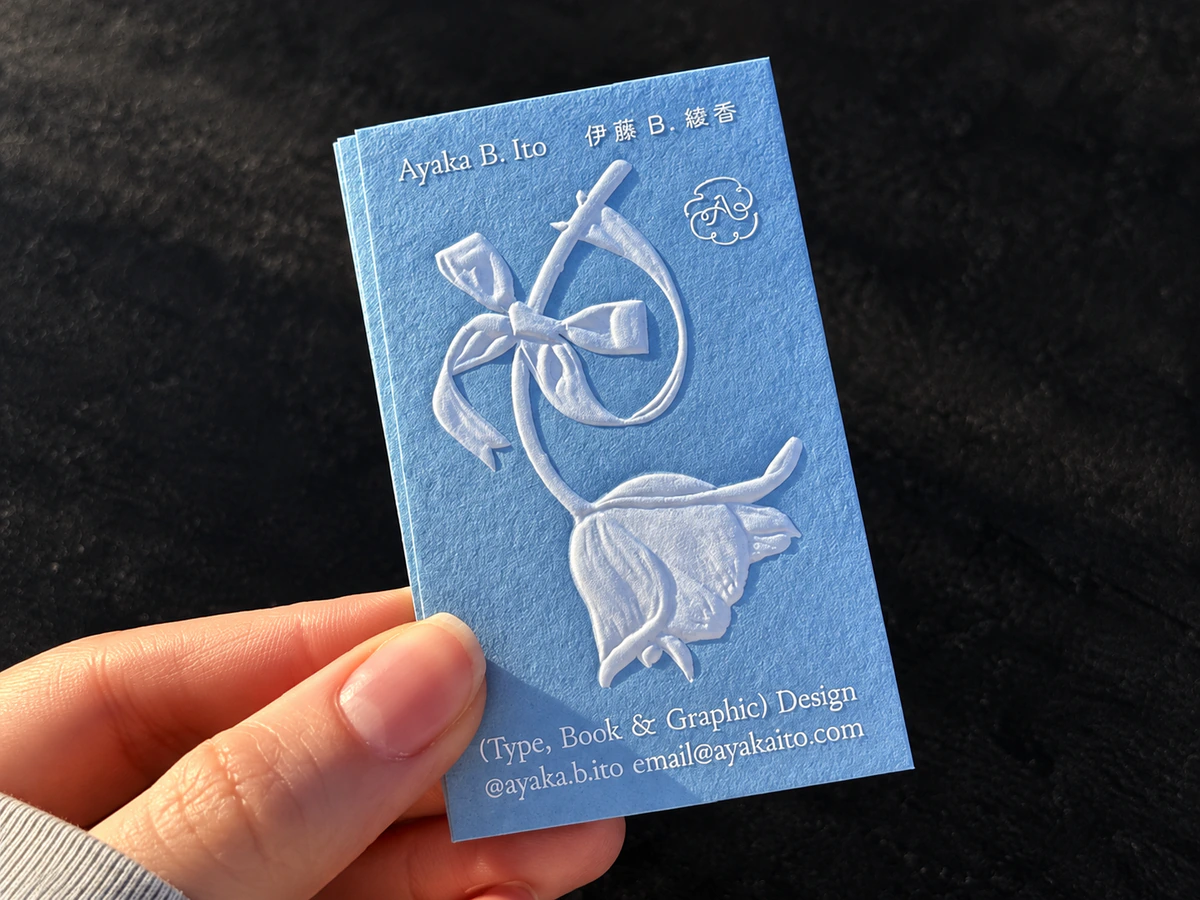
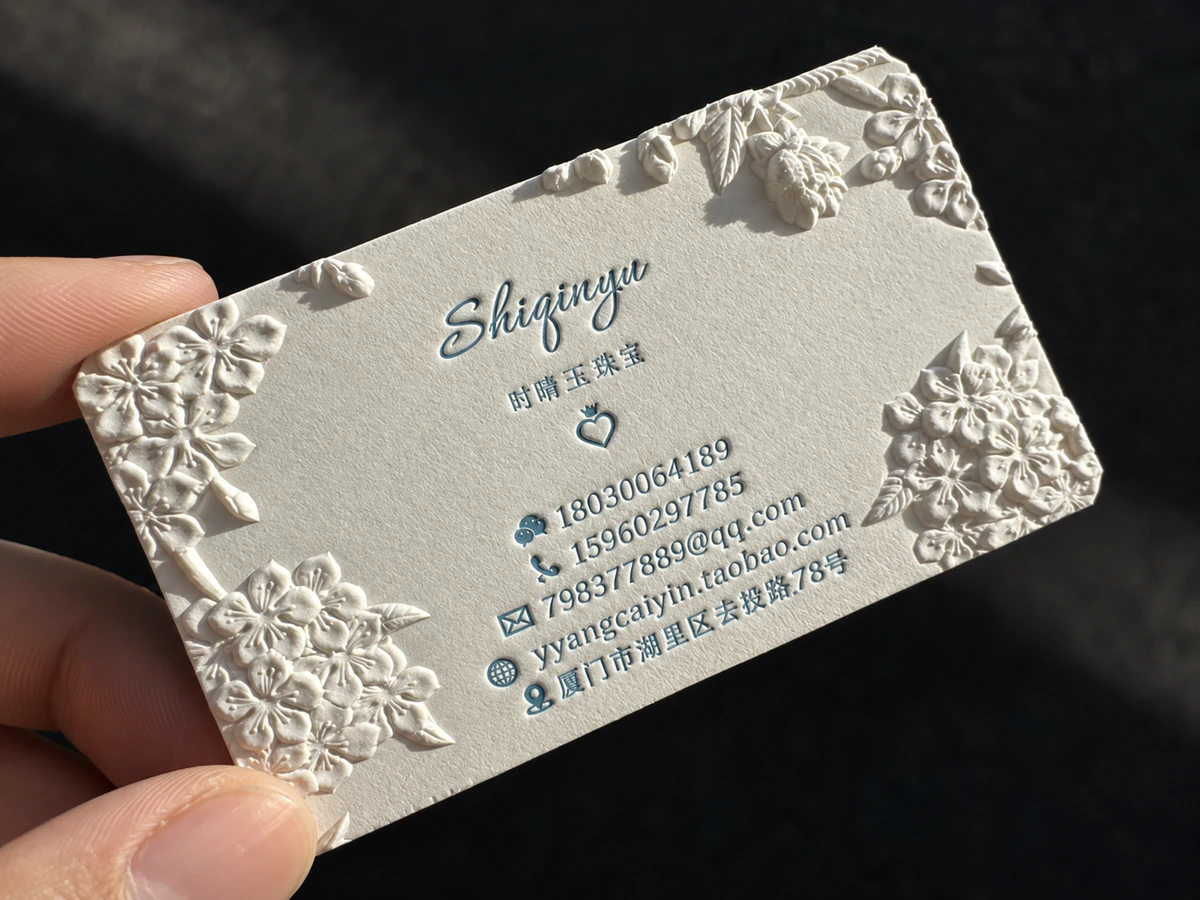
Then there’s the lettering. On standard business cards, the letters are printed on the surface and feel flat. On luxury cards, the lettering can be debossed into the paper. Run a finger over it, and you can feel the indentation. An ordinary printing press can’t do that. First, a custom copper die has to be engraved, then used to press the design into the paper. That adds to the cost.
Finally, there’s thickness. To make a card thicker and stiffer, or give one side raised or recessed details while keeping the other side flat, we bond two sheets of paper together. That’s called duplexing. It’s another production step, so it adds to the cost.
You can see the thickness and recessed lettering in a photo. But how the paper feels, and what it’s like to run a finger across those letters—you still need to hold the card to find out.
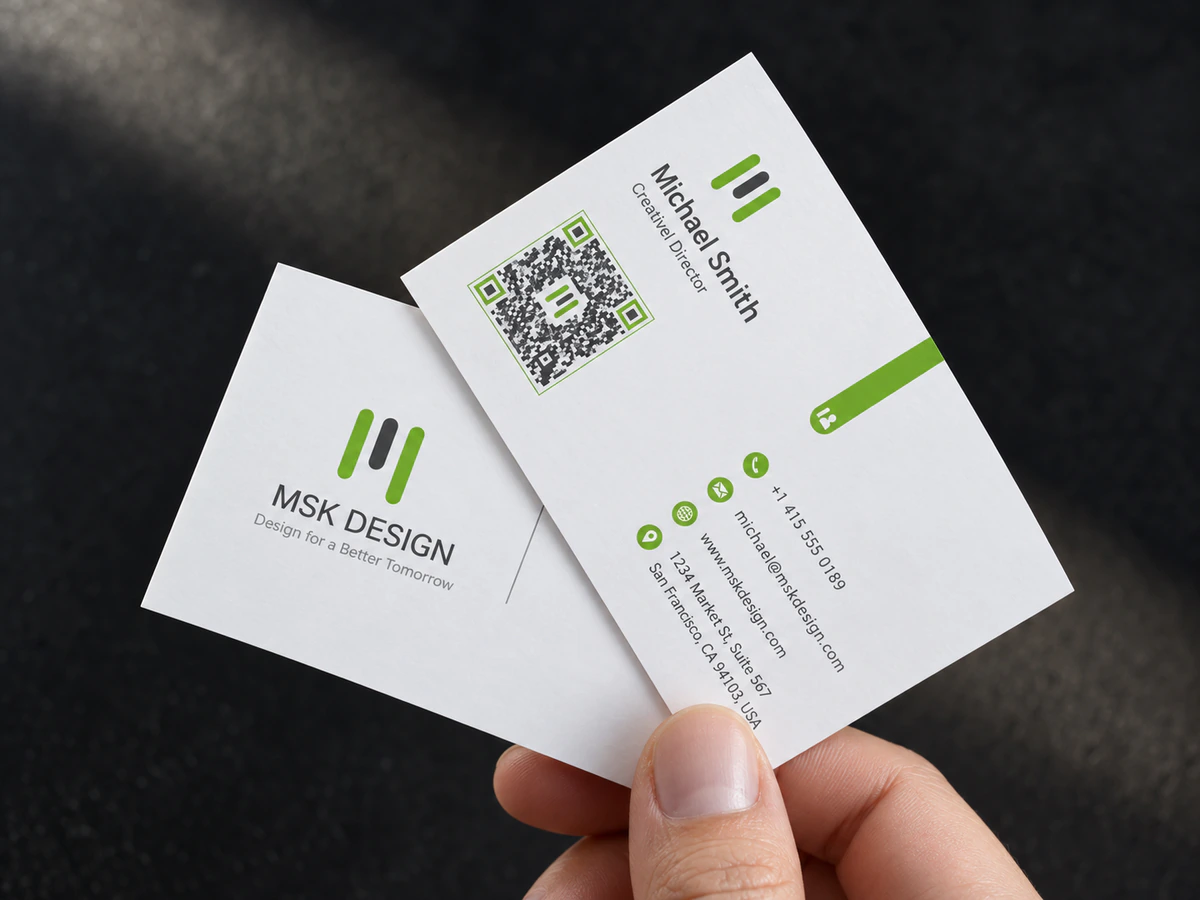
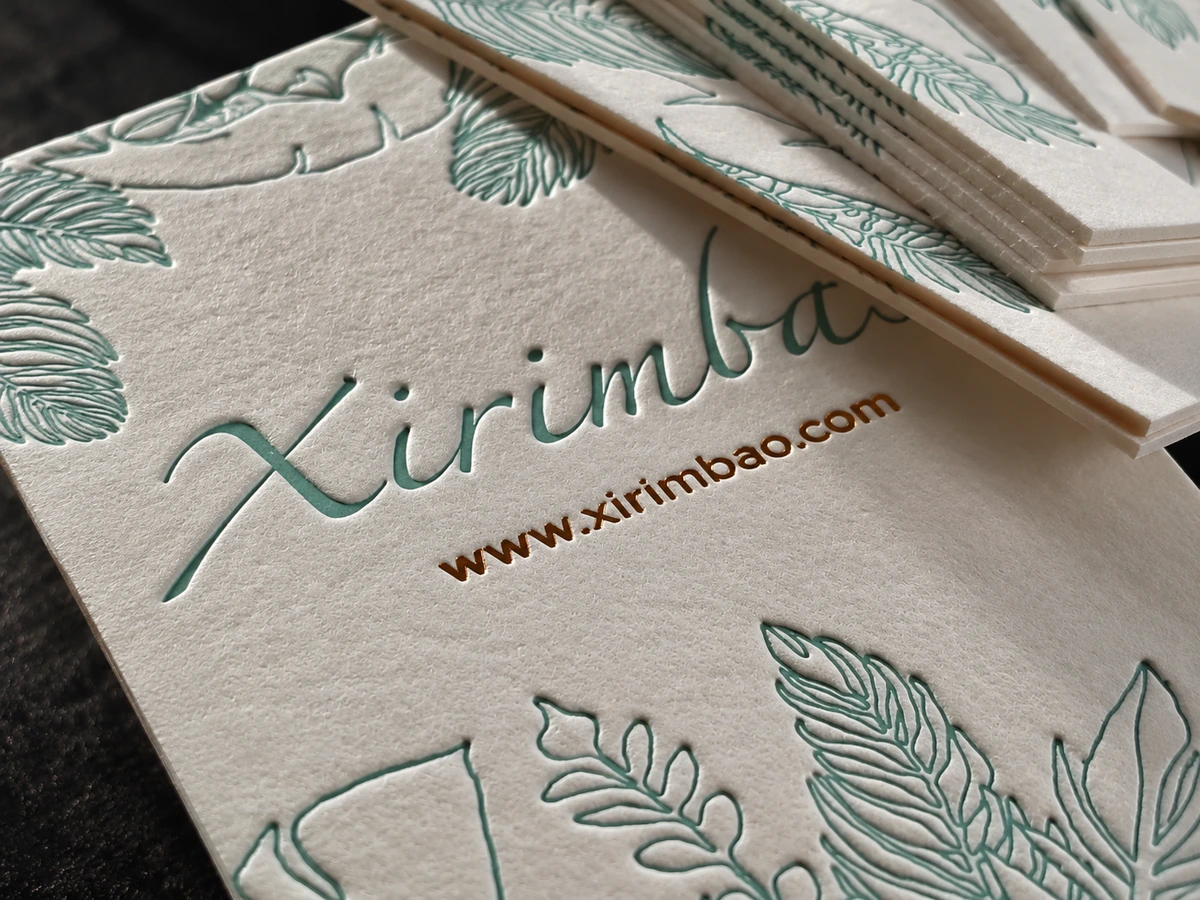
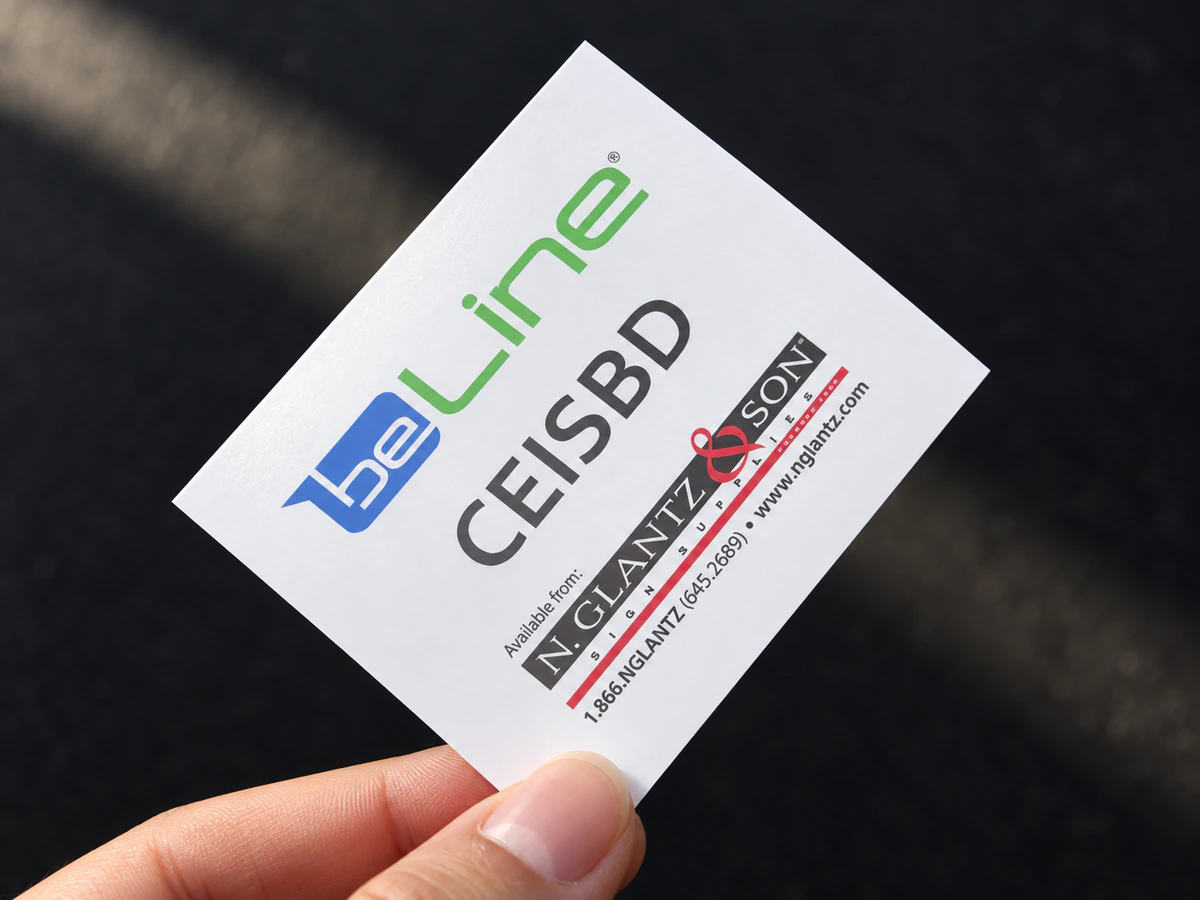
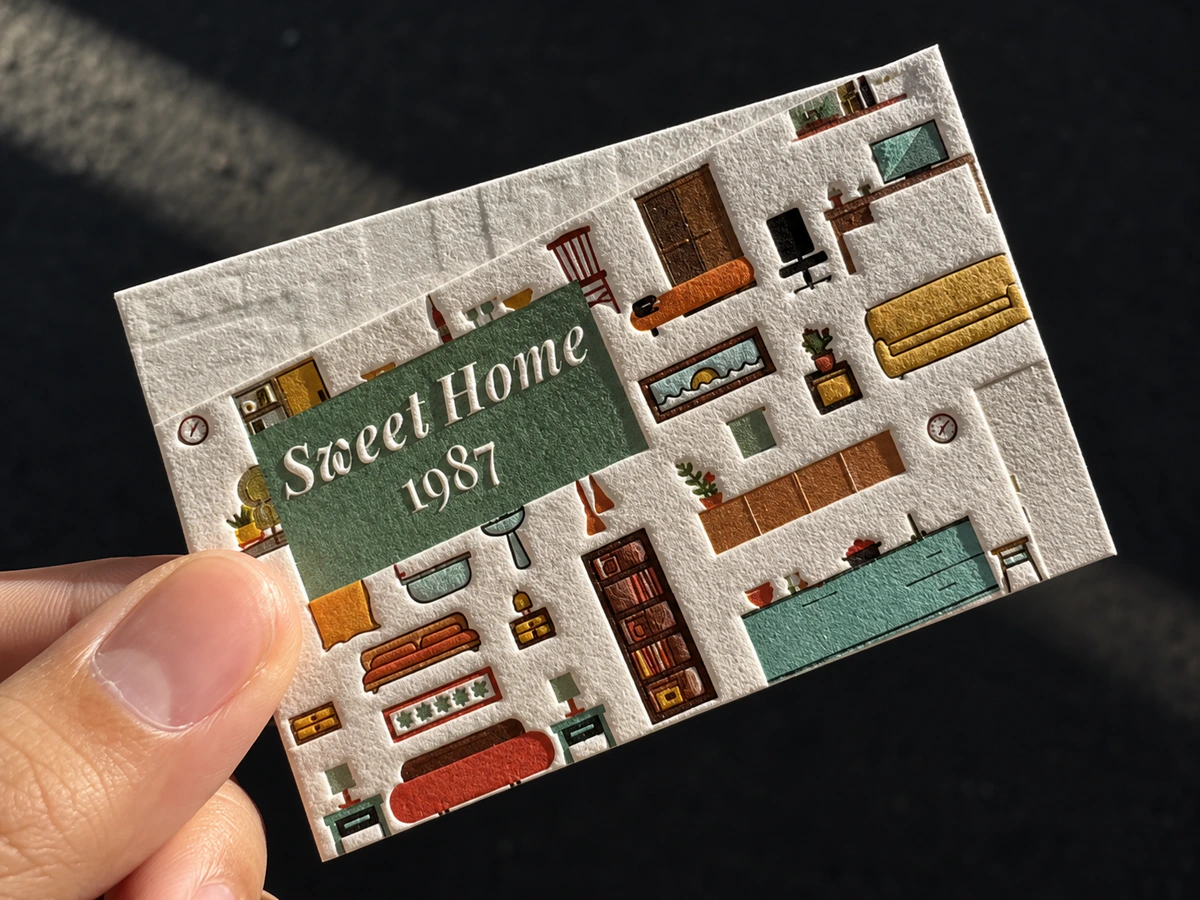
So what’s the difference between standard and luxury business cards? They might share a name, but they’re not cut from the same cloth.
With standard cards, dozens of customers’ designs go onto one large sheet. Send it through the press, laminate it, and cut the cards apart. It’s quick and efficient.
Luxury cards need all kinds of preparation: mixing ink, making plates, and setting up the right machines for the finishes. They’re die-cut one by one, and may also need gluing, duplexing, or engraving. And of course, the finished result can look stunning.
You’re Paying for Those First Few Seconds
Put simply, the extra money you spend on luxury business cards isn’t buying paper. It’s buying those few seconds.
You shake hands, hand over your card, and the other person looks down. Their first impression of you starts taking shape around that moment. Whatever you say afterward builds on that impression.
You can follow up on everything else later. You can send an email, share your portfolio, or take them out for a meal. But the first impression is harder to revisit.
But You Might Say: My Clients Don’t Even Look at Business Cards
Maybe they don’t. If all your business happens online and you never meet your clients, a business card really isn’t that important for you. A standard one is enough.
The extra cost of a luxury business card is about the impression it makes when you meet. If you don’t meet, there’s no need to spend the money.
Has Anyone Actually Studied This?
In 2012, Stefan Hampel, Daniel Heinrich and Colin Campbell published Is an Advertisement Worth the Paper It’s Printed on? The Impact of Premium Print Advertising on Consumer Perceptions in the Journal of Advertising Research. They used the same advertisement in two versions: one with standard printing and one with higher-end printing. The higher-end version made people see the brand as more distinctive and more upscale. In the experiment, people also gave higher scores for their willingness to buy and pay more. Read the original abstract here.
 doi.org
Joann Peck and Jennifer Wiggins’s 2006 study, It Just Feels Good: Customers’ Affective Response to Touch and Its Influence on Persuasion, published in the Journal of Marketing, found that promotional materials with tactile elements were more likely to create an emotional response and be more persuasive among people who enjoy exploring things by touch. Read the abstract here.
doi.orgSo that tells us one thing: something that’s well printed and feels good really can affect how people see a brand. It’s not just wishful thinking on our part.
Think about it. Your client has a pile of thin, flat business cards that all look much like the competition’s. Why do you think yours will be the one they pick?
Say you make custom furniture.
You talk to your client about wood, joints, how you finish the edges, and why some details can look much the same but take very different work to get right. The client keeps nodding.
Then you hand over a thin, flat card that looks like everybody else’s.
You’ve spent all that time saying, “We care about the details,” and the last thing you hand them shows none of that care. They might not say anything, but something doesn’t quite line up.
Now try this: your logo is pressed into the paper. The client runs a finger across it and can feel it.
You don’t need to explain anything else. Of course, it doesn’t prove you make good tables. Your work has to do that. But at least you’re not just talking about attention to detail.
When Are Luxury Business Cards Worth It—and When Don’t You Need Them?
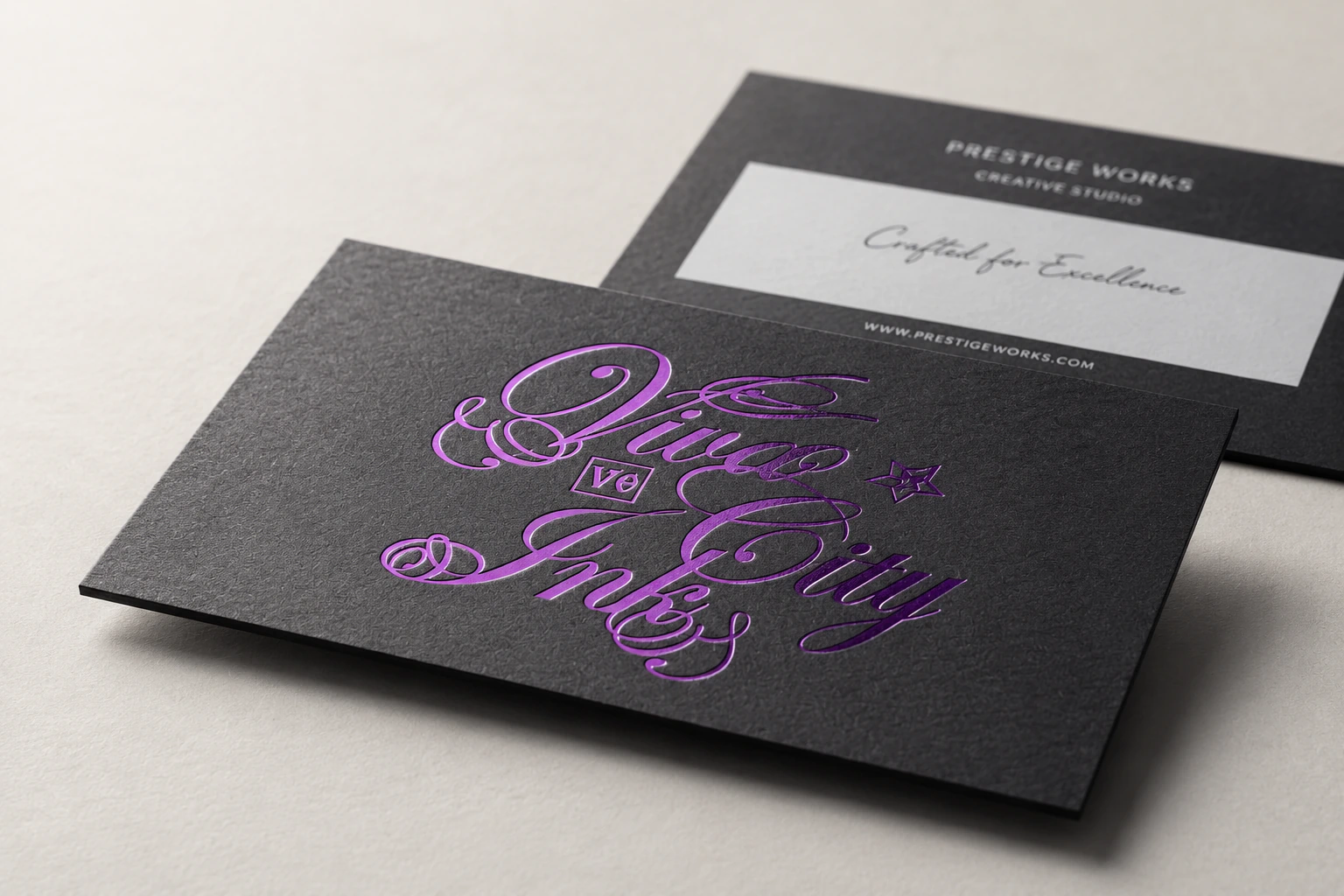
We think they’re worth it in these situations: you sell higher-priced products or services; you don’t meet clients often, but every meeting matters; what you sell is about attention to detail, whether that’s design, branding, custom work, or high-end services; you hand your cards out one at a time, in small numbers.
They’re less worthwhile when you hand them out in bulk—say, hundreds at a trade show—or use large numbers of cards for promotional campaigns with low conversion rates.
Here’s a hypothetical example with color core business cards, also known as triplex business cards. You make custom furniture, and a project is priced at $5,000. You meet ten clients and give each one a card. Suppose those ten triplex cards cost $20 more than ten standard cards. That’s an extra $2 per client.
The client takes the card, notices the color along the edge, and asks, “How did you get that color in the middle?” That gets you talking a little more. Is an extra $2 worth that opening?
You don’t have to use just one kind, either. Get a batch of standard cards and a batch of something more special. Use the standard ones when you’re handing them out in large numbers. When you’ve sat down and had a proper conversation with an important client, hand over the more carefully made card. You can do both at the same trade show.
So what’s the point of a business card? Put simply, it’s a conversation starter. It gives a client a reason to look a little longer, ask another question, and remember you. They can use that card to find you and get in touch. After that, it’s up to you.
Wondering why a single test card isn’t possible? Here’s why we can’t print just one sample.
Feel It for Yourself, Then Decide
After all that, the simplest thing to do is not just take our word for it. Start with a paper and finish sample book. Feel the paper, look at the finishes, and compare them with the business cards you use now.
If you’re considering color core cards, you can start by choosing papers and colors you like. We can work through what to use on the front, which color to put in the middle, and what works on the back.
Tell us your delivery country, and we’ll let you know how the sample book will be shipped and what the shipping will cost.
If you like it and can say what makes it better, go ahead. If you don’t feel much difference, don’t spend the money.
Once you’ve decided to go ahead, our guide to luxury business card design shows how to pick one standout finish instead of stacking them all.