
Edge Painting & Colored Edge Guide
Learn how painted edges add color to the side profile of thick custom business cards. This guide explains when edge painting works best, how it differs from color core cards, and what to prepare before requesting a quote.
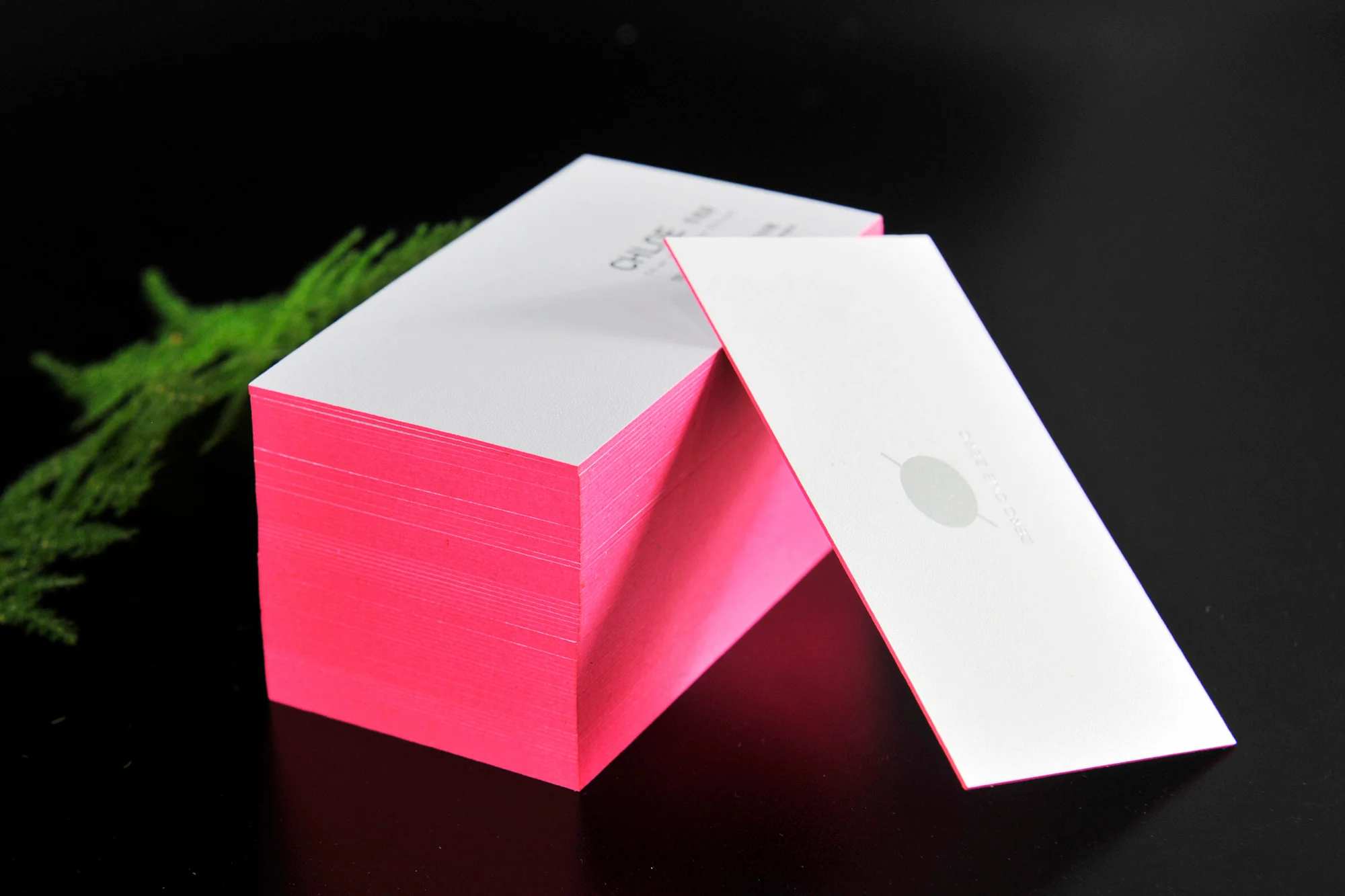
Painted edges add pigment to the outside edge after trimming, creating a visible color block when cards are stacked or viewed from the side.
What are painted edges?
Painted edges are created by applying high-opacity pigment to the trimmed side profile of the card. This is not the same as color core paper. The color is added to the outer edge surface after the card body is produced and cut.
Color applied to the side
The pigment sits on the card’s outside edge, making the card more visible when held, stacked, or photographed from the side.
Best on heavier stocks
Painted edges work best on thick cards because a thicker side profile gives the color more area to show clearly.
Different from layered cores
Painted edge color is added to the outside edge. Color core cards use a colored middle layer inside the card structure.
Painted edge effects on thick business cards
Edge painting becomes most visible when the card is thick enough to show the side profile. Bright colors create stronger contrast, while dark or metallic-looking edges create a more restrained luxury effect.
Bright Pink Edge
High-contrast color creates a bold edge block on thick white cards.
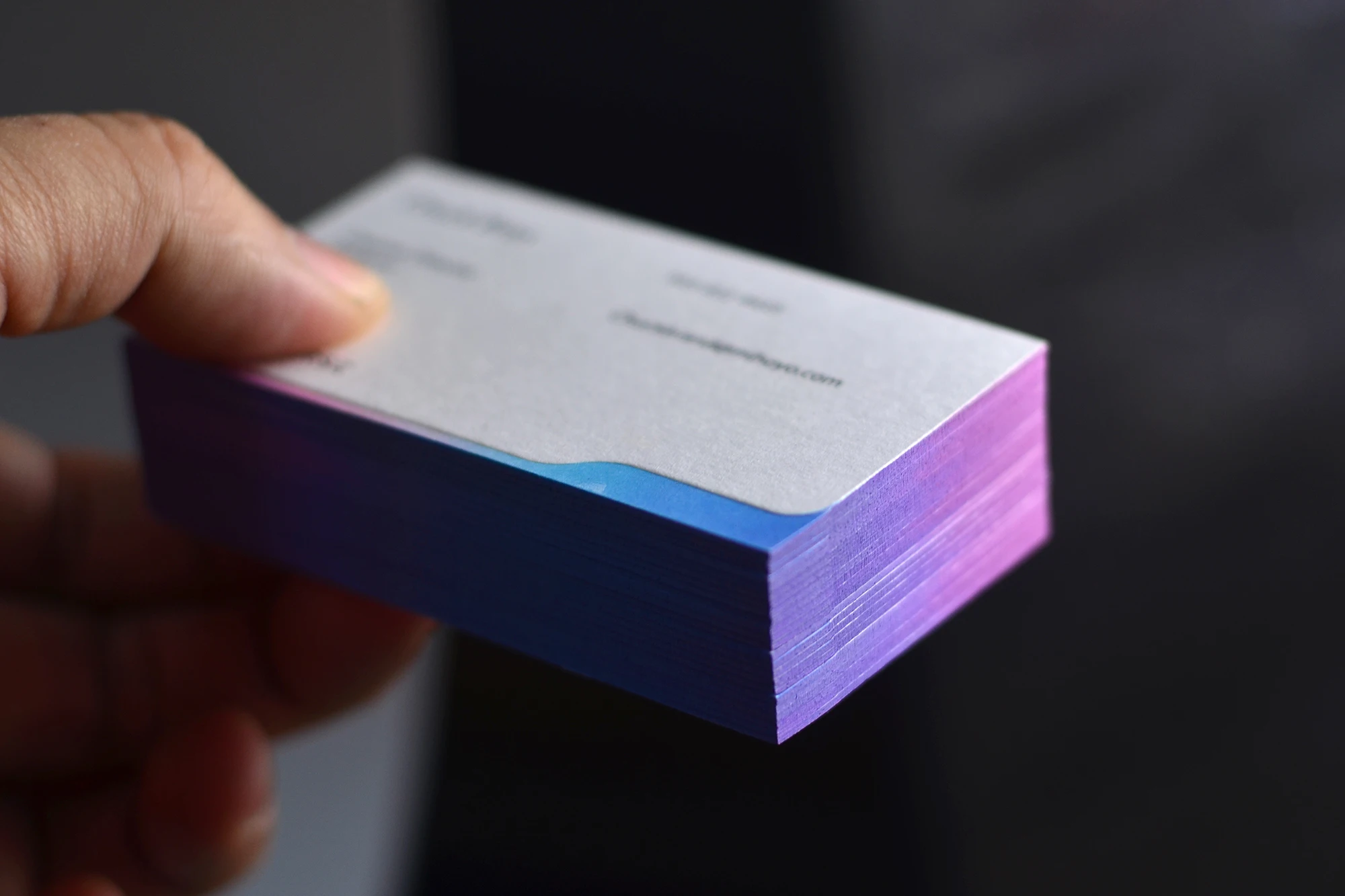
Blue & Purple Edge
Multi-tone edge color can create a more expressive side profile.
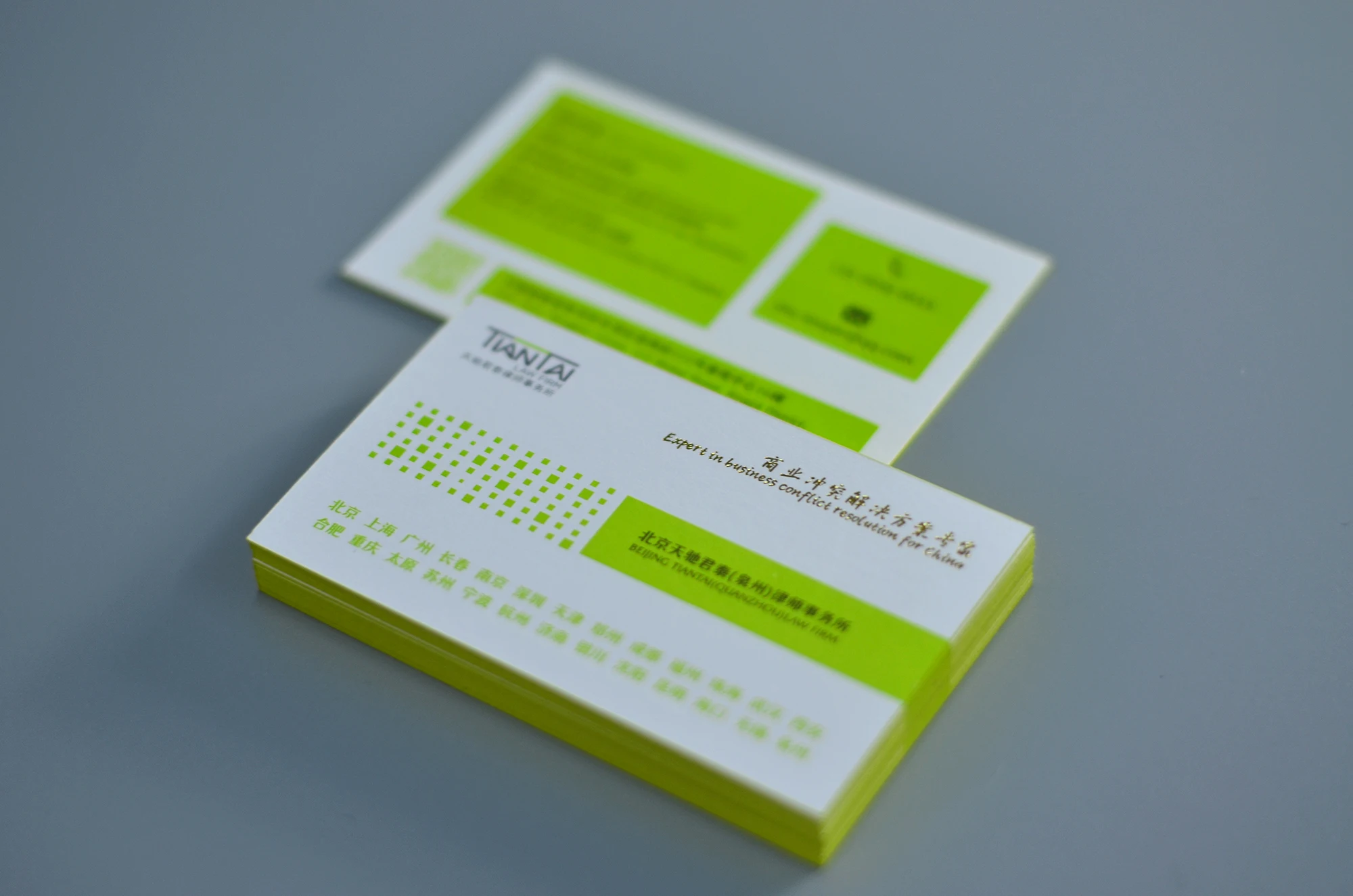
Vivid Green Edge
Bright pigment can echo brand color and make the stack more visible.
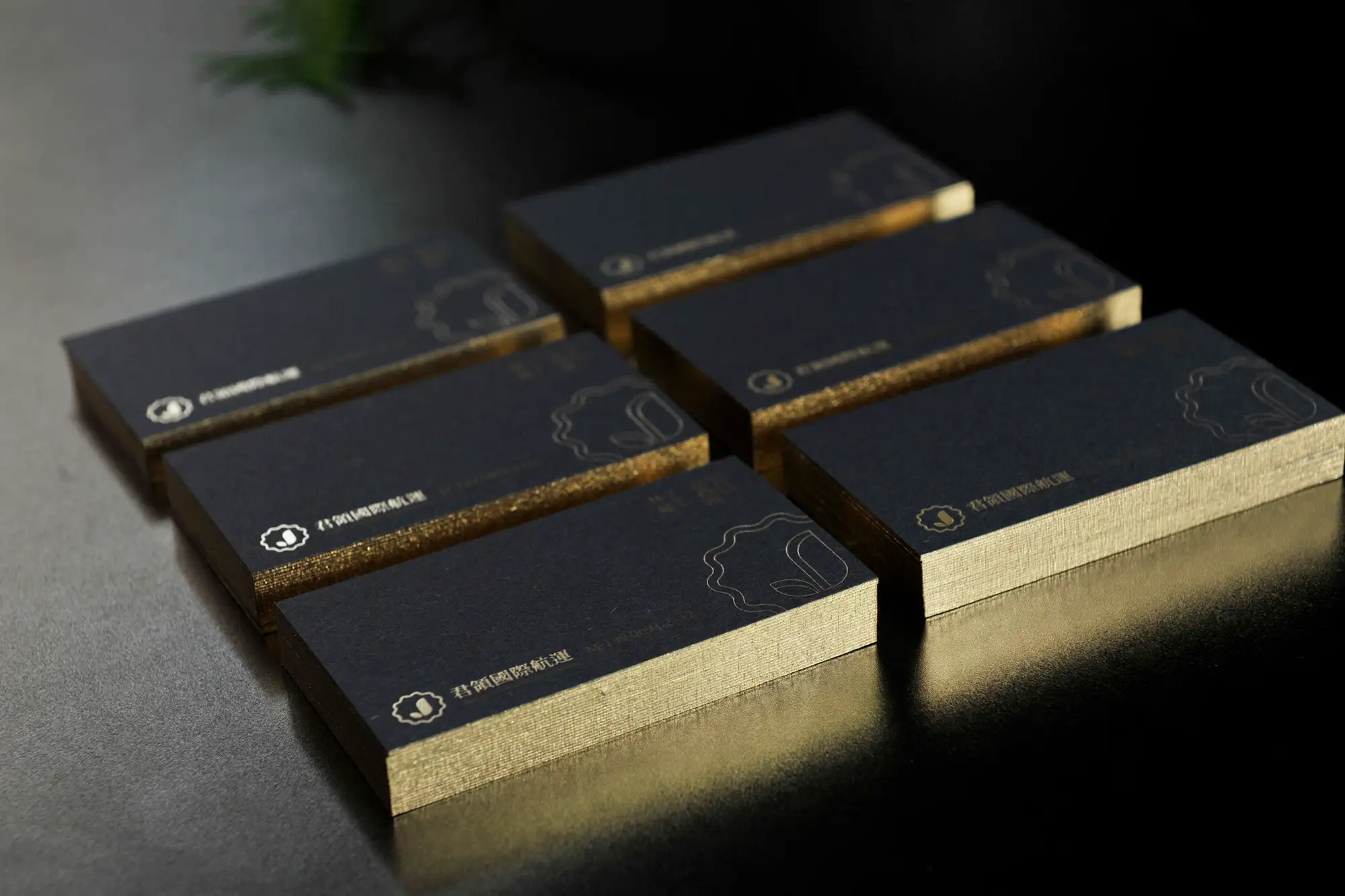
Metallic Edge Look
Gold-toned edges create a luxury side profile on dark premium cards.
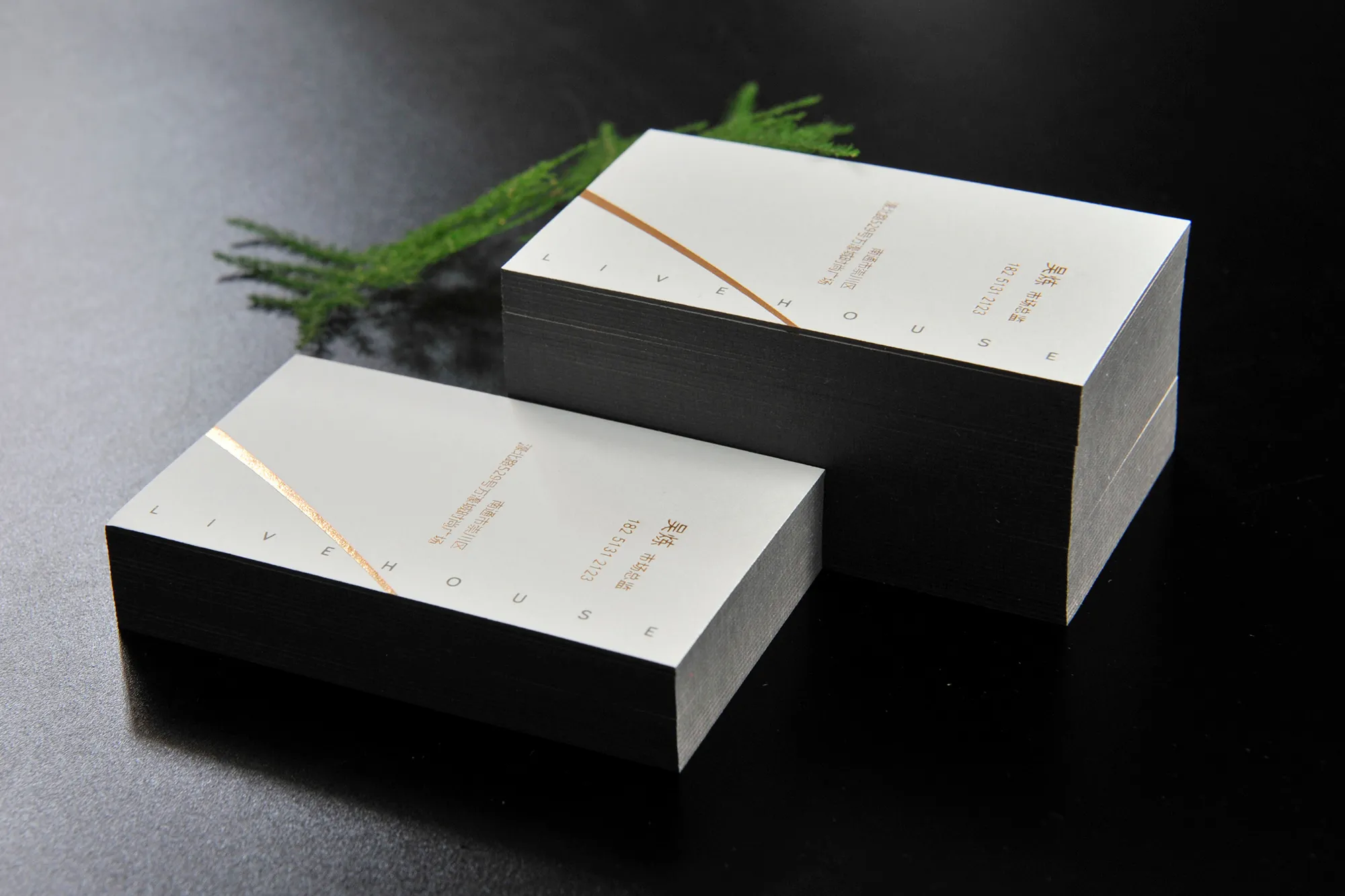
Dark Painted Edge
Dark edges create a strong border effect on light card faces.
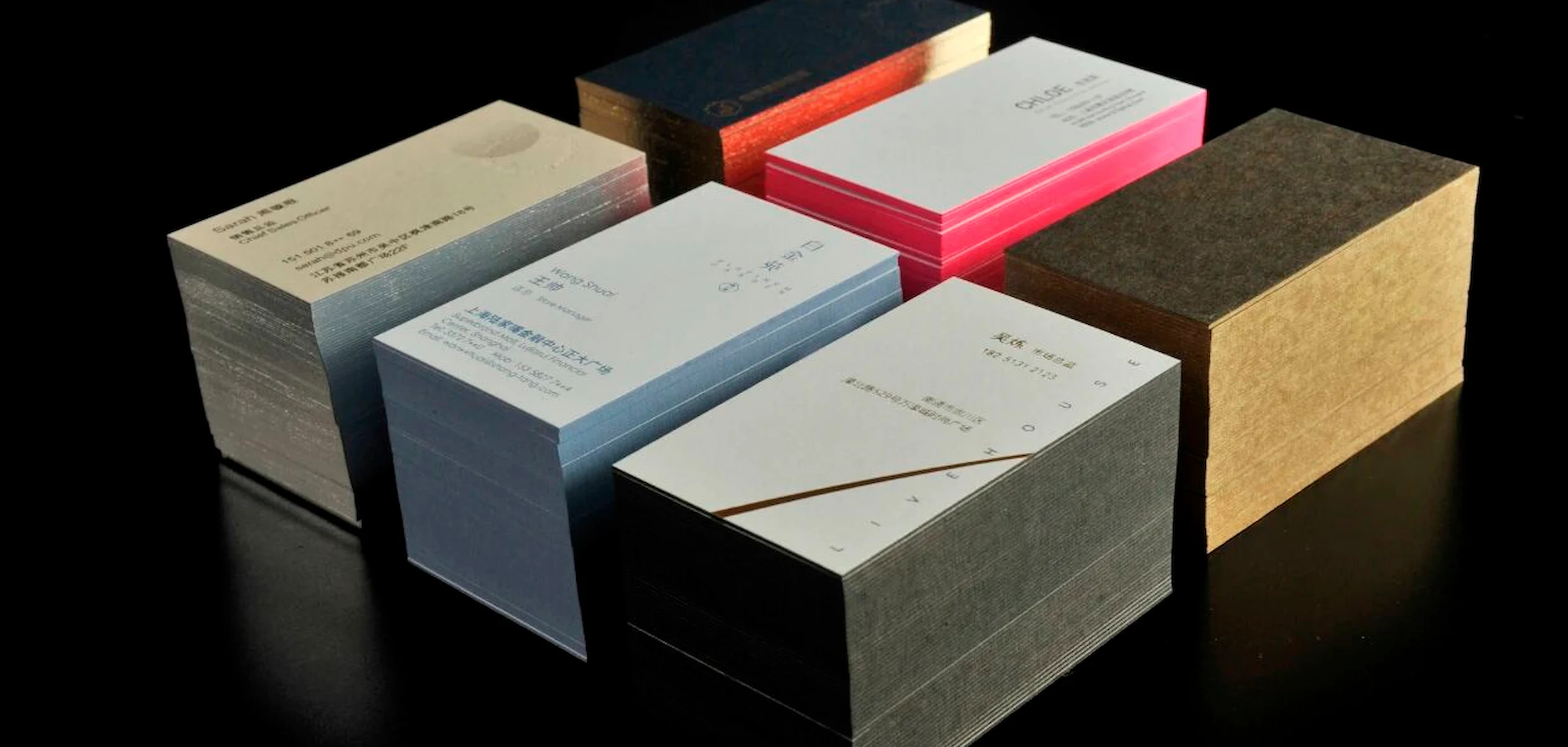
Color Range
Different edge colors can be matched to brand identity or campaign direction.
Painted edges are not the same as color core cards
These two effects are often confused, but they are produced differently. Painted edges are a surface finishing process. Color core is a card construction method.
| Feature | Painted Edges | Color Core |
|---|---|---|
| How color appears | Pigment is applied to the outside trimmed edge. | Color comes from a colored middle layer inside the card. |
| Production logic | Edge finishing after printing, cutting, and stacking. | Layered paper structure built before final trimming. |
| Visual effect | Solid edge color around the full side profile. | Thin colored line or colored core visible between outer layers. |
| Best use | Bold brand colors, neon accents, metallic-looking edges, luxury stacks. | Triplex cards where the internal colored layer is part of the structure. |
| This page covers | Yes. Painted edge finishing. | No. Color core belongs to layered card structure, not edge painting. |
How to choose painted edge colors
Edge painting works best when the side color supports the main card design. It can match the brand palette, create contrast, or add a surprise color detail when cards are stacked.
Better for painted edges
Use painted edges when the side color is part of the brand presentation, not just decoration.
Use caution
Edge color interacts with paper absorbency, card thickness, and handling requirements, so not every stock is equally suitable.
Thickness, color matching, and handling
Painted edges need enough thickness to display the pigment clearly. In practice, heavier cards show the effect better than thin cards because the edge surface has more visible area.
Best on 24PT and above
Painted edges are most effective on heavyweight cards. Around 24PT / 600gsm or thicker gives the side color more room to show.
Match or contrast
Choose an edge color that matches the logo, packaging, brand accent, foil color, or an intentional contrast color.
Handling matters
Edge pigments should be formulated and applied for adhesion, but very strong colors should still be reviewed based on stock and finish.
Choose a suitable card base for painted edges
Painted edges work best on thicker card structures. They can be combined with foil, debossing, soft touch, or uncoated stocks depending on the final brand direction.
Common questions about painted edges
Are painted edges the same as color core cards?
What thickness is best for painted edges?
Can I choose any edge color?
Can painted edges be combined with foil or debossing?
Will the edge color rub off?
What should I provide for quoting?
Need help choosing a painted edge color?
Send your artwork, quantity, target paper, thickness, and preferred edge color. We can review whether painted edges are suitable for your card structure before quoting.