

Water-resistant labels are usually suited to limited moisture, such as occasional splashes or handling with wet hands. When packaging will sit in condensation, face repeated wiping, or contact oil, soap, sauce, or cleaner, choosing a film face material is only the beginning. The printed layer, protective finish, adhesive, container surface, application temperature, friction, and exposure time all affect the result.
For buyers comparing waterproof vs water resistant labels, the practical difference is the exposure the finished package must handle. “Waterproof” should not be treated as a promise attached to one material name. A custom waterproof product label needs to be reviewed as a complete system. For demanding uses, test that system on the actual package before full production.
The short answer for packaging buyers
The practical difference between waterproof and water-resistant labels is the level and duration of exposure they are expected to handle. Treat both terms as descriptions to define, not proof of performance.
Water-resistant direction
A water-resistant label may be enough for brief splashes, damp hands, bathroom humidity, or routine wiping when liquid does not remain on the label for long. The face material, print, and adhesive still need to suit the package.
Waterproof direction
A waterproof direction is more appropriate when the label will face condensation, frequent wet handling, repeated cleaning, oily contact, or longer moisture exposure. Here, the film, print protection, adhesive, package surface, and application method must work together.
Weather-resistant direction
Weather-resistant labels have a different job. Outdoor exposure can add sunlight, changing temperatures, rain, dirt, and longer exposure periods. A label described as waterproof for normal packaging should not automatically be treated as suitable for outdoor weather, long immersion, or harsh chemicals.
Start with the exposure, not the material name
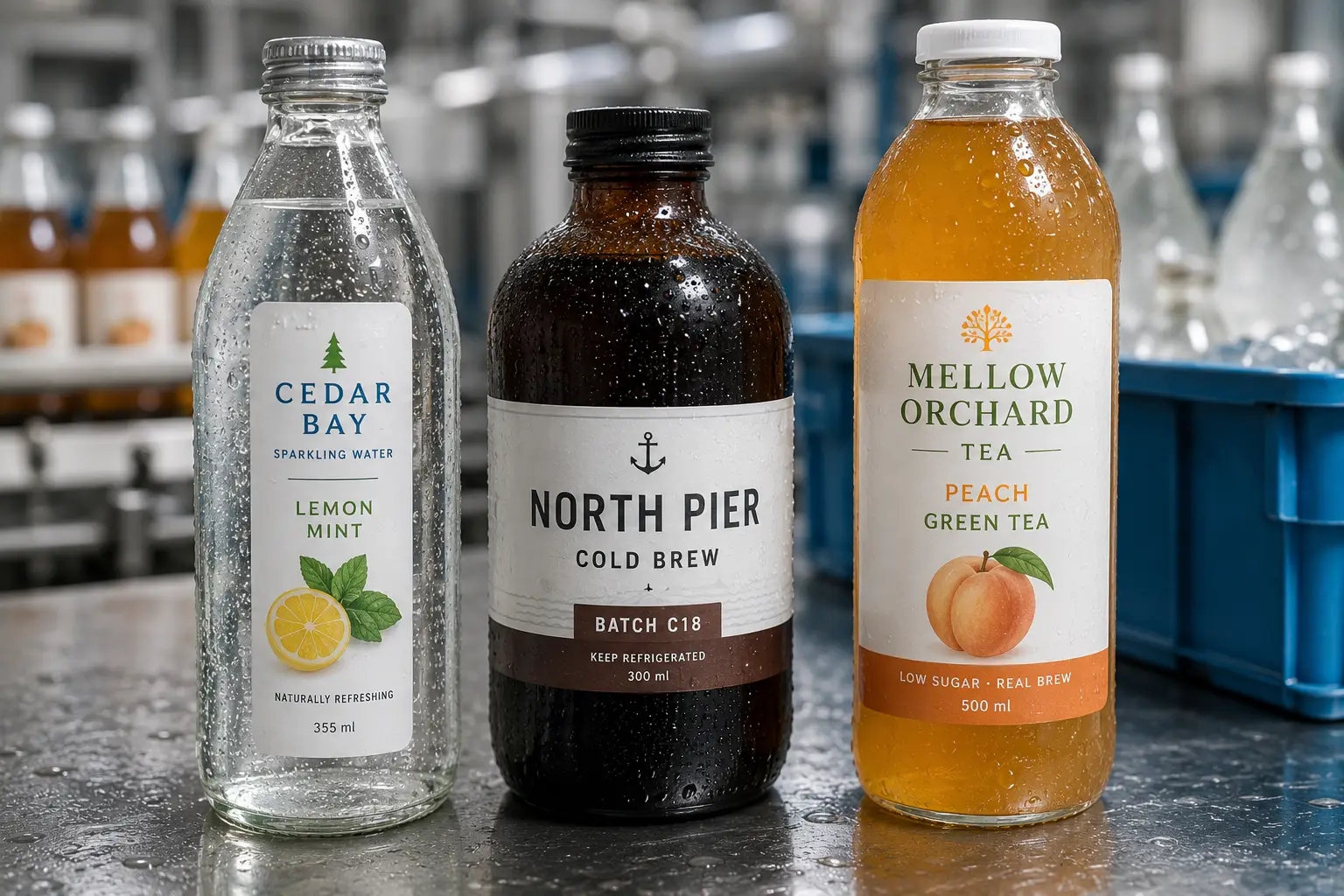
Buyers often begin by asking for a waterproof material. The condition the finished label will actually face comes first.
A chilled drink bottle may collect condensation for hours. A cosmetic jar may be handled with wet or oily fingers. A sauce bottle can be wiped repeatedly after filling or use. Cleaning-product packaging may meet both moisture and chemical contact. These situations do not place the same demand on the label, even if every project starts with a PP or BOPP film.
Describe the exposure in plain terms: the liquid involved, whether contact comes from a splash, condensation, wiping, or longer wet exposure, how often the package is handled, and whether labels are applied before or after chilling. Note outdoor use, immersion, oil, alcohol, or cleaner contact separately. This information is more useful than the word “waterproof” on its own.
Surface and adhesive decide whether the label stays in place
A film face material can resist moisture while the label edge still lifts. Adhesion changes with the container material, curve, texture, surface energy, and application conditions.
Glass, PET, HDPE, coated cartons, and textured plastics behave differently. A tight curve can pull against the adhesive. A low-energy plastic can be difficult to bond. Oil, dust, release agents, or condensation left on the package may reduce initial contact. Cold application can also change the result, especially when labels are applied after bottles have already chilled.
Apply labels to a clean, dry surface unless the project has been reviewed for another method. If the package will later enter a refrigerator, bathroom, filling line, or cleaning routine, include that condition in the adhesive review. Review the adhesive and film together.
When PP or BOPP is a sensible direction
White PP or BOPP film is a common non-paper direction for opaque product graphics on moisture-exposed packaging. It does not absorb water like standard paper, and it can be supplied with a gloss or matte surface. That makes it a useful starting point for bottles, jars, cosmetics, food packaging, and cleaning products.
That does not make every PP or BOPP construction interchangeable. Two labels using a similar BOPP face can behave differently because the adhesive, print protection, finish, backing liner, container, and application method are different. A gloss finish may suit one brand and handling condition, while matte may suit another. Neither finish creates a universal performance guarantee.
If the project needs a transparent no-label appearance, metallic construction, or a security feature, compare the relevant label directions before assigning those requirements to a white PP or BOPP label.
Match the label direction to the real use condition
| Actual use condition | Sensible starting direction | Confirm before production |
|---|---|---|
| Light splashes and routine moisture | PP or BOPP film with a suitable printed finish | Container surface, cleaning method, handling, and exposure time |
| Condensation or chilled bottles | Film label plus an adhesive review for cold and curved surfaces | Application temperature, bottle material, curve, storage, and test application |
| Oil, lotion, soap, sauce, or cleaners | Film, print protection, and adhesive reviewed as one system | Actual contact, wiping method, friction, spill time, and chemical details |
| Outdoor weather, long immersion, or harsh chemicals | Separate technical review | UV and weather exposure, chemical concentration, substrate, duration, and a validation test |
The last row should not be folded into a normal waterproof packaging claim. It needs its own conditions and test plan.
A practical pre-production check
Before requesting a quote or approving production, collect five pieces of information:
- The container material, shape, curve, and surface texture.
- The expected contact with water, condensation, oil, soap, sauce, cleaner, cold storage, or friction.
- The application method, including whether labels are applied by hand or machine and whether the surface is warm, cold, dry, or already chilled.
- The label size, shape, quantity, and required supply format, such as rolls, sheets, or individual pieces.
- The artwork status and any preferred gloss, matte, or print-protection direction.
For machine application, also share the roll direction, core size, spacing, maximum roll diameter, and applicator details when known. For hand application, the handling method and package curve often matter more than machine settings.
A test on the actual container gives more useful evidence about edge lift, initial adhesion, condensation, wiping, and handling. A flat sample on a desk cannot reproduce every package condition.
When to request samples or a custom quote
Use samples when the main uncertainty is the material, surface, hand feel, gloss or matte direction, or the way a label sits on the package. You can request label samples to compare available material and finish references. Samples help narrow the direction, but they cannot show every custom combination and do not replace artwork review, a proof, or testing on the real container.
Request a custom quote when the package, label size, quantity, use environment, supply format, and artwork status are reasonably clear. Share any contact with condensation, oil, cleaner, cold storage, friction, or repeated wiping. ZIVFY can then review the PP or BOPP film, finish, adhesive, and production direction around the real project rather than a generic label description.
Common buyer questions
Are PP and BOPP labels waterproof?
PP and BOPP films are widely used for moisture-exposed product labels, but the face film does not determine performance by itself. Print protection, adhesive, container surface, application, temperature, friction, and exposure time must also be reviewed.
Can water-resistant labels be used on chilled bottles?
They may suit some chilled applications, but condensation, bottle material, curve, application temperature, and adhesive can change the result. Test the proposed label on the actual chilled bottle before full production.
Should labels be applied to a dry surface?
Normally, yes. Moisture, oil, dust, release agents, or condensation can reduce adhesion even when the face material resists water. Apply to a clean, dry surface unless another application method has been specifically reviewed.
Are weather-resistant labels the same as waterproof packaging labels?
No. Weather resistance may involve sunlight, rain, temperature changes, dirt, and longer outdoor exposure. Those conditions need a separate technical review and should not be assumed from a standard waterproof packaging description.
Occasional splashes may only require a water-resistant direction. Condensation, frequent wiping, oils, soaps, cleaners, or longer moisture exposure call for a complete label-system review. Outdoor use, immersion, and harsh chemical contact need a separate test plan. If the project details are ready, send the package, exposure, size, quantity, and artwork information through the custom waterproof product labels quote path.