
If the goal is a thin raised metal logo effect with no printed label background after application, custom electroformed nickel stickers are the product route to review first. The important question is not only whether the logo should look silver, gold, or black. The real question is whether the logo size, surface, transfer film, adhesive direction, finish, and application method fit the project.
A metal logo on a product can go wrong before production even starts. The buyer may ask for a raised metallic logo, but the supplier may hear a printed metallic label, a foil sticker, a thick metal nameplate, or a DIY decal. Those are not the same thing, even when the search results and product photos look similar.
That is why a useful quote request needs more than a logo file. For electroformed nickel stickers, the surface and use case matter as much as the artwork.
Quick answer: when electroformed nickel stickers fit
- Choose this route when the logo itself should transfer as a thin raised metal mark without a visible printed sticker background.
- Start with a clean, stable surface. Send a surface photo when the material, coating, texture, or curve may affect application.
- Before quoting, prepare the finished logo size, quantity, preferred finish, surface details, and application method.
- Choose another label route when you need a full printed background, roll application, a flexible surface, or a thick structural nameplate.
Why the label route matters
A metallic logo can be made in several ways, and each route gives a different result.
| Project need | Route to review | Why |
|---|---|---|
| Thin raised logo with no visible printed background | Electroformed nickel stickers | The logo itself becomes the visible metallic mark after transfer. |
| Printed metallic artwork or a visible label area | Metallic PET label | The label film and printed area remain part of the finished result. |
| Roll-applied packaging labels | Foil or printed roll label | The supply format is built around repeated label application. |
| Thick, rigid, structural metal badge | Metal nameplate | A nameplate is a better fit when the project needs a heavier plate-like part. |
A metallic PET label usually still behaves like a printed or laminated label. It may have a label film, a printed area, or a background edge that is visible in certain lighting. A foil roll label is useful for many packaging jobs, but it is still part of a label-printing route. A thick metal nameplate creates a stronger plate-like object, which may be too heavy or too raised for small product branding. DIY decals and template stickers are a different buyer intent entirely.
Electroformed nickel stickers sit in a more specific lane. They are used when the buyer wants the logo itself to feel like a thin metal emblem on the surface. After transfer, the visual focus is the raised logo, not a printed sticker background.
What electroformed nickel stickers are used for
Electroformed nickel stickers are usually chosen for product branding where the logo needs a cleaner metal presence than a printed label can give. They can be used on packaging, bottles, devices, frames, panels, gift boxes, cosmetic packaging, premium accessories, and other smooth product surfaces when the surface is suitable.
The useful detail is the transfer behavior. The logo pieces are supplied with a carrier or transfer film so the buyer can position the design before application. Once applied, the finished look should read as a metallic logo on the product rather than a full sticker panel.
That does not mean every surface will work. Surface material, cleanliness, coating, curve, texture, and application pressure all affect the result. A flat rigid box is a different review from a curved bottle. A smooth coated surface is different from a textured surface. A small emblem with fine strokes is different from a bold wordmark.
Surface and application checklist
- Identify the actual substrate, coating, texture, and shape instead of describing it only as a product category.
- Confirm the finished logo size and whether the design contains separate letters, fine strokes, or small open areas.
- Review the adhesive and transfer-film direction against the surface and application method.
- Test the real surface with a sample before committing to a larger production run when adhesion or handling is uncertain.
Surfaces and applications to review first

The best candidate surfaces are usually smooth and stable enough for a clean transfer. Product boxes, device shells, rigid packaging, bottles, frames, panels, and smooth accessories are common examples. A small metal logo on a rigid package can look precise because the surface gives the logo enough support.
The risk appears when the surface is treated as a minor detail. A textured paper box may reduce contact. A strong curve may make positioning harder. A coated surface may need adhesive review. A flexible surface may move after application. Dust, oil, or uneven pressure can also affect how cleanly the logo transfers.
Before quoting, it is better to describe the actual surface in plain words: matte paper box, coated plastic bottle, glass jar, metal device panel, acrylic frame, painted surface, or another material. A photo of the application area also helps. The more specific the surface information is, the less likely the project is to be quoted in the wrong direction.
Finish, color, thickness, and logo readability
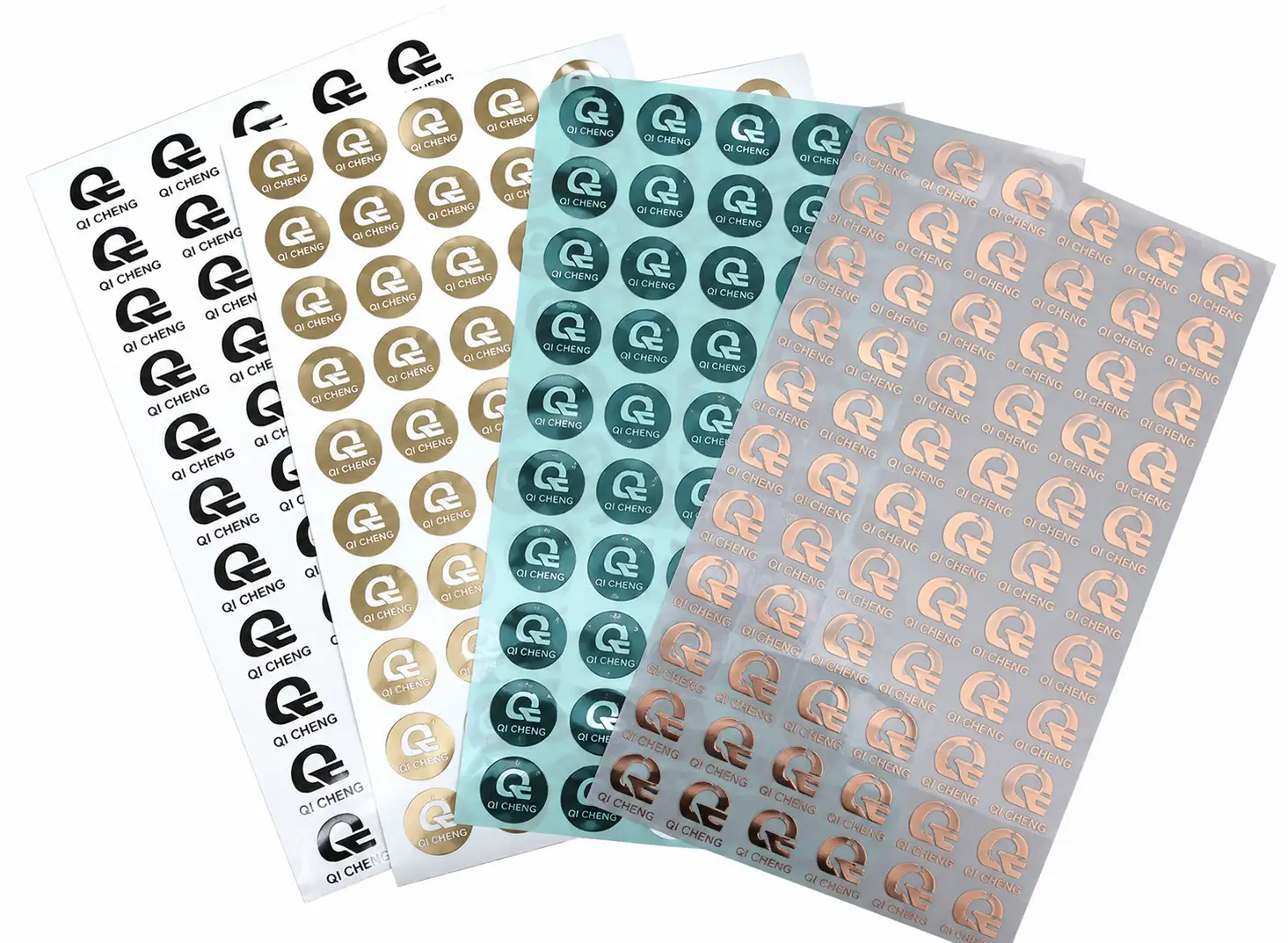
Many buyers start with finish first: silver, gold, black, brushed, polished, or another metal direction. Finish matters, but the logo design decides whether the result will still be readable.
Small text, tiny gaps, thin outlines, and very tight negative space can become a problem in a raised metal logo. A mark that looks clean on screen may need simplification before it becomes a good electroformed sticker. The finished size matters too. A logo that works at 60 mm wide may not work the same way at 18 mm wide.
Thickness and raised feel should also be reviewed as part of the product fit. The goal is usually a refined raised metal detail, not a heavy plate. If the buyer wants a thick badge or a structural metal part, a nameplate route may be more suitable. If the buyer wants a printed label with color artwork, a label route may be better.
The practical decision is this: what should the customer notice first when they hold the product? A simple metal mark, a readable brand name, a subtle emblem, or a more obvious decorative label? The answer changes the logo size, finish, and production review.
Transfer film and application details
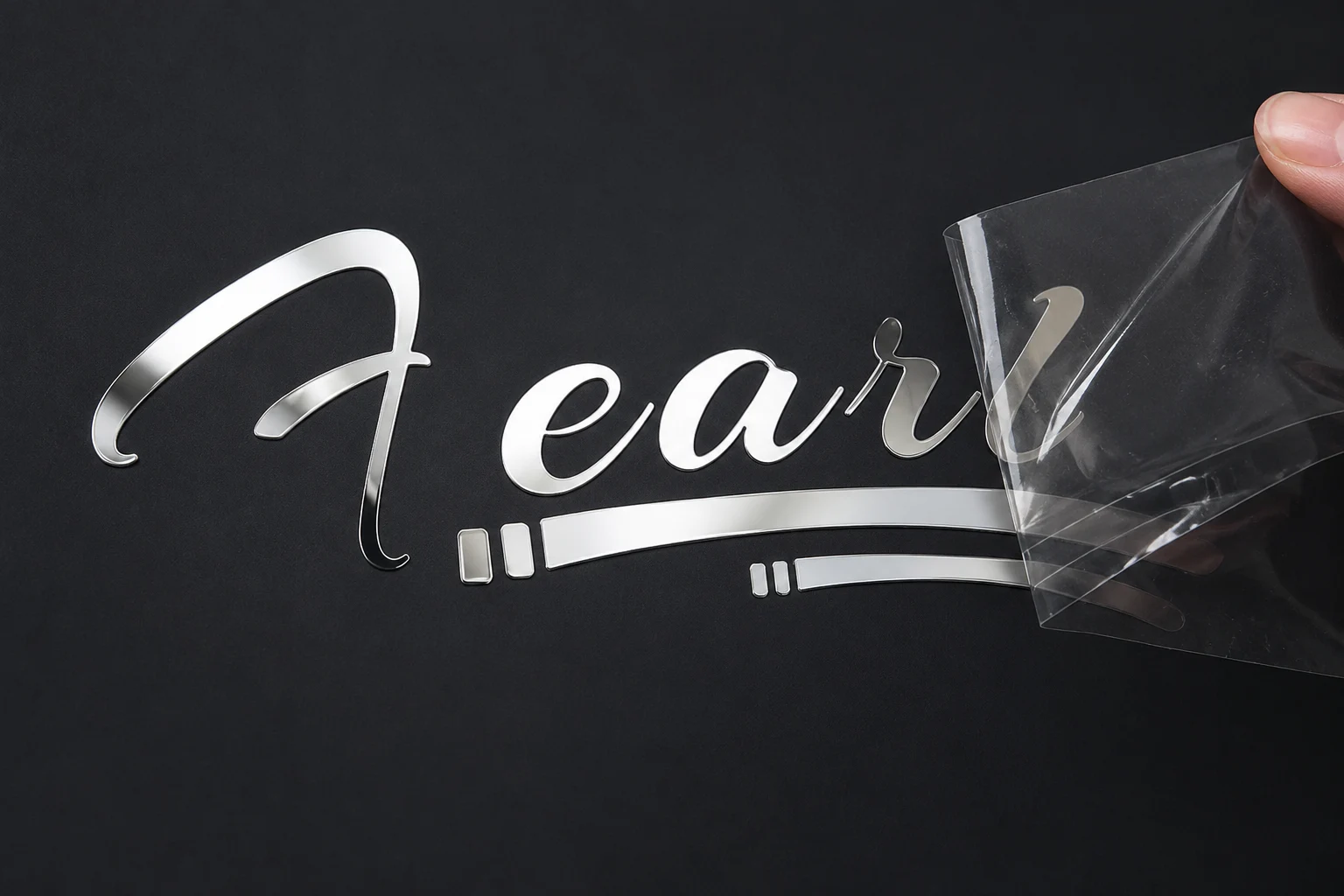
Transfer film is not just packaging around the sticker. It helps keep the logo parts aligned while the buyer places them on the product. This is especially important for wordmarks, separate letters, thin lines, and logos with multiple pieces.
Before production, confirm where the logo will be applied, how many pieces are needed, whether the surface is flat or curved, and whether placement will be manual or controlled.
Adhesive and surface compatibility also need review. It is not responsible to promise that one sticker construction will work perfectly on every material, in every environment, or for every handling condition. A clean indoor package, a frequently touched device, and a bottle exposed to moisture are different projects. If durability, water exposure, abrasion, or outdoor use matters, those conditions should be stated before quoting.
What to send before requesting a quote
A good quote request does not need to be complicated, but it should answer the decisions that affect production.
Send the logo file or a clear reference image first. Vector artwork is best when available, but a clear file or screenshot can still help with early review. Include the finished logo size, not only the file size. If the logo will be applied as individual letters or separate elements, mention that too.
Next, send the target surface. The material, shape, coating, and texture are important. A photo of the actual product or package area is useful because it shows scale and surface behavior better than a written description.
Then include the quantity or sheet requirement, preferred finish or color direction, application use case, and shipping country or deadline if timing matters. These details help the supplier decide whether the project is suitable for electroformed nickel stickers and what still needs confirmation before production.
When this is not the right product
Electroformed nickel stickers should not be used as a catch-all answer for every metallic-looking logo.
If the design needs a full printed background, metallic PET labels may fit better. If the project needs roll-applied packaging labels, a foil label or roll label route may be more practical. If the buyer needs a thicker plate with strong structure, a metal nameplate may be closer. If the goal is a home craft decal or downloadable template, this is the wrong production category.
A better next step before production
The best next step is not to ask for a universal price or choose the biggest-looking finish from a photo. Send the project details first: logo artwork, finished size, quantity, surface material, surface shape, preferred finish, and how the sticker will be used.
ZIVFY can then review whether electroformed nickel stickers for custom logos are the correct route, or whether another label or metal-logo option should be considered before production. That review protects the result. It keeps the article, the quote, and the final product pointed at the same thing.