
Triplex business cards (also called color core business cards) usually feel thick, solid, and premium, and there are quite a few finishes you can use on them. So when you’re making a card this complicated, there are quite a few things to pay attention to as well.
Below, I’ll go through a few questions customers often ask us.
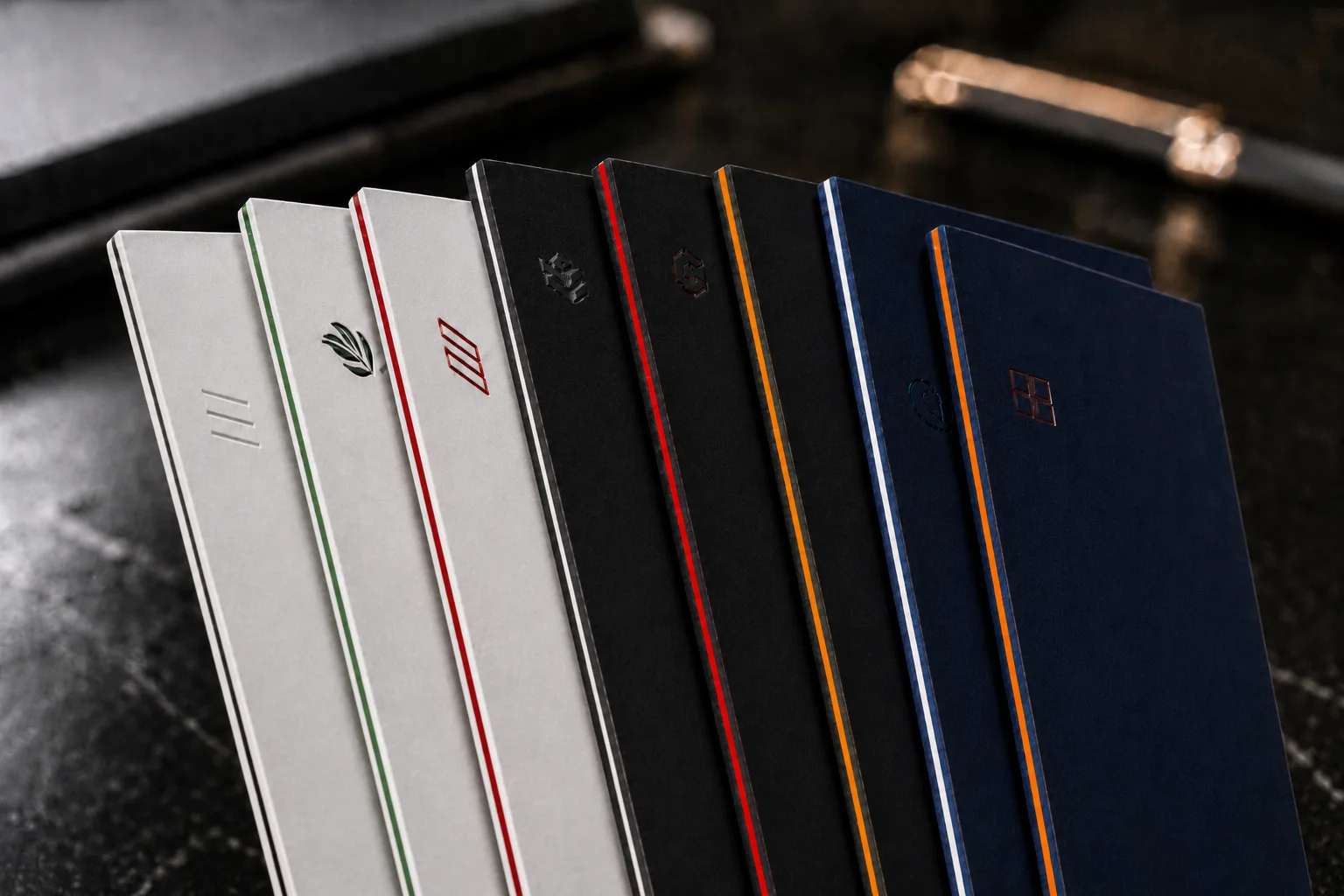
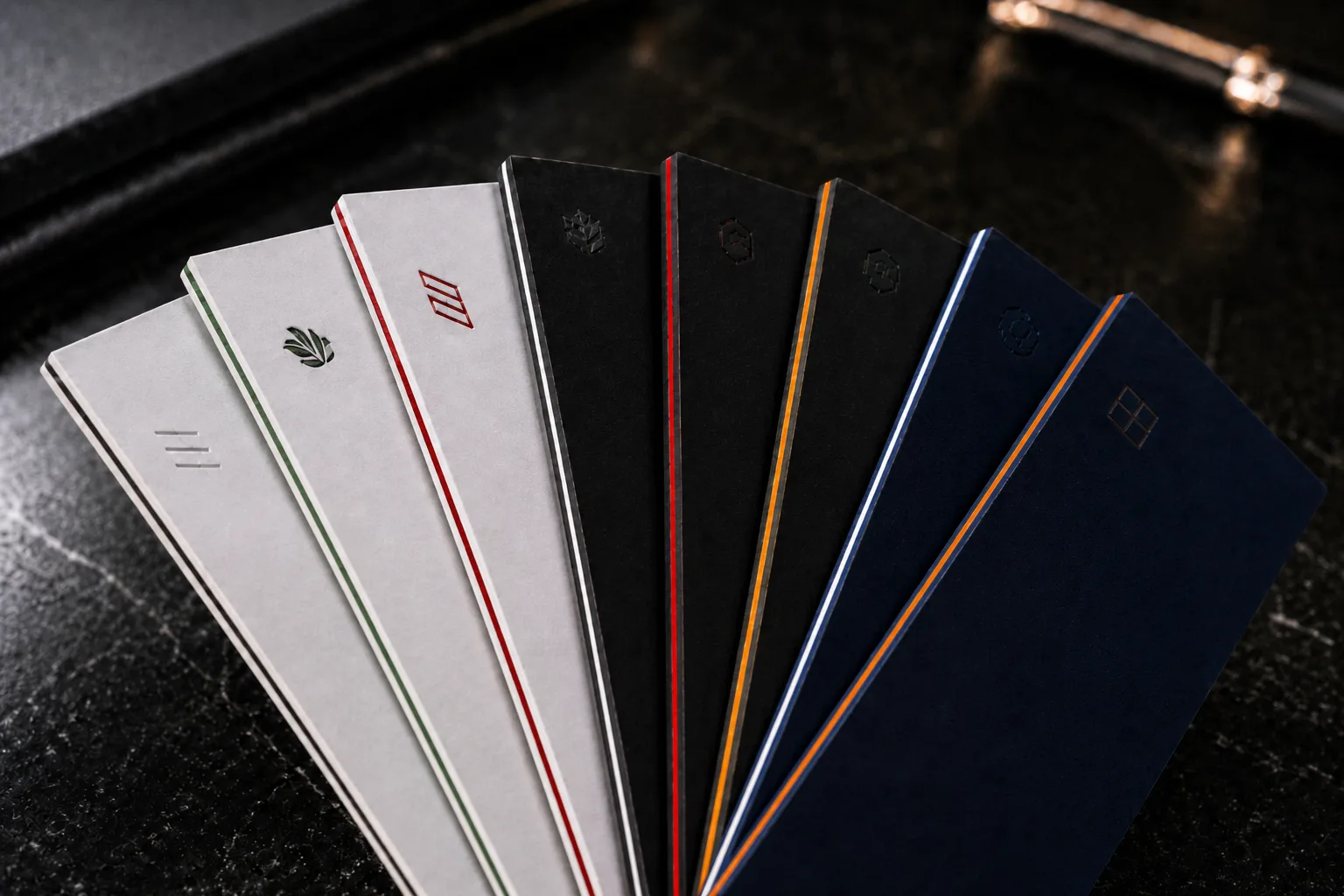
First, one thing about ZIVFY is that we have a lot of materials you can combine. Our sample book has more than 100 material, thickness, and finish references. If you have an idea of your own, you can contact us, and we’ll put together a triplex business card structure based on what you have in mind.
Can the middle layer come close to my brand color?
One of the questions buyers ask most often is: Do you have my brand color for the middle layer? Our answer is that we can look for a close color, but there are a few things to keep in mind. If you don’t need the core color to be exact and something close is fine, we can usually provide that. If you need it to match your brand color exactly, we can’t guarantee it. When we don’t have the color in stock, we’ll also talk with the customer about edge-painting the middle sheet. With the edge painting we currently do, we can only try to get close to the color. We can’t guarantee an exact match to your brand’s spot color.
Thinner outer sheets, or a thinner middle?
As for the thickness of the colored core, that depends on what you like. There’s no fixed answer. You can make the outer sheets thinner and the middle thicker, or make the middle thinner and the outer sheets thicker. But if you want embossing or debossing on the outer surfaces, especially if the impression is quite deep, we’d suggest thicker outer sheets and a thinner middle. Otherwise, the finish may not show as well. It also depends on the paper you choose.
If you want a big logo on the front
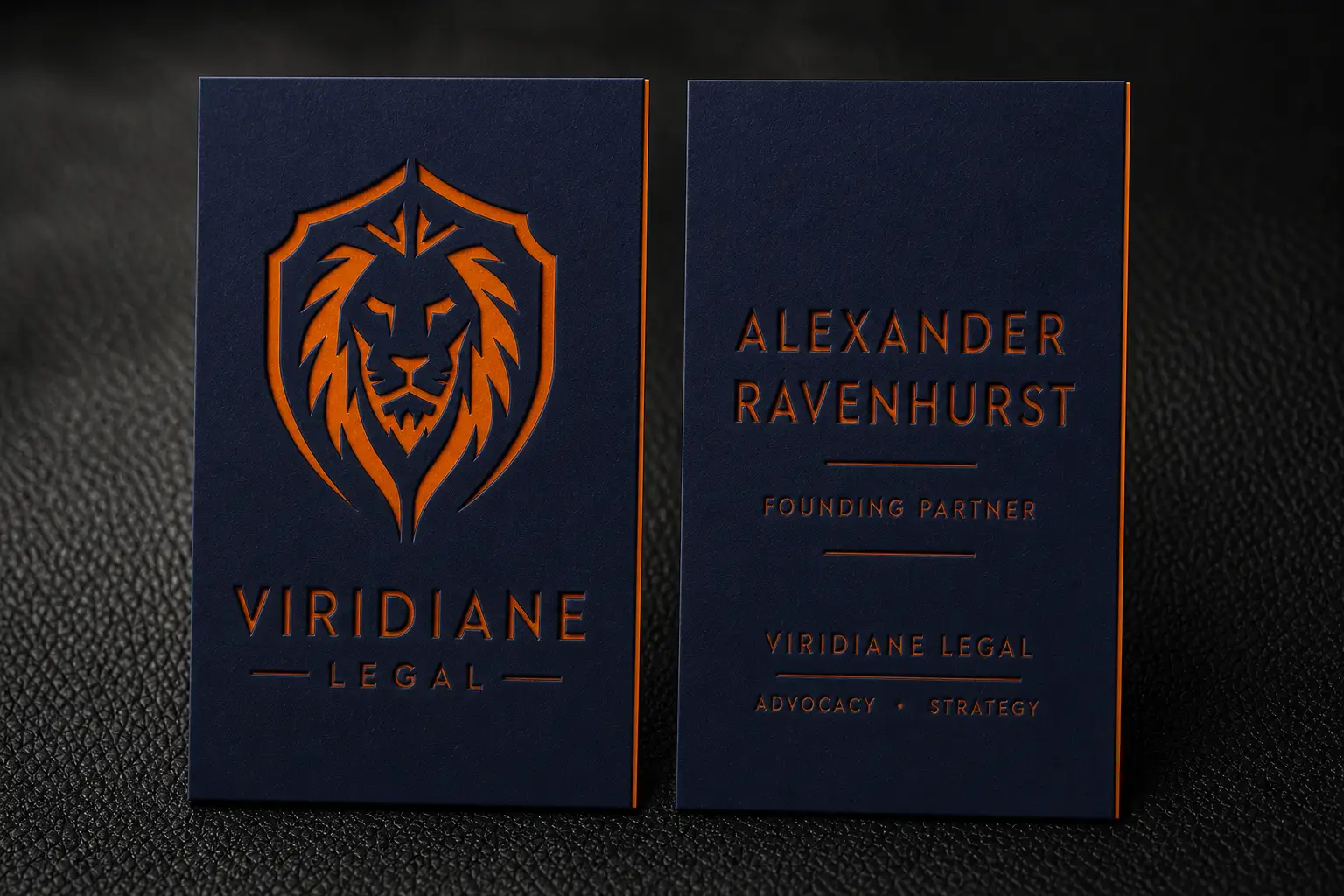
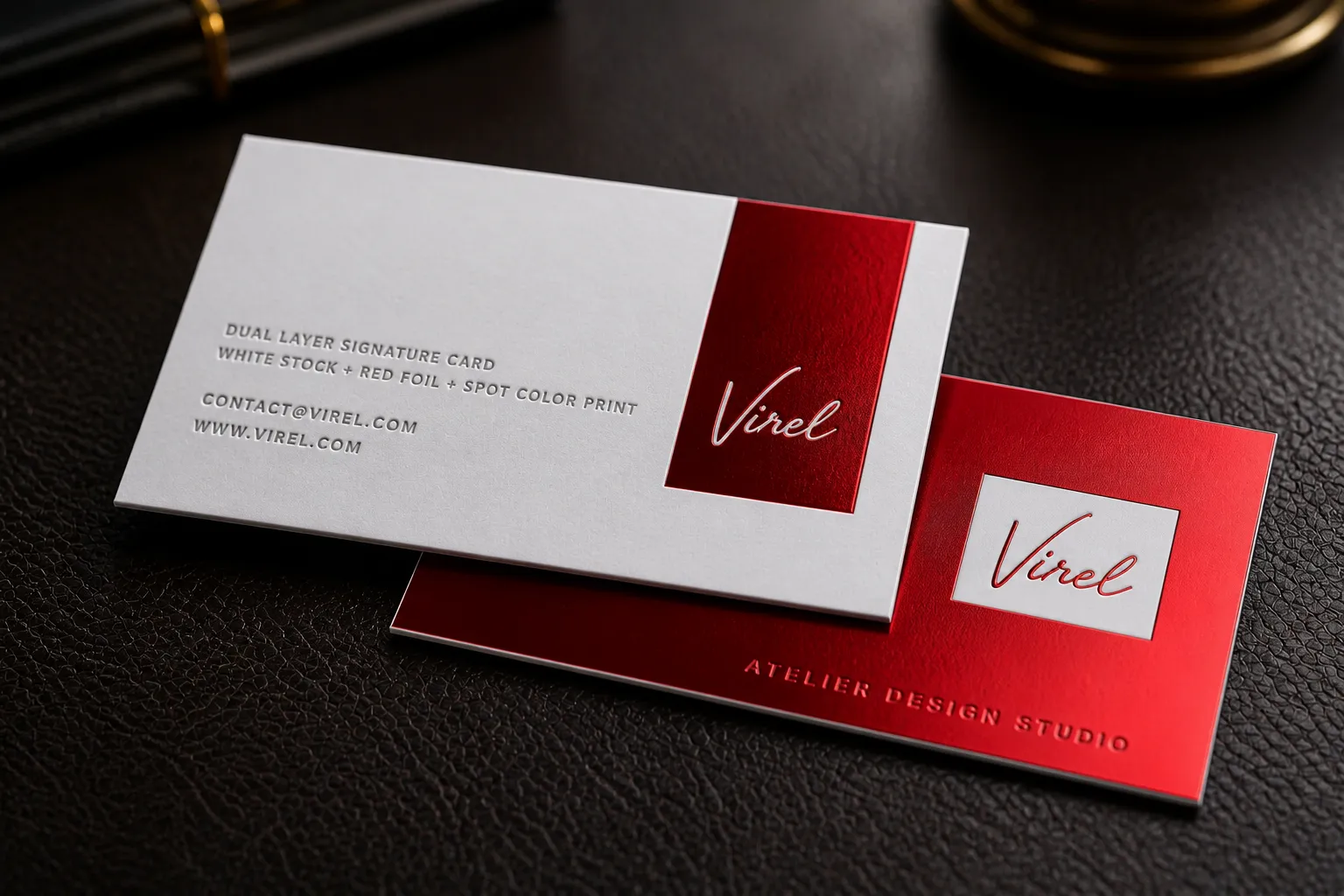
Another question follows on from printing your brand color. Some customers like having a big brand logo and its color on the face of a triplex business card. That’s a good idea, and we can help you do it. What you need to watch is the material used for the outer surface. It should be suitable for printing the brand color—for example, white soft-touch stock, white cardstock, or recyclable paper stock. Some customers might say, “I don’t like those materials. I want a nicer specialty paper, but I still want my logo in its spot color.” Then we first need to see whether that paper can take spot-color printing directly. If it can’t, we’d suggest engraving through the outer sheet to reveal the middle cardstock. We can print a spot color on the surface of that middle sheet so your brand color shows through. The edge of that spot-printed middle sheet can then be edge-painted. Also, the engraved area shouldn’t be too small, and the shape shouldn’t be too complicated.
How thick should triplex business cards be?
When it comes to business card thickness, a triplex card will definitely be thicker than an ordinary business card. Generally, we don’t recommend going below 0.6 mm. The common thicknesses shown on our website are around 0.8–1.2 mm; if you want a different thickness, that’s fine too. From our experience, we think 1.0 and 1.2 mm are good choices. They show what’s special about a triplex card, and the card has some weight when you hold it.
Choose the paper, then look at the finishes
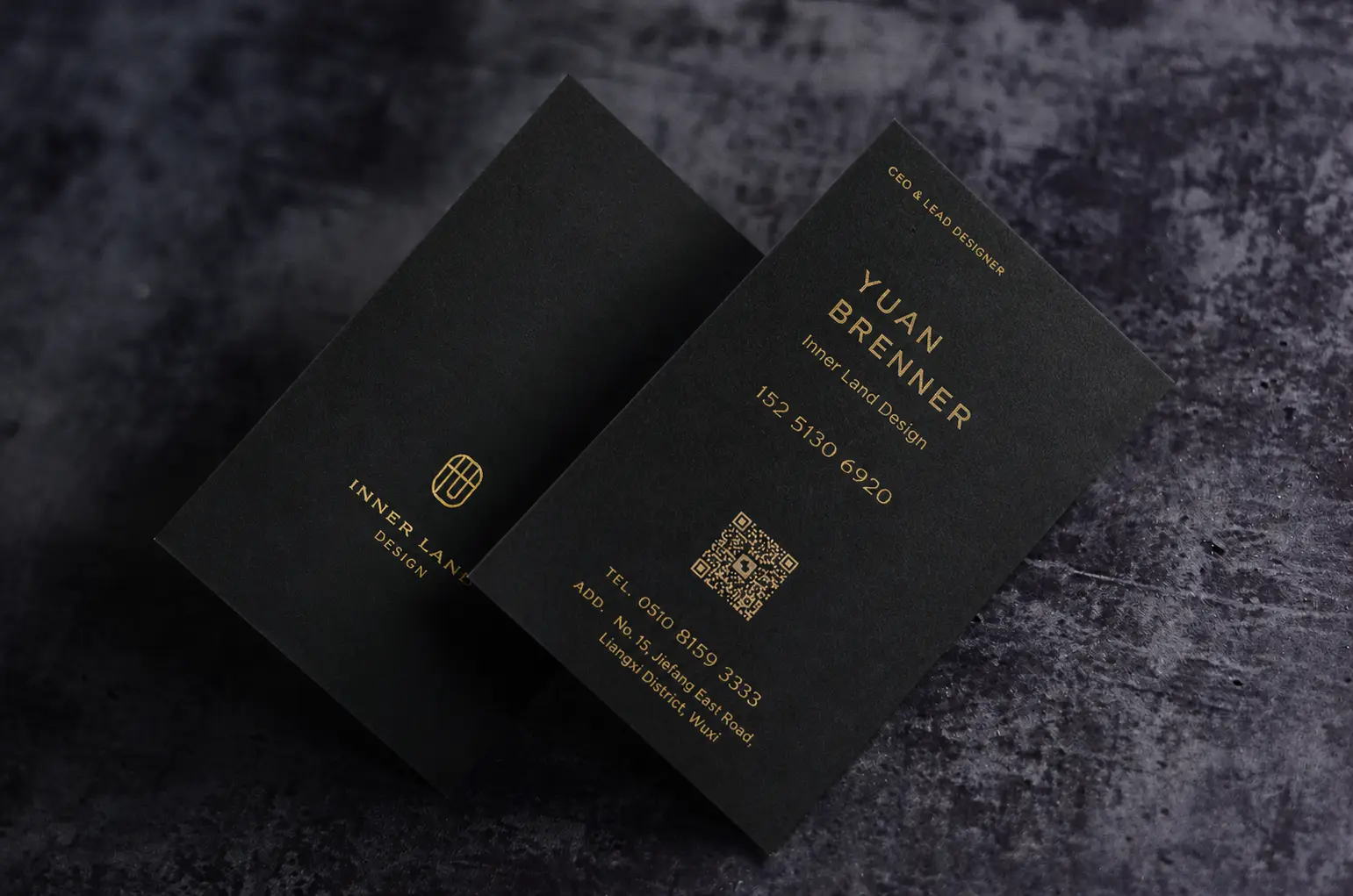
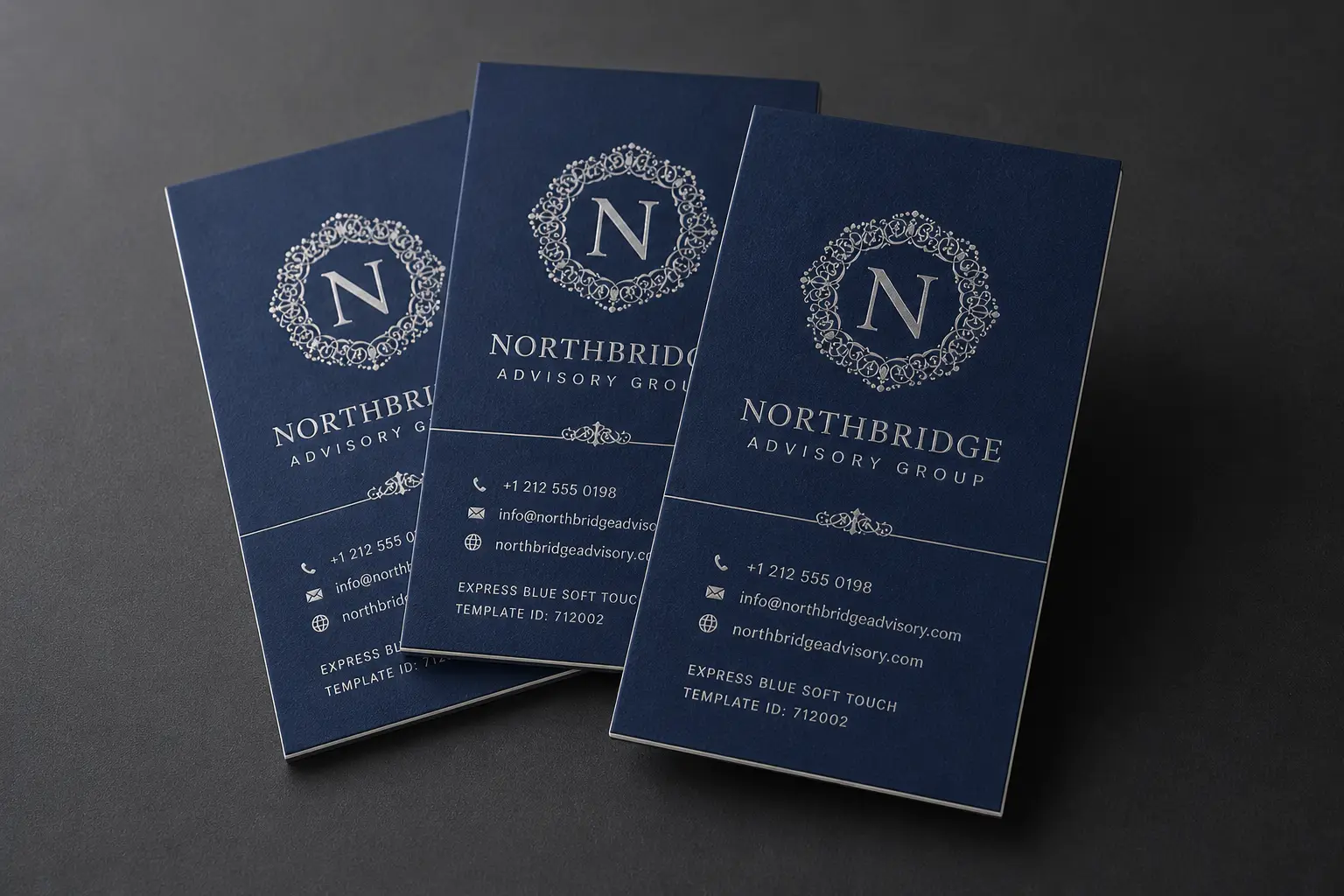
The finishes depend on what paper you use for the top and bottom sheets. Cotton paper, for example, is well suited to embossing and debossing, including those finishes combined with ink. We don’t recommend applying UV directly to the cotton paper we commonly use. If you want UV, we’ll have to see whether another paper would be more suitable. Soft-touch stock works for printing, spot colors, and foil stamping; black cardstock works for white ink and foil stamping. So if you want foil stamping, die cutting, printing, UV, embossing, or debossing, we can take a look at it for you. But you need to tell us which finishes you want first, so we can check whether the material you have in mind is suitable. If it isn’t, we’ll recommend a more suitable material. One thing we don’t really recommend is using paper with a very deep texture for triplex cards. With some deeply textured papers we’ve used, there’s a risk of the layers coming apart during bonding. So in the end, this also shows what’s special about ZIVFY: you can combine the options.
If your original artwork is in RGB
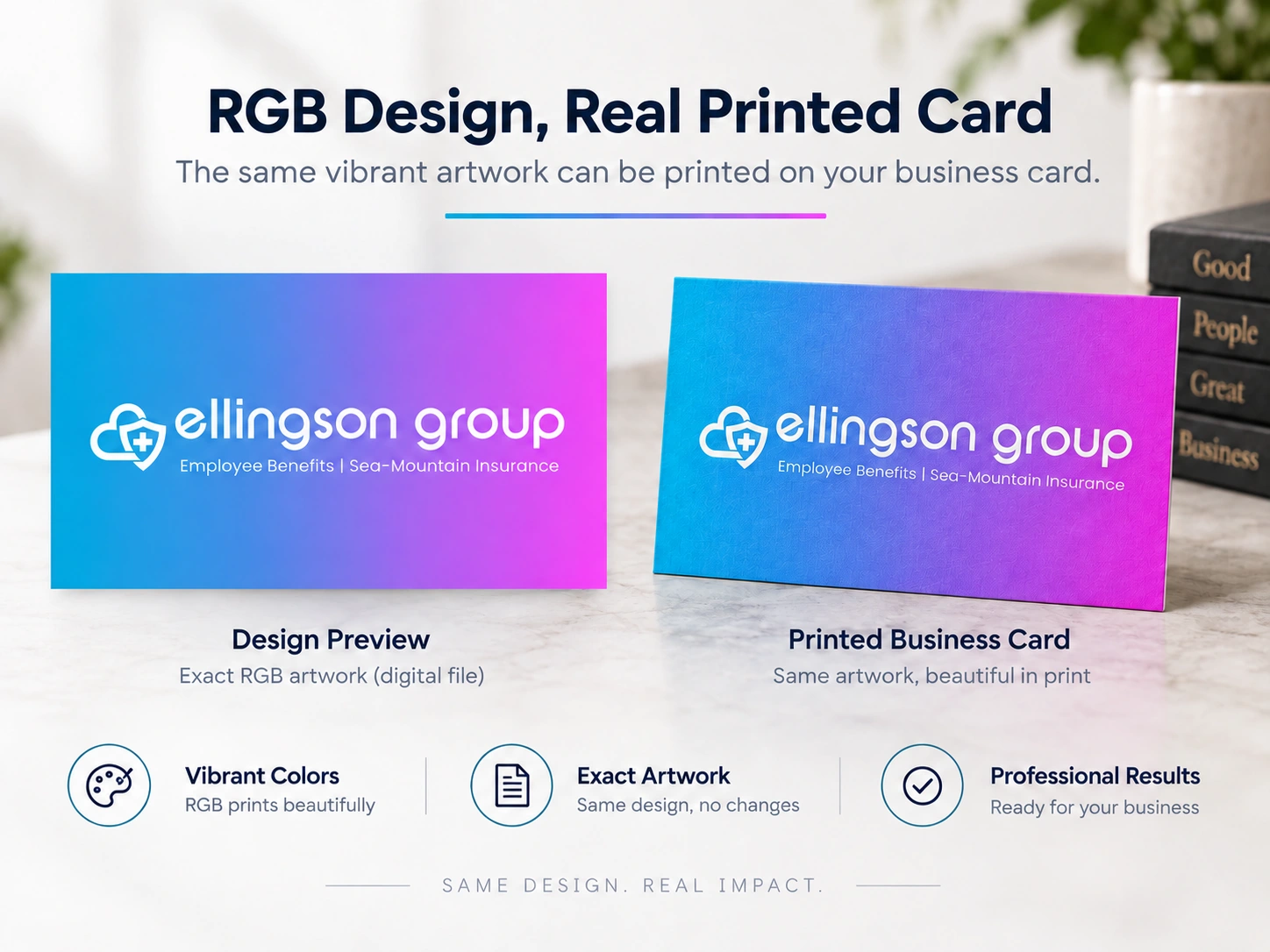
Another thing worth mentioning is that we at ZIVFY have a Landa seven-color printing press. It can print from RGB artwork, and its printed color gamut is generally wider than traditional CMYK. If you want the colors on your business card to look especially vivid and your original design is in RGB, you can send it straight to us. It gives the card a very distinctive look. There still aren’t many business cards made from RGB artwork on the market, and that can help yours stand out. But specialty papers can’t be used with the Landa seven-color press; only coated paper and white cardstock can.
Already have a design file?
As for the design, if you already have a finished file, you don’t need to worry about too many details. Just send us the file and we’ll help you work out the best way to make it. You only need to tell us what kind of paper you want and send us the file and your requirements.
Custom shapes, glue, lamination—and marks on the back
There are a few other questions buyers often ask when making business cards. First, can the card be die-cut into a custom shape? Our answer is yes. Second, will the layers come apart easily? When we make triplex business cards, we use adhesive made for bonding paper layers. After bonding the three layers, we put them in a press to flatten them, wait for the adhesive to dry, and inspect every card before shipping. That way, the cards won’t have layers splitting apart when they reach you. Third, lamination. We mainly use lamination on soft-touch materials or coated cardstock. With other specialty papers, whether they can be laminated depends on the specific paper. Unlaminated paper cards are more easily affected by water, so keep that in mind. Fourth, if we emboss the front, will there be a mark on the back? Our answer is that it depends on what you want. If you want the front embossed and the back as smooth as possible, we’ll do the embossing before bonding the layers. If you want to deboss the front so the back has a raised effect, we’ll press it after bonding, but first we need to see whether the thickness and paper are suitable.
Keep small text away from the edge
For the safe distance between text and the finished edge, we generally recommend 3–5 mm. We still need to bond the layers and then die-cut the card, so it’s better to keep text a little farther from the edge. The layers are bonded by hand, and there will inevitably be a little variation.
Is making just one finished sample worth it?
Proofing is another thing people care about. My answer is that I usually don’t recommend making just one finished sample. You can consider starting with the minimum order quantity instead. For a triplex business card with several complicated finishes, there’s a lot of preparation first: a cutting die, dies for foil stamping or embossing, and adjusting the spot ink until the color is stable. None of that goes away just because you’re making one or two cards. Some designs even need tens or hundreds of sheets of adjustment before they look the way you want. If you make only one finished sample, you still have those setup costs, so it may not work out much cheaper than ordering the minimum quantity. But you may worry that the finished card won’t look how you imagined. Our ZIVFY team has plenty of printing and production experience, and we carefully inspect all the cards before shipping, so you can feel reassured. If you have very strict requirements for a color or a particular finish, tell us in advance and we can discuss whether to make a sample.
You can look through the sample book first
We also offer a free sample book. It contains different materials, but it doesn’t contain finished triplex samples, because each triplex card is made to the customer’s own requirements. So if you request a sample book, you can only use it to look at our materials and finishes. The sample book is free, but you need to pay for shipping. The shipping cost depends on your location.
So, to sum up, what do you need to prepare before making a triplex card? If you have a design file, just send it to us and tell us what you have in mind. If you don’t have a design file, tell us your idea anyway, and we’ll help you see what would work. If you also need us to design the artwork from scratch, we can discuss that separately. You don’t need to understand every detail before getting in touch. We’ll help you sort out the production plan.