
If you want a strong color contrast between the front and back of your business card, duplex is worth considering. If you want a separate line of color between the two faces, consider triplex with a colored core. For one customer, a three-layer construction with full-coverage spot colors on both faces cost slightly less than the original duplex plan and revealed an orange paper core through the engraved logo. If you are unsure which suits you, here is how we look at the two options.
First, let’s clarify the two terms. Duplex business cards are made by bonding two sheets of paper together. Triplex business cards, including our color core business cards, add a separate core sheet between the front and back. That core can create a colored line along the edge of the card.
Price cannot be judged by layer count alone
In one project, a customer originally wanted duplex business cards with full-coverage spot-color printing on both faces and an engraved logo on one face revealing the color underneath. In the original duplex plan, one sheet would have needed different spot colors printed on its two sides, making that arrangement relatively costly. Part of the cost came from spot-color preparation and the time and labor involved in cleaning out ink.
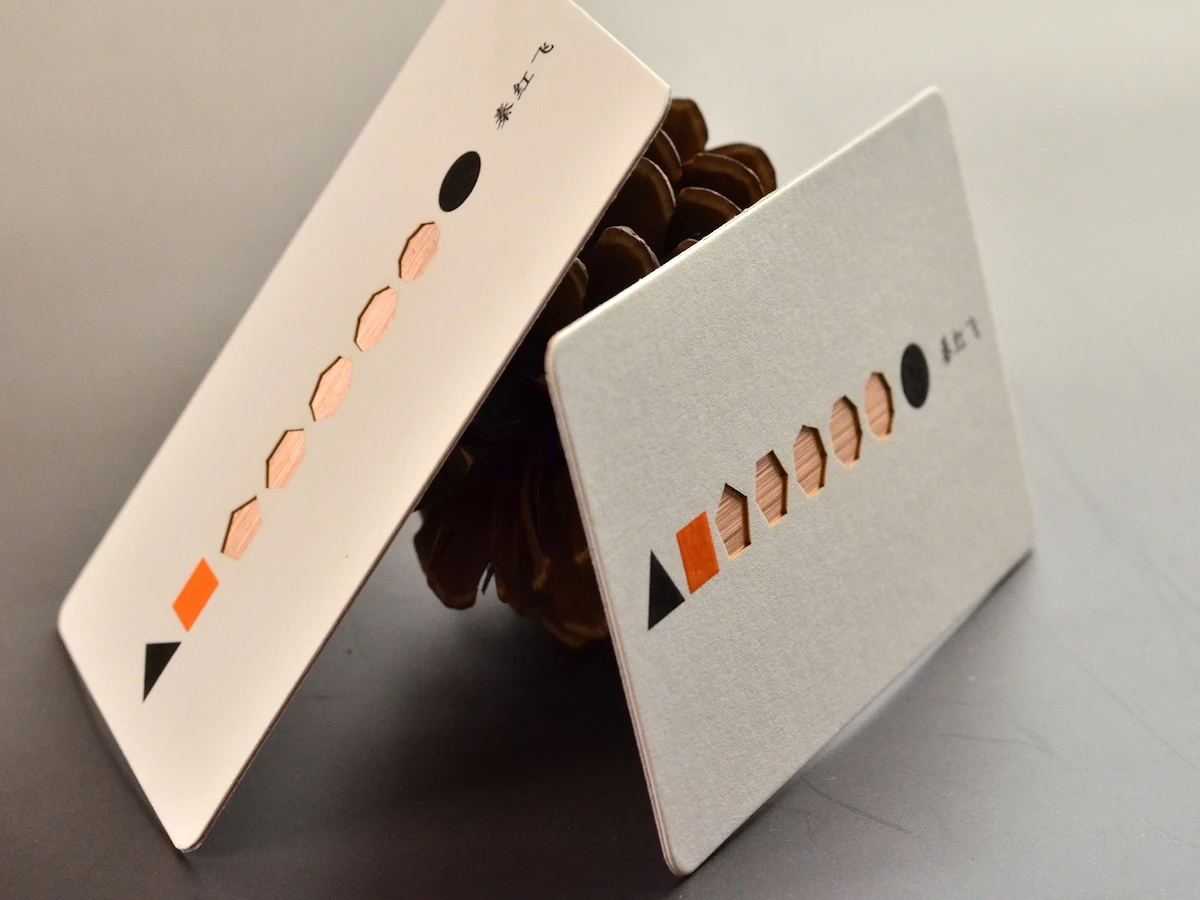
We changed the construction to three layers: two outer sheets, each with full-coverage spot-color printing, and a recycled paper core that was orange throughout. Engraving through one outer sheet exposed the orange core in the shape of the logo. The orange came from the paper itself, so it did not need to be printed separately.
The cost of this triplex plan was slightly lower than the original duplex plan. That result came from the particular combination of paper, printing and finishing in that project. More layers do not automatically mean a higher or lower price. Press manufacturer Heidelberg also explains how ink cleaning affects press preparation time.
When are duplex business cards a good fit?
If you sell tea, you might want a deep green front for a calm, understated feel and an ivory back for a clean look. Two sheets, two colors, bonded together: each face has its own appearance, without adding a separate core.
Designers also use contrasting colors on the front and back to express a particular style.
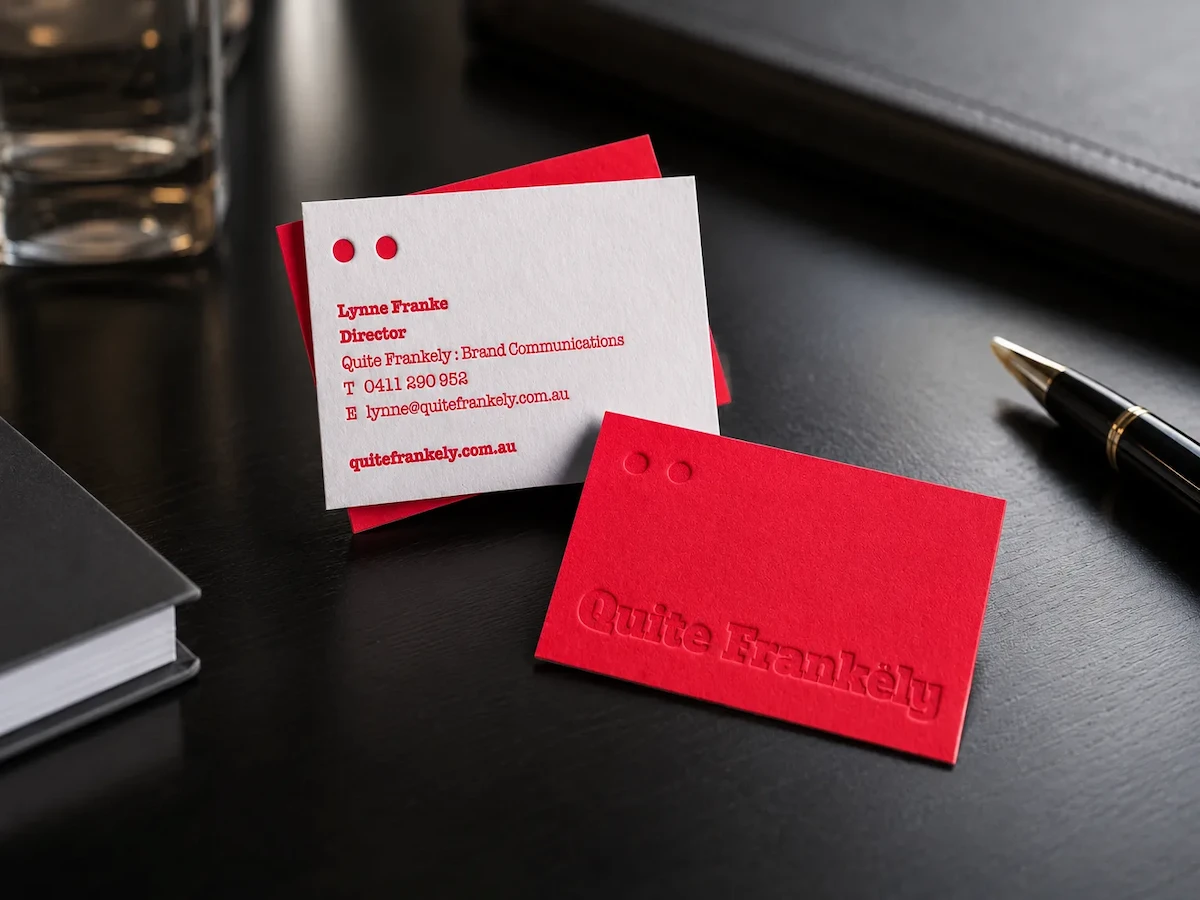
Paper supplier GF Smith also explains how bonding sheets can combine different paper colors. You may find more inspiration there.
 gfsmith.com
When are triplex business cards a good fit?
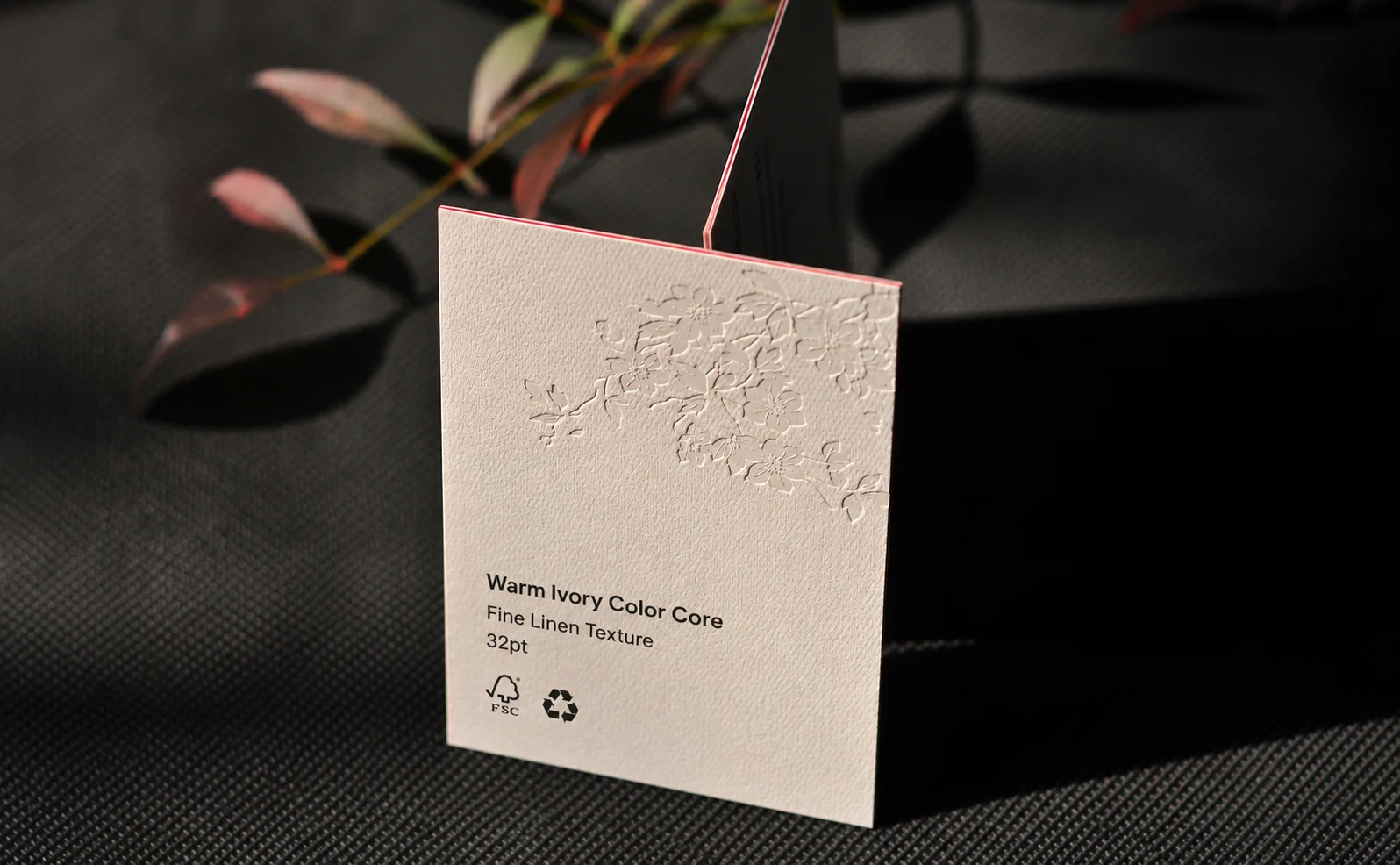
Handmade soap brands can keep both faces of a card light and use a soft orange core as a small accent. With triplex, the line along the edge is the exposed edge of the middle sheet. The color can be subtle; it does not have to be bright. The choice depends on the papers available, and an exact match to your brand color cannot be guaranteed.
Design studios also use engraved logos to reveal another color underneath. With suitable papers and construction, engraving the outer layer of a triplex card can reveal the core’s color.
In this construction, the core provides color both at the edge and within the engraved logo.
For more color ideas, see layered business cards beyond white, color, white. If you’re also weighing painted edges, our guide to painted edge vs color core business cards compares the two.
Thickness and finishes also affect the choice
If you mainly want a substantial feel, look beyond the layer count. Triplex is not necessarily thicker than duplex; the thickness of each sheet matters.
For example, you may want an embossed front while keeping the back as flat as possible. Embossing and debossing also depend on the outer papers and the order of production. We can consider embossing before bonding the layers. If you want a raised design on the front with a corresponding recessed impression on the back, a deeper emboss can be made after the layers are bonded.
Which looks more premium: duplex or triplex?
Whether a card looks premium depends on its design, paper and finishes, not its layer count. Duplex and triplex can both look refined when the front, back and edge work together.
Still unsure?
Our paper and finish sample book can help you compare paper feel and surface effects. The book does not contain finished triplex cards, so your chosen three-layer combination still needs a separate review.
You do not need to finish your design before getting in touch. Talk through your business card idea with us: how would you like the front, back and edge to look, and what kind of feel do you want? A logo or reference image helps. If you already know the size, quantity or intended use, share those too. Finished artwork can come later.